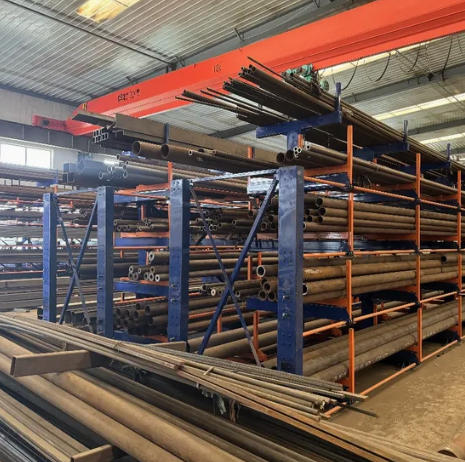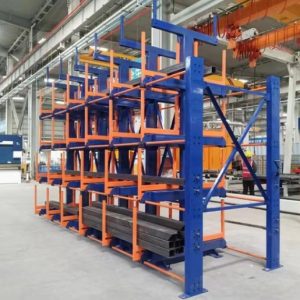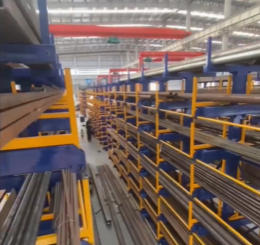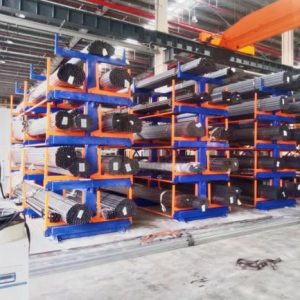
The Physics Problem with Fixed Cantilever Storage
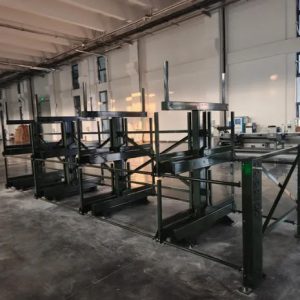
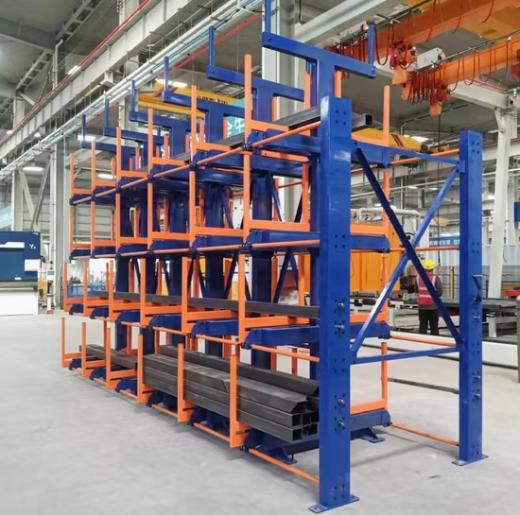
A fixed cantilever rack looks efficient on a layout drawing. Long arms project into the aisle, material sits on the arms, and the crane picks from above. The problem appears when the load is heavy and the bundle is tight against the column. The crane hook cannot reach the center of gravity without angling the load, and angling a 5-ton pipe bundle between uprights is where damage and injury happen.
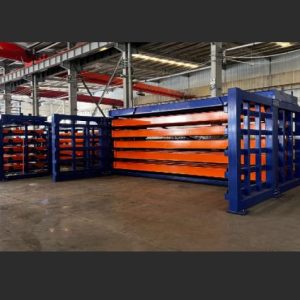
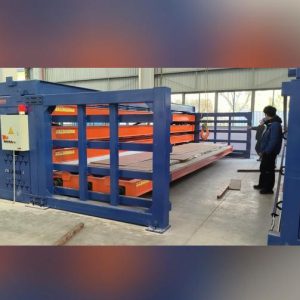
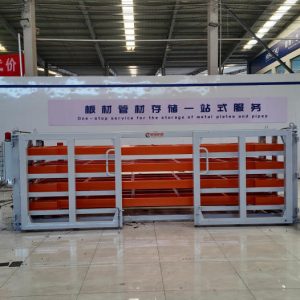
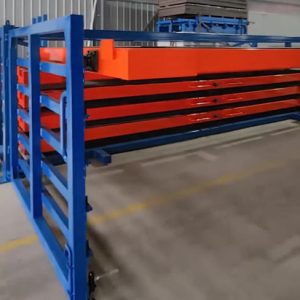
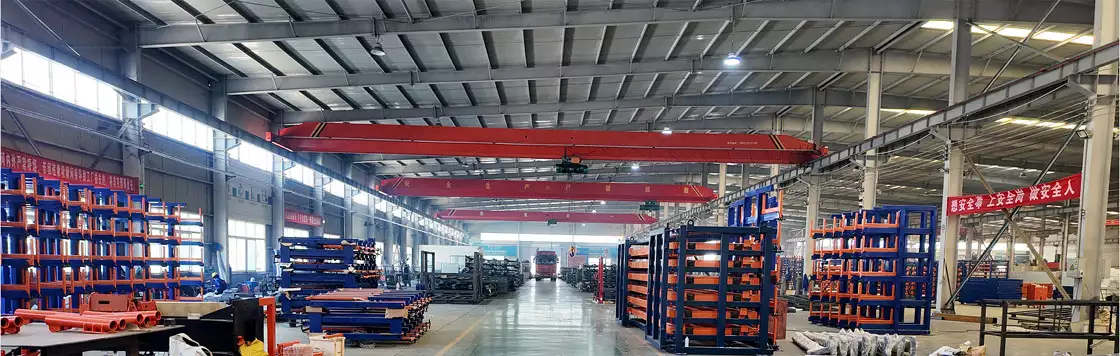
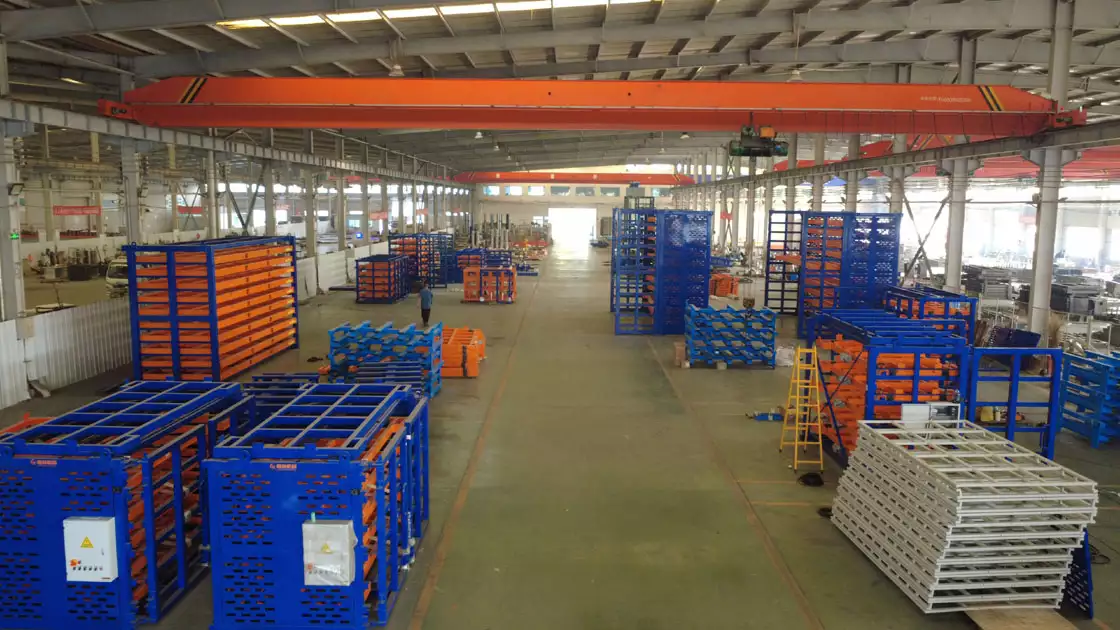
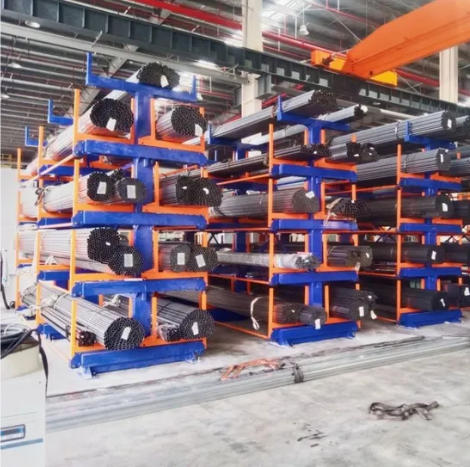
A heavy-duty roll-out pipe and tube storage rack solves this by moving the entire storage tier — arms, load, and all — out of the frame before the lift begins. Herochu builds these racks around a manual crank carriage that extends 100% of arm travel, so the crane hook descends vertically onto an unobstructed bundle. Nothing is dragged. Nothing is threaded. The geometry of the lift stays clean.
Load Capacity and Structural Reality
“Heavy-duty” is one of the most abused phrases in storage equipment marketing. For roll-out cantilever racks, the honest specification is load per arm level, not a single headline number for the whole rack.
Herochu’s HC-G series cantilever platforms are rated from 3,000 kg to 5,000 kg per level depending on arm length and column configuration, with standard material lengths of 6 m, 9 m, and 12 m. The roll-out mechanism does not reduce that rating — the carriage, roller bearings, and guide rails are sized to carry the rated load through the full extension cycle, not just in the parked position. A tier rated at 5 tons per level is engineered to be cranked out with 5 tons on it.
That distinction matters because a roll-out rack imposes loads that a fixed rack does not. When the carriage extends, the center of gravity moves forward and the column sees a different moment. Herochu engineers the anchor system and base connection around the extended-load condition, and specifies slab thickness and anchor type accordingly. Buyers comparing quotes should ask whether the load rating applies at full extension or only in the retracted position.
Tube Finish and the Cost of Handling Damage
For stainless tube, polished pipe, and aluminum extrusion, the storage decision is not only about density. It is about how many times the material is touched between receiving and the saw.
A roll-out rack reduces touch points. The crane lifts the bundle from above, moves it directly to the next operation, and the empty carriage retracts. There is no forklift dragging the bottom layer across a fixed arm. There is no manual re-stacking to reach a different diameter buried behind the front bundle. Protective liners on the arms and compartment surfaces further isolate the material from steel-to-steel contact.
The economic case is straightforward for surface-critical product. Every scratch that turns prime stock into a second or a reject carries a cost far larger than the storage hardware. For carbon steel pipe and rebar, the finish argument is weaker, but the handling-time and crane-utilization arguments still apply.
Crane Integration and Aisle Design
A roll-out rack is not a standalone purchase. It is part of a lifting system, and the rack specification must match the crane’s coverage, hook height, and lift path.
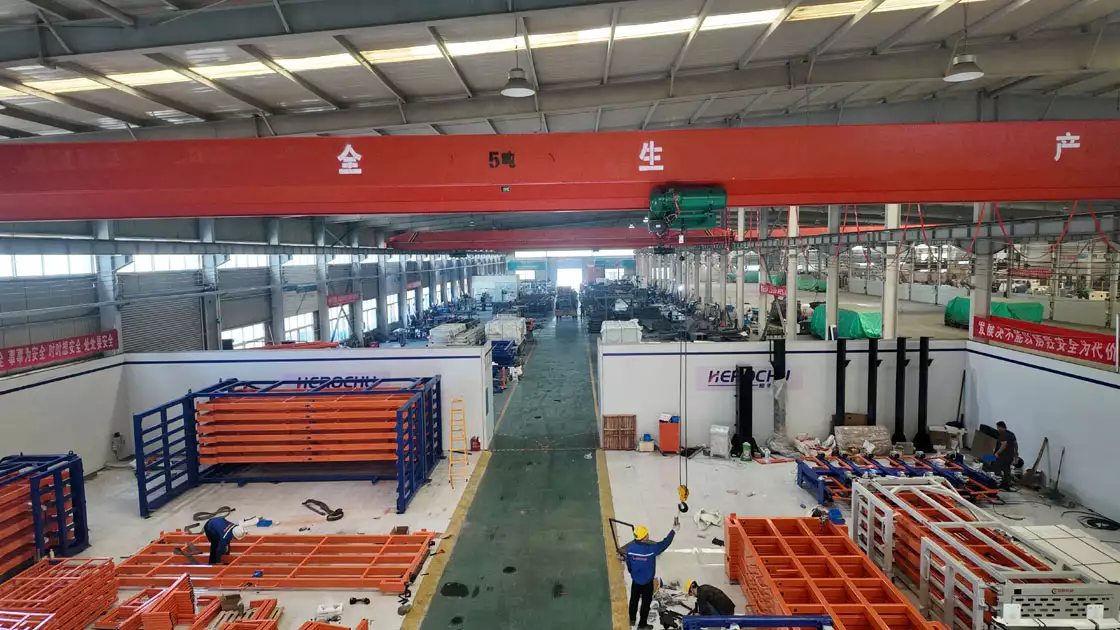
Herochu’s engineering input includes crane coverage over the rack face, the hook height available above the top loaded tier, the clearance required for the carriage to travel into the aisle, and the maximum bundle weight the crane will handle per pick. A rack that is structurally adequate but positioned outside the crane’s hook coverage becomes a very expensive static shelf.
The aisle side of the equation is simpler than with fixed cantilever. The permanent aisle can be narrower because the forklift no longer needs to enter the storage bay. The operating zone only needs to accommodate the extended carriage and the vertical lift path, not a turning vehicle. In buildings where floor space is the binding constraint, that difference often determines whether the rack fits at all.
Configurations and Growth
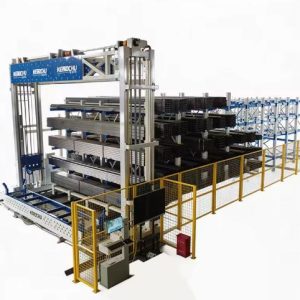
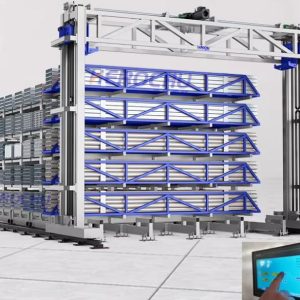
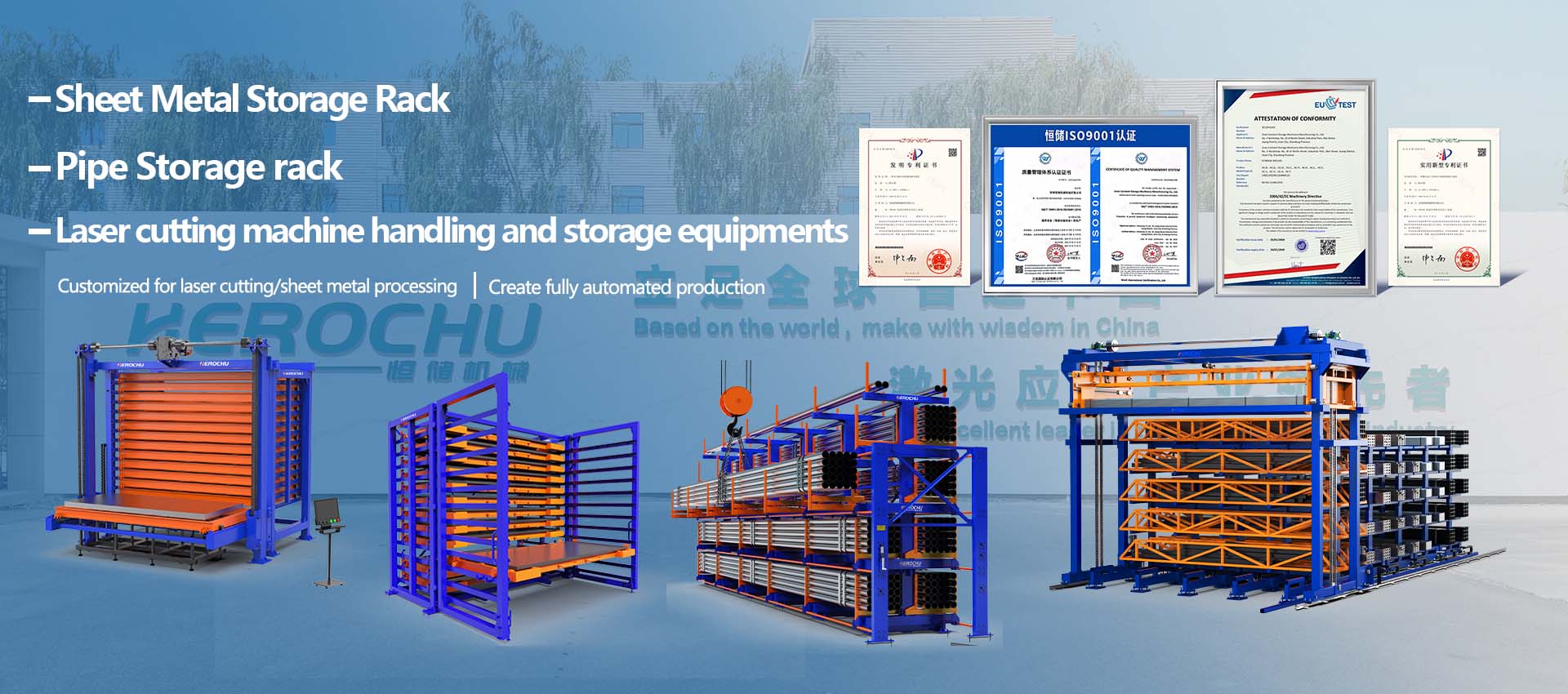
Herochu builds roll-out cantilever racks as single-sided or double-sided units, with stacked tiers up to eight levels high and modular components that allow a bay to be expanded as inventory grows. The control panel, grid supports, and connecting shafts are designed as a system rather than a one-off weldment, so adding a level or converting a single-sided bay to double-sided does not require replacing the column.
For operations storing a mix of pipe, tube, and bar, compartment widths and divider layouts can differ within the same frame. A bay might carry 12-meter pipe on deep arms in the lower tiers and shorter extrusion bundles on narrower compartments above, all served by the same crane and the same crank system.