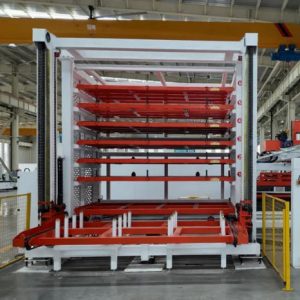
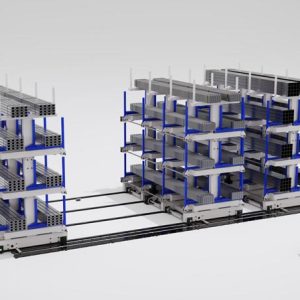
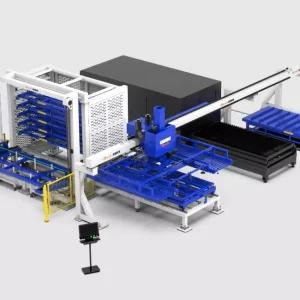
Gantry Automated Long Goods Storage System for Steel Profiles and Bar Stock
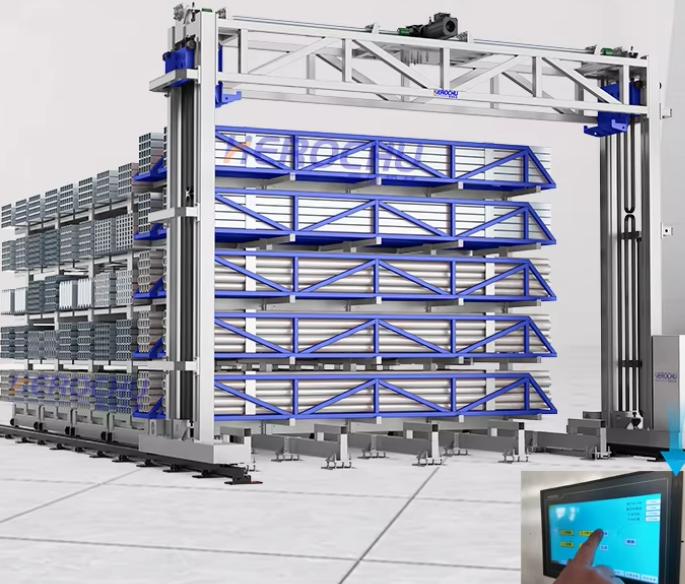
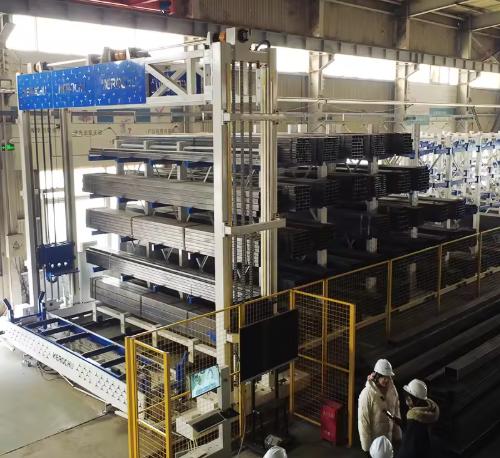
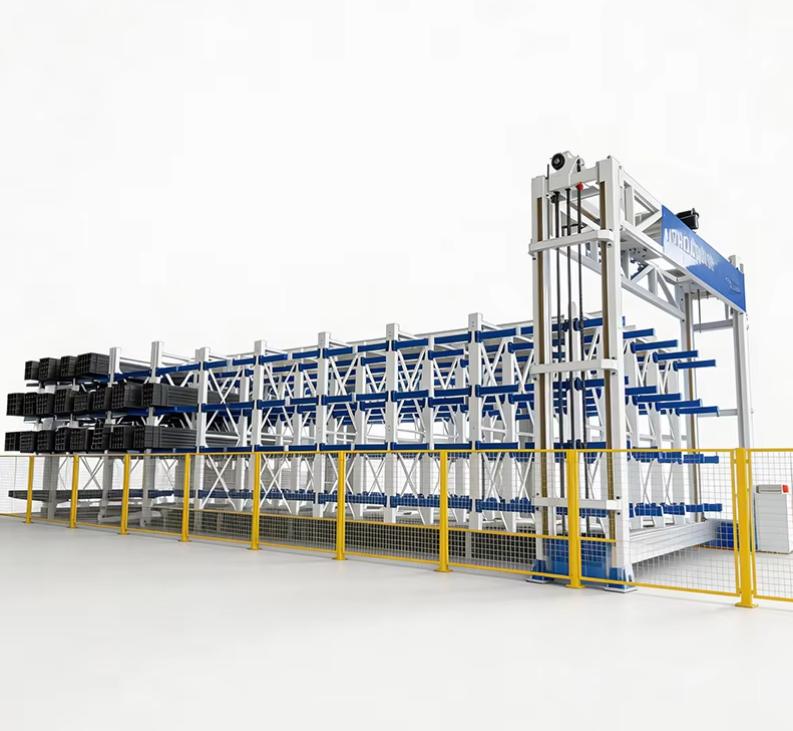
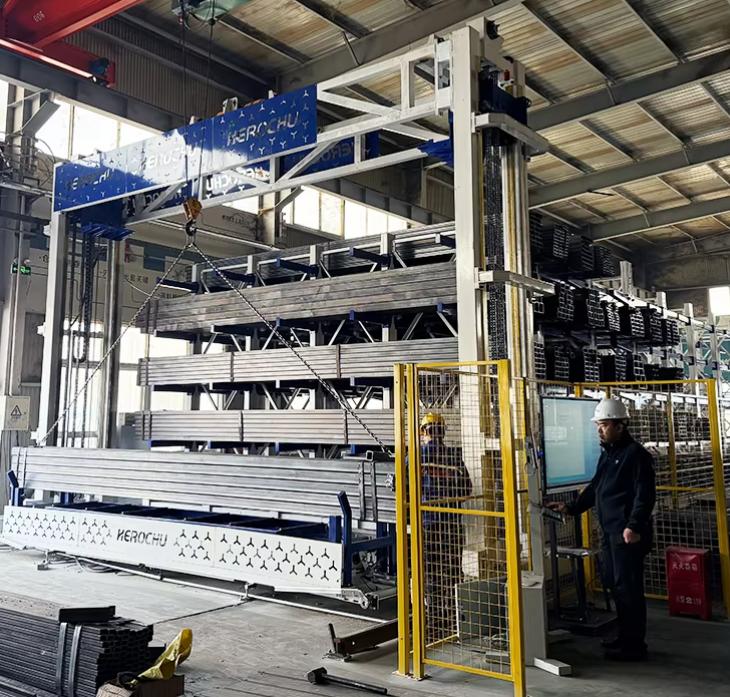
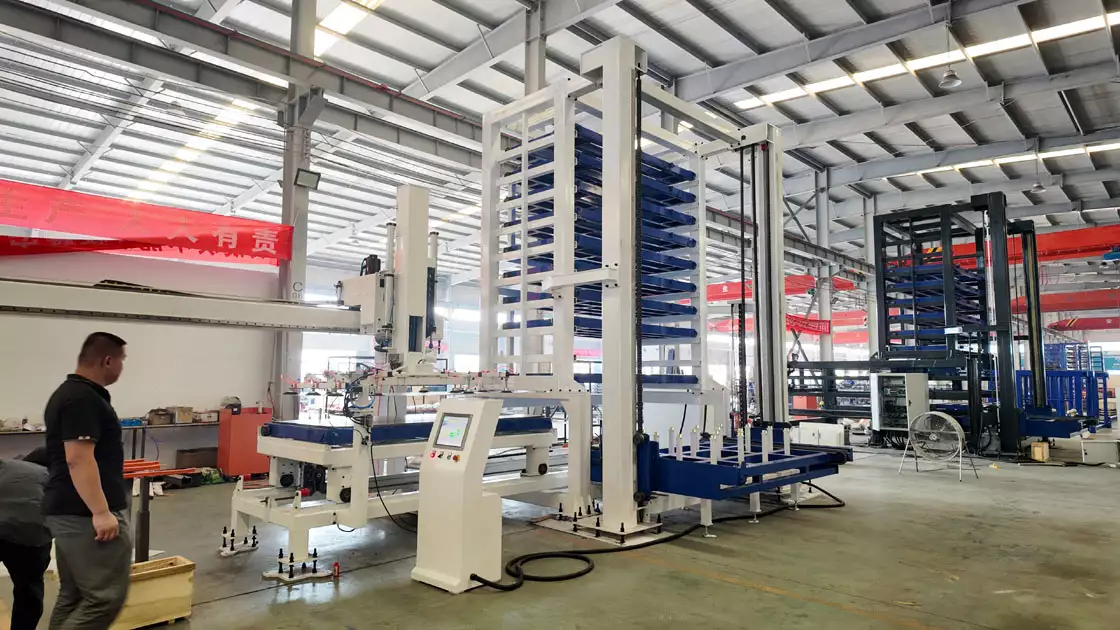
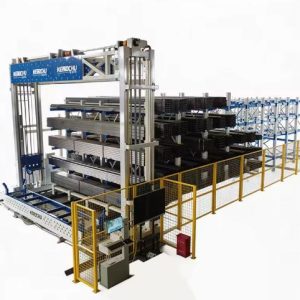
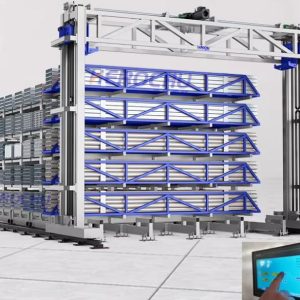
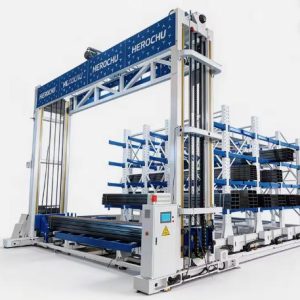
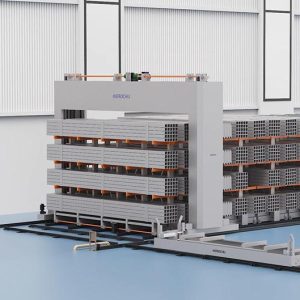
A gantry automated long goods storage system moves profiles and bar stock between multi-level racks with an overhead Cartesian gantry rather than a crane or forklift. It completes a bundle pick in about 90 seconds, holds ±2 mm at the shelf, and keeps people out of the aisle during the move.Fabrication shops rarely buy storage as a standalone project. It comes attached to a saw, a laser or a new dispatch bay, and the question is whether the storage can keep up with the machine it feeds. Profiles and bar stock make that question harder than flat plate does, because the loads are long, the bundles vary and the cost of a bad pick is a bent section.
Fabrication shops rarely buy storage as a standalone project. It comes attached to a saw, a laser or a new dispatch bay, and the question is whether the storage can keep up with the machine it feeds. Profiles and bar stock make that question harder than flat plate does, because the loads are long, the bundles vary and the cost of a bad pick is a bent section.
Why use a gantry when the bay already has an overhead crane?
Cranes are shared assets. The same hook that unloads a delivery also serves the saw, the paint line and the dispatch truck, so storage waits its turn. Slinging a bundle takes five to ten minutes with two people, the load swings, and the crane cannot place a bundle into a 1.2 m gap between shelf dividers.
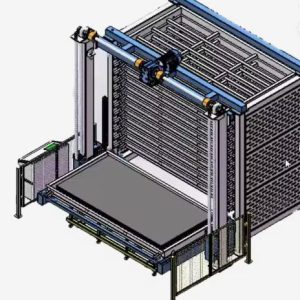
A gantry does the storage task only. It picks from a known address, travels a fixed path and sets the bundle down without a rigger. Where the crane stays, it is freed for the work it does best: unloading inbound transport and lifting loads that never enter the tower.
What changes at 5,000 kg per level?
Everything below the load gets heavier. Columns move to a larger section, the rail beam deepens, and the wheel loads concentrate into a smaller footprint than an equivalent rack layout. That is the point where the slab has to be checked rather than assumed.
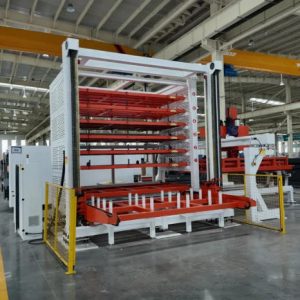
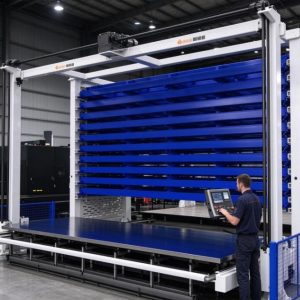
The mast also grows. A 5,000 kg load at 8 m needs a stiffer section to hold ±2 mm at the top level, and lifting speed is set by what the structure will tolerate rather than by the drive. Herochu builds the HC-X7065-10 and HC-X8085-10 to that rating, with six and eight levels respectively.
How does eight levels affect picking time?
Vertical travel is the hidden cost of height. Lifting at 5 to 15 m/min means a move from the ground to level eight takes roughly 50 to 60 seconds, and the return trip doubles it. In practice the average pick sits near the middle of the stack, so the tower still beats a forklift working a 4 m cantilever row.
Two control features keep the penalty small: batching jobs by level so the mast does not cross the tower twice for two picks, and pre-positioning the gantry at the next address while the operator confirms the current one. Herochu exposes both as standard operating modes on the PLC.
Why bar stock needs different bins than profiles?
Bar rolls. A bundle of round bar in a flat shelf will spread under the band and creep toward the edge, which is why bar levels use cradles or V-blocks with a positive stop at both ends. Profiles do not roll, but they nest: two channels placed leg to leg occupy less height than expected and more width than the bin allows, so separator pegs set the pitch.
Count is the second difference. Bar is usually issued by bundle, or by piece from a banded bundle, so the pick face needs room to read the tag and cut the band. Profiles are often picked as single lengths, which is easier with a fork that can lift one piece off the stack without disturbing the rest.
How does the tower feed a saw or a laser?
With an outfeed station at the aisle end and a buffer of two or three positions beside it. The saw operator calls a bundle from the screen or from the saw control, the gantry delivers to the buffer, and the operator takes it from there. Nothing is stored in front of the machine, so the floor around the saw stays clear.
For lights-out cutting the sequence runs from a work order: the Herochu PLC queues bundles in cut order, the saw reports completion, and the gantry returns remnants to a tray position. Remnants need their own addresses, or they become the scrap pile.
In the Herochu range the choice is driven by the longest product and the heaviest bundle, not by the average. A tower specified for the average will be blocked by the exception every week, and the exception is usually the order that pays for the machine.
For storage work, yes. Most sites keep the crane for inbound unloading and for loads that never enter the tower, which removes the queue at the hook rather than the crane itself.
How accurately does the system place a bundle?
The Herochu gantry repeats to ±2 mm at the pick face, which allows fork entry into divided bins and reliable label reading without contact.
Is a pit required for the rails?
No. Rails sit on grouted base plates on the existing slab, and a separate foundation is only needed where the slab cannot take the concentrated rail loads.
How long is the bay out of service?
Typically two to four weeks for rails, rack modules, gantry assembly and load testing, with commissioning scheduled around production where possible.
What happens if a bundle is overweight?
The control compares the booked weight against the position rating before the cycle starts and refuses the move, which protects the rack and the mast.
FAQ
Here are some frequently asked questions about our sheet metal racks and pipe storage solutions. We hope you find them helpful!
Q1: Can I request a custom size or color? Absolutely. We offer complimentary design services and deliver efficient, tailored solutions to meet your specific requirements.
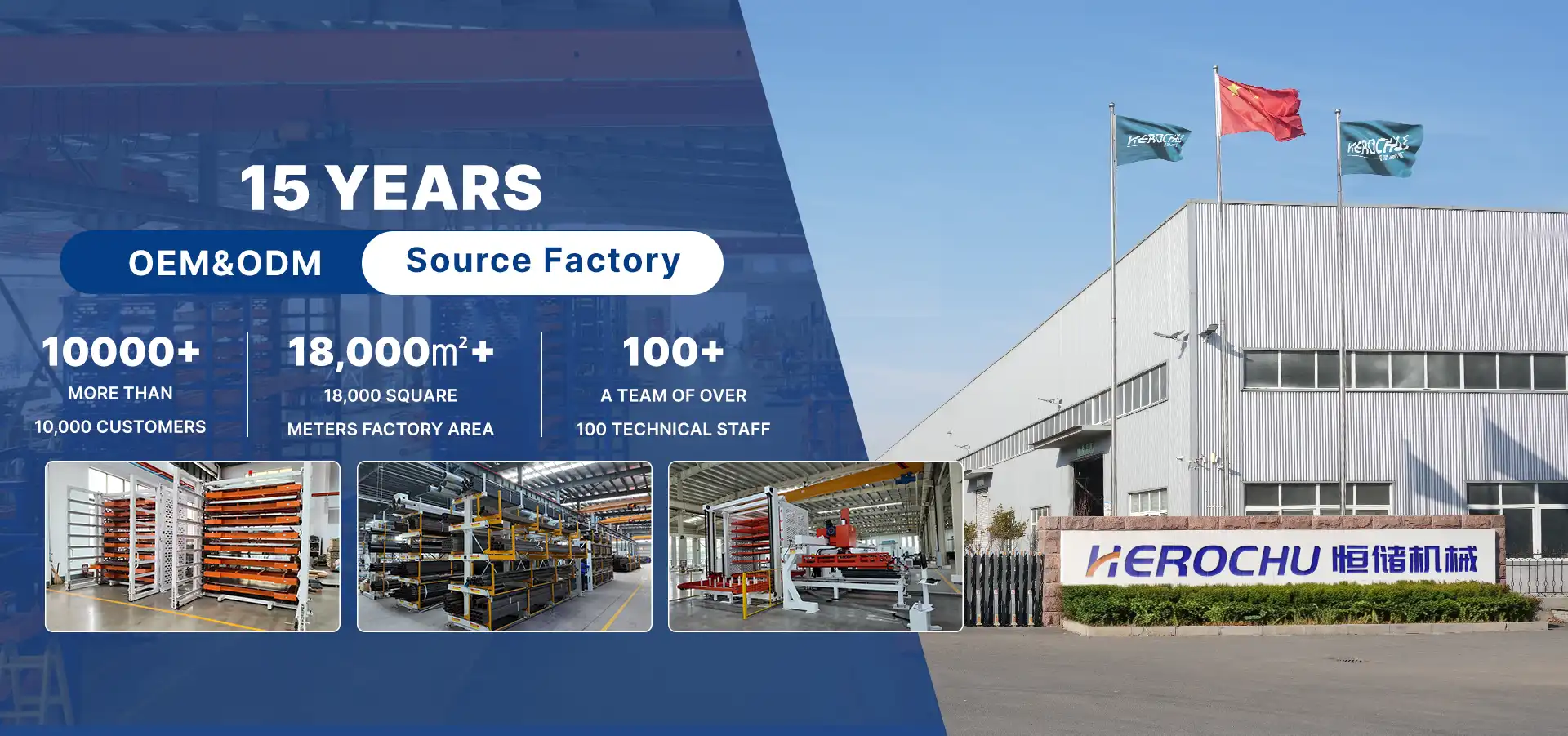
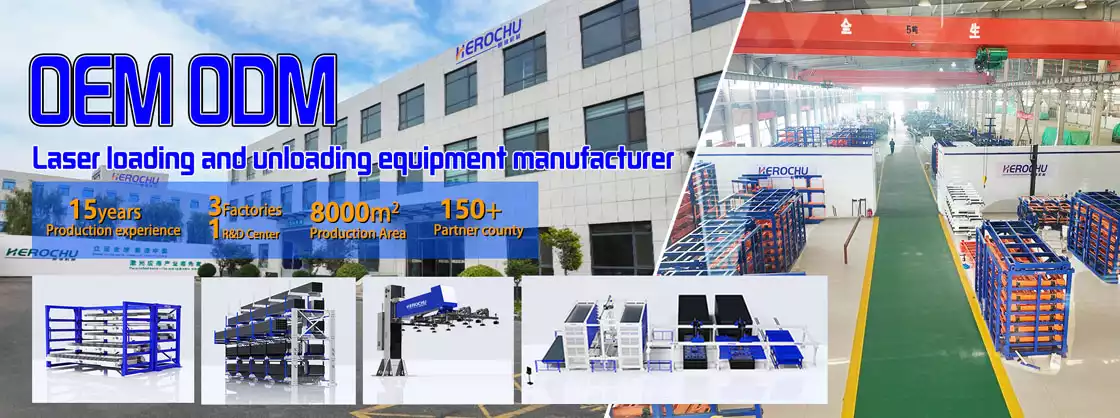
Q2: Are you a manufacturer or a distributor? We are a direct manufacturer with over 15 years of industry experience and expertise.
Q3: Is there a minimum order quantity? No. We welcome orders of any size, starting from a single unit.
Q4: How can I get detailed product information? Click the “Get a Quote” button to receive product images, detailed specifications, and videos. Our team is always ready to assist.
Q5: How do I provide my storage rack requirements? Simply share the type, dimensions, and quantity of materials you plan to store, along with any other specific needs. We will develop a professional storage solution for you. Alternatively, leave your contact details for a personalized consultation.
Q6: Do you offer automated loading systems or robotic arms? Yes. We provide loading robotic arms and integrated loading/unloading systems tailored to your laser cutting machine’s table size and material handling method (e.g., board rack, exchange platform, or material warehouse). Contact us with your details for a customized proposal.
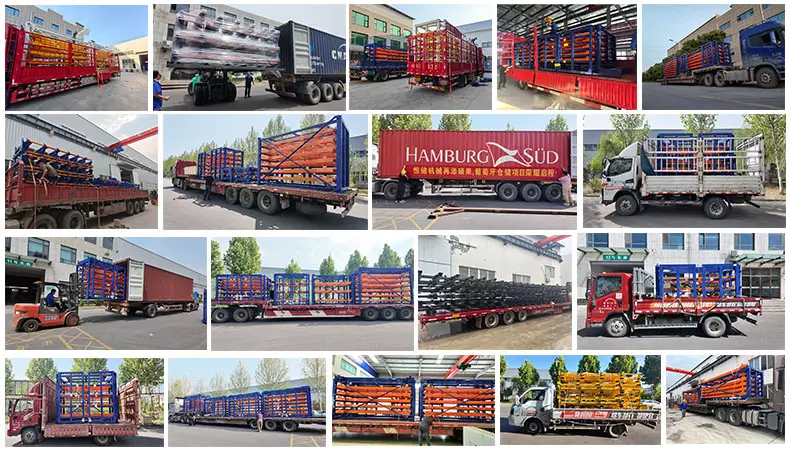
Q7: Do you provide on-site installation and debugging? Yes. Our technicians can travel to your facility for installation and debugging, ensuring successful operation. We have served clients globally, including in the USA, South Korea, Russia, Qatar, Mexico, South Africa, Egypt, and Lebanon.
Q8: How do you ensure product quality? Our quality assurance includes:
A team of over 40 technical engineers for professional debugging and support.
A dedicated quality control department compliant with ISO9001 standards.
CE certification for all exports.
Rigorous load testing before shipment to ensure structural safety and reliability.
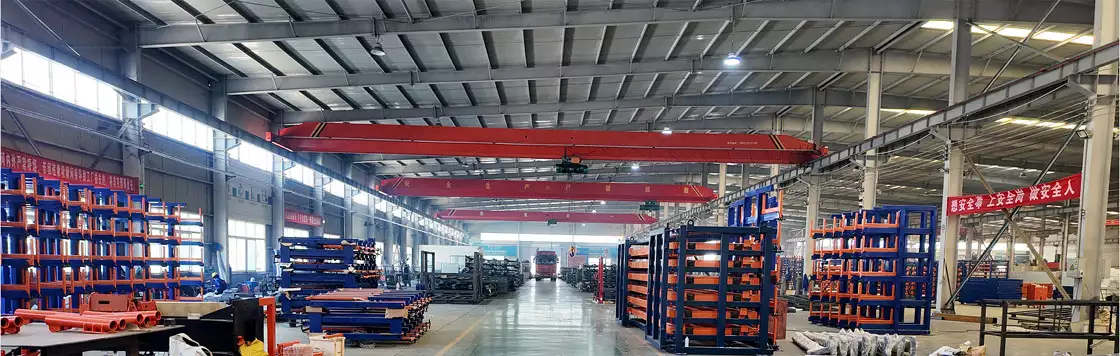
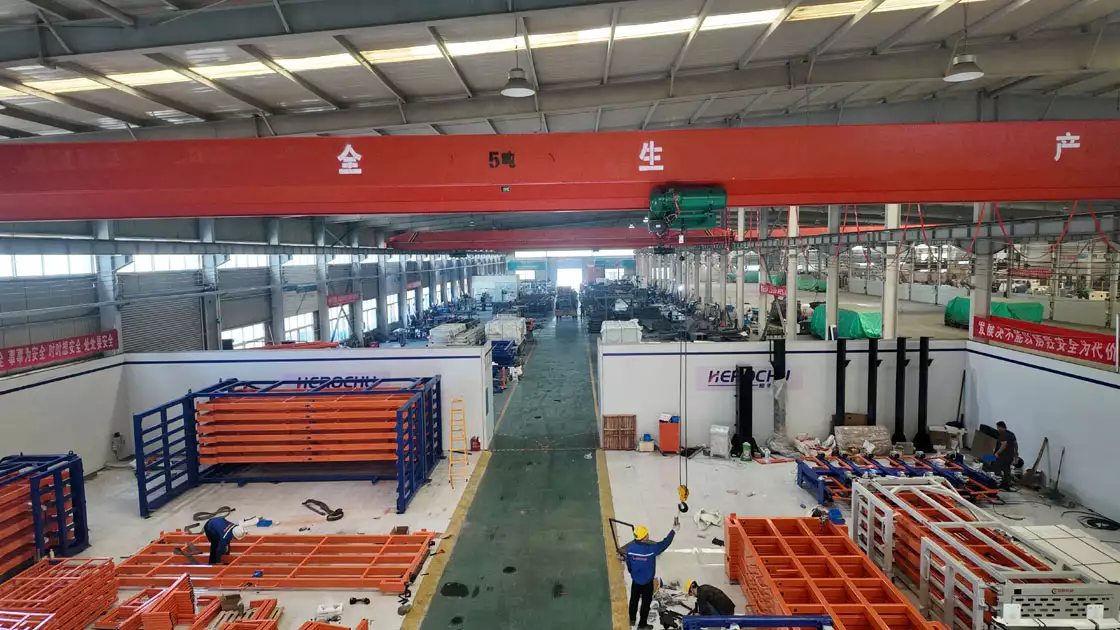
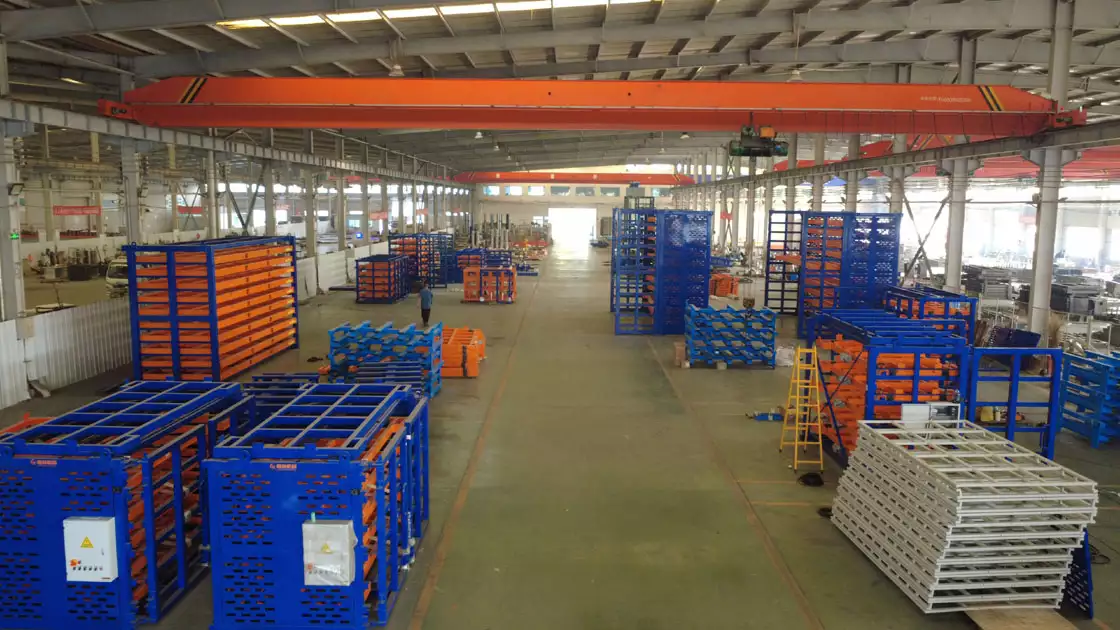
Q9: Where is your factory located? Our modern 10,000-square-meter manufacturing facility is located in Jiyang Industrial Park, Jinan, Shandong, China.
Q10: How can I evaluate your company’s capabilities? We offer virtual video factory tours and warmly welcome on-site visits.
Q11: What does your company specialize in? Jinan Constant Storage Machinery Manufacturing Co., Ltd. is a high-tech enterprise specializing in the R&D, production, sales, installation, and service of intelligent storage solutions. Our product range includes sheet material warehouses, drawer-style shelves, cantilever racks, servo manipulators, gantry loaders, and fully automated handling systems. Supported by a skilled technical team and advanced equipment, we are committed to delivering high-performance storage products and solutions to customers worldwide.
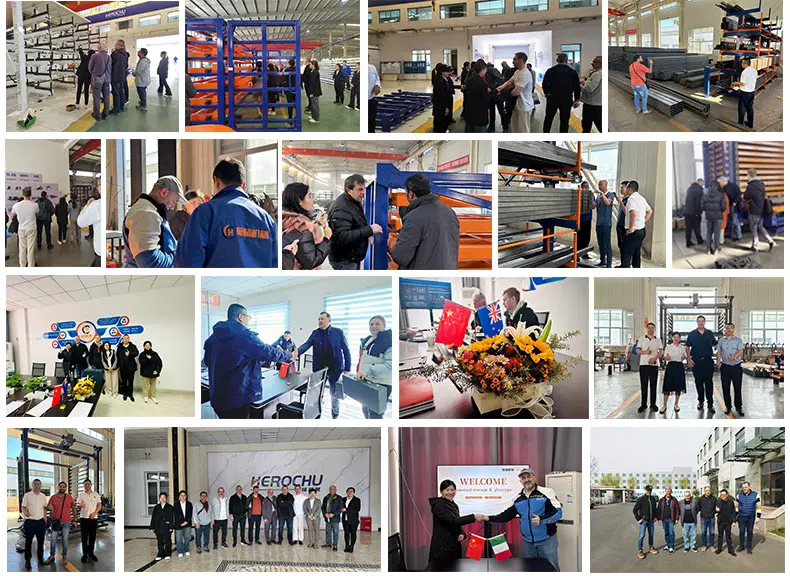
Customer visit
Herochu has always been adhering to the market-centric approach to meet customer requirements to the maximum extent, and the business philosophy of “creating brands with heart and gaining reputation with sincerity”. It provides customers with high-quality products and services with rigorous military quality, professionalism, and excellence, and has won unanimous praise in the Chinese aerospace, Chinese weapons, Chinese railways, automobile manufacturing, engineering machinery, non-ferrous metal titanium alloy and other industries.