Is a crank-out rack safe for one person to operate?
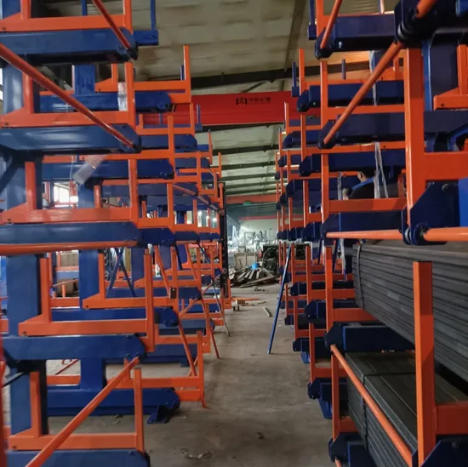
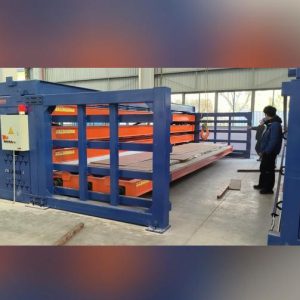
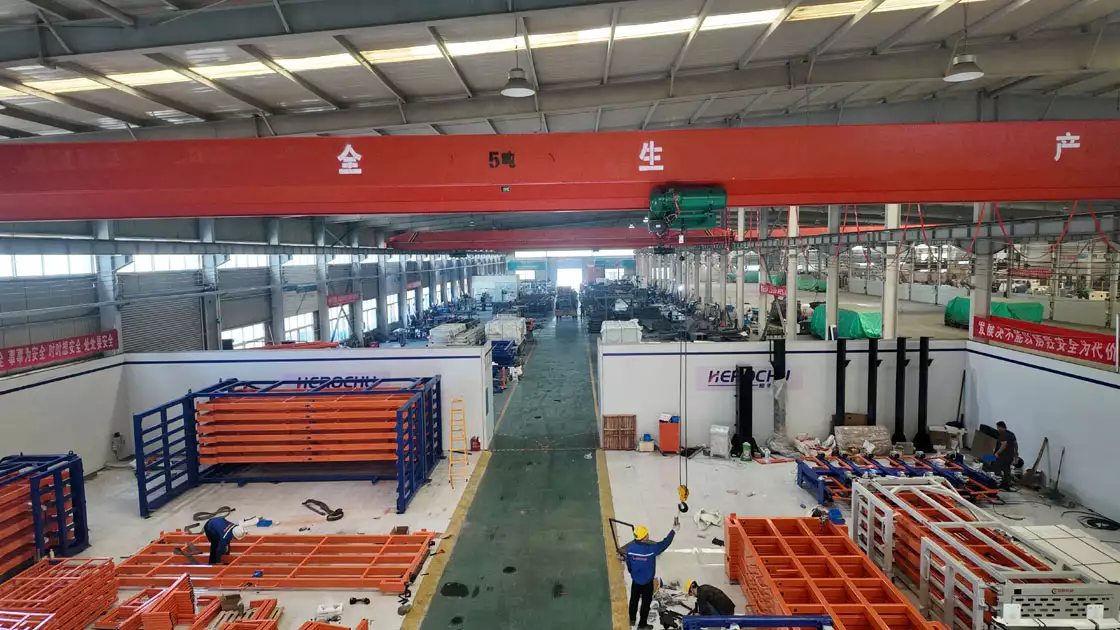
Yes, when the bay is laid out for it. The operator stands at the panel outside the load path, the crane does the lifting, and the arms hold position while the sling is set. Herochu marks the standing zone on the layout drawing.
What happens if the crank is turned while a bundle is slung?
The arms move under the slung bundle, which stays where the crane holds it. Crank in after the lift to keep the aisle clear.
Can a crank-out unit replace an existing cantilever rack?
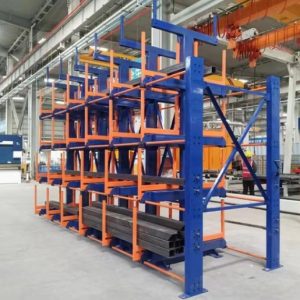
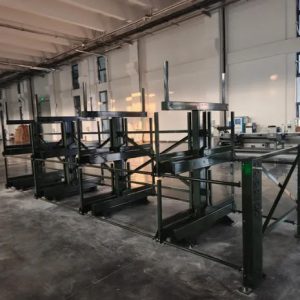
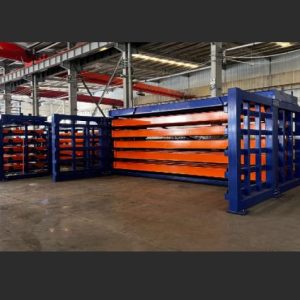
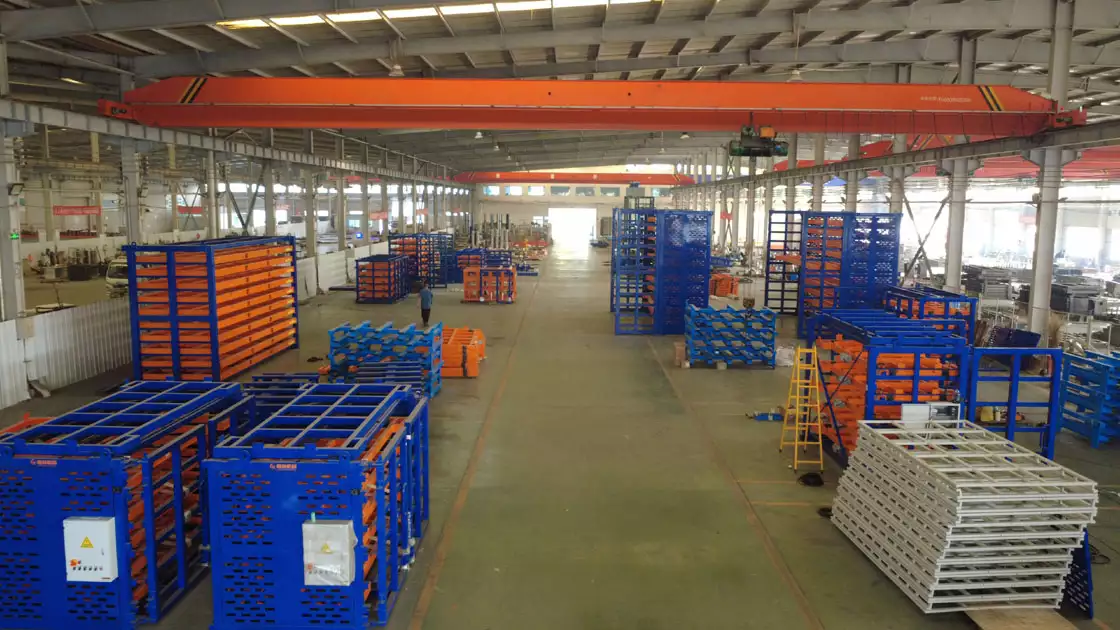
Often yes, on the same aisle. The new frame is deeper because receptacles travel forward, so the layout is checked against column lines and crane coverage first.
How much aisle width is needed?
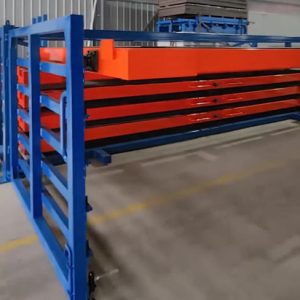
Enough for the extended arms plus the operator’s standing zone, not the full bundle length. Because the arms travel into the aisle, the clear width is measured to the arm tip at full extension.
What is the difference between roll-out and crank-out?
Nothing mechanical. Roll-out describes the motion of the arms, crank-out describes the drive that produces it. A manual roll-out cantilever rack and a crank-out rack are the same machine.
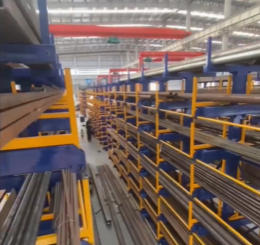
How much floor space does one unit need?
Enough for the frame depth plus the arm extension travel and a standing zone. The aisle is measured to the arm tip at full extension, which is shorter than the bundle length and does not grow with it.
Can one bay hold several lengths?
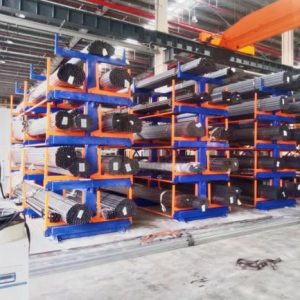
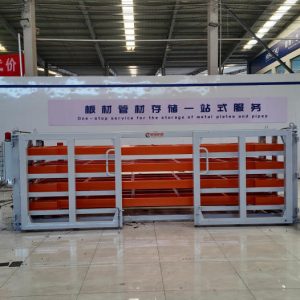
Yes. Dividers split an arm into lanes, and levels can be spaced for different bundle heights, so a bay can serve several SKUs without turning into a search.
Is 20 ft the height limit?
It is the practical limit for crane-served receptacles of this type. Above that the building, the hook height and the sling length usually decide the matter before the rack does.