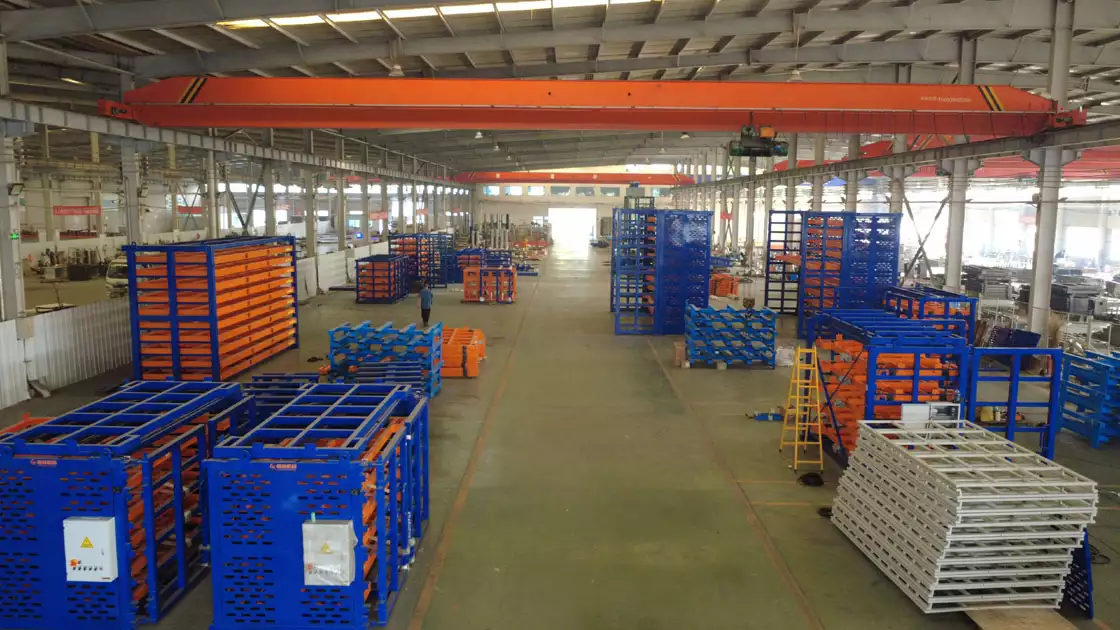
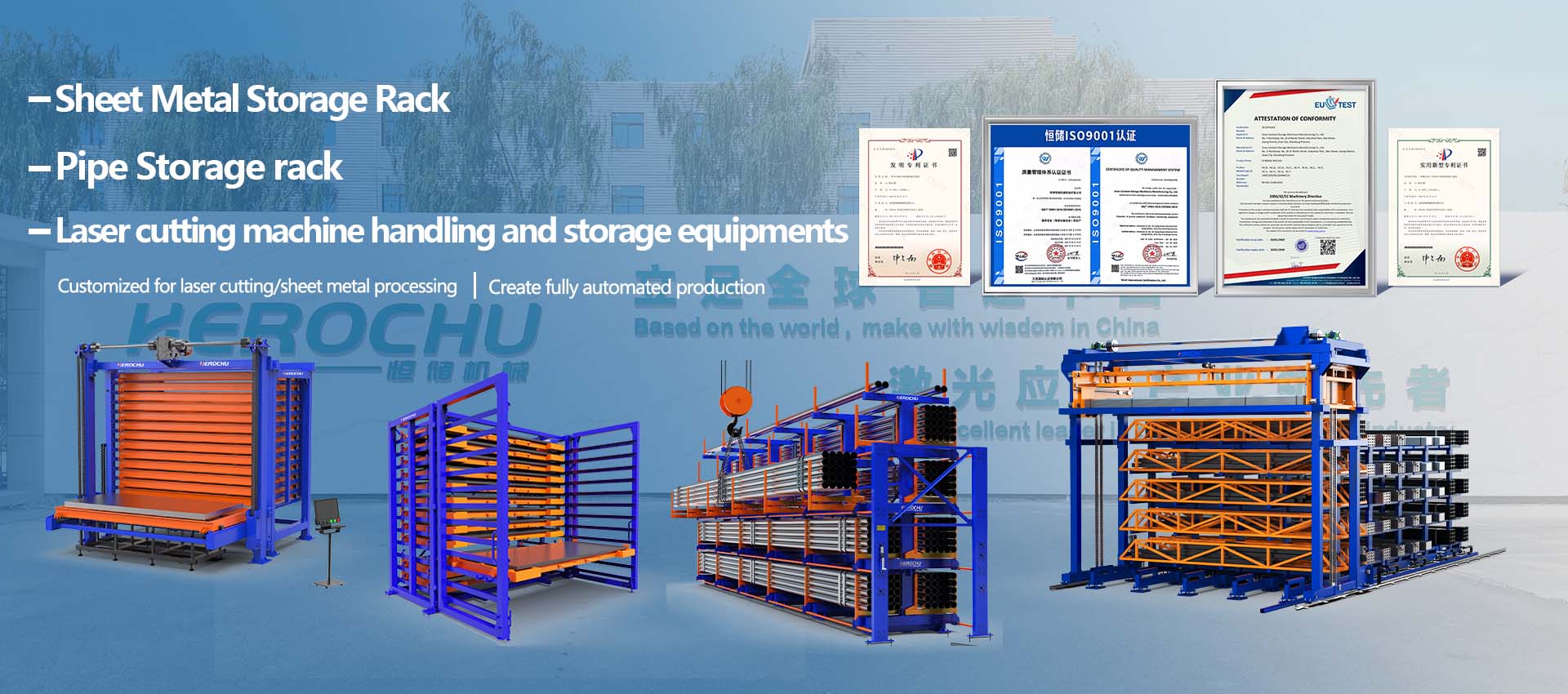
No two fabrication shops store sheet metal the same way. One shop runs mostly 4×8 foot mild steel blanks; another handles oversized 6×2 meter plates for structural work; a third stores a mix of aluminum, stainless, and acrylic in small batches. A storage system that works for one may be a poor fit for another. Herochu addresses this reality with a pull-out sheet metal rack with customizable drawers—a platform that adapts to the material mix, floor layout, and retrieval workflow of each individual facility.
The Problem with One-Size-Fits-All Storage
Generic shelving and cantilever racks force shops to adapt their workflow to the storage system. Sheets that do not fit the fixed dimensions get stored elsewhere, often on the floor. Drawer counts that do not match inventory volume lead to either wasted vertical space or overcrowded tiers. Load ratings that exceed actual needs add cost; ratings that fall short create safety risks.
A customizable pull-out rack reverses this relationship. The storage system adapts to the shop.
Drawer Configuration: Layers, Dimensions, and Clear Space
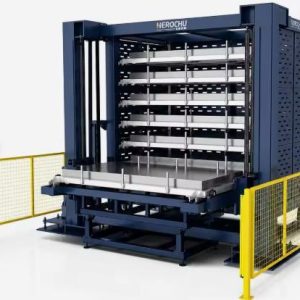
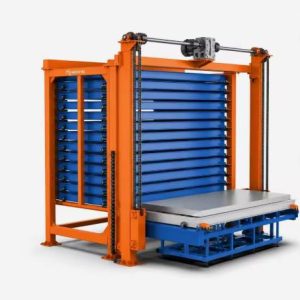
Herochu builds each rack to order. The number of drawer layers can range from 3 to 15, depending on available ceiling height and inventory volume. Standard configurations include 6 layers, but this is a starting point rather than a constraint. Clear space per tier is 120 mm as standard and can be adjusted to accommodate thicker plate or to tighten spacing for thin-gauge material.
Drawer dimensions are matched to the sheet sizes the shop actually handles. The HC-B series covers common formats: 2500×1300 mm, 3000×1500 mm, 4000×1500 mm, 4000×2000 mm, and 6000×2000 mm. For shops working with non-standard sheet sizes, Herochu designs custom drawer dimensions to fit.

Optional dividers subdivide a single drawer into multiple compartments, allowing small blanks or remnants to be stored alongside full sheets without mixing.
Load Capacity Matched to Material Weight
Each drawer supports between 2 and 5 tons, depending on the model. The HC-B2513-63, HC-B3015-63, and HC-B4015-63 are rated at 3 tons per tier. The HC-B4020-65 and HC-B6020-65 handle 5 tons per tier. This range covers the majority of sheet metal inventory in fabrication and distribution environments.
The load-bearing structure uses Q235B high-strength steel throughout the main frame and drawer carriages. The dual-beam design splits the load between two parallel paths, reducing deflection and keeping the drawer motion smooth even under maximum load. Thickened Q235 steel frames resist deformation under long-term heavy pressure.
Full Extension for Direct Access
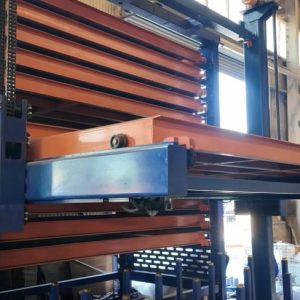
Every drawer extends 100 percent of its travel. This is not a convenience feature; it is the mechanism that makes customizable storage practical. A drawer that extends only partially forces operators to reach in, slide sheets forward, and lift them out laterally—exactly the manual handling that causes injuries and surface damage. Full extension exposes the entire drawer platform to open vertical access, allowing direct hoisting with a suction cup, magnetic lifter, or crane hook.
The full pull-out structure means one person can access every sheet without stacking or turning over goods. No second operator is needed to stabilize the load or guide the crane.

Space Efficiency and Layout Flexibility
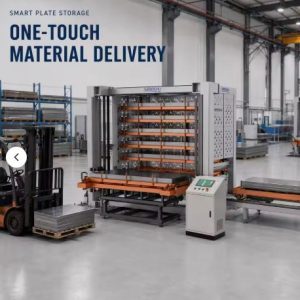
Vertical layered storage dramatically reduces aisle occupation. By stacking drawers vertically rather than spreading sheets across the floor, a pull-out rack improves warehouse storage density by 30 to 70 percent compared to traditional floor storage or cantilever systems. The freed floor area can house additional equipment, work-in-progress buffers, or expanded production capacity.
For shops with irregular floor plans or columns, Herochu designs rack configurations that fit around obstructions. Optional casters enable mobile configurations for shops that need to reconfigure their layout periodically.
Material Preservation and Organization
Each sheet rests flat on its own drawer tray. There is no friction contact with other sheets, no point loading from stacked weight, and no risk of surface scratching from dragging. For shops storing stainless steel, aluminum, or pre-finished material, this protection preserves the surface quality that downstream processes—laser cutting, painting, anodizing—depend on.
Label slots on each drawer front allow instant identification by material type, thickness, or specification. Multi-layer separation enables classified storage: drawer 1 for 3 mm aluminum, drawer 2 for 5 mm stainless, drawer 3 for mild steel blanks, and so on. This organization reduces picking time and eliminates the search through mixed piles.

Surface Treatment and Durability
Herochu applies a multi-stage surface treatment to protect the rack in workshop conditions. Options include powder coating in customized RAL colors or hot-dip galvanizing for superior corrosion resistance. The coating resists scratching, acid exposure, and alkali exposure—all routine in metalworking facilities. For shops storing dissimilar metals, the coating prevents galvanic corrosion that can occur when materials contact bare steel.
A System Built Around the Operator
The hand crank mechanism provides tactile feedback that motorized drives cannot replicate. If a plate is misaligned, if debris has entered the slide path, or if the load is unevenly distributed, the operator feels the resistance change through the handle immediately. This feedback makes the manual system not just simpler but, in many operational scenarios, safer.
Safety features include automatic locking pins that hold the drawer rigid when extended, anti-tip mechanisms, and drawer limiters that prevent over-extension. The rack must be anchored to a concrete floor with sufficient compressive strength to resist tipping forces.

Customization Process
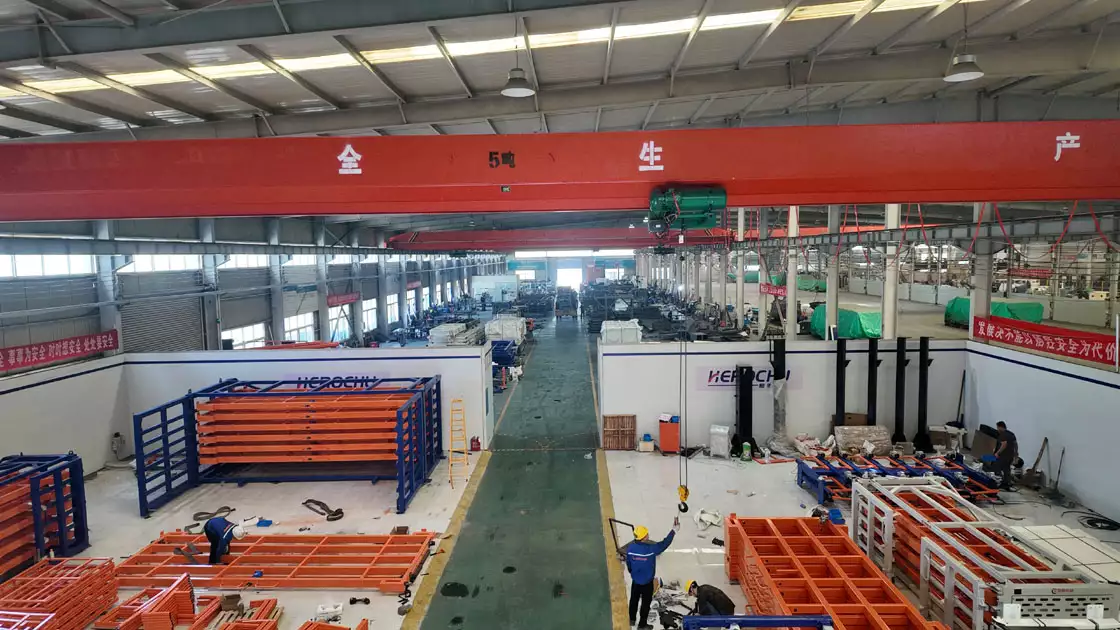
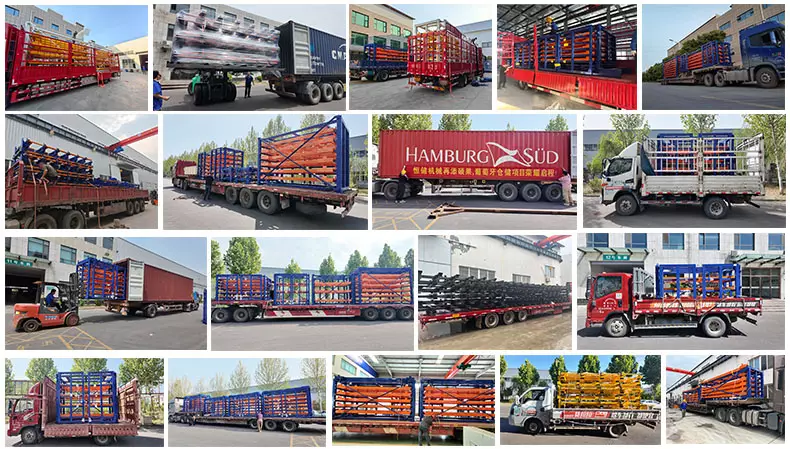
Herochu does not sell off-the-shelf racks. The process begins with understanding the shop’s material types, sheet dimensions, weight per tier, storage volume, and floor layout. The design team creates a layout drawing and 3D rendering so the customer can visualize the installation before manufacturing begins. Finish options, color choices, and accessories are selected. The self-operated factory handles manufacturing and delivery.
A pull-out sheet metal rack with customizable drawers is not a commodity purchase. It is a storage infrastructure investment designed around a specific operation. When the fit is right, the rack becomes invisible—operators simply use it, and the workflow runs smoother because of it.