
Multi-Tower Sheet Metal Storage System 6000x2500mm Automated
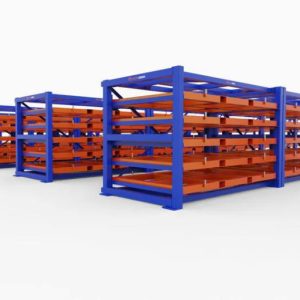
Fabricators handling large-format steel plates — 6000×2000 mm, 6000×2500 mm, and similar oversized formats — face a storage geometry problem that smaller plates do not create. A single 6000×2500 mm plate at 40 mm thickness weighs over 4700 kg. Storing these plates horizontally requires floor area that most workshops cannot spare, and stacking them on top of each other risks surface damage, makes retrieval difficult, and prevents access to specific plates without moving the ones on top.The Herochu Multi-Tower Sheet Metal Storage System 6000x2500mm Automated solves this problem through vertical multi-tower architecture. Instead of a single vertical column of trays, the system uses a double-tower — or multi-tower — configuration that multiplies storage capacity within the same floor footprint.
Multi-Tower Sheet Metal Storage System 6000x2500mm Automated
Fabricators handling large-format steel plates — 6000×2000 mm, 6000×2500 mm, and similar oversized formats — face a storage geometry problem that smaller plates do not create. A single 6000×2500 mm plate at 40 mm thickness weighs over 4700 kg. Storing these plates horizontally requires floor area that most workshops cannot spare, and stacking them on top of each other risks surface damage, makes retrieval difficult, and prevents access to specific plates without moving the ones on top.
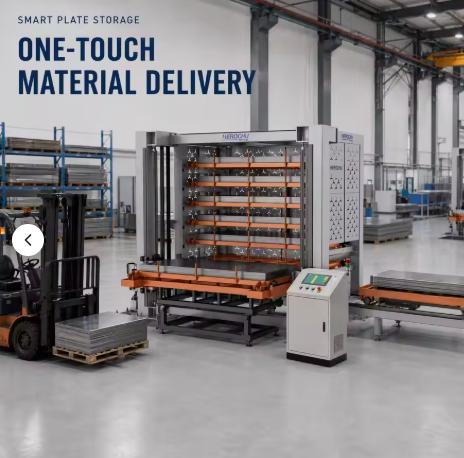
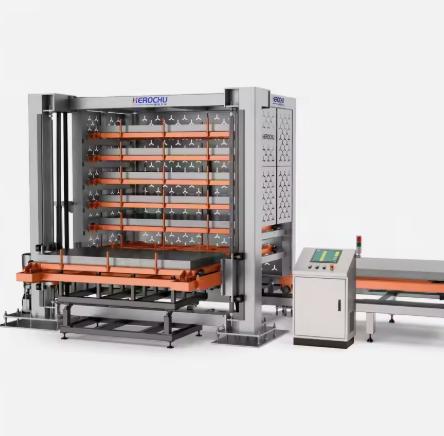
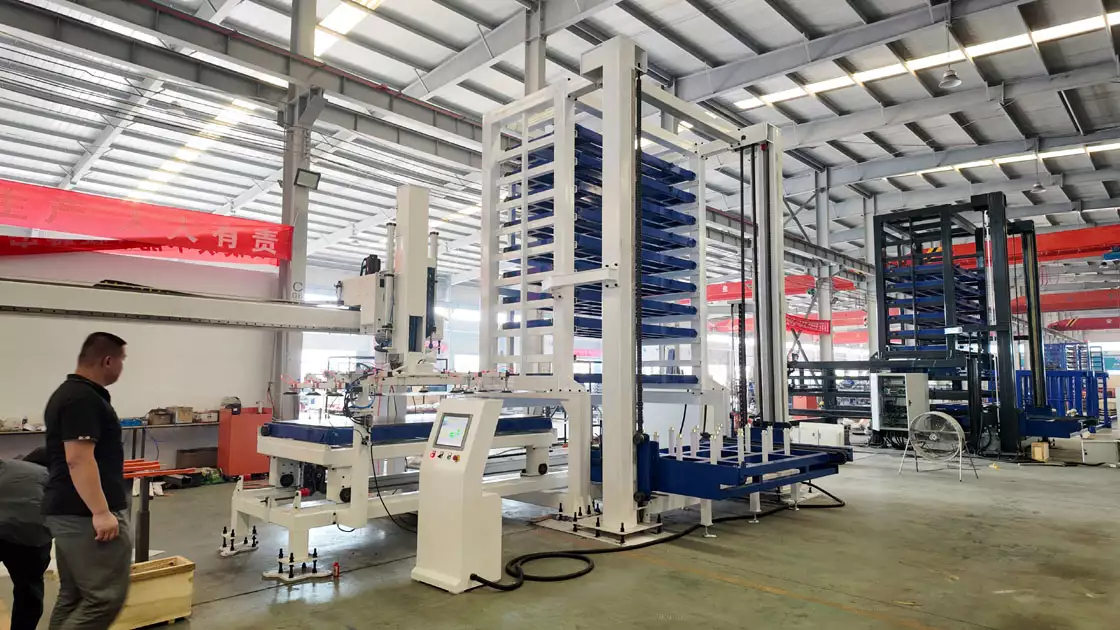
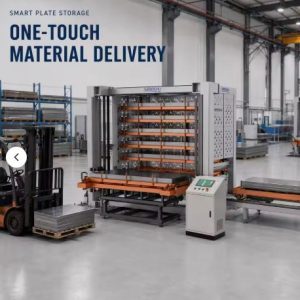
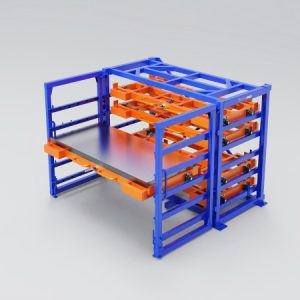
The Herochu Multi-Tower Sheet Metal Storage System 6000x2500mm Automated solves this problem through vertical multi-tower architecture. Instead of a single vertical column of trays, the system uses a double-tower — or multi-tower — configuration that multiplies storage capacity within the same floor footprint. Each tower operates as an independent storage column with its own tray set, but the towers share a common access station, PLC controller, and WMS inventory database. This shared infrastructure means adding a second tower does not require a second operator station, a second control system, or a second inventory database.
The capacity boost is immediate and measurable. A single HC-S6020-105 tower with ten levels at 6000×2000 mm tray dimensions stores ten large-format plates. A double-tower configuration stores twenty — double the inventory in a footprint that extends only one additional tower-width along the access axis. For a fabrication shop processing a mix of plate sizes, the multi-tower system can be configured with different tray dimensions per tower: one tower sized for 6000×2500 mm plates, a second for 4000×2000 mm sheets, providing material-specific storage columns within a unified system.
Engineering the Multi-Tower Configuration
The Herochu multi-tower design is not simply two single towers placed side by side. The structural framework, drive system, and control architecture are engineered for multi-tower operation from the initial design phase. The shared base frame distributes loads from all towers through a common foundation, ensuring structural stability and vibration isolation across the full system.
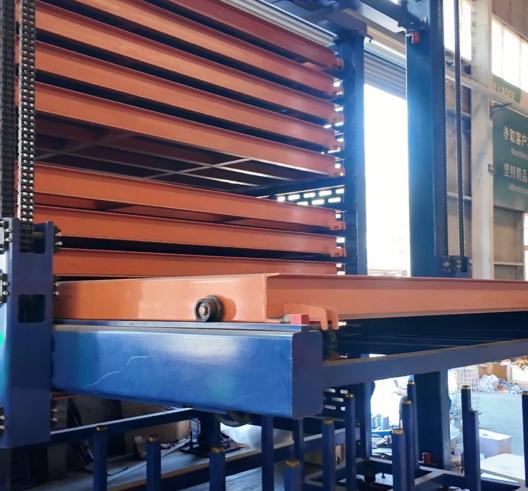
Each tower maintains its own lifting mechanism — a gear-and-rack drive system with guided rails — but the towers are synchronized through the Siemens S7 PLC controller. When an operator requests a plate from Tower 2 while Tower 1 is delivering a different tray, the system queues the operations and executes them in sequence without collision risk. The PLC manages tray positioning across all towers, maintaining the ±2 mm repeat positioning accuracy specification across every tower in the configuration.
The transfer speed of 5–15 m/min applies to tray movement within each tower. The access station — the point where trays are presented for loading and unloading — handles one tray at a time, cycling between towers as retrieval commands are executed. The cycle time between consecutive tray deliveries is determined by the vertical travel distance and the transfer mechanism engagement time, with the system sustaining continuous throughput across multi-shift operation.
Handling 6000×2500 mm Plates: Structural and Handling Considerations
Plates at 6000×2500 mm represent the upper end of what fabrication shops process. These dimensions exceed the bed size of many cutting machines, requiring plates to be cut to size before processing or stored in a format that allows edge access for measurement and inspection. The Herochu tower accommodates these dimensions through tray engineering matched to the plate size.
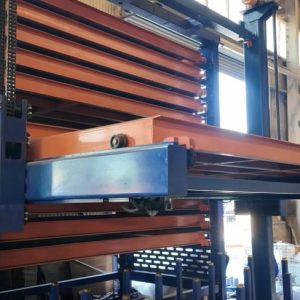
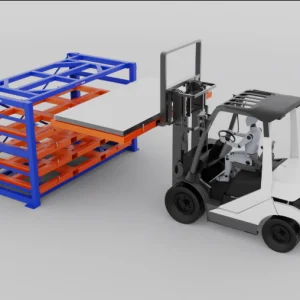
Trays for 6000×2500 mm plates are fabricated from structural steel with support members spaced to prevent plate deflection under the 5000 kg maximum per-level load. The tray engagement interface — where the extractor arm engages the tray for transfer — is reinforced to handle the dynamic loads generated when moving a fully loaded tray at transfer speed. The 350 mm clear space between trays, customizable for the plate thickness range being stored, provides the physical clearance needed for the extractor arm to enter, engage, and withdraw the tray without contacting adjacent plates.
The isolated tray storage that defines the Herochu system provides particular value at this plate size. A 6000×2500 mm plate stored in a horizontal stack is the bottom plate — the one most difficult to reach, the one that requires moving every plate above it, and the one most likely to sustain surface damage from the weight of the plates resting on it. In the vertical tower, that same plate sits in its own tray, accessible through a single retrieval command, with no other plate in contact with its surfaces. For shops handling stainless steel plates or plates with pre-applied surface treatments, this isolation is not a convenience — it is a material quality requirement.
Customization: Matching Tower Configuration to Workshop Reality
The Herochu multi-tower system is built to order, configured to match the specific plate portfolio and floor layout of each fabrication shop. The customization parameters define the system’s physical and operational characteristics:
Number of towers: Single, double, or multi-tower configurations, with each tower sized independently for the plate dimensions it will store. A shop handling both structural plates and smaller gauge sheets can configure towers with different tray dimensions and load ratings.
Number of layers: Six layers as the base configuration, extendable to eight or ten layers based on ceiling height and storage volume requirements. The layer count directly determines the system’s total plate capacity per tower.
Tray dimensions: Matched to the largest plate the shop processes, with standard configurations at 3000×1500, 4000×1500, 4000×2000, and 6000×2000 mm. Custom tray dimensions for non-standard plate sizes are available.
Load capacity per level: 3000 kg for the HC-S3015-63 model; 5000 kg for the HC-S4015-85, HC-S4020-85, and HC-S6020-105 models. The load rating is sized to the heaviest plate the shop stores.
Clear space between trays: 350 mm standard, adjustable to match the plate thickness range. Shops storing thick plates in the 30–50 mm range may specify greater clearance; shops storing thin gauge sheets can reduce clearance to increase layer count within the same tower height.
This configuration flexibility means the multi-tower system is not a fixed product — it is an engineered solution tailored to each shop’s material list, ceiling height, floor area, and production volume. The Herochu engineering team works from the shop’s plate inventory data to specify tower count, layer count, and tray dimensions that match operational requirements.
Space Efficiency and Workshop Organization
The floor space economics of the Herochu multi-tower system favor vertical storage decisively. Consider a shop storing forty 6000×2500 mm plates. Horizontally stacked with fork access lanes between stacks, this inventory occupies roughly 120 square meters of floor area — space unavailable for processing equipment, material handling routes, or assembly zones.
The same forty plates in a double-tower HC-S6020-105 configuration with ten layers per tower occupy approximately 20 square meters of floor footprint. The 100 square meters recovered by vertical storage accommodates a cutting machine, an assembly cell, or a welding station — productive equipment that generates revenue rather than consuming floor space for passive storage.
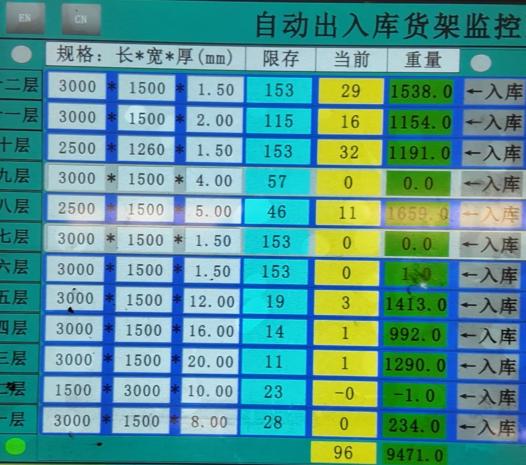
Beyond raw area savings, the multi-tower system improves workshop organization. Scattered horizontal plate stacks create tripping hazards, obstruct sight lines, and complicate forklift routing. The Herochu tower concentrates all plate storage into a defined footprint, improving workshop tidiness and safety. The PLC touchscreen inventory display eliminates the need to physically walk to the storage area to check material availability — the data is on the screen, in the WMS, and in the ERP system.
WMS Intelligence Across Multiple Towers
The WMS warehouse management system in a Herochu multi-tower configuration manages all towers as a unified inventory database. Material stored in any tower is visible on the PLC touchscreen at the access station. The classification logic assigns plates to towers based on the storage rules defined by the operator — by size, thickness, grade, or type — ensuring that when a specific material is needed, the system knows which tower holds it and which tray position within that tower.
Real-time inventory display shows material dimensions, weight, and quantity across the full multi-tower system. The built-in weighing function on each tray provides independent weight verification of stored material. ERP integration extends this visibility to purchasing, production planning, and plant management — the entire material inventory across all towers is queryable on demand from the ERP system, enabling instant stocktaking and data-driven material purchasing decisions.
The Multi-Tower Sheet Metal Storage System 6000x2500mm Automated from Herochu doubles storage capacity, accommodates the largest fabrication plate formats, and consolidates inventory management through a unified WMS and ERP architecture. By engineering multiple towers into a shared structural and control framework, it delivers the capacity of expanded horizontal storage within the footprint of a single vertical system.
FAQ
Here are some frequently asked questions about our sheet metal racks and pipe storage solutions. We hope you find them helpful!
Q1: Can I request a custom size or color?
Absolutely. We offer complimentary design services and deliver efficient, tailored solutions to meet your specific requirements.
Q2: Are you a manufacturer or a distributor?
We are a direct manufacturer with over 15 years of industry experience and expertise.
Q3: Is there a minimum order quantity?
No. We welcome orders of any size, starting from a single unit.
Q4: How can I get detailed product information?
Click the “Get a Quote” button to receive product images, detailed specifications, and videos. Our team is always ready to assist.
Q5: How do I provide my storage rack requirements?
Simply share the type, dimensions, and quantity of materials you plan to store, along with any other specific needs. We will develop a professional storage solution for you. Alternatively, leave your contact details for a personalized consultation.
Q6: Do you offer automated loading systems or robotic arms?
Yes. We provide loading robotic arms and integrated loading/unloading systems tailored to your laser cutting machine’s table size and material handling method (e.g., board rack, exchange platform, or material warehouse). Contact us with your details for a customized proposal.
Q7: Do you provide on-site installation and debugging?
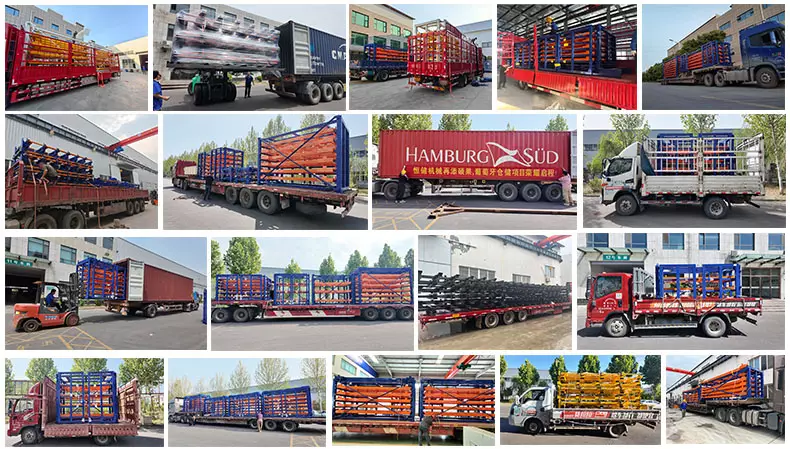
Yes. Our technicians can travel to your facility for installation and debugging, ensuring successful operation. We have served clients globally, including in the USA, South Korea, Russia, Qatar, Mexico, South Africa, Egypt, and Lebanon.
Q8: How do you ensure product quality?
Our quality assurance includes:
A team of over 40 technical engineers for professional debugging and support.
A dedicated quality control department compliant with ISO9001 standards.
CE certification for all exports.
Rigorous load testing before shipment to ensure structural safety and reliability.
Q9: Where is your factory located?
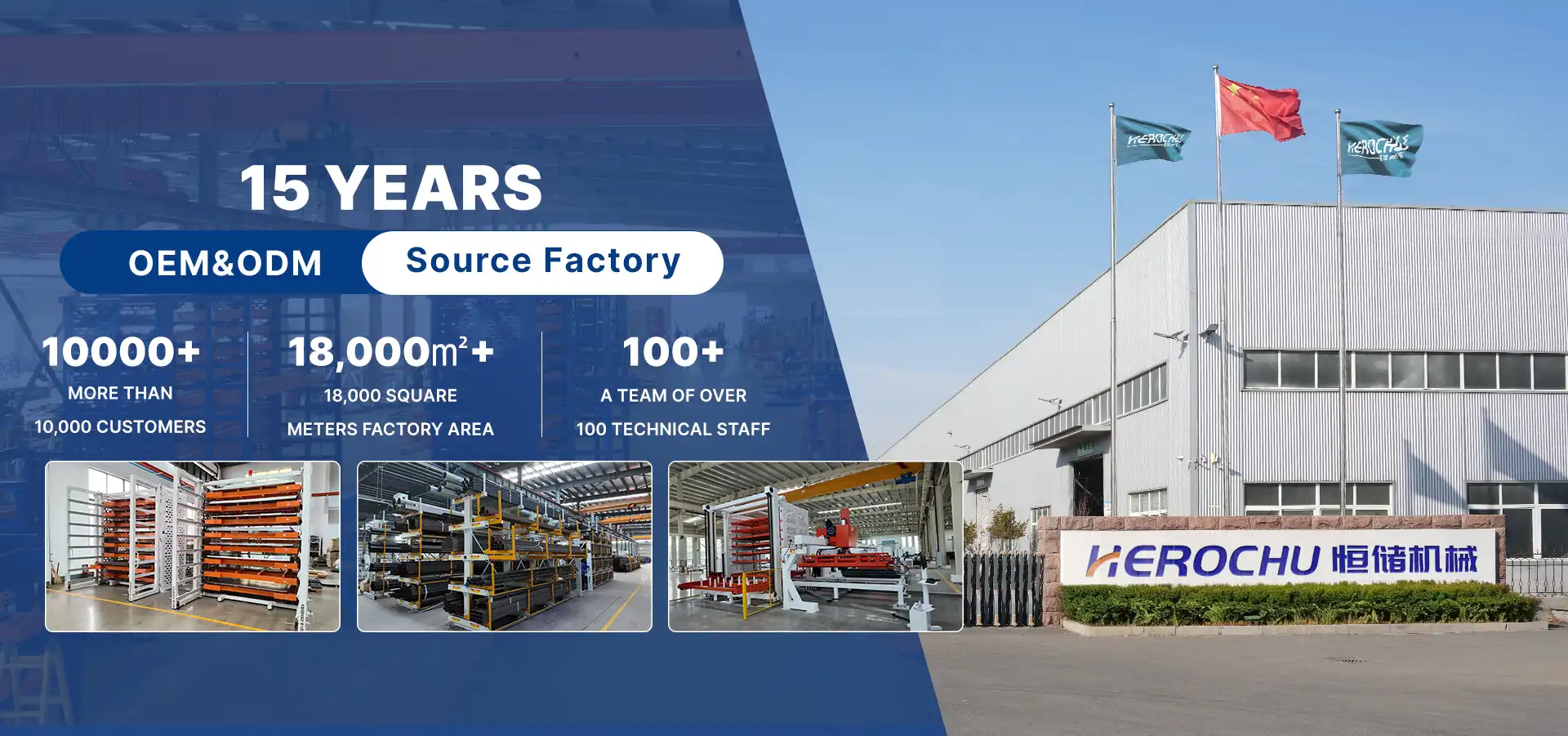
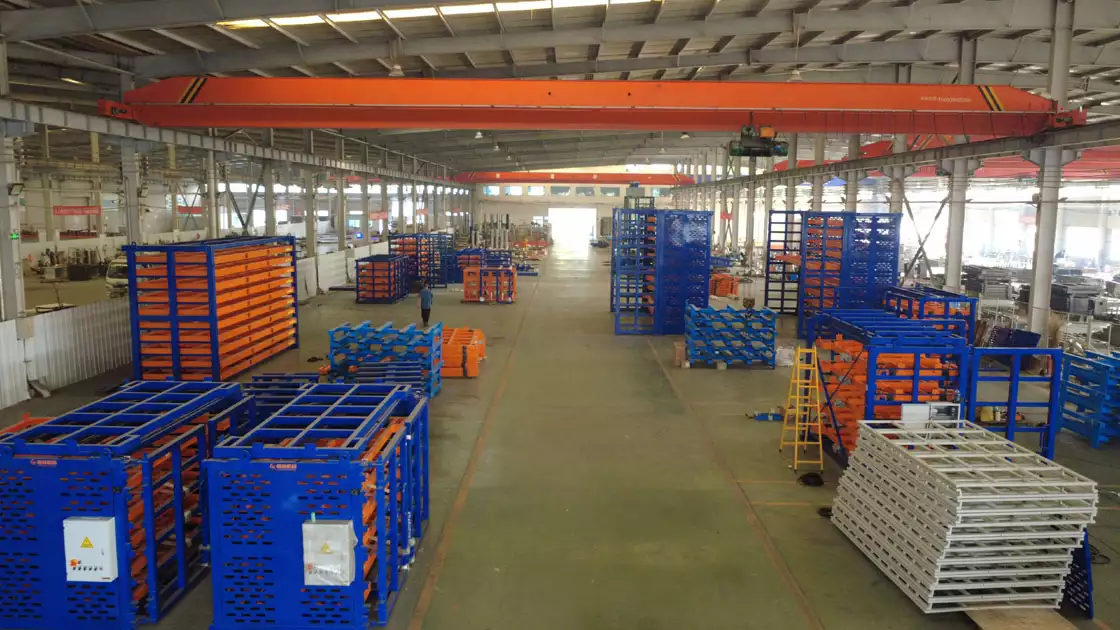
Our modern 10,000-square-meter manufacturing facility is located in Jiyang Industrial Park, Jinan, Shandong, China.
Q10: How can I evaluate your company’s capabilities?
We offer virtual video factory tours and warmly welcome on-site visits.
Q11: What does your company specialize in?
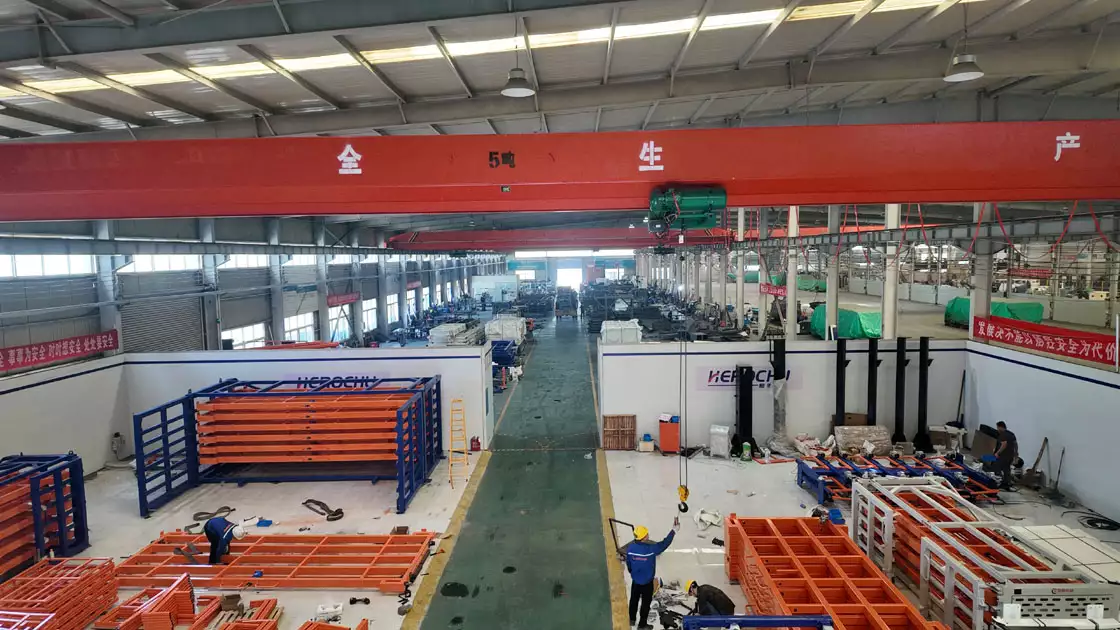
Jinan Constant Storage Machinery Manufacturing Co., Ltd. is a high-tech enterprise specializing in the R&D, production, sales, installation, and service of intelligent storage solutions. Our product range includes sheet material warehouses, drawer-style shelves, cantilever racks, servo manipulators, gantry loaders, and fully automated handling systems. Supported by a skilled technical team and advanced equipment, we are committed to delivering high-performance storage products and solutions to customers worldwide.
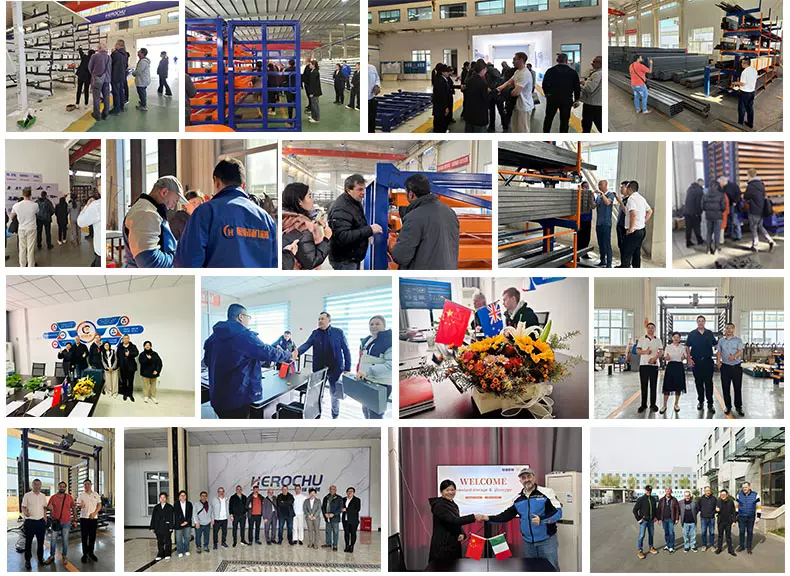
Customer visit
Herochu has always been adhering to the market-centric approach to meet customer requirements to the maximum extent, and the business philosophy of “creating brands with heart and gaining reputation with sincerity”. It provides customers with high-quality products and services with rigorous military quality, professionalism, and excellence, and has won unanimous praise in the Chinese aerospace, Chinese weapons, Chinese railways, automobile manufacturing, engineering machinery, non-ferrous metal titanium alloy and other industries.
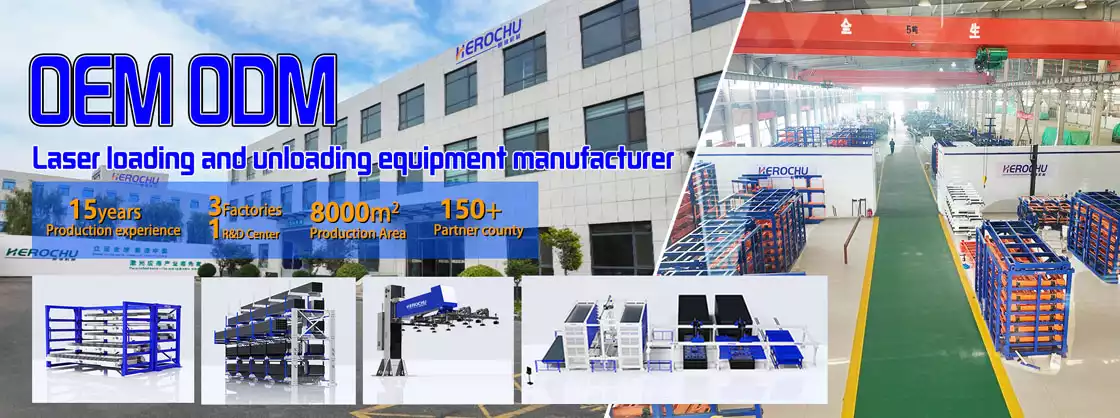
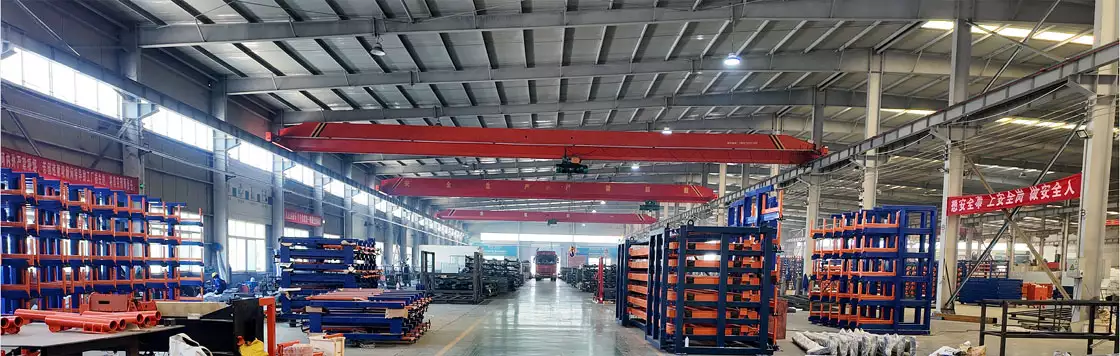
Factory

Hot Selling Machines
-
Automatic Sheet Metal Storage System
Heavy Duty Vertical Steel Plate Storage Tower 5000kg ASRS
Read moreRated 0 out of 5 -
Multi-tower intelligent board material warehouse
Multi-Tower Sheet Metal Storage System 6000x2500mm Automated
Read moreRated 0 out of 5 -
Automatic Sheet Metal Storage System
Automated Steel Plate Warehouse Vertical ASRS for Fabrication
Read moreRated 0 out of 5 -
Automation Sheet Metal Material Warehouse
Smart ASRS Sheet Metal Storage System 5000kg Vertical Tower
Read moreRated 0 out of 5 -
Automated Pipe Storage Systems
Intelligent Gantry Pipe Storage ASRS for Manufacturing
Read moreRated 0 out of 5 -
Automatic Profile Material Library
Top-Mounted Profile Vertical Storage ASRS System
Read moreRated 0 out of 5 -
Gantry-Type Material Library
Gantry-Type Pipe ASRS Warehouse Storage System: High-Density Automated Storage for Industrial Long Materials
Read moreRated 0 out of 5 -
Automated Pipe Material Storage Warehouse
Automatic Pipe Racking ASRS for Smart Warehousing
Read moreRated 0 out of 5
Related products
-
Heavy duty sheet metal storage racks
Sheet metal Storage Solutions Heavy duty Plate Metal Storage Rack Roll Out Drawer Racks
Read moreRated 0 out of 5
Product Categories