Laser cutting shops generate offcuts by the ton. Every nest that comes off the table leaves behind corners, strips, and partial sheets that are too large to scrap but too disorganized to find when the next job calls for a matching piece. The default response in most shops is to lean remnants against a wall, stack them on a pallet, or toss them into a bin — all of which guarantee that nobody will bother looking through the pile when a remnant-sized order lands on the schedule. The result is new full sheets consumed for remnant-sized parts, while perfectly usable offcuts rust in a corner.
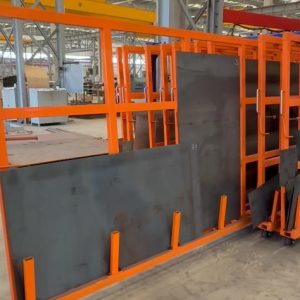
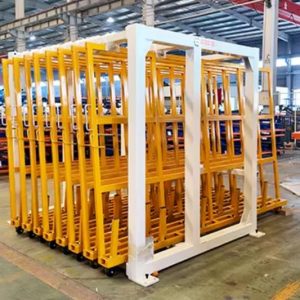
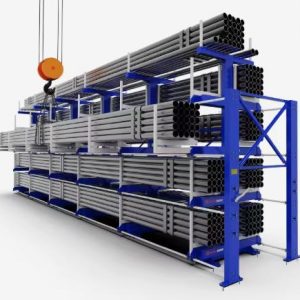
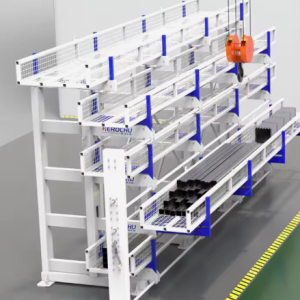
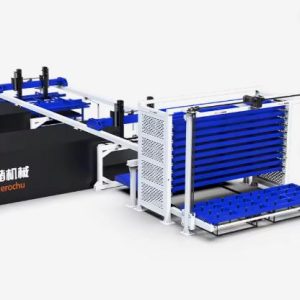
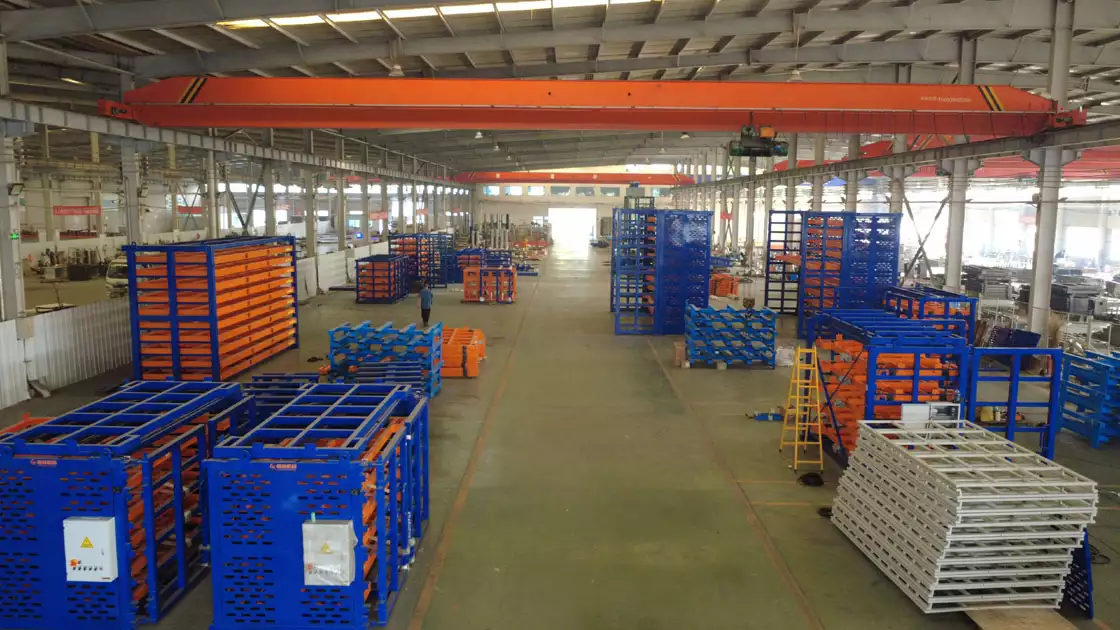
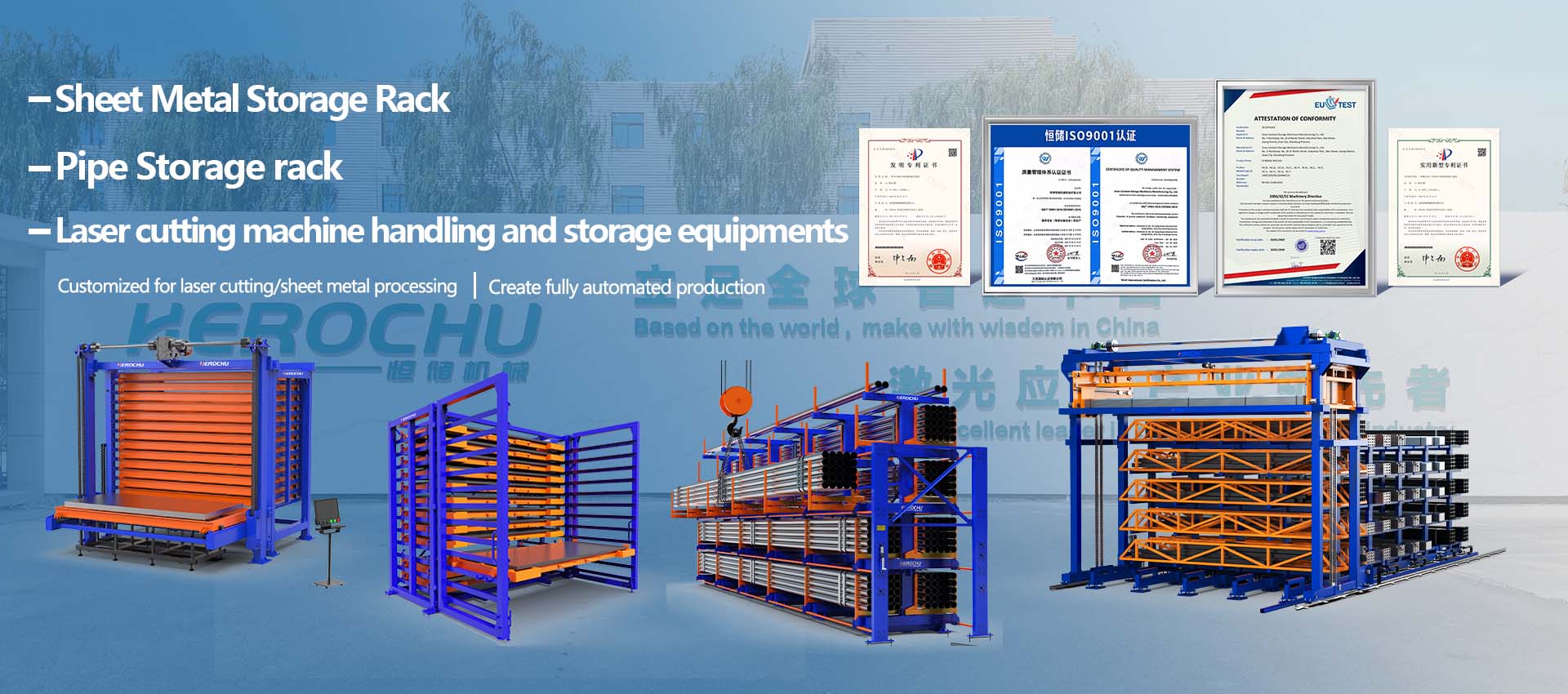
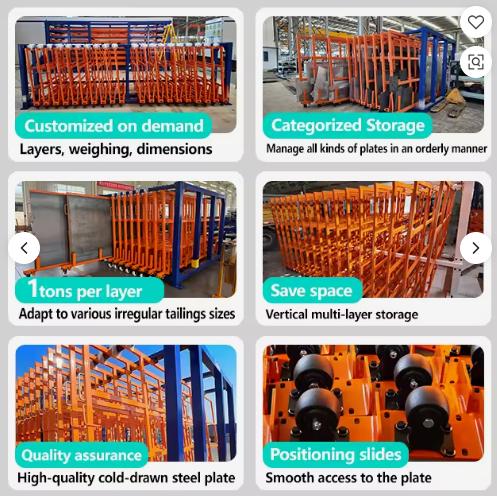
Herochu addresses this industrial waste cycle with a vertical pull-out sheet metal scrap rack purpose-built for laser cutting remnants. Each drawer pulls out independently to 100 percent extension, giving an operator full surface visibility before deciding whether the piece fits the next nesting layout.
Why Remnants Stay Unused in Traditional Shops
The problem is not that operators are unwilling to reuse offcuts. The problem is access friction. A stack of 30 mixed-size remnants leaning against a workshop column requires several minutes of digging to find whether any piece in the pile matches a given cut list. If the digging takes longer than the cost of pulling a new sheet from inventory, the new sheet wins every time.
Herochu vertical racks remove that friction. Each drawer holds one layer of remnants — flat, visible, and accessible without touching any other piece. The operator walks to the rack, pulls out drawer four, scans the surface in seconds, and either retrieves the piece or slides it shut and checks the next tier. The time cost of checking falls from minutes to seconds, and the economic incentive flips: reusing an offcut now costs less labor than opening a new full sheet.
Vertical Structure and Floor Savings
Most fabrication shops operate inside buildings where floor area costs more per square foot than any single piece of shop equipment. Flatbed stacking of sheet remnants — a common arrangement where plates lie horizontally on pallets or dunnage — consumes enormous floor area relative to the usable material it stores. A stack of ten sheets measuring 2,500 by 1,250 millimeters occupies roughly 3.1 square meters of floor, and reaching the bottom sheet requires moving the nine above it.
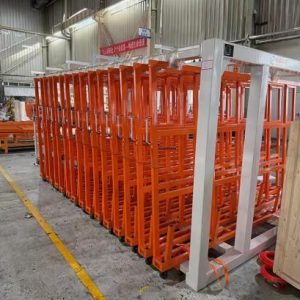
Herochu’s vertical pull-out configuration stacks those same ten sheets in a footprint measuring approximately 2.8 by 1.2 meters — but the sheets sit in individual drawers stacked vertically rather than piled on top of each other. The floor footprint reduction approaches 50 percent compared to equivalent horizontal storage. For shops paying industrial lease rates, reclaiming that square footage for a production cell or additional racking often covers the equipment cost within the first year of operation.
The standard product line includes two primary frame sizes. The HC-V2513-8 accommodates sheets up to 2,500 by 1,000 millimeters across 8 configurable tiers. The HC-V3015-8 scales to 3,000 by 1,500 millimeter stock — the format common in mid-sized fiber laser tables — also with 8 tiers and a 1,000 kg per-layer load rating. Both models support mechanical-assisted material discharge, and tier counts can be specified upward during order configuration to match the shop’s maximum remnant volume.
Drawer Mechanics and Load Integrity
Each pull-out drawer in a Herochu scrap rack rides on hardened steel ball bearings rated for 100,000 cycles under full load. The 100 percent extension travel means the entire drawer surface clears the frame, eliminating blind spots where small remnants could hide at the rear of a partially extended shelf. This full-exposure design is critical for scrap management because operators need to see the complete remnant shape — not just the leading edge — to judge whether it fits the next nesting layout.
The frame itself is fabricated from structural carbon steel with a powder-coated finish that stands up to the metal dust, cutting fluid aerosol, and occasional coolant spray common in laser cutting environments. Clear vertical spacing between drawers adjusts from 50 to 200 millimeters at the specification stage, allowing shops to match the gap to their typical remnant thickness and prevent material from binding against the drawer above during extension.
For operations running multiple laser tables in a single shift, the mechanical-assisted discharge on each drawer means operators can pull out a loaded tier without powered assistance — even when the drawer holds a full 1,000 kg of nested remnants. The manual pull force stays manageable through the bearing and rail geometry, and the drawer locks in the extended position until deliberately released, preventing accidental retraction during loading or retrieval.
Scrap Becomes Inventory
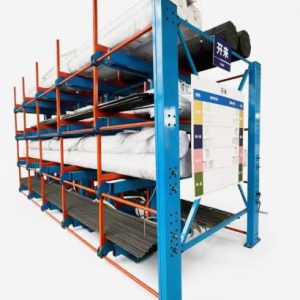
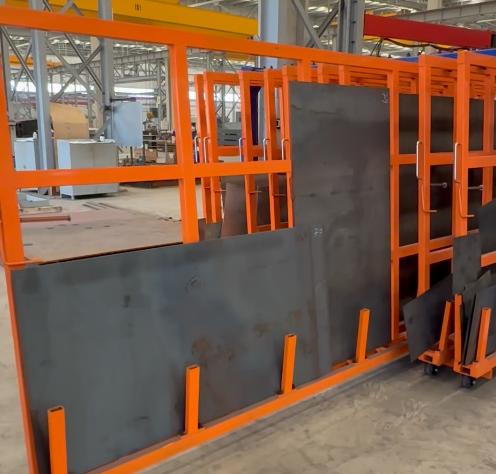
The operational shift from treating offcuts as scrap to treating them as inventory requires a system that makes finding and picking remnants as fast as pulling from primary stock. Herochu achieves this with layered assignment: each drawer in the rack is designated for a specific material type, thickness range, or color code. A simple tag on each drawer face tells the operator what lives inside — 2 mm cold-rolled, 3 mm hot-rolled, 1.5 mm stainless 304, and so on.
When a new job order hits the scheduling board, the nesting operator checks whether any remnant drawer with matching material holds a piece large enough to nest the required parts. The full-extension drawer design makes this check visual and instant. If the piece fits, it goes onto the laser table instead of a fresh full sheet. Over weeks and months, the material savings compound: shops that convert from flatbed stacking to Herochu vertical pull-out racks routinely report a 15 to 25 percent reduction in new sheet purchases because remnants actually get consumed instead of accumulating until they go to the recycler.
Placement Next to Laser Cutting Cells
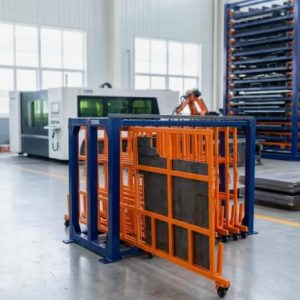
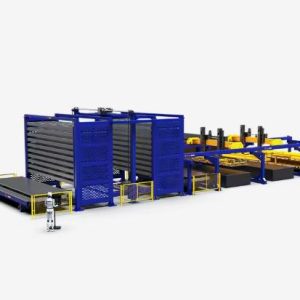
Installing a remnant rack within arm’s reach of the laser cutting station creates a closed-loop workflow that minimizes forklift traffic. The operator unloads cut parts from the laser table, removes the skeleton, and immediately sorts usable offcuts into the appropriate rack drawer. On the next job setup, the same operator pulls from the rack before walking to the raw material storage area. This physical proximity — rack positioned adjacent to the cutting cell — is what turns the rack from a passive storage unit into an active workflow tool.
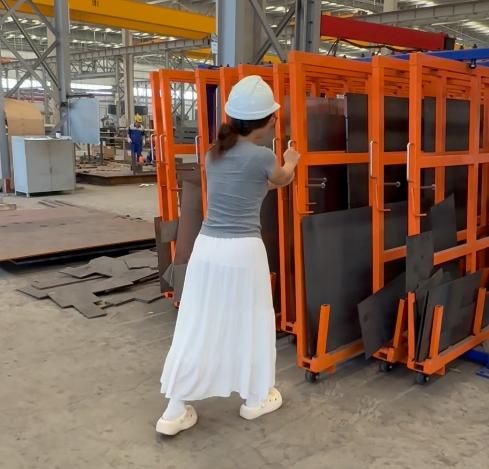
For shops where laser tables change configuration or floor layout shifts with production volume, Herochu offers models equipped with heavy-duty mobility wheels. These wheeled racks move between cutting cells without requiring a forklift or crane for repositioning, supporting lean manufacturing layouts that evolve with order mix and machine utilization.
Safety and Compliance
Sheet metal remnants present unique safety hazards in a workshop: sharp edges, unpredictable weight distribution, and the tendency of stacked sheets to slide when disturbed. Herochu vertical racks contain these hazards within individual sealed drawers. A sheet leaning inside a drawer cannot fall on an operator. A drawer loaded to its 1,000 kg rating stays mechanically locked in position whether extended or retracted. The frame meets CE and ISO 9001 certification requirements, and the structural design passes load testing at 125 percent of rated capacity before leaving the factory.
For shops pursuing ISO 14001 environmental management certification or similar sustainability credentials, the documented material savings from remnant reuse provide quantifiable data points that support waste reduction targets. The rack itself becomes part of the audit trail: tagged drawers, visible material organization, and measurable reduction in new sheet consumption.