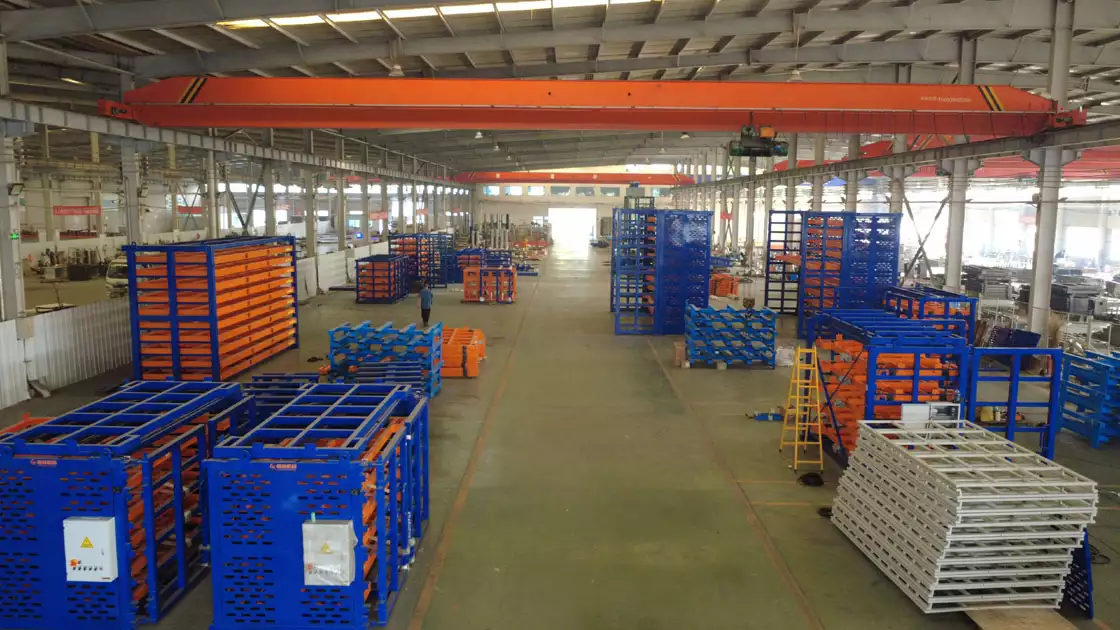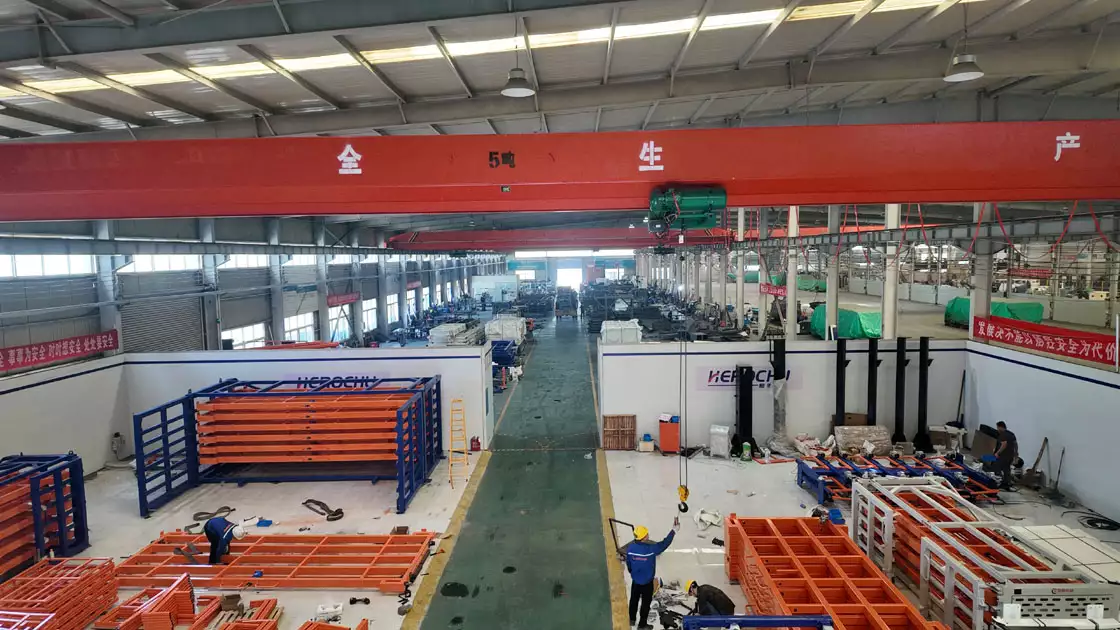
The 6000×2500mm plate is a specific beast. It is large enough that two workers cannot safely handle it without mechanical assistance. It is heavy enough that a single plate can exceed the rated capacity of many standard forklifts. And it is common enough in shipbuilding, structural steel fabrication, and heavy equipment manufacturing that any storage system serving those industries must handle it as a first-class material, not as a special case.
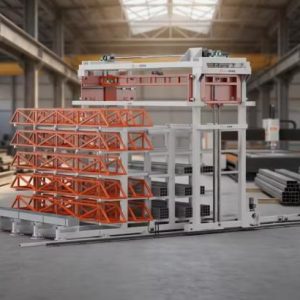
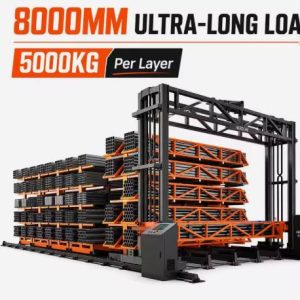
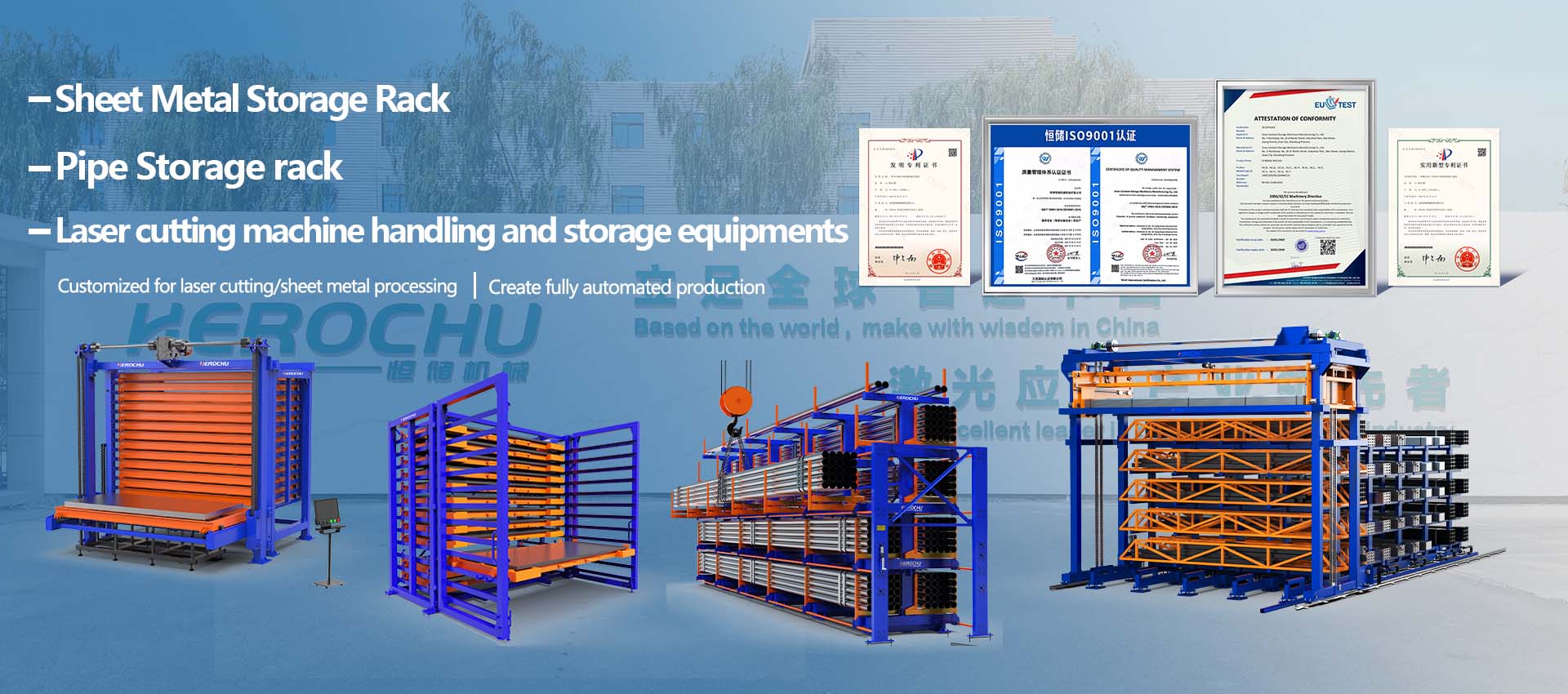
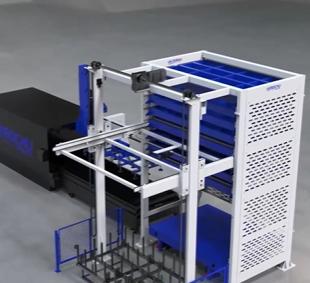
Herochu’s Sheet Metal Storage System for 6000×2500mm sheets is built around this requirement. The system accommodates plate dimensions up to 6,000 millimeters in length and 2,500 millimeters in width, with per-layer load ratings reaching 5,000 kilograms. These are not theoretical maximums that require derating in practice. The structural frame, the lift mechanism, and the tray carriers are all specified to these figures as working loads.
The Geometry of Large-Format Storage
Storing a 6-meter plate horizontally on a cantilever rack consumes approximately 15 square meters of floor space per plate if adequate clearance is maintained for forklift access. A fabrication shop holding 40 such plates in floor storage is dedicating 600 square meters — nearly 6,500 square feet — to raw material that is not being processed.
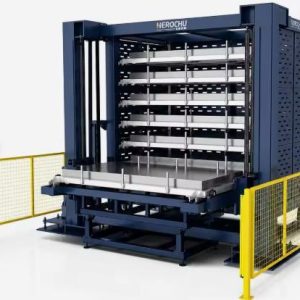
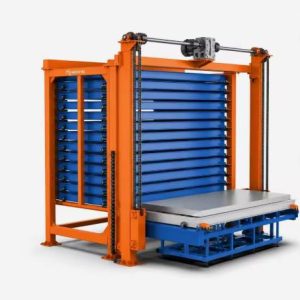
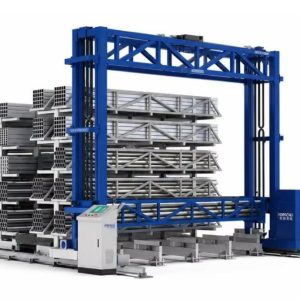
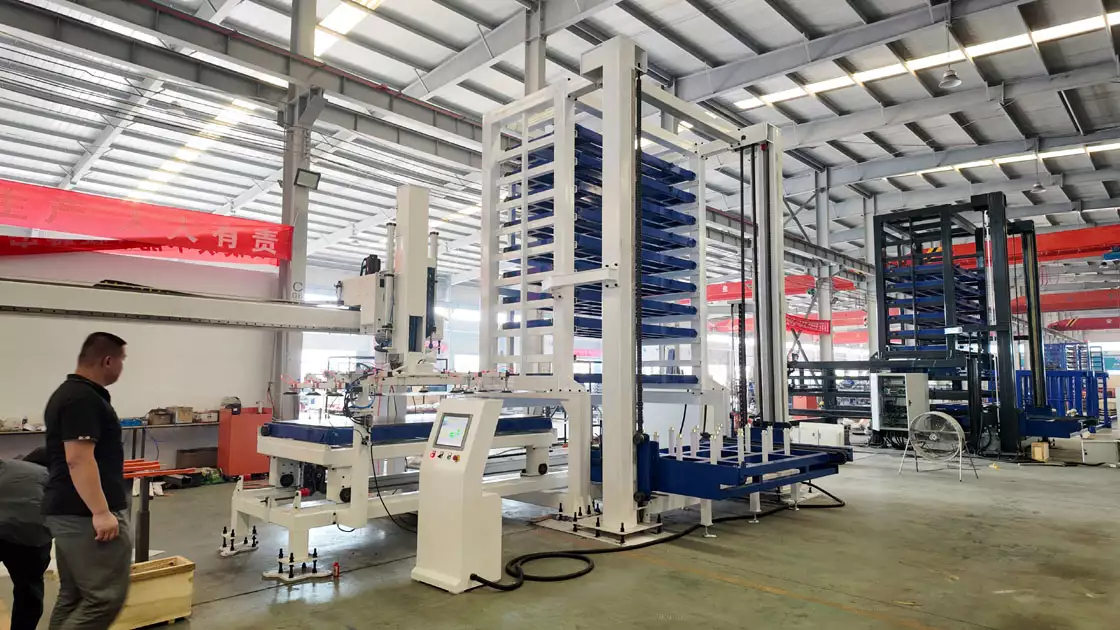
The vertical alternative stacks those plates in trays that move within a tower footprint. A single ten-layer tower storing 6,000×2,000mm plates occupies a ground area of roughly 18 to 22 square meters, depending on configuration. The same 40 plates fit within that footprint with room for additional stock. The floor space saved is not a marginal improvement; it is the difference between a workshop that can add a second laser cutter and one that cannot.
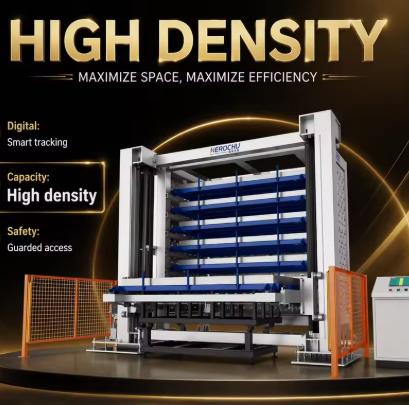
Herochu’s largest standard configuration, the HC-S6020-105, accommodates 6,000×2,000mm sheets across ten layers at 5,000 kg per layer. The 2,500mm width capacity extends the platform to handle the full range of oversized plate sizes encountered in heavy fabrication.
Tray Design and Surface Protection
Large plates are expensive, and surface damage is not merely cosmetic. A scratched plate may require rework, may fail inspection, and in the case of stainless or aluminum stock, may be rejected outright by the customer.
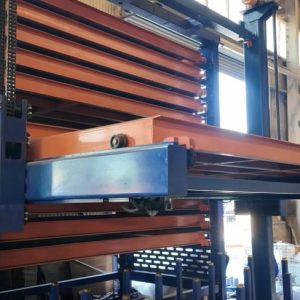
Herochu addresses this with individual tray carriers for every plate. Each tray is a dedicated platform that holds one sheet, keeping it separated from adjacent plates and protected from the abrasion that occurs when plates slide against one another during forklift handling. The tray surface is engineered to distribute load evenly and to prevent point-contact deformation — a particular concern with thinner gauge plates stored under their own weight.
The trays also serve an inventory function. Each tray position is a unique address within the system’s database. When an operator requests a specific plate — by dimensions, by material grade, or by the work order that requires it — the system retrieves that exact tray. There is no ambiguity about which plate among several similar-looking sheets is the correct one.
Lift Mechanism Precision
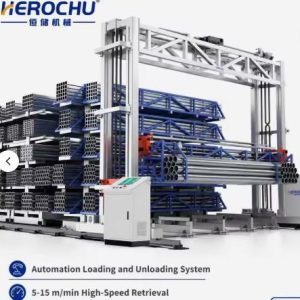
Moving a 5,000-kilogram tray from the tenth level of a tower to the access opening requires a lift system that combines load capacity with positional accuracy. Herochu specifies a repeat positioning accuracy of ±2 millimeters and a transfer speed range of 5 to 15 meters per minute. The precision matters because the tray must align with the access opening and with any downstream conveyor or loading mechanism. A tray that stops 10 millimeters short of the transfer position will not release its plate cleanly.
The ±2mm repeatability is maintained across the full load range, from an empty tray to one carrying a full 5,000 kg plate. The lift system does not require recalibration between light and heavy loads, which means retrieval cycle times remain consistent throughout the production day.
Forklift and Crane Compatibility
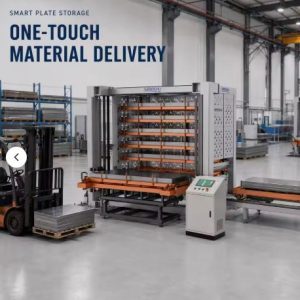
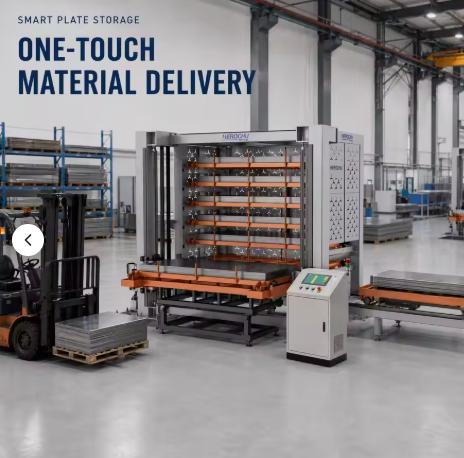
The access opening of the tower is designed to interface with the lifting equipment that already exists in the workshop. Forklift tines can enter the opening to deposit or retrieve plates directly from the presented tray. Overhead cranes with magnetic or vacuum lifters can also be used. The integrated loading and unloading conveyor, fitted with adjustable legs and leveling feet, allows the system to be positioned at the correct working height for the facility’s existing material flow.
This compatibility is deliberate. Herochu does not require the customer to purchase a proprietary loading mechanism or to modify the factory’s lifting equipment. The tower adapts to the workshop, not the other way around.
Control and Data
The PLC touchscreen provides the operator interface, but the system’s data layer is where the operational value concentrates. Every retrieval and return is logged. Material dimensions, weight, and quantity are displayed in real time. The built-in weighing function confirms that the plate placed on the tray matches the record associated with that tray position.
For facilities running multiple shifts or managing stock across multiple storage locations, the ability to query inventory status remotely — from a workstation or from the ERP interface — eliminates the end-of-shift stocktaking ritual that consumes operational hours and produces inconsistent results.
Applications in Heavy Fabrication
The 6000×2500mm format is the standard working size for several industries. In shipbuilding, hull plates and bulkhead sections are cut from stock in this size range. In structural steel fabrication, gusset plates and connection plates arrive in these dimensions. In heavy equipment manufacturing, boom sections, chassis components, and wear plates are cut from 6-meter stock.
For each of these applications, the storage requirement is the same: keep large plates separated, protected, and immediately retrievable. Herochu’s automated steel plate warehouse addresses all three requirements within a footprint that frees the factory floor for the work that generates revenue.