
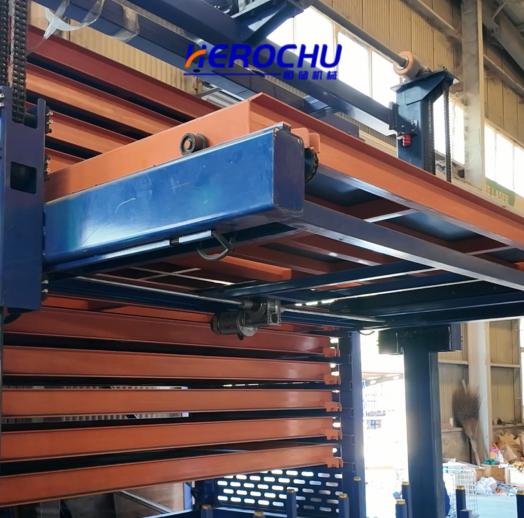
Heavy Duty Vertical Steel Plate Storage Tower 5000kg ASRS
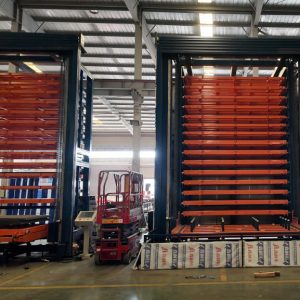
Storing 5000 kg of steel plate on a single storage level is not a light engineering task. The support structure must resist the static load of the plate, the dynamic loads introduced during tray transfer, and the long-term fatigue effects of continuous loading and unloading cycles. The Herochu Heavy Duty Vertical Steel Plate Storage Tower 5000kg ASRS is engineered from the ground up to meet these structural demands without compromise.The tower frame is fabricated from Q235B high-strength structural steel — a material grade specified for its yield strength, weldability, and dimensional stability under load. Column sections are built from heavy-wall rectangular tubing, with cross-members sized through finite element analysis using Simsolid and Ansys modeling.
Heavy Duty Vertical Steel Plate Storage Tower 5000kg ASRS
Storing 5000 kg of steel plate on a single storage level is not a light engineering task. The support structure must resist the static load of the plate, the dynamic loads introduced during tray transfer, and the long-term fatigue effects of continuous loading and unloading cycles. The Herochu Heavy Duty Vertical Steel Plate Storage Tower 5000kg ASRS is engineered from the ground up to meet these structural demands without compromise.
The tower frame is fabricated from Q235B high-strength structural steel — a material grade specified for its yield strength, weldability, and dimensional stability under load. Column sections are built from heavy-wall rectangular tubing, with cross-members sized through finite element analysis using Simsolid and Ansys modeling. The analysis verifies deflection limits under full rated load, stress concentrations at weld joints, and the dynamic response of the structure during tray engagement and transfer. Every structural member is sized with a safety factor that accounts for the worst-case loading condition: a full 5000 kg plate placed off-center on the tray during loading.
The base frame distributes the tower’s full loaded weight — potentially exceeding 50,000 kg across a ten-level HC-S6020-105 configuration — into the concrete foundation through anchor points engineered for the specific point loads. The foundation design is part of the Herochu engineering deliverable: the installation specification defines concrete strength, pad thickness, and anchor bolt pattern required for the configured tower. This is not a catalog product dropped onto an existing floor — it is an engineered structure installed on a foundation matched to its operational loads.
The Lifting System: Precision Under Heavy Load
The lifting mechanism is the component that determines whether a 5000 kg plate arrives at the access opening precisely positioned or arrives with a variance that complicates downstream handling. The Herochu system uses a gear-and-rack drive for vertical tray positioning — a mechanism chosen for its positional accuracy, load capacity, and resistance to drift under heavy loads.
Gear-and-rack drive systems convert rotational motor output into linear vertical motion through a pinion engaging a toothed rack. The positive engagement between pinion and rack means the tray position is mechanically fixed at any point along the travel — there is no backdriving under load, no hydraulic creep, no positional drift. The system holds a 5000 kg loaded tray at any vertical position without braking energy or mechanical locks. This mechanical advantage translates directly into the system’s ±2 mm repeat positioning accuracy specification.
The Siemens S7 PLC controller governs the drive system, managing motor speed, acceleration profiles, and positioning commands. The PLC receives position feedback from encoders on the drive motor and limit sensors at each tray level. This closed-loop control ensures the tray arrives at the access opening within the ±2 mm tolerance on every cycle, regardless of load weight. The entry-exit and lifting speed range of 5–15 m/min provides the throughput needed for continuous production — fast enough to sustain retrieval rates across multi-shift operation, controlled enough to prevent tray oscillation that could shift a plate during transfer.
Repeatability of ±2 mm across continuous operation is a specification that requires engineering justification. Every component in the positioning chain — drive motor, gearbox, pinion, rack, guide rails, and tray engagement mechanism — contributes to the cumulative positioning error. The Herochu system holds this tolerance because each component in the chain is sized and manufactured to a precision class that keeps individual errors well below the system-level budget. Guide rails are machined and aligned to prevent lateral tray movement. The rack is mounted to the tower frame with reference to the tray levels, not to the frame member, ensuring thermal expansion of the frame does not translate into positional error at the tray interface.
Tray Engineering for Heavy Plate Handling
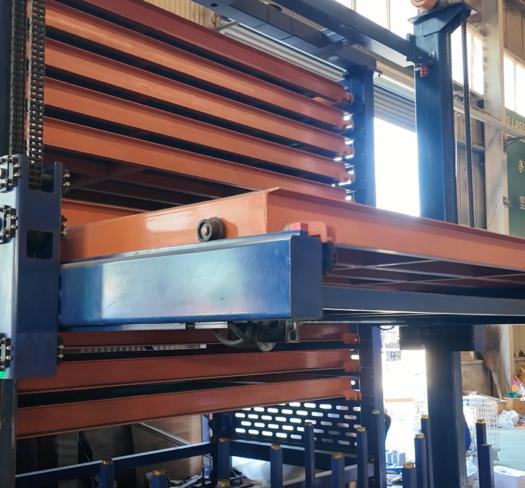
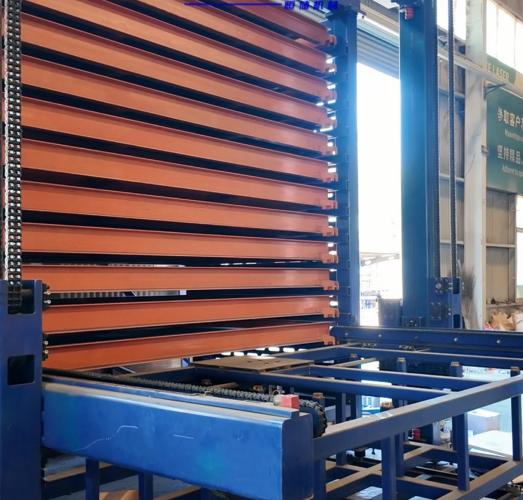
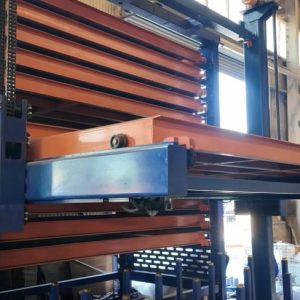
The trays in the Herochu 5000 kg ASRS are not generic shelving. Each tray is a structural assembly engineered to support a distributed load of up to 5000 kg without deflection that would compromise plate surface quality or handling precision. Tray support members are positioned at intervals calculated from the plate dimensions and the maximum load, ensuring the plate rests on a flat, rigid surface across its full area.
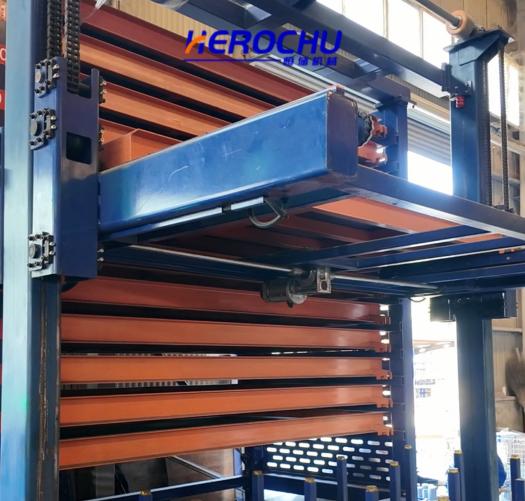
The tray engagement interface — the mechanism by which the extractor arm connects to the tray for transfer — is reinforced to handle the dynamic loads of lifting and moving a fully loaded tray. The interface uses mechanical engagement rather than magnetic or vacuum connection, providing positive retention that does not depend on surface condition, plate material, or power supply continuity. Once the extractor arm engages the tray, the tray remains secured through the full vertical and horizontal transfer cycle.
The 350 mm clear space between tray levels — a dimension customizable to the plate thickness range stored — provides the physical clearance needed for the extractor arm to enter the tray position, engage the interface, and withdraw the tray without contacting the plates on adjacent levels. For shops storing thick plates in the 30–60 mm range, this clearance can be increased to accommodate the plate thickness plus handling clearance. For shops storing thin gauge sheets, the clearance can be reduced to increase the number of layers within a given tower height.
Isolated Tray Storage and Surface Protection
The isolated-tray architecture of the Herochu tower is a surface quality feature as much as a storage architecture. In horizontal stacks, plates rest on each other — the weight of upper plates bears on the surfaces of lower plates, with whatever debris, moisture, or surface irregularity exists between them. Over weeks or months of storage, this contact causes surface marring, scratching, and in stainless steel plates, the potential for carbon contamination from steel-to-steel contact.
In the Herochu vertical tower, each plate sits in its own tray, separated from adjacent plates by the tray structure and the 350 mm clear space. No plate bears the weight of another. Surfaces remain in the condition they arrived in — critical for plates destined for processes where surface finish is specified, such as stainless steel for food-grade fabrication, clad plates for pressure vessel construction, or pre-painted sheets for architectural applications.
The tray surface itself is engineered to be compatible with plate materials. Contact surfaces are smooth, clean, and free of features that could imprint or mark the plate underside. For shops with specific surface protection requirements, tray surface materials and configurations can be specified during the engineering phase.
PLC Control, WMS, and ERP Integration
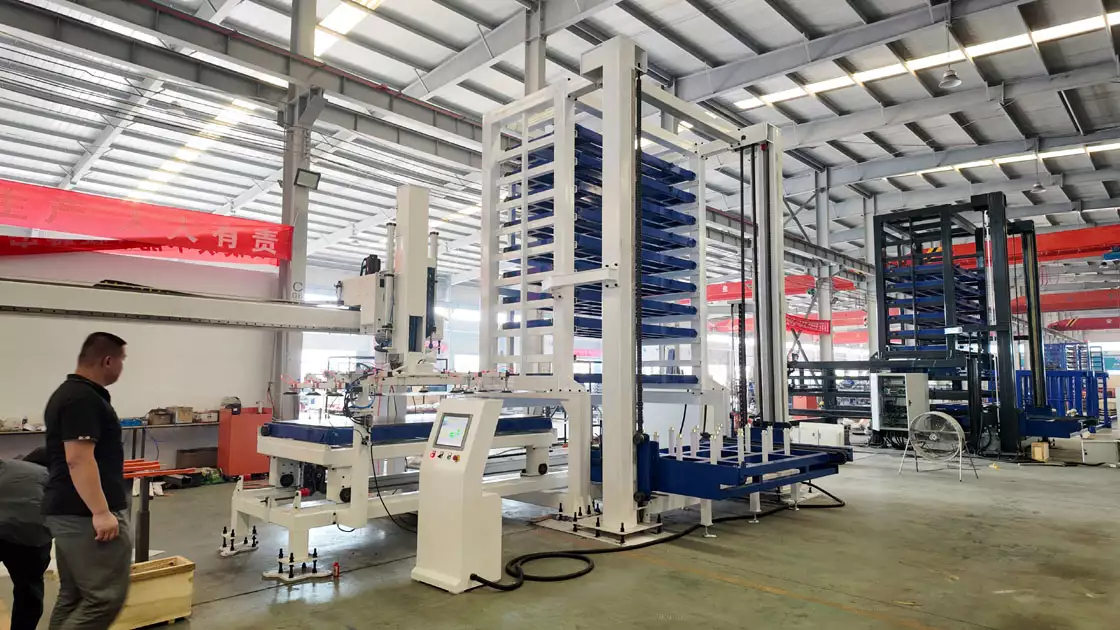
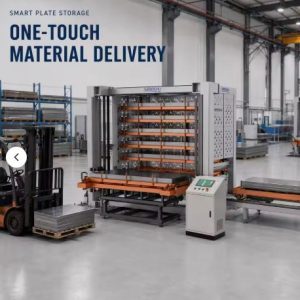
The heavy-duty structural and mechanical engineering of the Herochu tower is matched by the control system architecture. The PLC touchscreen at the access station provides the operator interface for all storage and retrieval operations. The display shows tower layout, tray contents, material specifications, and real-time weight readings. One-touch delivery commands retrieve trays by material specification — the system identifies the correct tray based on classification rules and executes the retrieval.
The embedded WMS warehouse management system handles inventory tracking, batch traceability, and expiration warnings. Scan-in identification with automatic positioning delivers 100% inventory accuracy — every plate in the tower is identified, located, and tracked through its entire storage lifecycle. The WMS connects to the factory ERP system, enabling on-demand stocktaking, real-time material availability for production planning, and data-driven purchasing decisions.
Configuration Options for Heavy-Duty Applications
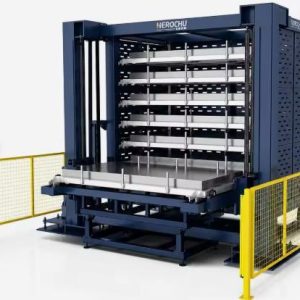
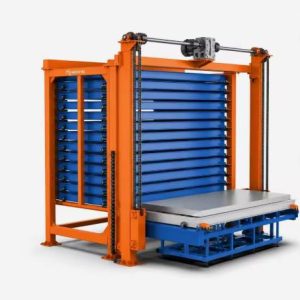
The Herochu Heavy Duty Vertical Steel Plate Storage Tower 5000kg ASRS is available in four standard models, each engineered for different plate dimensions and capacity tiers. The HC-S3015-63 handles 3000×1500 mm sheets at 3000 kg per level across six layers. The HC-S4015-85 and HC-S4020-85 handle 4000×1500 mm and 4000×2000 mm plates respectively at 5000 kg per level across eight layers. The HC-S6020-105 — the flagship heavy-duty configuration — manages 6000×2000 mm plates at 5000 kg per level across ten layers.
Every parameter is customizable: layer count, tower count, tray dimensions, load capacity, and clear space between trays. The Herochu engineering team configures each system from the shop’s material list, structural foundation specifications, and production volume requirements. The result is a storage tower engineered not to a generic standard but to the specific heavy-duty plate handling demands of the fabrication shop that will operate it.
The Heavy Duty Vertical Steel Plate Storage Tower 5000kg ASRS from Herochu combines Q235B structural steel construction, gear-and-rack drive positioning at ±2 mm repeatability, isolated tray storage for surface protection, and full WMS and ERP integration in a heavy-duty vertical storage system engineered for continuous 5000 kg per-level plate handling.
FAQ
Here are some frequently asked questions about our sheet metal racks and pipe storage solutions. We hope you find them helpful!
Q1: Can I request a custom size or color?
Absolutely. We offer complimentary design services and deliver efficient, tailored solutions to meet your specific requirements.
Q2: Are you a manufacturer or a distributor?
We are a direct manufacturer with over 15 years of industry experience and expertise.
Q3: Is there a minimum order quantity?
No. We welcome orders of any size, starting from a single unit.
Q4: How can I get detailed product information?
Click the “Get a Quote” button to receive product images, detailed specifications, and videos. Our team is always ready to assist.
Q5: How do I provide my storage rack requirements?
Simply share the type, dimensions, and quantity of materials you plan to store, along with any other specific needs. We will develop a professional storage solution for you. Alternatively, leave your contact details for a personalized consultation.
Q6: Do you offer automated loading systems or robotic arms?
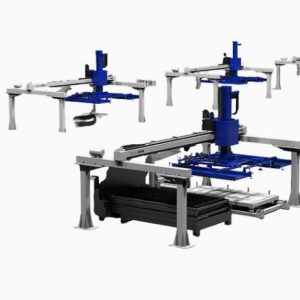
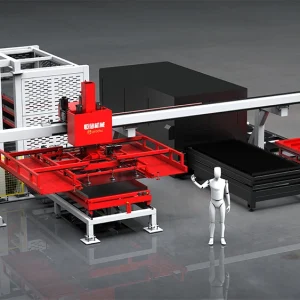
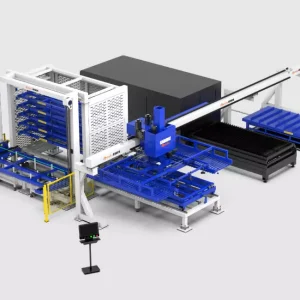
Yes. We provide loading robotic arms and integrated loading/unloading systems tailored to your laser cutting machine’s table size and material handling method (e.g., board rack, exchange platform, or material warehouse). Contact us with your details for a customized proposal.
Q7: Do you provide on-site installation and debugging?
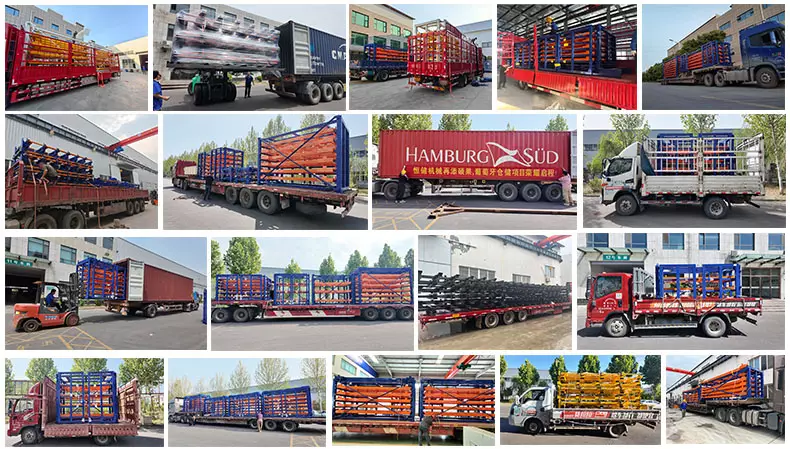
Yes. Our technicians can travel to your facility for installation and debugging, ensuring successful operation. We have served clients globally, including in the USA, South Korea, Russia, Qatar, Mexico, South Africa, Egypt, and Lebanon.
Q8: How do you ensure product quality?
Our quality assurance includes:
A team of over 40 technical engineers for professional debugging and support.
A dedicated quality control department compliant with ISO9001 standards.
CE certification for all exports.
Rigorous load testing before shipment to ensure structural safety and reliability.
Q9: Where is your factory located?
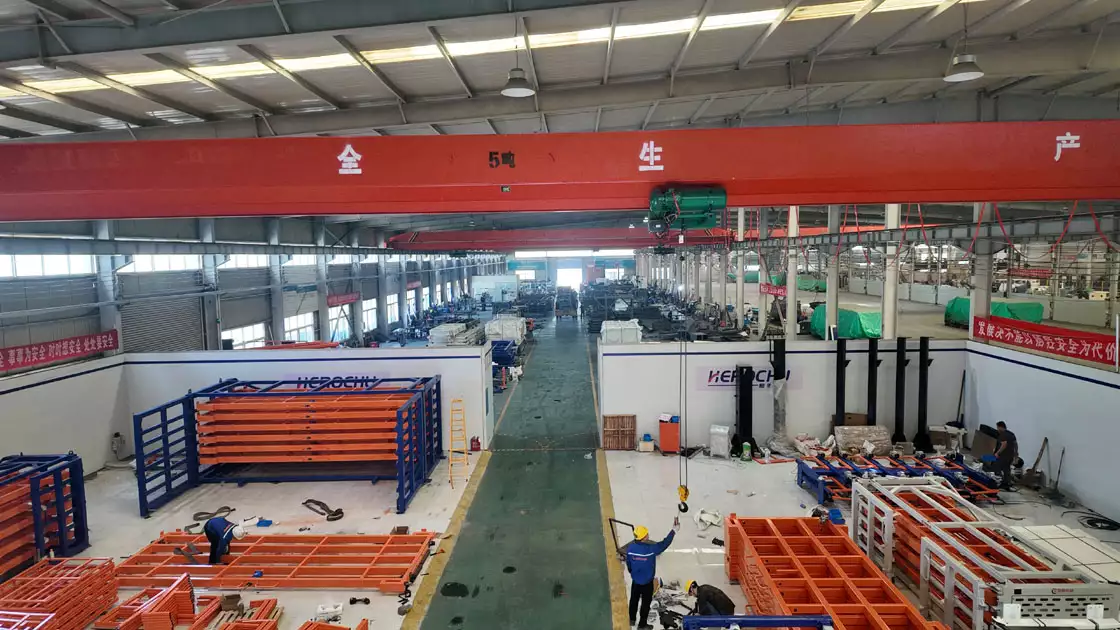
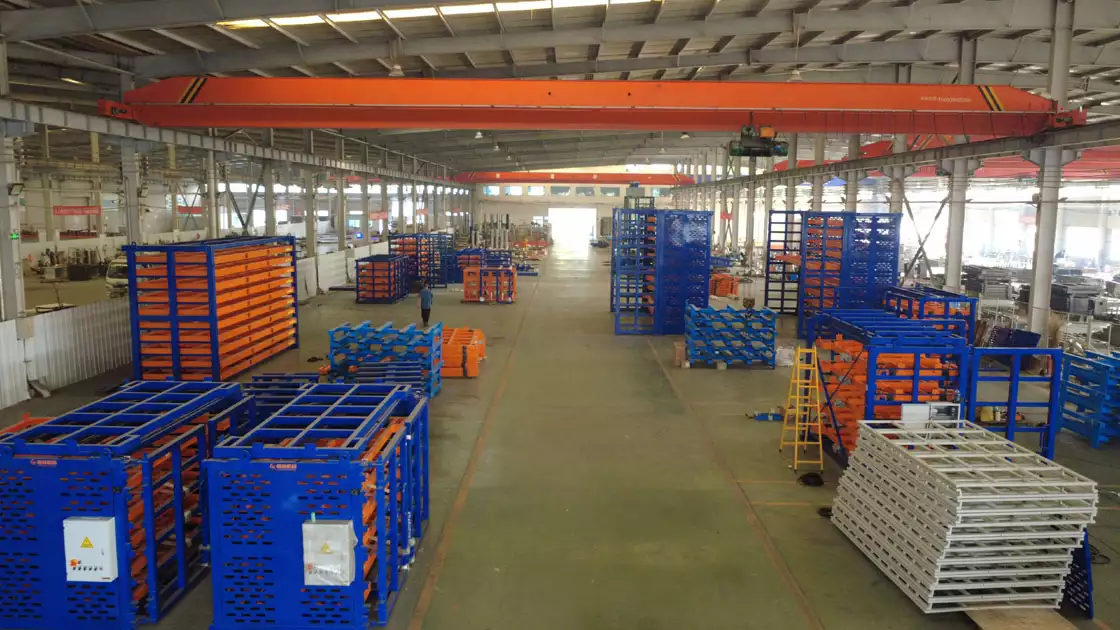
Our modern 10,000-square-meter manufacturing facility is located in Jiyang Industrial Park, Jinan, Shandong, China.
Q10: How can I evaluate your company’s capabilities?
We offer virtual video factory tours and warmly welcome on-site visits.
Q11: What does your company specialize in?
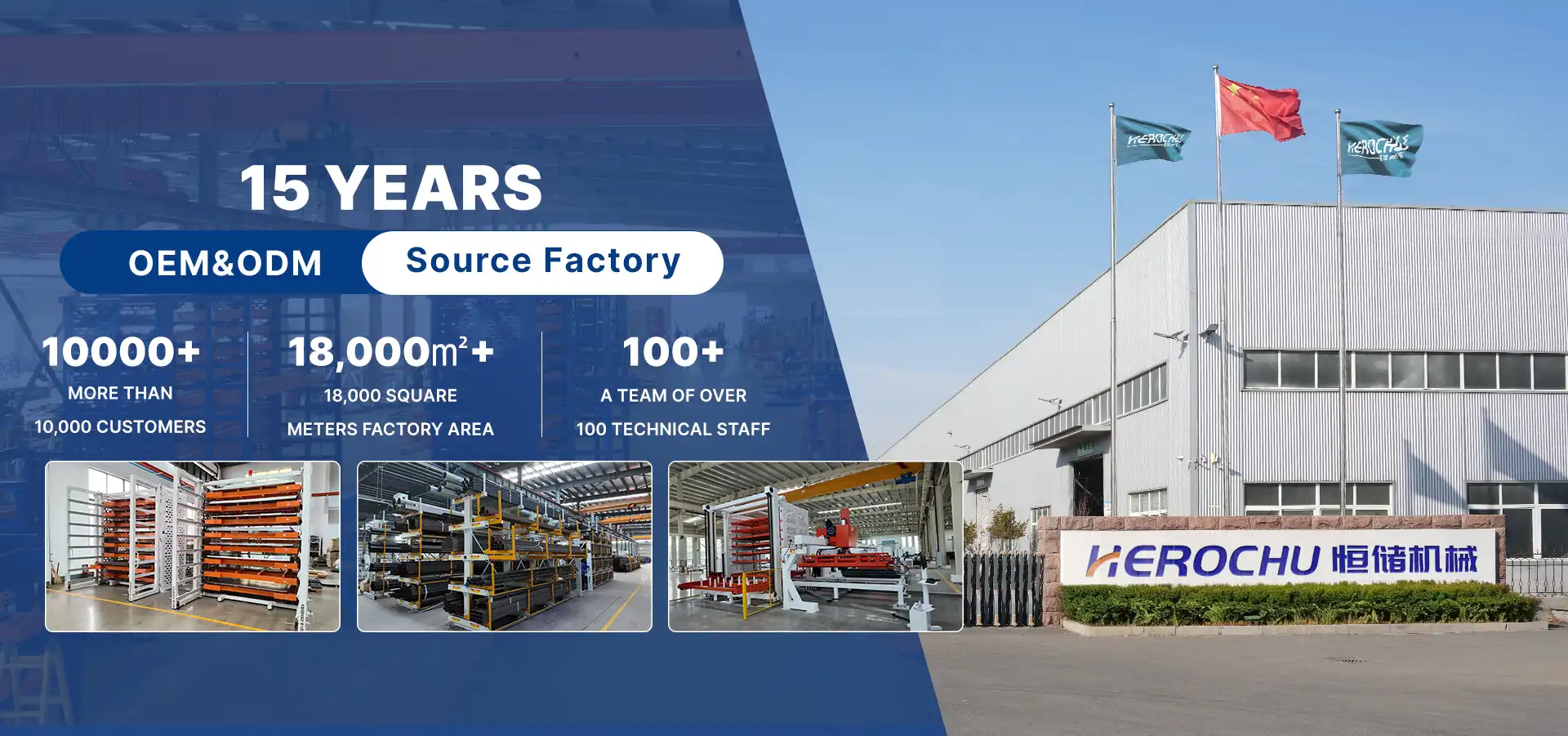
Jinan Constant Storage Machinery Manufacturing Co., Ltd. is a high-tech enterprise specializing in the R&D, production, sales, installation, and service of intelligent storage solutions. Our product range includes sheet material warehouses, drawer-style shelves, cantilever racks, servo manipulators, gantry loaders, and fully automated handling systems. Supported by a skilled technical team and advanced equipment, we are committed to delivering high-performance storage products and solutions to customers worldwide.
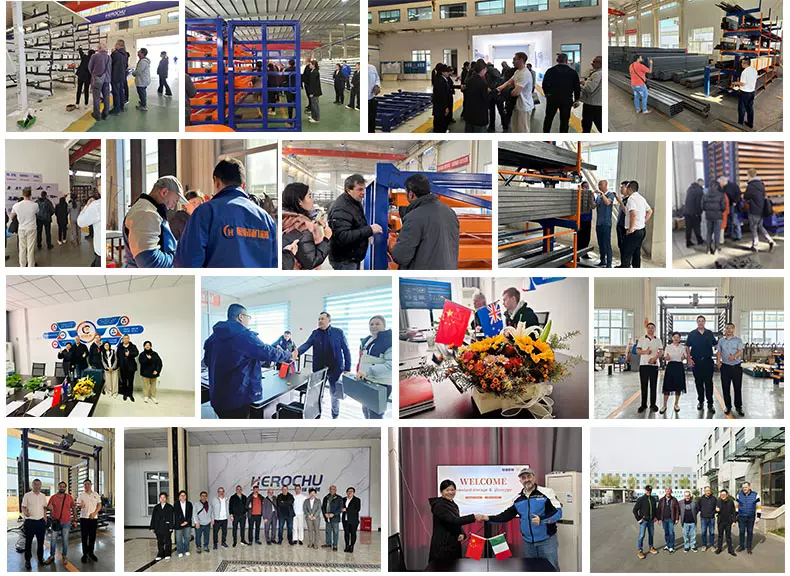
Customer visit
Herochu has always been adhering to the market-centric approach to meet customer requirements to the maximum extent, and the business philosophy of “creating brands with heart and gaining reputation with sincerity”. It provides customers with high-quality products and services with rigorous military quality, professionalism, and excellence, and has won unanimous praise in the Chinese aerospace, Chinese weapons, Chinese railways, automobile manufacturing, engineering machinery, non-ferrous metal titanium alloy and other industries.
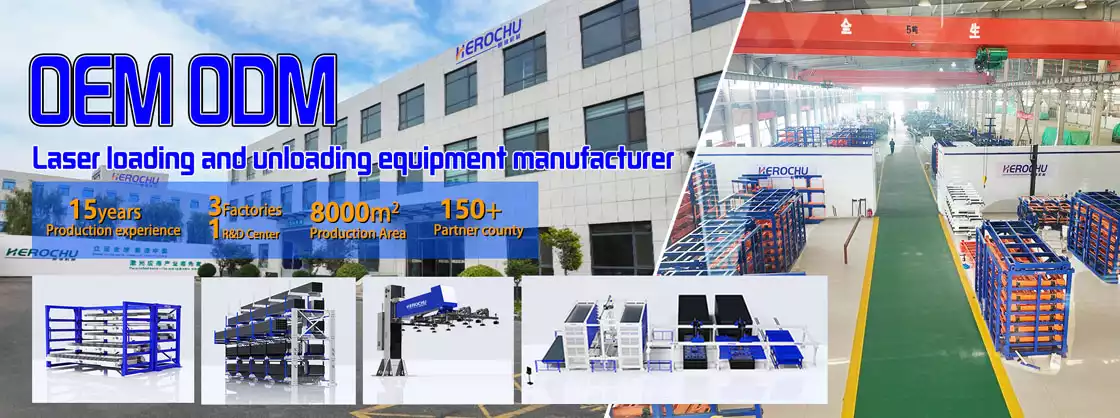
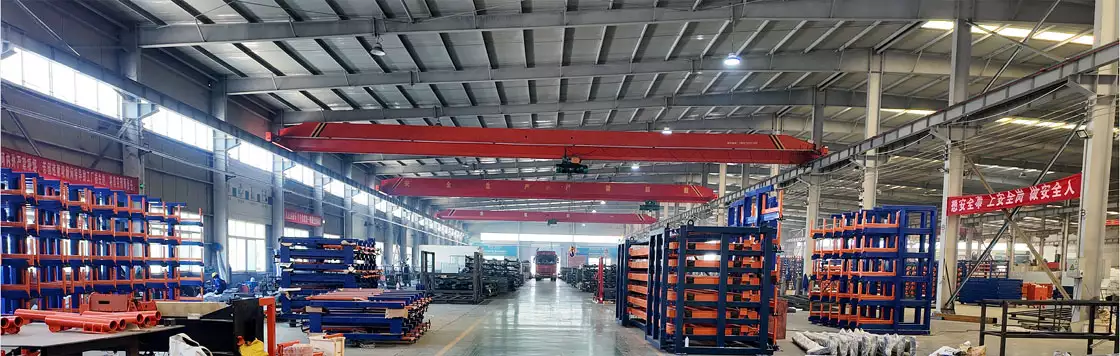
Factory

Hot Selling Machines
-
Drawer Type Sheet Metal Racks
Heavy-Duty Drawer System with Customizable Sizes
Read moreRated 0 out of 5 -
Manual Metal Plate Storage Rack
Manual Crank Type Sheet Metal Rack for Industrial Use
Read moreRated 0 out of 5 -
Heavy duty sheet metal storage racks
Heavy Duty Steel Storage Rack Pull-Out Plate System
Read moreRated 0 out of 5 -
Manual Metal Plate Storage Rack
Hand-Cranked Roll Out Sheet Metal Warehouse Rack
Read moreRated 0 out of 5 -
Automatic Sheet Metal Storage System
Heavy Duty Vertical Steel Plate Storage Tower 5000kg ASRS
Read moreRated 0 out of 5 -
Multi-tower intelligent board material warehouse
Multi-Tower Sheet Metal Storage System 6000x2500mm Automated
Read moreRated 0 out of 5 -
Automatic Sheet Metal Storage System
Automated Steel Plate Warehouse Vertical ASRS for Fabrication
Read moreRated 0 out of 5 -
Automation Sheet Metal Material Warehouse
Smart ASRS Sheet Metal Storage System 5000kg Vertical Tower
Read moreRated 0 out of 5


Related products
-
Automation Sheet Metal Material Warehouse
Loading/unloading system for fiber laser / Automatic Loading and Unloading Systems
Read moreRated 0 out of 5 -
Automation Sheet Metal Material Warehouse
Sheet Metal Processing Automation Solution Automatic Storage Warehouse with Automatic Loading and Unloading System
Read moreRated 0 out of 5 -
Automation Sheet Metal Material Warehouse
Automatic sheet plate storage warehouse
Read moreRated 0 out of 5
Product Categories