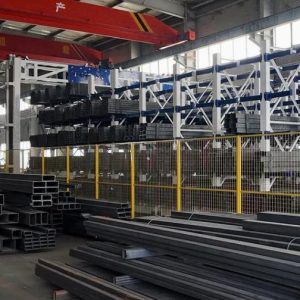
Warehouses that handle long steel pipes, tubing, and structural profiles face a set of challenges that conventional pallet racking cannot address. Standard shelving leaves long materials leaning against walls, stacked in unstable piles, or arranged in floor-level rows that consume enormous square footage. Each of these approaches introduces safety risks, complicates inventory tracking, and slows down retrieval. When a specific pipe section or profile must be pulled from the middle of a stack, operators typically need to shift several other pieces first — a process that wastes labor hours and exposes workers to handling hazards.
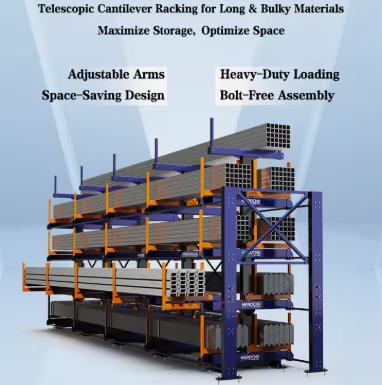
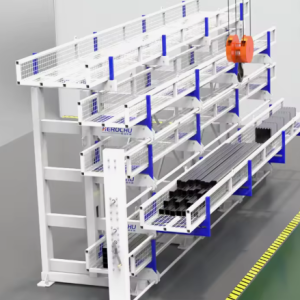
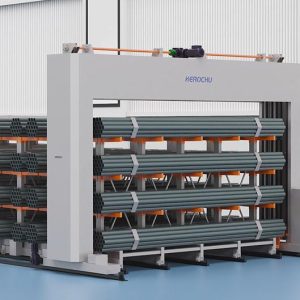
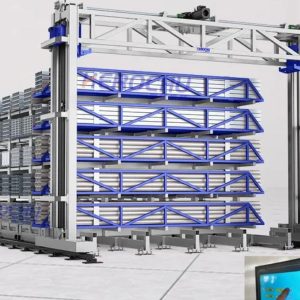
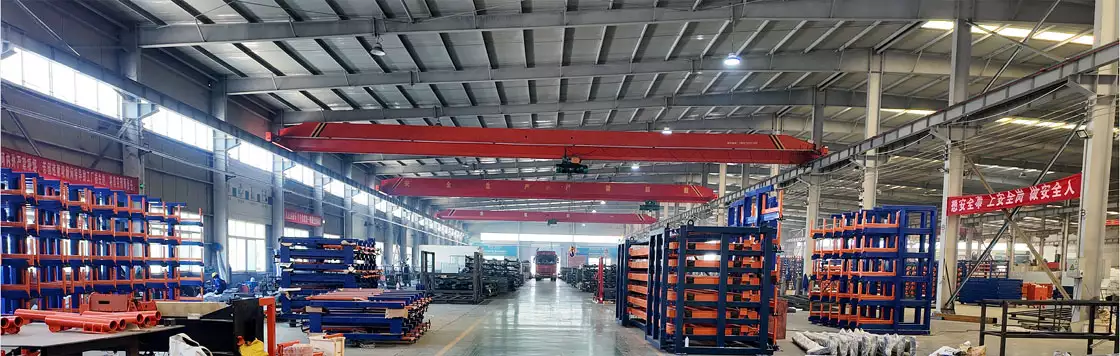
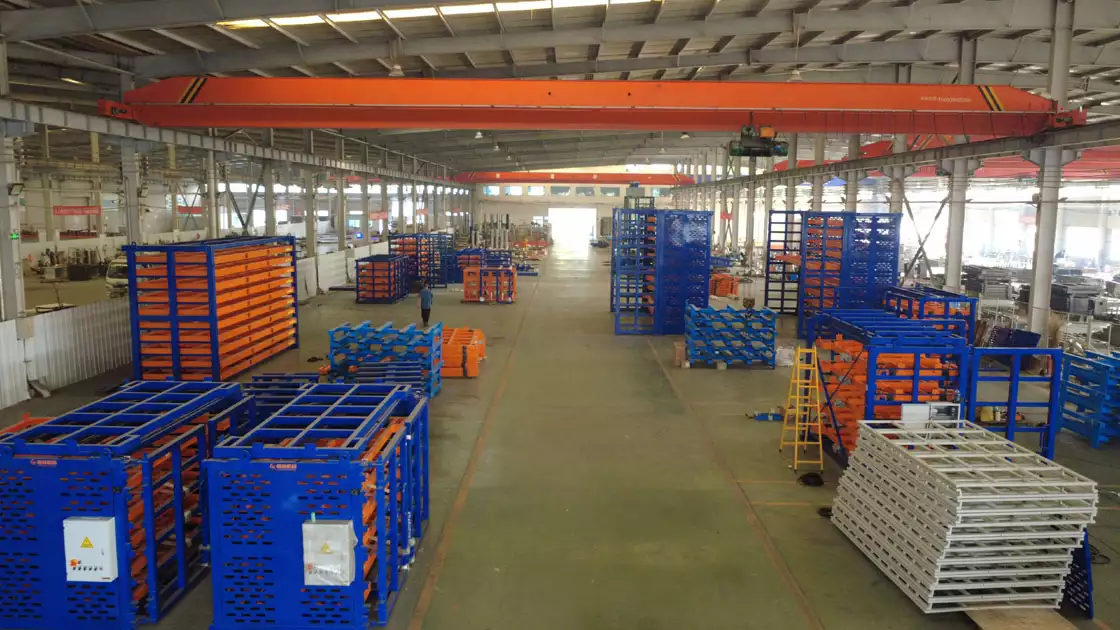
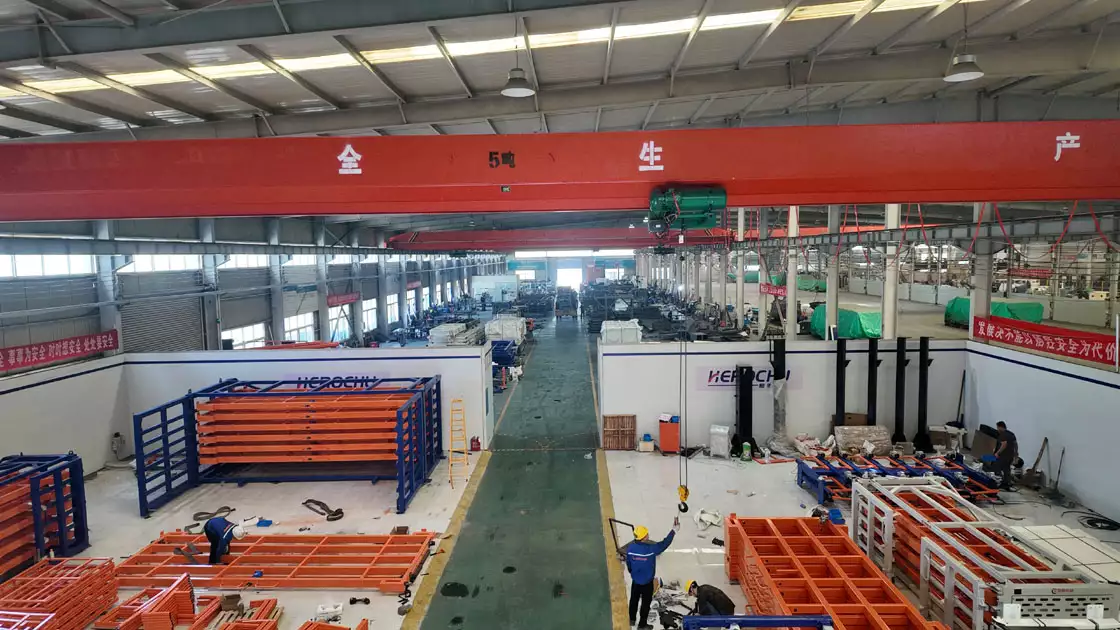
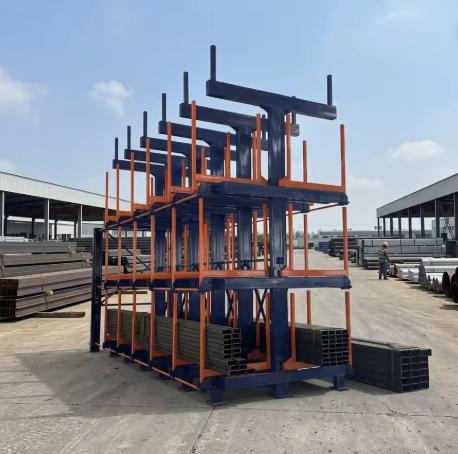
Herochu addresses these inefficiencies with an electric heavy duty pipe storage and retrieval system built around a cantilever racking design that stores materials vertically while keeping every individual item directly accessible. Unlike static cantilever frames where arms remain fixed in position, this system incorporates motor-driven retractable arms that extend outward to present a full layer of stored material. The result is a storage configuration where operators retrieve exactly the piece they need without repositioning adjacent stock.
How the Electric Retrieval Mechanism Works
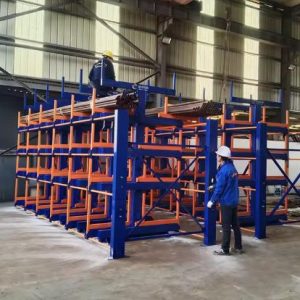
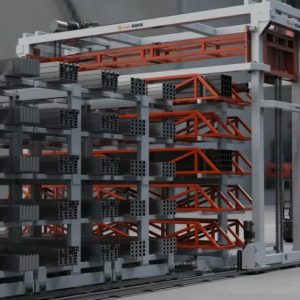
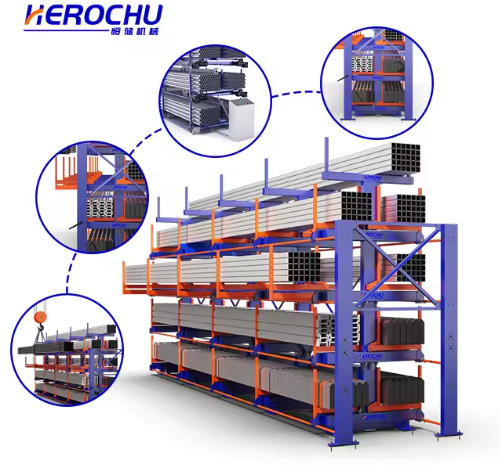
The frame of each Herochu heavy duty pipe storage and retrieval system consists of multiple upright columns connected by structural tie rods. On each upright, fixed arms serve as the primary load-bearing members, while movable arm assemblies form support brackets that cradle the stored pipes or profiles. When an operator needs to access a particular layer, the integrated motor drive activates and extends that layer’s arms outward at a controlled speed of 0.1 to 0.2 meters per second. Once fully deployed — achieving 100 percent extension — the arms present the entire stock layer to the aisle, where a forklift or overhead crane can pick up the required item.
After retrieval, the arms retract back into the rack frame. Because each layer operates independently, accessing material stored on the third tier does not disturb stock on the first, second, or fourth levels. This layered independent access is the system’s defining operational advantage over fixed-arm cantilever racks, where lower layers usually block upper ones and vice versa.
The drive system runs on a standard 380-volt three-phase 50 Hz power supply, with customization available for facilities operating on different electrical standards. Control is managed through a dual interface — a touch screen panel on the rack’s end column and a set of physical push-button controls — so operators can initiate arm movement from whichever position is most convenient. The touch screen also displays layer occupancy status, giving warehouse staff a visual inventory reference without consulting a separate management system.
Load Capacities and Configuration
Herochu configures each pipe storage and retrieval system around the customer’s specific inventory profile. Key parameters include:
- Arm load capacity: Single-arm ratings of 0.5 tonnes, 1.0 tonne, 2.0 tonnes, or 3.0 tonnes, selected according to the weight of the heaviest material the rack will hold.
- Cantilever extension length: Standard ranges from 1.0 meter to 3.0 meters, with custom lengths engineered for non-standard material widths.
- Number of layers: Between two and six layers per bay, adjustable to match the mix of diameters and profile types in the warehouse.
- Column height: From 2.0 meters to 6.0 meters in standard configurations, with taller custom uprights available for facilities with high ceilings.
- Pipe length accommodation: Designed around the common 3-meter, 6-meter, 9-meter, and 12-meter stock lengths used in steel supply and fabrication.
This modular parameter set means a warehouse storing 12-meter structural steel tubes at 2 tonnes per bundle can have a system engineered specifically for that load case, while a smaller operation handling shorter, lighter profiles can specify a configuration with lower arms and tighter spacing.
Space Utilization and Aisle Efficiency
The vertical orientation of the Herochu pipe storage and retrieval system converts idle overhead space into organized storage capacity. Where floor-level stacking might occupy 200 square meters for a given volume of stock, a multi-layer cantilever configuration occupying the same footprint stores several times that volume by building upward. Column heights of 6,000 millimeters, 7,000 millimeters, or 9,000 millimeters take full advantage of warehouse clear height.
Because the retractable arms bring material out to the aisle rather than requiring a forklift to enter the rack bay, the system operates effectively in narrow aisles. This narrow aisle capability further increases storage density because less floor area must be dedicated to travel lanes. For warehouses nearing capacity constraints, reducing aisle width by even 500 millimeters per row can free enough floor space for an additional rack run.
Structural Durability and Service Life
The rack frame is fabricated from structural steel with a powder-coated or painted surface finish — available in blue, black, or white to match facility color schemes — that protects against corrosion in industrial environments. The interlocking fixed arm structure distributes load forces across multiple uprights and tie rods rather than concentrating stress at isolated weld points. This distributed load path gives the system strong anti-fatigue and anti-impact performance, meaning it withstands repeated loading cycles and occasional fork strikes without progressive deformation.
Assembly is completed through screw connections rather than on-site welding, which simplifies installation, enables future reconfiguration when inventory profiles change, and eliminates the fire-risk and quality-control variables associated with field welding. Sections can be added, removed, or repositioned as warehouse needs evolve.
Control and Safety Design
Beyond the touch screen and button interface, the electrical control system incorporates overload protection on the motor circuits and limit switches that prevent arm over-extension. The controlled extension speed — 0.1 to 0.2 meters per second — keeps the movement predictable and gives operators time to confirm clearance before material enters the aisle. Emergency stop circuits are hardwired into the control architecture so that a single button press immediately halts all arm movement across the bay.
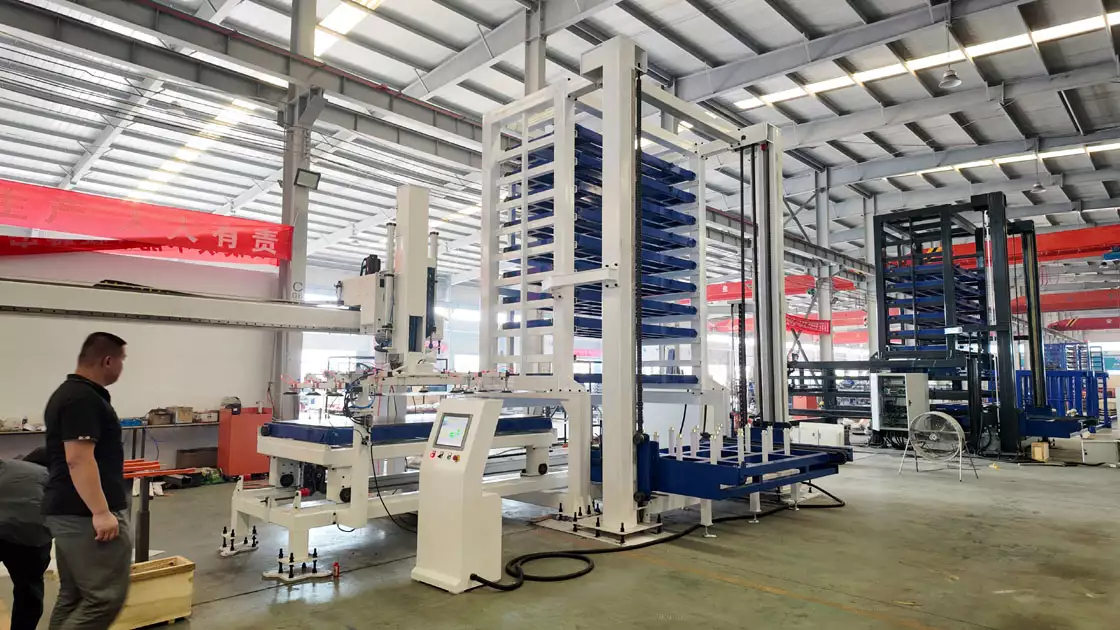
For facilities with WMS or ERP integration requirements, the control system’s digital architecture supports communication with higher-level warehouse management platforms. This enables real-time inventory tracking where the rack system reports layer occupancy status to the central database, reducing reliance on manual cycle counts and paper-based stock records.
Industry Applications
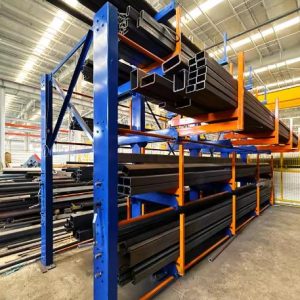
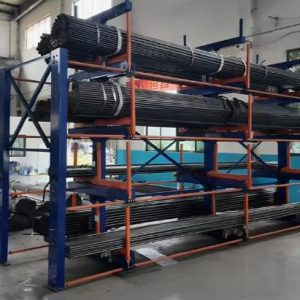
Herochu heavy duty pipe storage and retrieval systems are deployed across industries where long, heavy, and awkwardly shaped materials form a major portion of daily throughput. In machinery manufacturing plants, they organize raw bar stock and tube blanks ahead of CNC machining cells. In steel service centers and distribution warehouses, they enable rapid picking of customer orders that may call for a single length of a specific profile from a bay holding dozens of varieties. Pipe and profile processing operations — including laser tube cutting, bending, and end-forming shops — use the layered storage configuration to stage incoming material by work order while keeping the production floor clear.
For any warehouse managing long steel stock that is currently stored in floor stacks or static cantilever frames, switching to an electric retrieval system addresses three persistent problems at once: inefficient use of vertical space, time lost to manual stock repositioning during picking, and the safety exposure inherent in handling heavy materials from unstable piles. The productivity gains compound as the number of daily picks increases — the more frequently operators access the rack, the more labor the automated arm movement saves compared to manual retrieval workflows.
Each Herochu pipe storage and retrieval system is manufactured to order based on the specific dimensions, load requirements, and electrical standards of the installation site. Prospective buyers should prepare the following information before requesting a quotation: the maximum length and weight of the materials to be stored, the available floor area and ceiling height, the preferred number of storage layers, and the facility’s power supply specifications.