Steel bars, beams, and structural sections form the material backbone of metal fabrication, construction supply, and heavy manufacturing. Yet the storage systems that hold this inventory often lag behind the sophistication of the production equipment that consumes it. A fabrication shop may run a multi-axis CNC beam line capable of processing 50 tonnes of structural steel per shift, while its incoming stock sits in floor-level piles sorted by handwritten tags. This mismatch between processing speed and storage organization creates hidden costs: operators searching for the correct heat number, material handling crews double-handling stock to reach buried items, and inventory inaccuracies that lead to over-ordering or production delays.
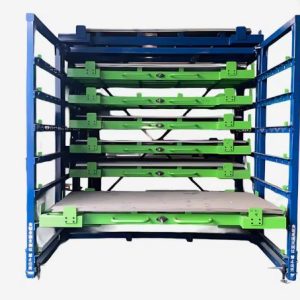
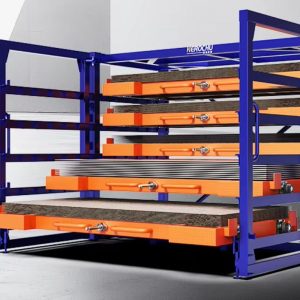
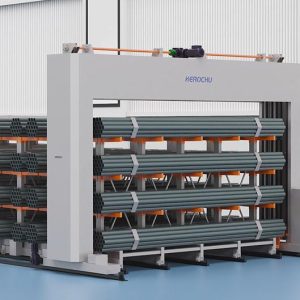
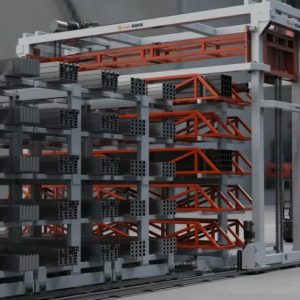
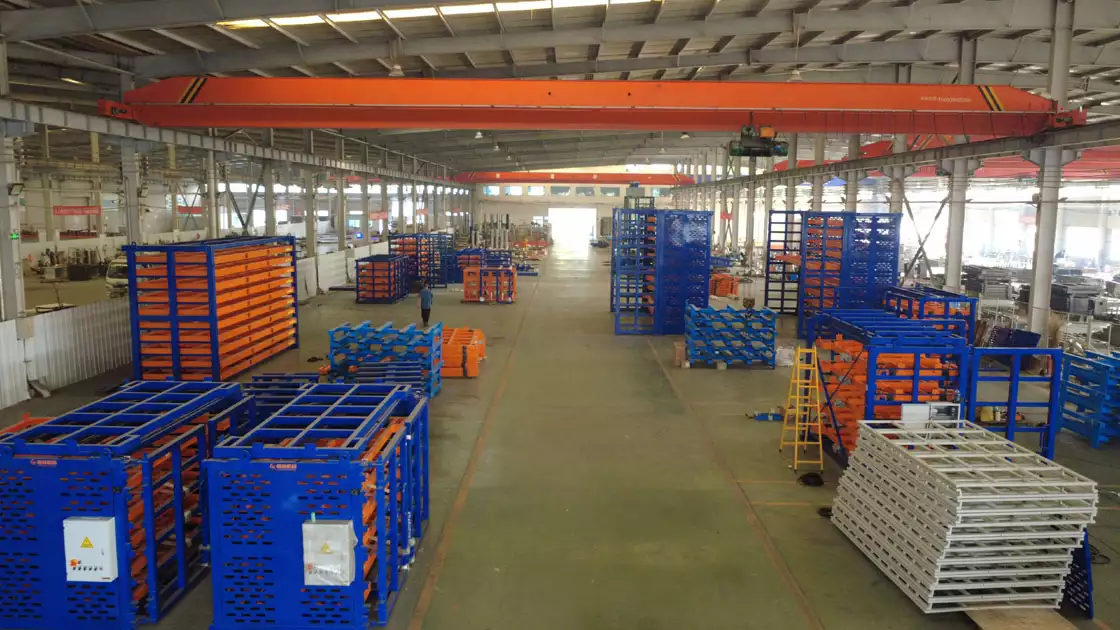
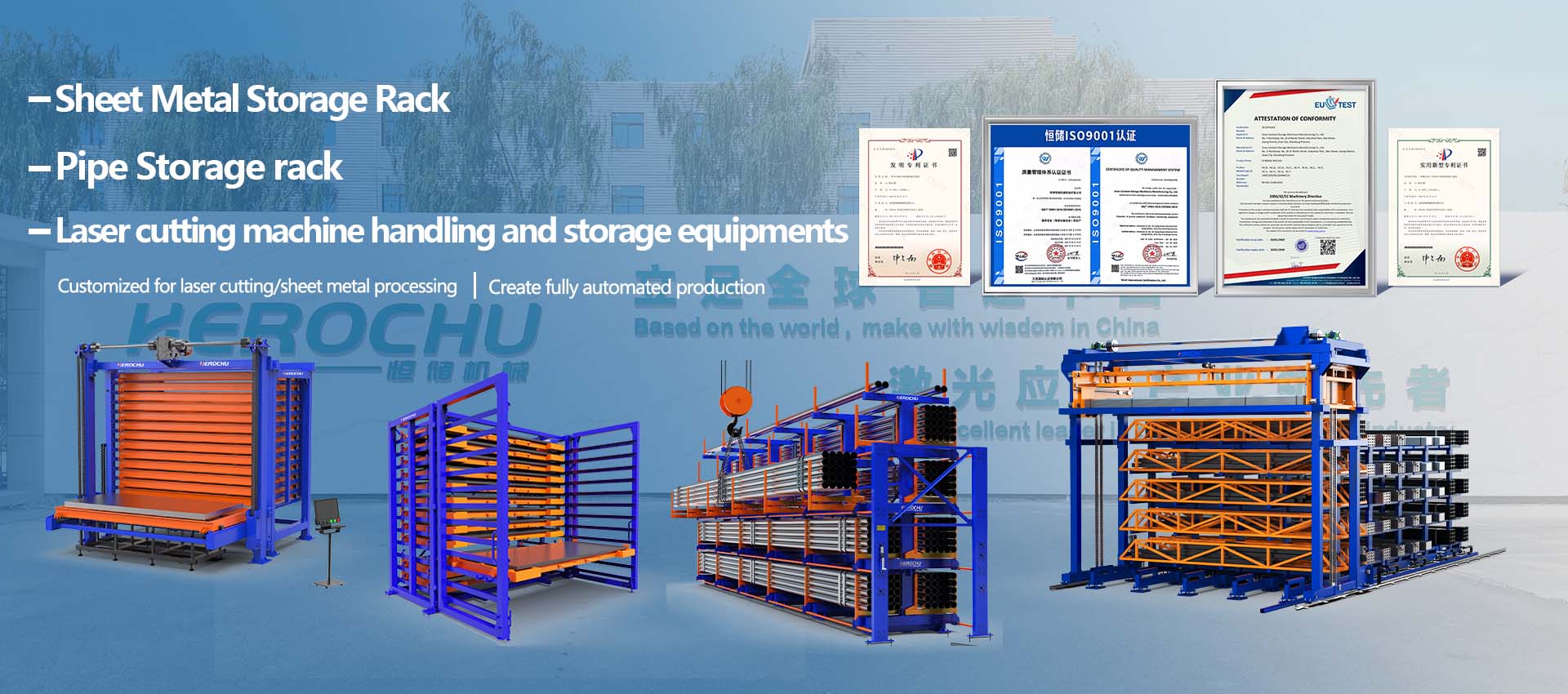
Herochu designs its industrial cantilever racking system to close this gap. The system provides organized, labeled, and individually accessible storage positions for long steel products — bars, beams, channels, angles, flats, rounds, and structural tubing — in a configuration that integrates with a facility’s material flow rather than obstructing it.
System Architecture: Columns, Arms, and Tie Rods
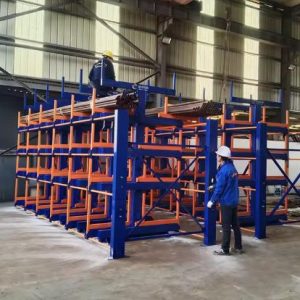
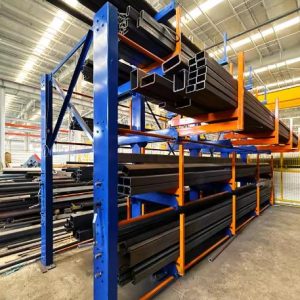
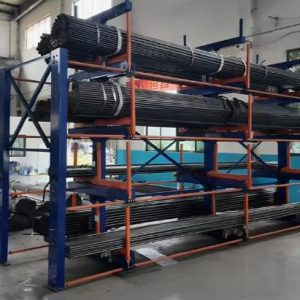
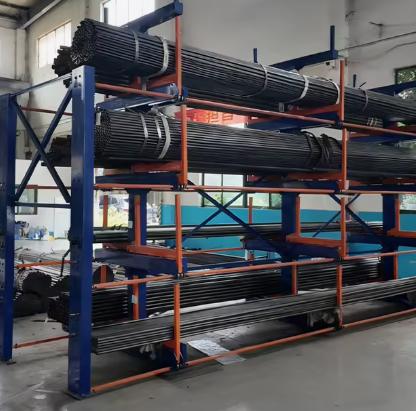
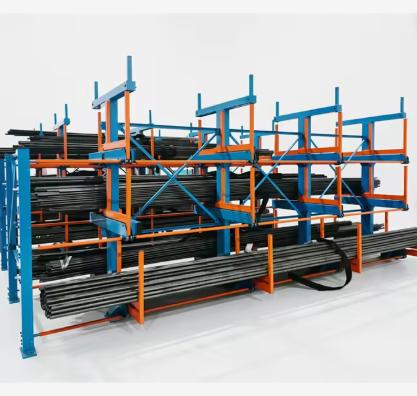
The racking system is built from a repeating structural module: a pair of upright steel columns connected by horizontal tie rods, with cantilever arms projecting from the column faces at designated heights. Multiple modules are joined along the length of a rack run, creating continuous storage bays. The tie rods between columns perform two structural functions simultaneously — they lock the column spacing at the designed dimension for the stored material length, and they carry lateral forces that develop when unevenly loaded arms apply differential bending moments to adjacent uprights.
Columns are available in standard heights of 2,000 millimeters, 3,000 millimeters, 4,000 millimeters, 6,000 millimeters, 7,000 millimeters, and 9,000 millimeters. The taller options — 6,000 millimeters and above — are specified for facilities with sufficient clear height to stack six layers of material within a single bay. In a warehouse with a 10-meter ceiling, a 9,000-millimeter column height places the top arm at approximately 8.5 meters from the floor, exploiting vertical space that would otherwise remain empty above lower rack installations.
Arm length is specified as the cantilever extension from the column face: 1,000 millimeters or 2,000 millimeters are standard, with longer custom arms available. The arm length must exceed half the width of the widest stored bundle to ensure that material sits fully on the arm surface rather than cantilevering beyond the support point. For bundles of large-diameter pipe or wide-flange beams stacked several pieces deep, the 2,000-millimeter arm length provides the necessary support depth.
Load Capacity Engineering
Each arm on a Herochu industrial cantilever racking system is rated for a specific load: 0.5 tonnes, 1.0 tonne, 2.0 tonnes, or 3.0 tonnes. This rating represents the maximum static load the arm can carry under normal warehouse conditions with a defined safety factor. The rating is not a suggestion or a peak-load figure — it is the design limit, and the structural analysis behind it accounts for the combined effects of vertical weight, horizontal forces from material expansion or accidental impact, and the fatigue accumulation that develops over years of loading cycles.
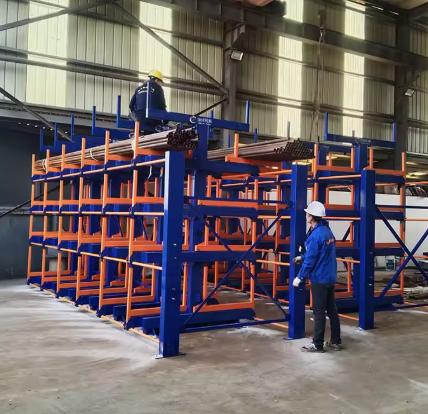
The arm-to-column connection is the most heavily stressed joint in the system. Each arm applies a bending moment at its column interface equal to the load multiplied by the arm’s cantilever distance. For a 3.0-tonne load on a 2,000-millimeter arm, this bending moment is substantial, and the bolted connection assembly — including the bolt diameter, grade, tightening torque, and the bearing area between the arm bracket and column face — is engineered specifically to resist it without loosening or fretting over the service life.
The base of each column transfers the accumulated weight of every loaded arm on that column to the warehouse floor through a steel base plate anchored with expansion bolts or cast-in-place anchors. The anchor specification accounts for the overturning moment that develops when a loaded rack is subjected to horizontal forces — forklift impact being the most common, with seismic loading also considered in applicable regions.
Single-Sided and Double-Sided Layouts
The racking system offers two fundamental layout options:
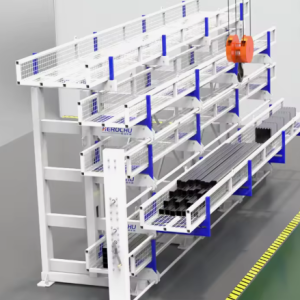
Single-sided racks position arms on one face of the column line only. This configuration suits installation against a wall, along a building column line, or at the perimeter of a storage zone where aisle access is only needed from one direction. Single-sided racks are also appropriate for applications where the stored material on the back face would be difficult to access — for example, when the rack backs up to a building expansion joint or a utility chase.
Double-sided racks extend arms from both column faces, creating a central spine with storage positions on either side. Each face operates as an independent loading plane, so material on the front face does not affect load distribution on the rear face beyond the shared column structure. Double-sided configurations approximately double the storage capacity per linear meter of rack run and are the preferred choice for freestanding rack rows in the center of a warehouse, where aisles run along both sides.
The choice between single and double sided affects not only storage density but aisle planning. In a typical layout, a double-sided rack row requires an aisle on each side, while two single-sided racks placed back-to-back achieve the same storage configuration but with a gap between the two column lines — a less efficient use of floor space unless the gap is required for other purposes such as fire suppression piping or lighting conduit.
Customization Parameters
Because no two warehouses stock exactly the same mix of materials, Herochu configures each racking system around the customer’s inventory profile. The engineering team works from the following input data:
- Material length range: The longest and shortest stock items determine upright spacing along the rack run. Standard configurations handle 3-meter, 6-meter, 9-meter, and 12-meter lengths. For non-standard lengths, such as 7.5-meter tubing for a specific product line, the upright spacing is adjusted accordingly.
- Maximum bundle weight: The heaviest bundle that will rest on a single arm pair determines the arm capacity rating. A bundle of 12-meter steel pipe weighing 2,800 kilograms requires 2.0-tonne or 3.0-tonne arms depending on how many arm pairs support the span.
- Bundle cross-section: The width and height of the largest bundle determine the arm extension length and the vertical clearance between layers.
- Number of distinct SKUs: The variety of materials influences the number of layers and whether independent layer access — via the roll-out mechanism — is justified. A bay holding six SKUs with daily access to all layers benefits more from powered arm deployment than a bay storing a single SKU accessed once per week.
- Ceiling height and floor loading: The available vertical clearance and the floor slab’s load-bearing capacity constrain the maximum bay height and total rack weight. On elevated slabs or mezzanine floors, these constraints may require reducing the number of layers or specifying lighter arm ratings.
Finish and Environmental Protection
The rack structure receives either a powder-coated or liquid-painted finish after fabrication. Powder coating electrostatically applies a dry powder that is then cured under heat, producing a uniform, chip-resistant surface that withstands the incidental contact common during loading operations. Liquid painting provides flexibility for color matching — a consideration when the rack must align visually with existing building columns, overhead cranes, or other installed equipment.
Standard colors are blue, black, and white. Each serves a functional purpose beyond aesthetics: blue provides high visibility against concrete and steel, making rack boundaries obvious to forklift operators; black camouflages oil and grease staining in maintenance-intensive environments; white maximizes ambient light reflection in facilities where illumination at height is limited.
In outdoor or semi-outdoor installations — common in steel service centers with covered but open-sided storage bays — the coating specification is upgraded to withstand UV exposure and moisture. Bolted connections in these environments receive additional corrosion protection at the fastener interfaces.
Inventory Visibility and Management Interface
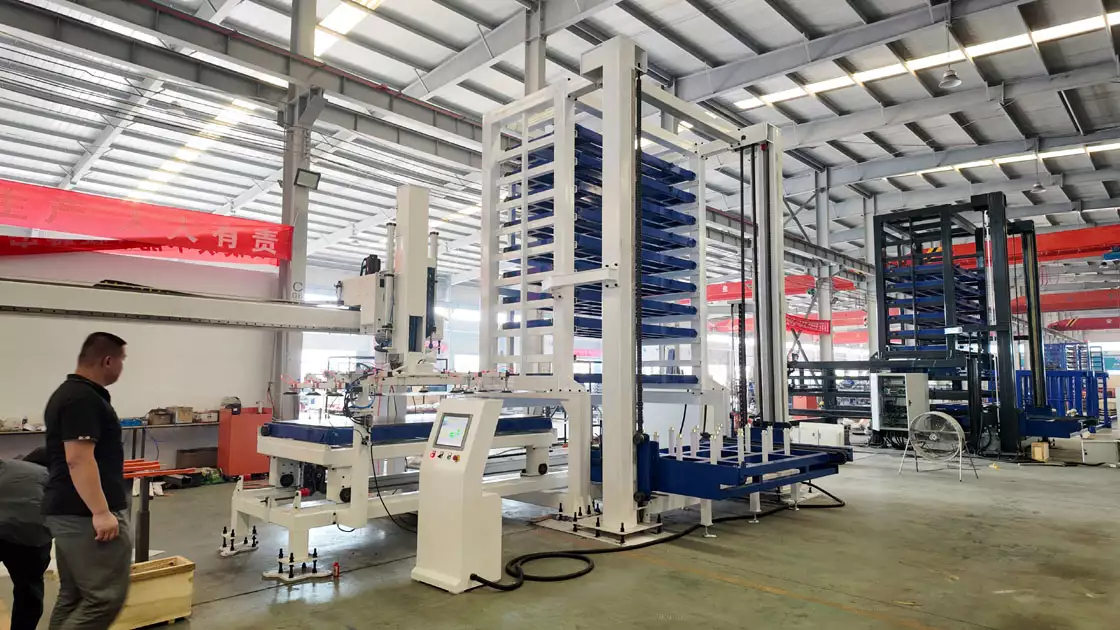
The physical rack structure supports inventory organization, but the control system adds a layer of digital visibility. On bays equipped with the electric roll-out mechanism, the touch screen control panel displays the occupancy status of each layer — occupied or empty — based on the last recorded putaway or retrieval action for that layer. While this is not a substitute for a full WMS, it provides forklift operators with a real-time reference that reduces the need to visually verify upper-layer contents from the ground.
For facilities that operate a warehouse management system or ERP platform, the digital architecture of the Herochu control system supports data communication with higher-level software. Layer status can be transmitted to the WMS database so that inventory records update automatically when material is placed into or removed from a rack position. This integration eliminates the lag between physical stock movement and system record updates — a common source of inventory discrepancy in manual tracking environments.
Applications Across Industrial Sectors
The Herochu industrial cantilever racking system installs across a range of industrial settings where bars and beams represent the primary stored material type:
Steel service centers and distributors use the system to organize stock by grade, section size, and heat number, enabling pickers to fill customer orders that may call for a single bar of a specific specification from a bay containing dozens of varieties. The organized layout also supports quality system requirements around material traceability, since each storage position can be associated with mill test reports and heat certificates.
Structural steel fabricators assign bays or layers to specific projects, staging incoming beams, columns, channels, and angle stock by job number. When a project releases for fabrication, all associated material is in known locations, and the retrieval sequence can be planned to match the production schedule.
Pipe and tube processors — including operations that perform threading, grooving, bending, and end-forming — use layered storage to separate incoming raw stock from processed material awaiting shipment. The physical separation between layers prevents cross-contamination between different processing stages and makes WIP inventory visible at a glance.
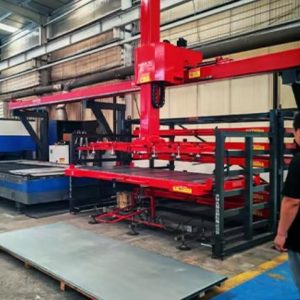
Heavy equipment manufacturers that consume bar stock, plate, and structural sections in production volumes use the racking system as a buffer between receiving and the fabrication floor. By organizing material by part number or work order, the rack supports just-in-time delivery to cutting and machining operations without requiring production schedulers to physically search the warehouse for stock.
Installation and Long-Term Flexibility
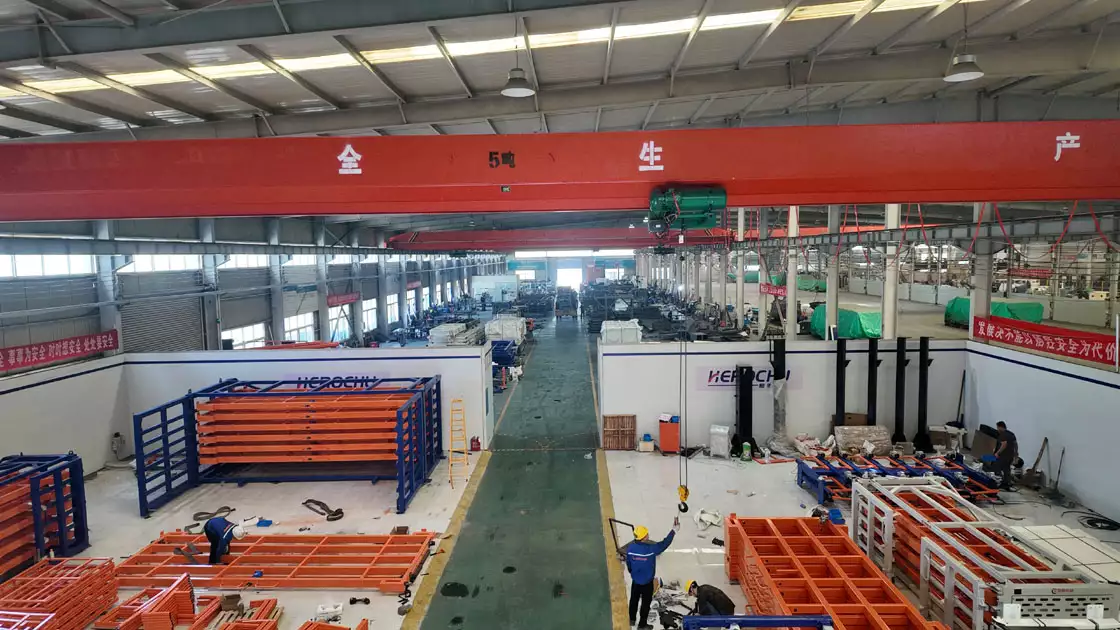
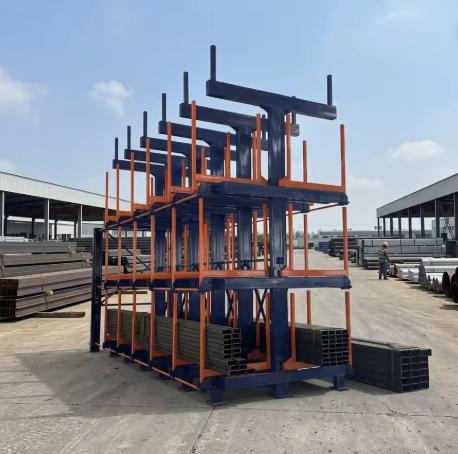
All structural connections in the Herochu cantilever racking system use screw-assembly fasteners. The installation process involves erecting the columns, connecting the tie rods, bolting the arm brackets at the specified heights, and anchoring the base plates to the floor. No on-site welding is required, which simplifies the permitting and safety requirements for installation in active facilities.
This bolted architecture also supports future reconfiguration. If the inventory profile shifts — a distributor begins stocking longer material, or a fabricator adds a new product line requiring different storage geometry — arms can be repositioned or additional layers can be added by unbolting and rebolting at the new positions. The base structure remains in place, and the reconfiguration cost is limited to labor and any new arm components required.
For buyers evaluating racking options, the specification process begins with a dimensional survey of the available space and a weight-and-length inventory of the materials to be stored. Herochu provides engineering support to translate these inputs into a configured system quotation that includes structural calculations, layout drawings, and installation requirements.