Steel service centers, pipe fabricators, and heavy manufacturing facilities share a persistent operational headache: managing long, cylindrical inventory in a way that does not waste square footage, damage product surfaces, or slow down order picking. Round stock, whether it is carbon steel pipe, seamless tube, or alloy bar, resists tidy stacking. Piles on the floor accumulate dents and rust from ground contact. Forklift retrieval from nested stacks becomes a two-man guessing game — which layer is the 6-meter SCH 80 pipe, and how many bundles need to come out before the operator reaches it?
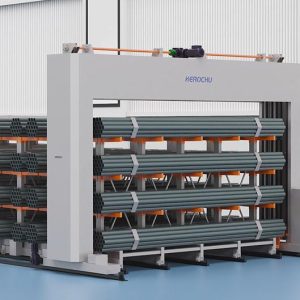
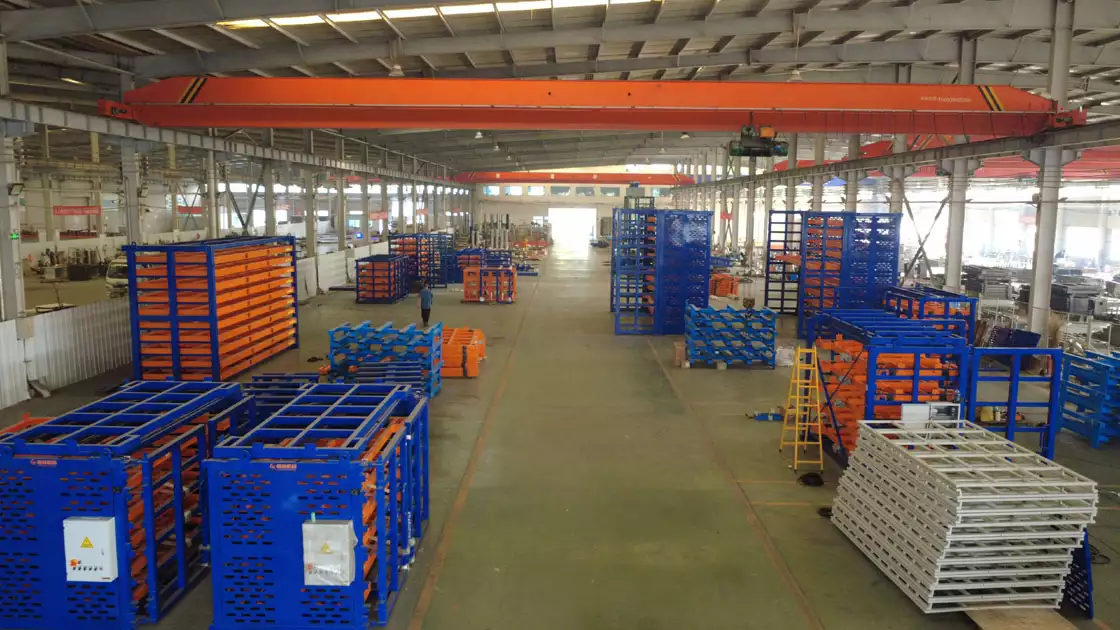
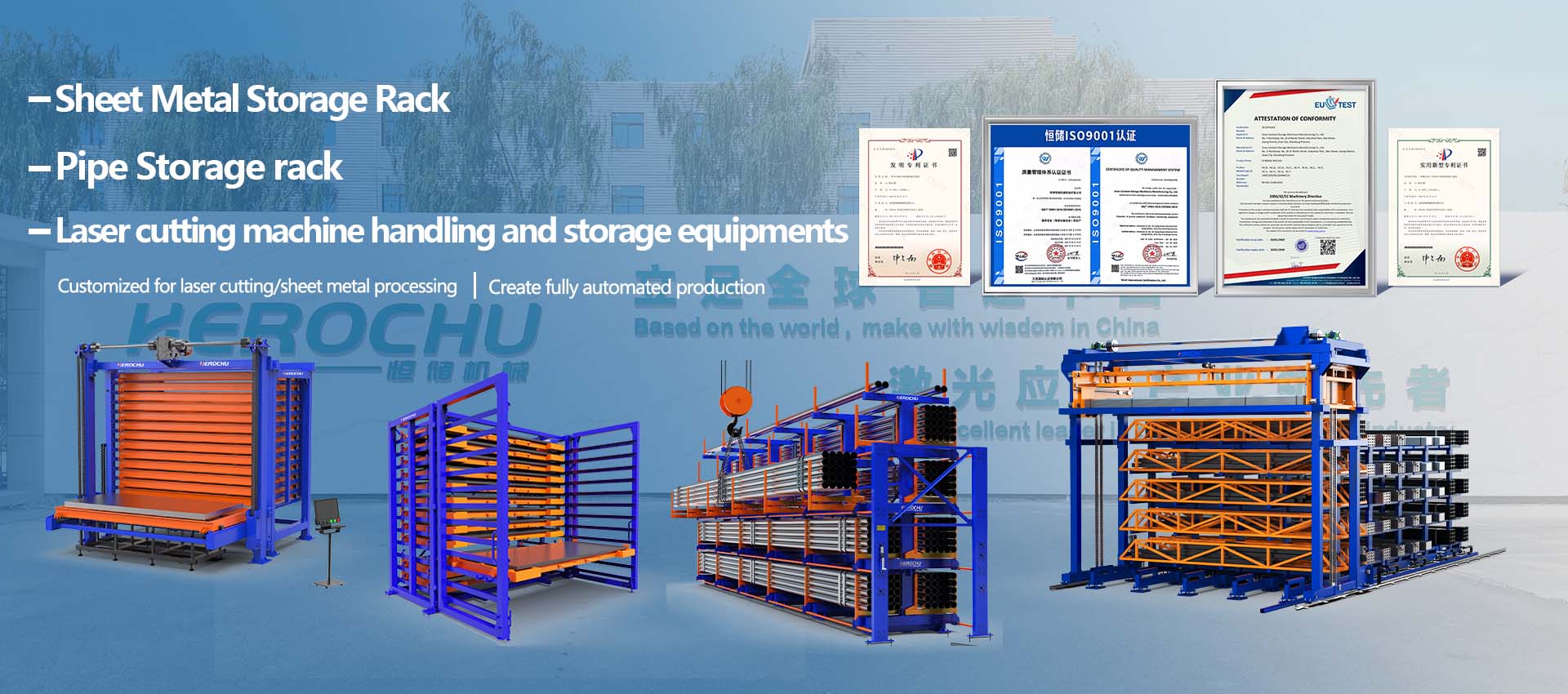
Herochu addresses this exact set of problems with a purpose-built heavy duty steel pipe cantilever warehouse racking system. The design strips away the structural compromise found in conventional pallet rack retrofits. Instead of forcing round, long, or bundled materials into a standard pallet bay, the cantilever architecture provides open-front access along the entire length of every storage level. Each arm functions as an independent support plane, which means operators — or automated retrieval equipment — can approach any SKU without disturbing adjacent stock.
Why Cantilever Racking Outperforms Traditional Storage for Pipe and Tube
Standard selective pallet racking introduces three friction points when storing pipe and profiles. First, upright frames create vertical obstructions every 2.5 to 3 meters along the aisle, restricting the clear span available for long goods. Second, beam levels are not designed for point-loaded cylindrical stock — a bundle of 6-inch Schedule 80 pipe resting on two narrow beams concentrates stress at two contact lines, deforming both the beam and the pipe surface over time. Third, loading and unloading a mid-level beam tier requires clearing the tier below and above, which creates a cascading handling cost for every pick.
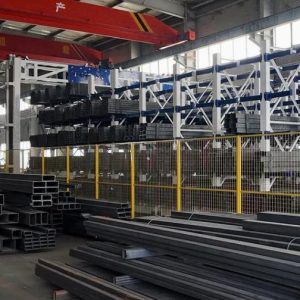
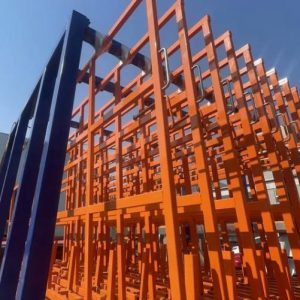
A cantilever rack eliminates all three constraints. The upright column stands on one side of the stored material, with horizontal arms extending outward into the aisle. No front column obstructs the loading face. Arms can be spaced vertically at increments that match the diameter and bundle height of the stored product rather than a fixed beam pitch. Herochu’s heavy duty steel pipe cantilever warehouse racking system typically deploys arm lengths from 600 mm to 1,200 mm on a single-sided configuration and up to 1,200 mm per side on double-sided units, providing support across the full cross-section of the load.
Structural Engineering: Load Capacity and Material Selection
The backbone of Herochu’s cantilever storage rack is a welded H-section steel column fabricated from Q235B structural steel plate. Column thickness ranges from 6 mm to 12 mm depending on the target load per arm and the overall bay height. Each arm-to-column connection uses a bolted clevis bracket with grade 8.8 fasteners, allowing field adjustment of arm spacing without welding or cutting. This bolted connection is a deliberate design choice — it preserves the factory-applied anti-corrosion coating at every joint and permits reconfiguration when the warehouse SKU mix changes.
A single arm on the Herochu heavy duty racking system is rated for 3,000 kg when the column is anchored to a properly cured concrete slab of 150 mm minimum thickness. For applications involving nested bundles of heavy-wall pipe — drill casing, line pipe, or thick-wall mechanical tubing — the system can be specified with reinforced arms featuring full-depth stiffener plates welded along the underside. The column base plate includes four anchor bolt positions per side, and Herochu provides an anchor bolt template drawing with each order to simplify on-site layout.
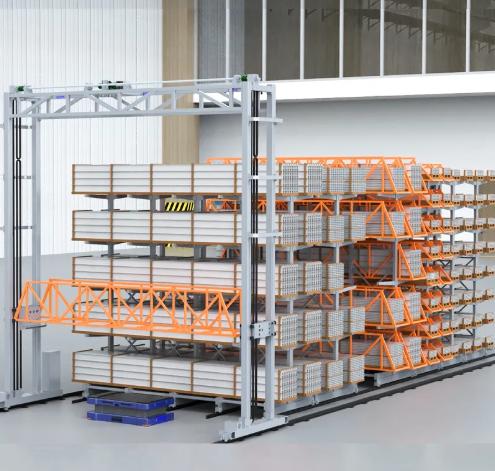
Floor loading calculations are part of the engineering package. A 6-meter-high bay with six arm levels loaded to 3,000 kg per level transmits roughly 18 tonnes of material weight plus the self-weight of the steel structure to the foundation. Herochu’s technical team reviews the customer’s floor slab specification and, where needed, recommends a base rail distribution beam that spreads point loads across a wider concrete area. This is standard practice for industrial storage rack installations and is documented in the structural calculation report delivered with each project.
Configuration Flexibility for Mixed-Inventory Warehouses
No two pipe warehouses carry an identical SKU profile. A distributor stocking Schedule 40 and Schedule 80 carbon steel pipe in diameters from ½ inch to 12 inches needs tighter arm spacing than a fabricator storing pre-cut structural hollow sections in 200 mm × 200 mm bundles. Herochu’s modular arm mounting system accommodates this variation. Arm pitch can be set as close as 400 mm on center, allowing dense vertical stacking of small-diameter tube, or as wide as 1,200 mm for nested bundles of heavy-wall pipe.
The column height is built to order. Common bay heights range from 3,000 mm to 9,000 mm, with the number of storage levels scaling accordingly. A 6,000 mm bay can support eight to ten loaded arms depending on the stored product diameter. The bay width — the horizontal distance between columns — is typically specified at 1,200 mm, 1,500 mm, or 1,800 mm, providing enough clear opening for a forklift, side-loader, or overhead crane to enter the bay with a full bundle.
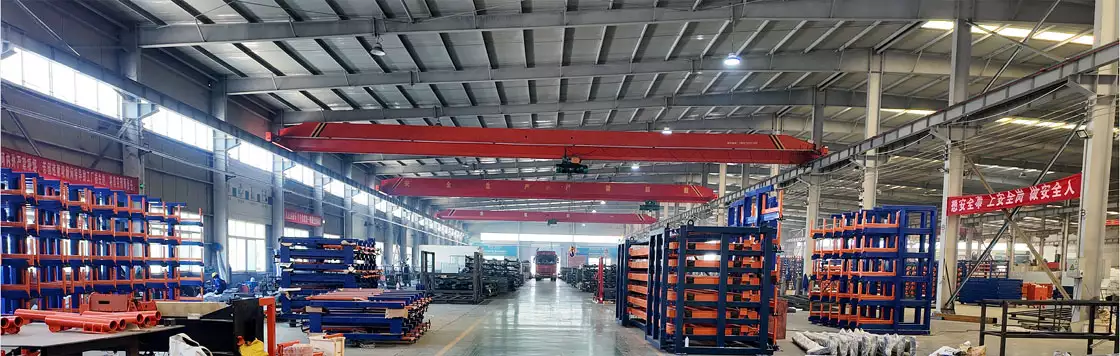
Single-sided and double-sided configurations are both standard. A single-sided cantilever rack places the column against a wall or at the end of an aisle, with arms extending in one direction only. A double-sided rack sits in the middle of a warehouse, serving two aisles from one column line. The double-sided layout nearly doubles the storage density per linear meter of aisle and is the preferred configuration for high-volume pipe distributors where floor space carries a measurable cost per square meter per month.
Integration with Overhead Handling and Automated Retrieval
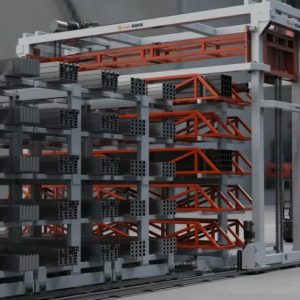
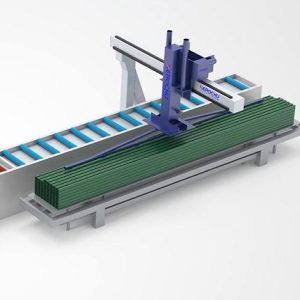
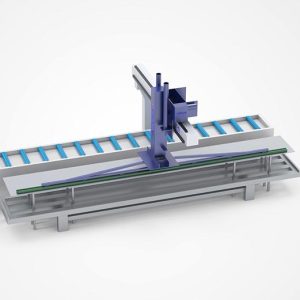
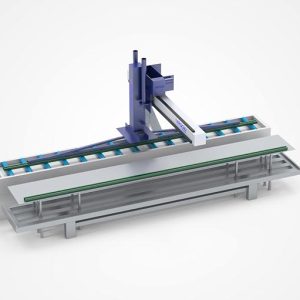
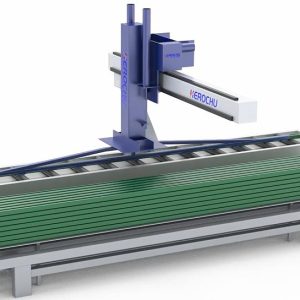
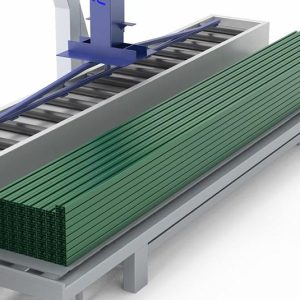
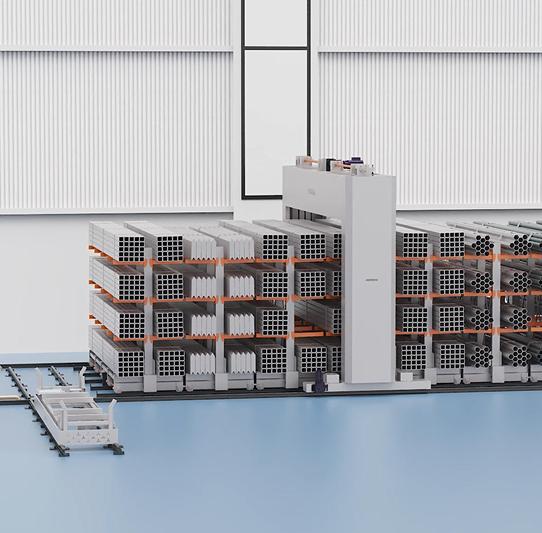
One of the defining advantages of the open-front cantilever format is its compatibility with overhead crane and gantry-based retrieval. Because no front uprights stand between the aisle and the stored material, a bridge crane or gantry manipulator can travel the full length of the rack row and lower a lifting beam or vacuum spreader directly onto any bundle. Herochu’s heavy duty steel pipe cantilever warehouse racking system is frequently deployed as the storage subsystem within a broader automated material handling project.
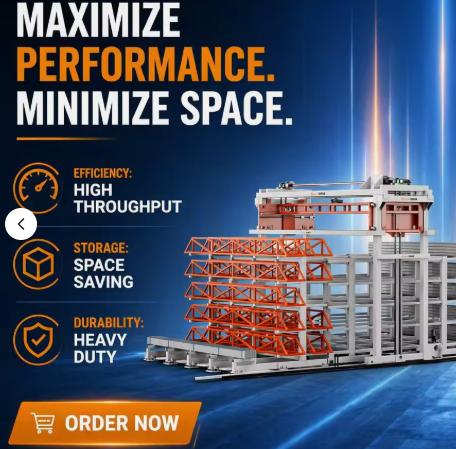
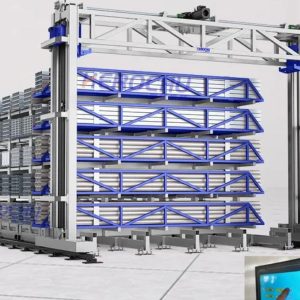
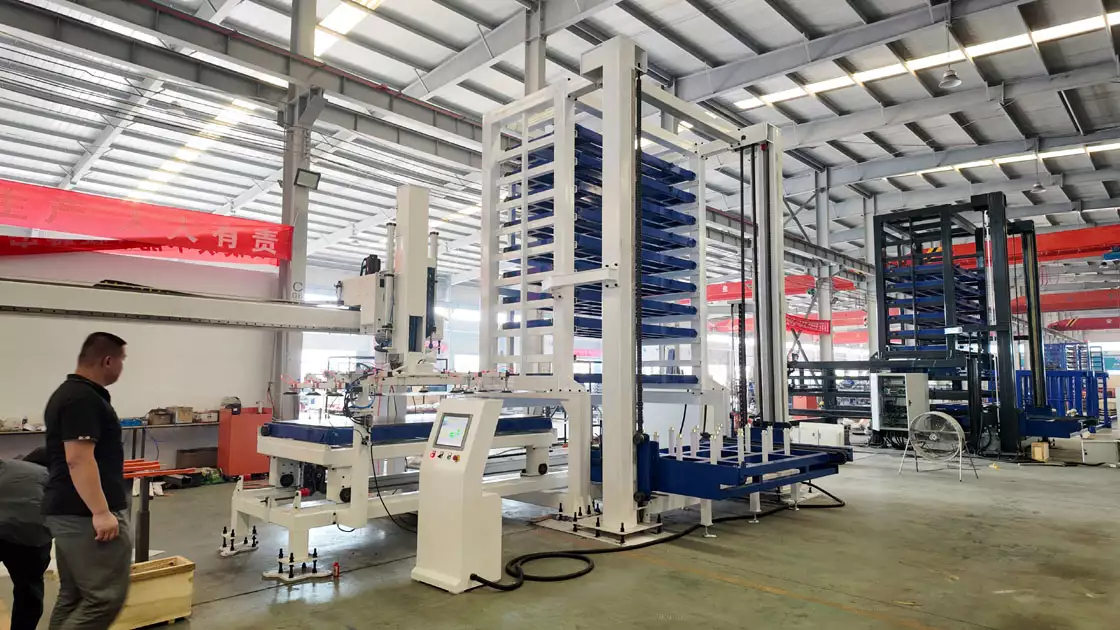
For semi-automated warehouses, Herochu pairs the rack with a linear guide rail system mounted along the aisle floor and an overhead guide track. An electric-powered gantry carriage traverses the rail at speeds up to 30 meters per minute, with a vertical hoist traveling at 9 to 15 meters per minute. Positioning repeatability of ±2 mm ensures the lifting cradle aligns with the arm gap on every cycle. The control cabinet integrates Siemens S7-series PLC hardware and communicates with the warehouse management system via Profinet or Modbus TCP, enabling real-time inventory tracking and order-pick sequencing.
Operators interact with the system through a 10-inch HMI touch panel mounted at the loading station. The interface displays a live map of occupied and vacant storage positions, current retrieval queue status, and equipment health indicators. When a pick order arrives from the ERP system, the gantry carriage moves to the assigned bay location, the hoist descends to the target arm level, and the lifting device — typically a fork-style cradle or magnetic beam — engages the bundle. The entire cycle, from receiving the order signal to depositing the bundle at the outfeed conveyor, completes in under 90 seconds for a typical 30-meter travel distance.
Material Compatibility and Surface Protection
Herochu’s cantilever storage rack handles the full range of ferrous and non-ferrous long products found in industrial supply chains: carbon steel pipe, galvanized tube, stainless steel round bar, aluminum extrusion, copper-nickel alloy pipe, and structural steel profiles including I-beams, channels, and angles. Each arm can be fitted with accessories that adapt the contact surface to the stored material. Polyethylene arm caps prevent metal-to-metal contact for coated or polished products. V-shaped cradle inserts center round stock and prevent rolling on the arm surface. Adjustable stop pins at the arm tip prevent bundles from sliding forward under vibration.
For outdoor or semi-enclosed installations, Herochu offers a hot-dip galvanized finish to EN ISO 1461 standard, with a minimum coating thickness of 85 microns on structural sections. This finish is specified for pipe yards in coastal environments, chemical plants, and unheated storage sheds where condensation and airborne chlorides accelerate corrosion on untreated steel.
Installation, Commissioning, and Compliance
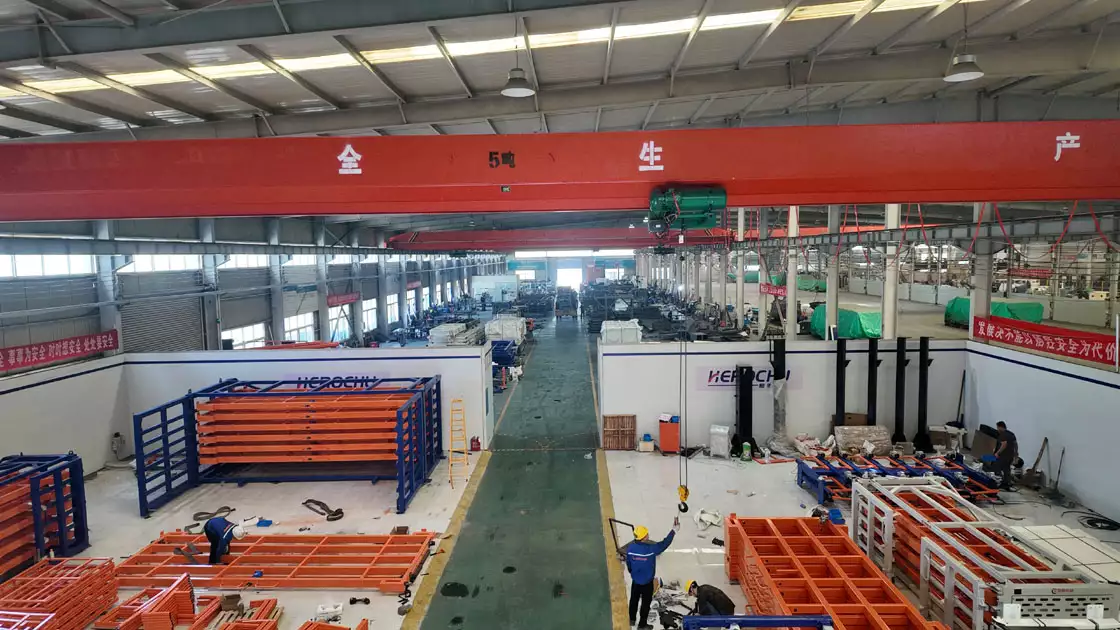
Each Herochu cantilever rack project ships with a detailed installation drawing set, a bolt schedule, and a sequential assembly guide. The bolted construction means the rack can be assembled by the customer’s in-house maintenance crew or by a Herochu-supervised local installation team. Anchor bolt templates are provided at the drawing stage so the concrete contractor can set anchors to the correct pattern before the steel arrives on site.
Load rating plaques are affixed to each bay at eye level and at the loading face, showing the maximum uniform load per arm and the total bay capacity. These plaques comply with the signage requirements of EN 15635 for static steel storage systems. A post-installation inspection checklist covers column verticality tolerance (±3 mm per meter of height), anchor bolt torque, arm level alignment, and base plate shimming, and the completed checklist is part of the handover documentation package.
Herochu provides a two-year structural warranty on all cantilever rack components. The warranty covers defects in materials and workmanship under rated load conditions. Extended warranty terms and annual inspection service agreements are available for high-utilization installations.
Summary
A heavy duty steel pipe cantilever warehouse racking system is not a commodity storage product. It is a load-bearing structure that must maintain dimensional stability across decades of daily loading cycles while holding thousands of tonnes of pipe inventory. Herochu’s engineering approach — bolted connections for reconfigurability, Q235B steel columns sized to the specific load plan, and automation-ready geometry — delivers a storage platform that grows with the facility rather than constraining it. For warehouses that handle pipe, tube, bar, and structural profiles as their primary inventory, the cantilever format remains the most space-efficient and operationally practical storage method available.