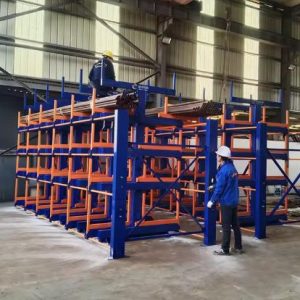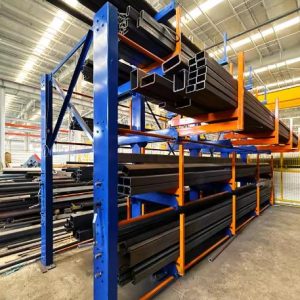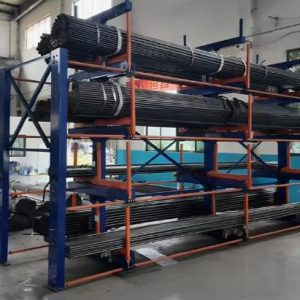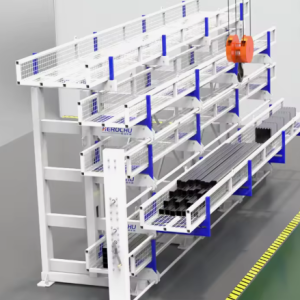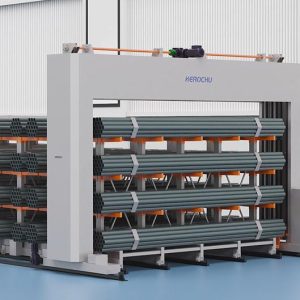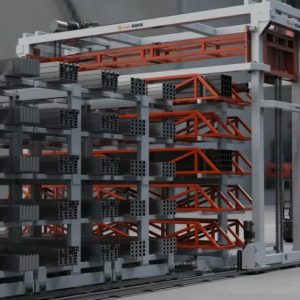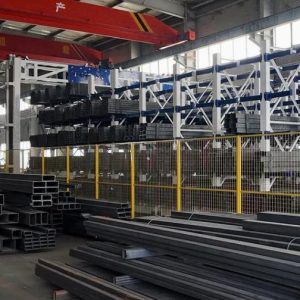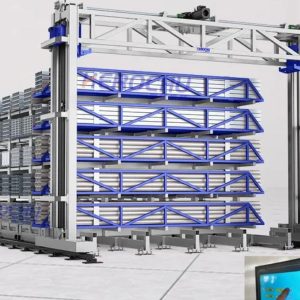
Storing long steel profiles — I-beams, channel sections, square and rectangular tubing, angle iron, and structural pipe — presents a mechanical engineering problem as much as a logistical one. These materials combine substantial individual weight with awkward length-to-cross-section ratios. A 12-meter H-beam weighing several tonnes behaves very differently under gravity than a comparable weight stored on a standard pallet: bending deflection, load distribution across multiple support points, and the concentrated forces applied to each rack arm all require careful calculation.
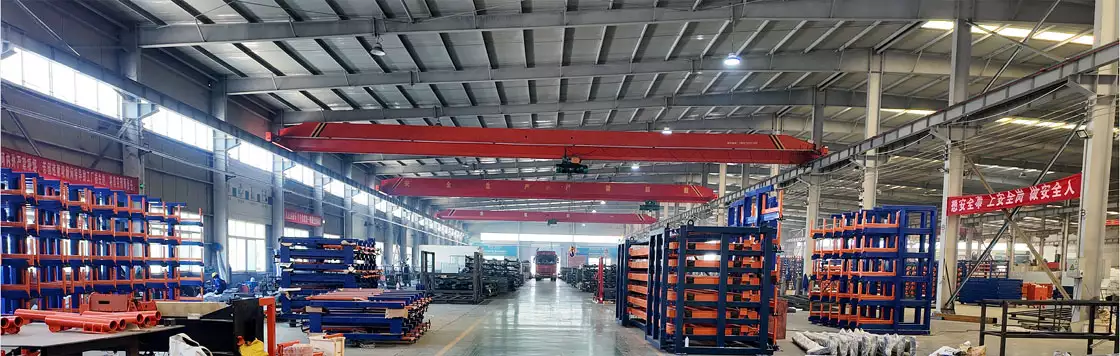
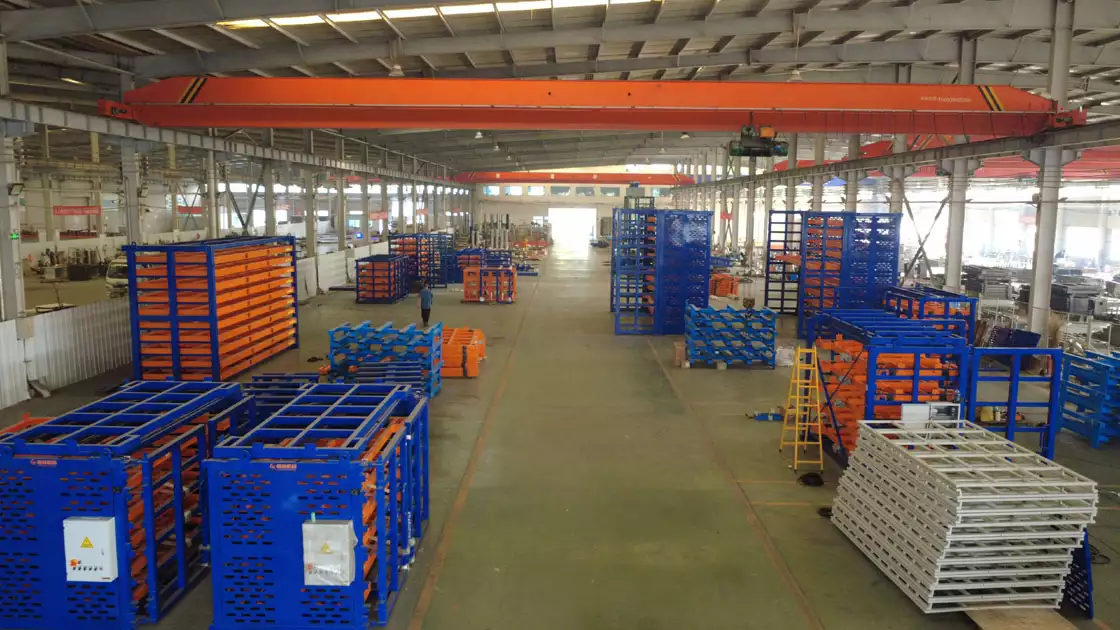
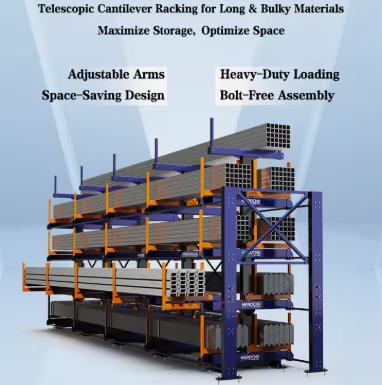
Herochu engineers its high load capacity cantilever rack specifically around these demands. The design accepts single-arm loads up to 3.0 tonnes, supported by a column-and-tie-rod frame structure that transfers weight through the uprights to the floor rather than relying on welded joints to carry primary structural forces. This approach produces a rack system that maintains dimensional stability under sustained heavy loading — a critical requirement when months or years of static storage could otherwise cause gradual deformation in under-engineered alternatives.
Structural Engineering and Load Path
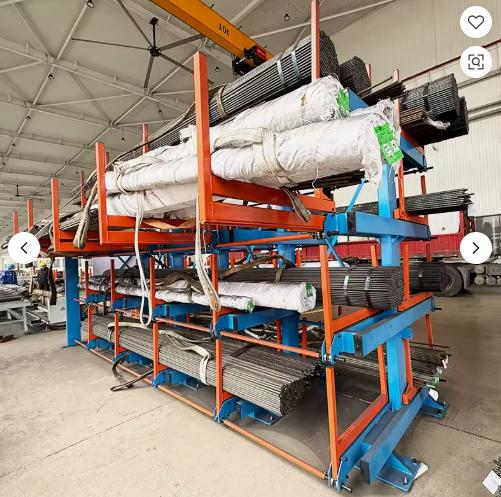
The frame assembly begins with vertical upright columns fabricated from structural-grade steel sections. Each column’s height is specified according to the facility — standard options include 2,000-millimeter, 3,000-millimeter, 4,000-millimeter, 6,000-millimeter, 7,000-millimeter, and 9,000-millimeter uprights — with the taller columns selected for warehouses that can exploit overhead clearance for denser storage.
Horizontal tie rods connect adjacent uprights at regular intervals along the column height, creating a truss-like framework that resists lateral deflection. When loaded cantilever arms apply a bending moment to a column, the tie rods transfer a portion of that force into the neighboring uprights, spreading the load across the frame rather than concentrating it at a single column base. This distributed load path is the mechanism that enables the 3.0-tonne single-arm rating without requiring impractically massive column sections.
The arms themselves are engineered as structural cantilevers — hence the name — with a standard extension range from 1,000 millimeters to 3,000 millimeters. For applications involving unusually wide bundles or non-standard profile dimensions, Herochu can fabricate arms to a custom extension specification. The connection between each arm and its upright column uses a bolted assembly that is sized not only for vertical load but for the combined bending and shear forces that develop when a bundle of steel tubes sits near the outer end of an extended arm.
Load Capacity Options and Selection
The single-arm capacity rating is the primary selection parameter when specifying a Herochu high load capacity cantilever rack. The four standard ratings — 0.5 tonnes, 1.0 tonne, 2.0 tonnes, and 3.0 tonnes — cover the spectrum from lighter tube bundles to dense structural sections:
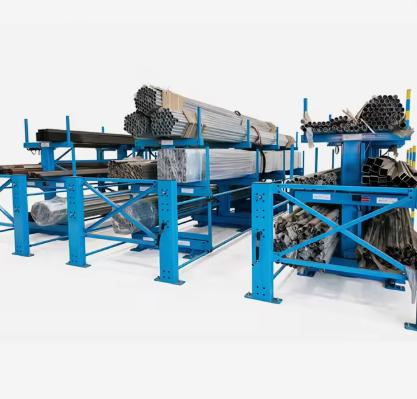
- 0.5-tonne arms suit operations handling smaller-diameter tubing and light-gauge profiles, where individual bundles may not exceed 500 kilograms per support point.
- 1.0-tonne arms cover the middle range common in general fabrication shops and small-to-medium service centers where mixed-stock inventory includes a range of section sizes.
- 2.0-tonne arms address heavier applications: large-diameter pipe, heavy-wall tubing, and standard structural sections such as wide-flange beams and channels.
- 3.0-tonne arms are specified for the heaviest stock — thick-wall pipe, large H-beams, and bundled plate sections where the weight per linear meter demands maximum support capacity at each arm position.
The total per-bay capacity depends on the number of layers and the load on each arm. A six-layer bay with 3.0-tonne arms operating at full rated load supports up to 18 tonnes of material across its height. In double-sided configurations — where arms extend from both faces of the upright columns — this capacity effectively doubles because each face operates as an independent load path to the floor.
Material Adaptation: Length, Layer Count, and Spacing
Because the rack is configured to the material, not the other way around, several dimensional parameters are dialed in during the specification phase:
- Adaptation to pipe and profile length: The upright spacing along the rack run is set to match the stock length. Standard configurations accommodate 3-meter, 6-meter, 9-meter, and 12-meter materials, with custom spacing available for non-standard lengths. For a 12-meter pipe stored horizontally, at least two arm sets support the span — more if the material weight or wall thickness demands intermediate support to prevent sag.
- Number of layers: Two to six layers are standard, chosen to match the variety of SKUs and the ceiling height. Fewer layers with greater vertical spacing allow taller individual bundles; more layers with tighter spacing increase storage density for smaller-diameter stock.
- Vertical clearance between layers: Set according to the largest cross-sectional dimension of the stock on that layer, plus sufficient clearance for fork tines or lifting slings to engage the material during retrieval.
- Single-sided versus double-sided: A single-sided rack positions arms on one face of the uprights and typically installs against a wall or at the end of an aisle. A double-sided rack extends arms from both faces, forming a central spine with storage positions on either side. Double-sided configurations roughly double the storage capacity per linear meter of rack run.
Anti-Fatigue Performance and Long-Term Service
Industrial racking operates in cyclic loading conditions even when the stored material does not move frequently. Each loading and unloading event applies and then removes up to several tonnes from the arm structure. Over thousands of such cycles, microscopic stress concentrations at geometric discontinuities — sharp inside corners at welds, unradiused bolt-hole edges — can initiate fatigue cracks that eventually propagate to failure.
Herochu addresses this through a combination of material selection and detail design. The interlocking fixed arm structure eliminates the need for load-bearing fillet welds at the arm-to-column junction, substituting a mechanical interlock that distributes stress across a wider bearing area. Bolt holes are sized with an engineered clearance that prevents fretting under cyclic load while maintaining positional accuracy. The overall frame geometry has been validated through structural analysis to confirm that peak stresses under full rated load remain well within the material’s endurance limit for the design service life.
The powder-coated or painted surface finish — blue, black, or white depending on the customer’s preference — provides corrosion protection in typical indoor industrial environments. For facilities in coastal regions or those processing materials that introduce corrosive contaminants, upgraded coating specifications are available.
Installation and Reconfiguration
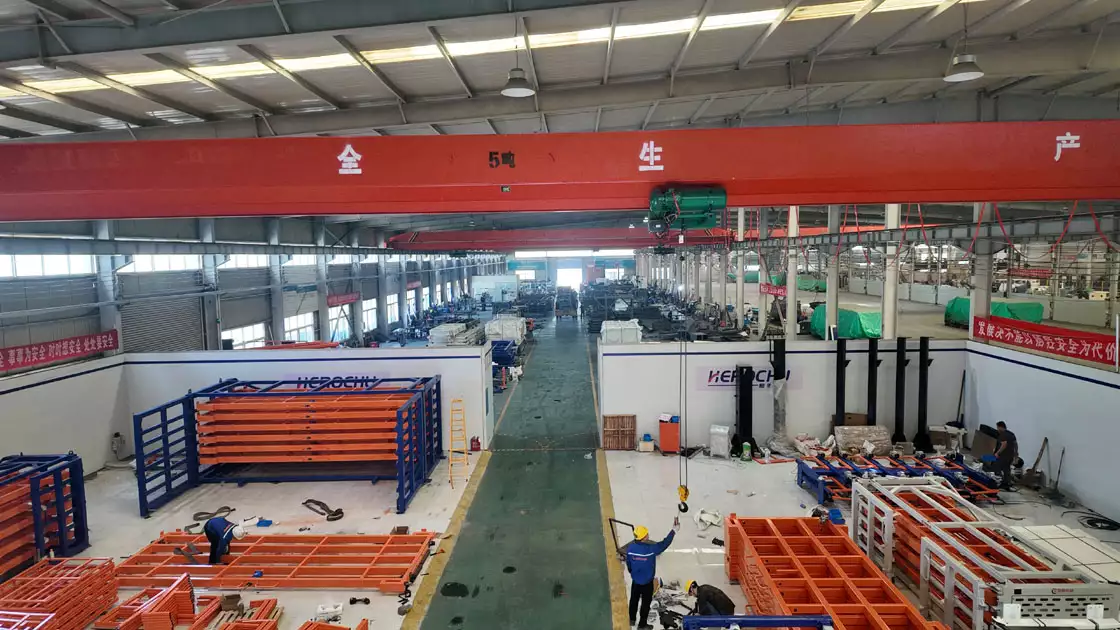
All structural connections in the Herochu high load capacity cantilever rack use screw-assembly fasteners. This design choice carries several implications for the end user. Installation can proceed without welding permits, hot-work procedures, or fire watch protocols — the crew uses hand tools and torque wrenches to erect the frame. If the warehouse layout changes, the rack can be disassembled and reconfigured at a new location without cutting or grinding. Adding or removing layers to accommodate a shift in inventory profile is a matter of unbolting and rebolting arm assemblies.
Column bases are anchored to the warehouse floor through pre-drilled base plates. The anchor pattern and bolt specification are determined during the engineering phase based on the maximum overturning moment the loaded rack will apply to the floor connection — a calculation that accounts for seismic zone requirements where applicable.
Surface Treatment Options
Herochu offers two surface finish standards: powder coating and liquid painting. Powder coating produces a harder, more chip-resistant surface that stands up well to the incidental contact that occurs during loading and unloading operations. Liquid painting allows faster color-matching for facilities that need the rack to align with existing equipment or corporate color standards. Both finishes are applied after fabrication and before assembly, ensuring full coverage on all exposed surfaces including the interior faces of bolt holes.
The color palette spans blue, black, and white as standard options. Blue is commonly selected for visibility — the rack stands out against concrete floors and stock materials, making the storage boundaries obvious to forklift operators. Black suits environments where oil and grease residue is expected, as it masks staining better than lighter colors. White serves facilities with high ambient lighting requirements or those where contrast with dark-colored stock improves operator depth perception.
Applications in Profile-Intensive Industries
Operations that stock a broad range of long steel profiles benefit most directly from a high load capacity cantilever configuration. Structural steel fabricators use the system to organize incoming beams, columns, and bracing members by project, with each layer or bay assigned to a specific job number. Pipe and tube distributors arrange stock by diameter, wall thickness, and grade so order pickers can locate the correct item without reading mill marks on every piece. Manufacturers of agricultural equipment, trailers, and building components — all of whom consume long steel sections in high volumes — use the vertical storage configuration to maintain buffer stock near production cells without encroaching on assembly floor space.
For any of these operations, the engineering starting point is the same: define the heaviest and longest item the rack must hold, then specify the arm capacity, layer count, and upright height that support it with margin for future inventory changes. Herochu provides the structural analysis and configuration recommendations to ensure the installed rack matches both current and anticipated storage requirements.