Walk into any sheet metal fabrication workshop and you will notice a recurring pattern: cut-off pieces, partial sheets, and residual plates stacked against walls, leaned against machinery, or piled on pallets. These remnants represent real material value, yet the way they are stored makes them nearly invisible to operators. When a programmer needs a specific size of stainless or carbon steel for a small-batch job, nobody wants to spend twenty minutes digging through a leaning stack to find it. The result is predictable — shops order new full sheets instead of reusing what they already have, and material utilization numbers stay stubbornly low.
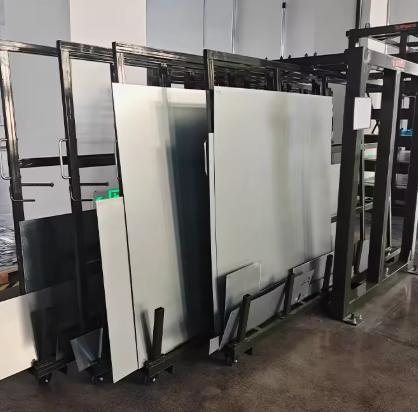
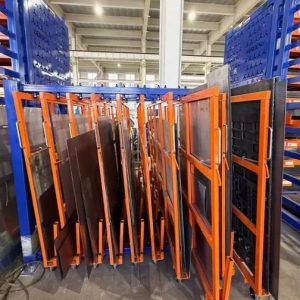
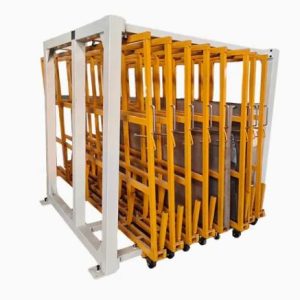
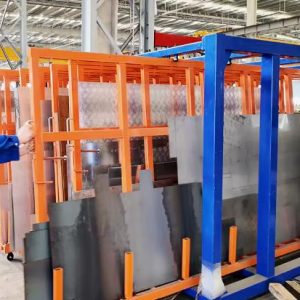
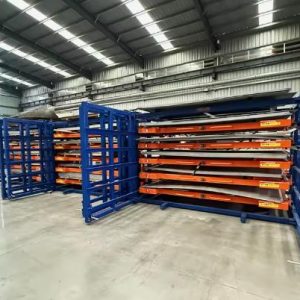
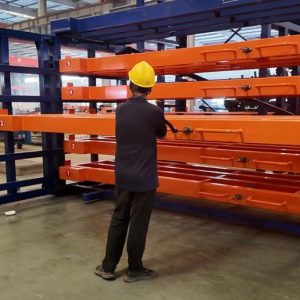
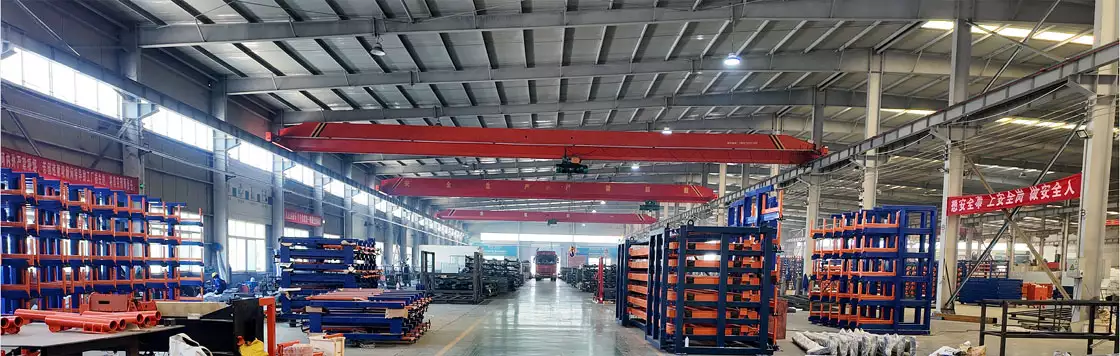
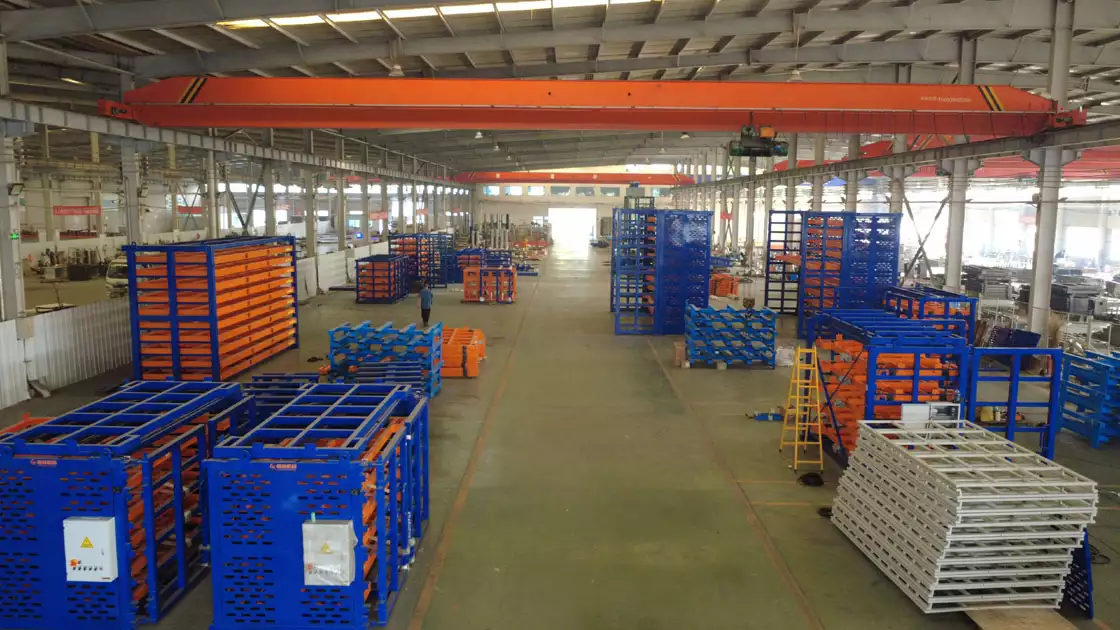
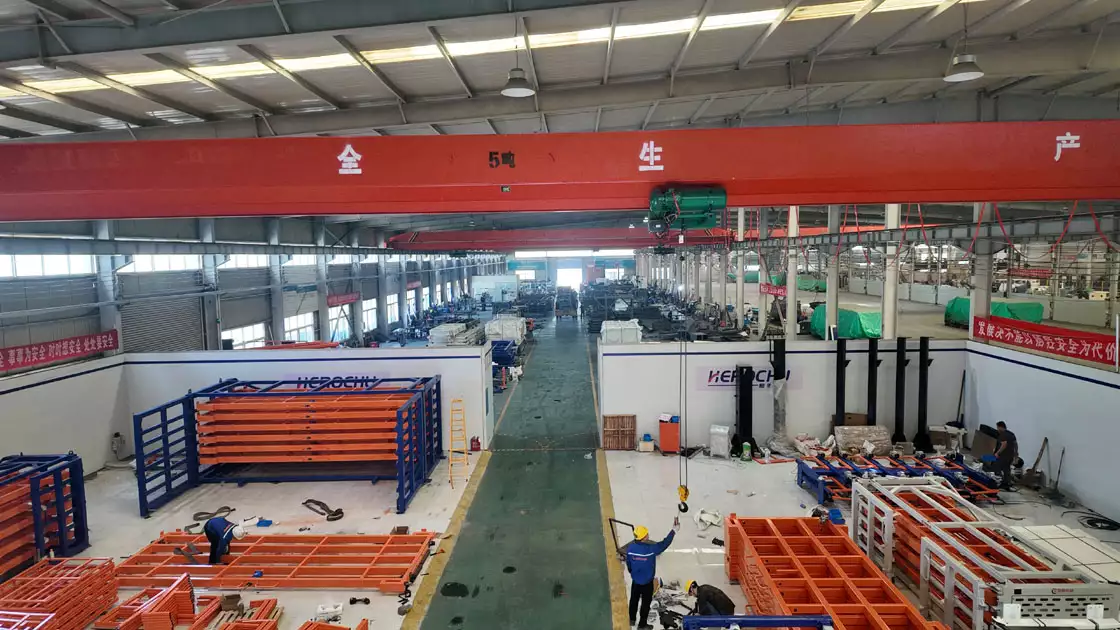
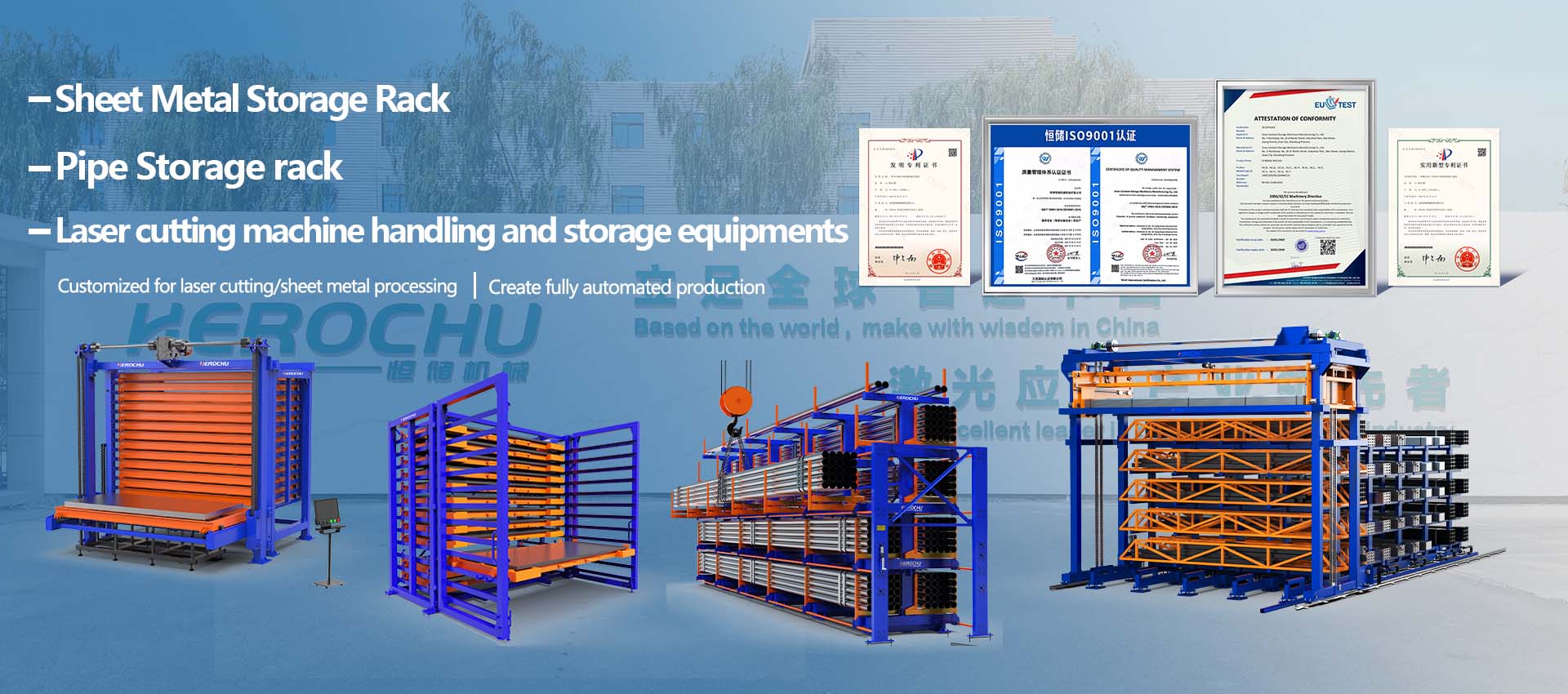
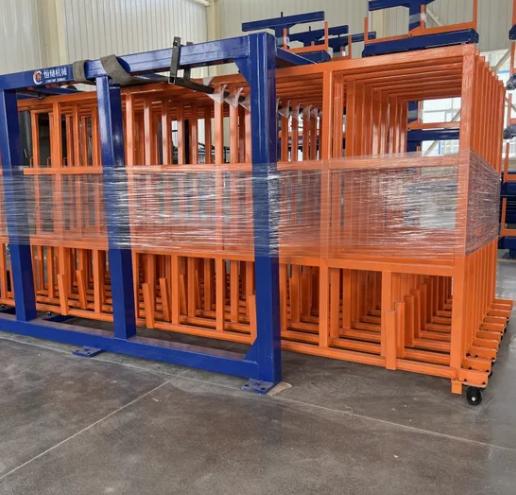
The Vertical Pull-Out Sheet Metal Scrap Storage Rack for Workshops from Herochu was engineered to solve this exact problem. Instead of horizontal stacking that buries useful material, the system stores every remnant in its own pull-out drawer, vertically organized and individually accessible. The operator opens the drawer, sees the sheet, retrieves it, and returns to the machine — a sequence that takes seconds rather than minutes and requires no forklift, no second person, and no stack-shuffling.
The Pull-Out Drawer Mechanism: Engineering Details That Matter
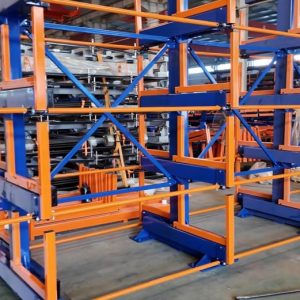
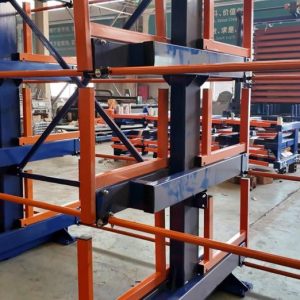
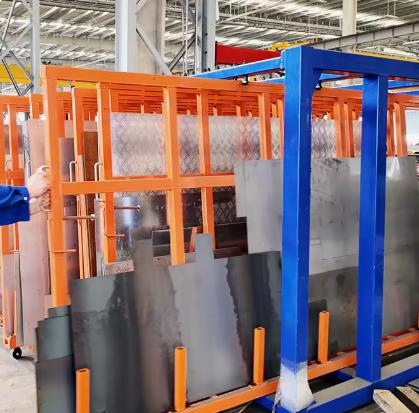
At the core of the Herochu vertical rack is a drawer system designed for full extension. Each drawer rides on wheel-equipped guides and can be pulled out 100 percent of its depth, meaning the entire sheet is exposed and reachable the moment the drawer is open. This is a meaningful distinction from partial-extension shelving, where the back third of a shelf remains obstructed and sheets at the rear are effectively inaccessible without removing the front ones first.
The bottom of every drawer is fitted with non-skid strips. This detail matters more than it sounds: when a 1000 kg load of steel plate sits on a smooth metal surface and the drawer is pulled out, the sheets can shift forward under their own momentum. Non-skid strips hold the material in place, protecting the operator and preventing edge damage to the sheets themselves. The mechanical-assistance discharge method means that even heavily loaded drawers move smoothly, so a single operator can handle retrieval without strain.
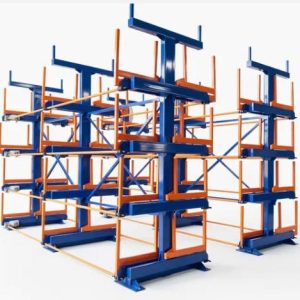
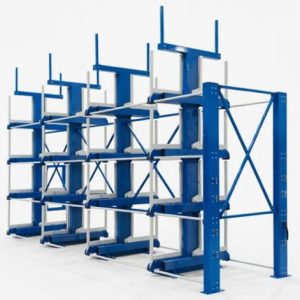
The structure above is built from high-strength Q235B steel, the same grade used in heavy industrial racking and bridge components. Welded joints and a rigid upright frame give the rack the structural integrity needed to carry up to 1000 kg per level across eight or more tiers. For workshops processing larger formats, Herochu offers the HC-V3015-8 model, accommodating sheet dimensions of 3000 × 1500 mm, and the HC-V2513-8 for 2500 × 1000 mm plates. Clear space between layers is customizable — the standard 60 mm can be adjusted to match the plate thicknesses a shop actually handles.
Vertical Structure: Reclaiming Floor Space That Was Already Wasted
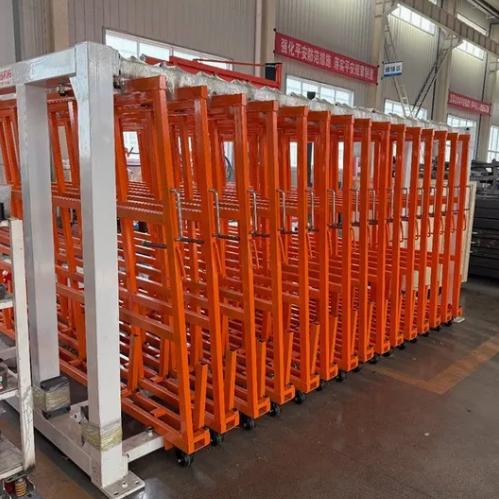
A conventional horizontal storage layout for remnants spreads across a large footprint. When sheets are laid flat on pallets or racks, a workshop storing a few hundred remnants can easily consume 30 to 50 square meters of floor area — and most of that space is aisle, not storage. The vertical design compresses that footprint dramatically. An eight-tier Herochu rack occupies roughly the same floor space as a single pallet rack bay but holds eight separate layers of material.
This compression has a second benefit that workshop managers often overlook: the rack can be placed directly beside the machine tool. When remnants are stored in a remote warehouse corner, the time cost of walking back and forth adds up across a shift. When the rack sits next to the laser cutter or press brake, retrieval becomes part of the natural workflow. Operators pull the drawer, take the remnant they need, and load it into the machine without leaving the work cell. This is the principle behind cellular manufacturing, and the Herochu vertical rack is built to support it.
Multi-Tier Organization and Inventory Visibility
One of the most underrated features of a drawer-based vertical system is the inventory clarity it provides. Each drawer functions as a discrete storage location. When remnants are sorted by material type — carbon steel in drawers one through three, stainless in four and five, aluminum in six — the rack becomes a physical inventory list. A supervisor can walk up to the rack, open drawers in sequence, and see exactly what material is available. No guessing, no clipboard reconciliation, no database that someone forgot to update.
The tier count itself is customizable based on the material mix. A workshop that processes thin gauge sheets in many small sizes benefits from more tiers with tighter clear spacing. A shop handling thicker plate needs fewer tiers with greater clearance. Herochu builds to the specification, and the layer count reflects the actual production profile rather than a generic default.
This layered organization feeds directly into material utilization. When every remnant is visible and accessible, operators reuse them. Jobs that call for a 600 × 400 mm piece of 3 mm carbon steel can pull from remnants instead of cutting into a fresh full sheet. Over months, the savings in material cost — and the reduction in scrap sent to recycling — compound into a meaningful return on the rack investment.
Single-Operator Operation and Labor Reduction
A detail that comes up repeatedly in fabrication shops is labor cost. Two-person retrieval of a sheet from a horizontal stack is not just slower; it ties up a second operator who could be doing value-adding work. The Herochu vertical pull-out system is designed so that one person can handle the full retrieval cycle. The drawers extend fully on wheels, the non-skid strips keep the load stable, and the mechanical assistance reduces the pulling force needed even at full load capacity.
The time savings are measurable. In workshops that have moved from horizontal stacking to the vertical pull-out rack, retrieval time per remnant drops from several minutes to under a minute. Across a shift where a operator pulls remnants ten or fifteen times, the labor hours saved per week are real. For shops running lights-out or short-staffed shifts, the ability to retrieve material without a second person is not a convenience — it is a production enabler.
Compatibility With Machining Equipment
The Herochu rack is not tied to a single machine type. It works equally well beside a laser cutter, a plasma table, a press brake, a shearing machine, or a punch press. The principle is the same regardless of the equipment: remnants come off the machine, go into a labeled drawer, and are available next time a job needs that size. The rack’s mechanical-assistance discharge and full-extension drawers mean that material flow in and out is fast regardless of which machine it serves.
For laser cutting shops specifically, where nesting software generates offcuts of many shapes and sizes, the multi-tier drawer system provides a natural sorting mechanism. Drawers can be dedicated to specific material grades or thicknesses, and the remnants from a nested sheet go into the appropriate drawer immediately after cutting. The next nest job can then pull from those remnants before cutting into new plate.
Customization and Installation Support
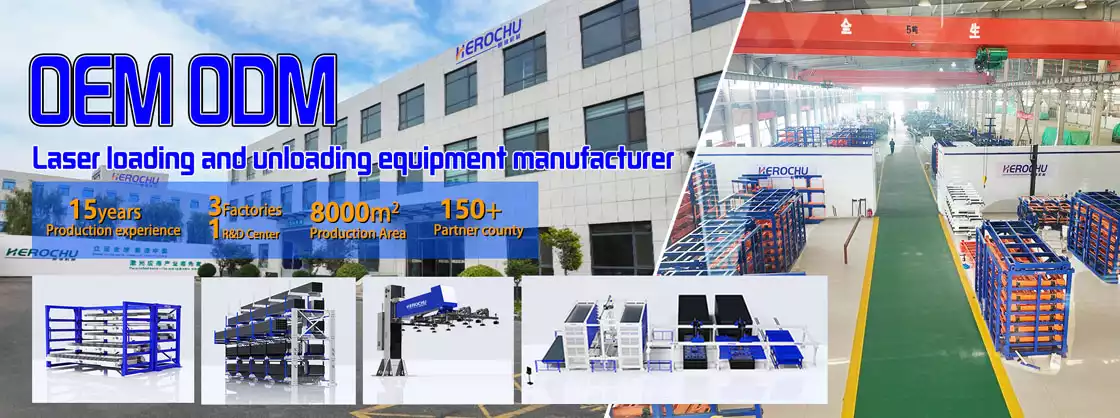
Herochu provides full customization of the vertical rack system. Sheet dimension capacity, layer count, clear space between tiers, and load per level are all adjustable to the shop’s requirements. The HC-V2010-15, HC-V2513-15, and HC-V3015-15 models cover the 15-tier configurations with 2000 × 1000, 2500 × 1500, and 3000 × 1500 mm sheet capacities respectively, each rated at 1000 kg per layer with integrated pull-type drawer movement. Delivery cycle is 30 days from order, and Herochu provides on-site installation and online guidance to ensure the rack is commissioned correctly and operating at full capacity from day one.
Color, overall dimensions, and structural reinforcement can all be tailored. For shops with non-standard plate sizes — longer than 3000 mm, for instance, or thicker plate requiring greater clear space — Herochu’s engineering team works directly with the customer to produce a rack that fits the actual material rather than forcing the material to fit a standard rack.
A Practical Investment in Material Efficiency
The decision to install a Vertical Pull-Out Sheet Metal Scrap Storage Rack for Workshops is, at its core, a decision to stop treating remnants as waste and start treating them as inventory. Every shop knows the cost of a full sheet of stainless. Every shop knows the frustration of discovering, after ordering new material, that a usable remnant was buried somewhere in a stack. The Herochu rack eliminates that disconnect. What remains is a workshop where material is visible, accessible, and reused — where the floor space devoted to storage serves the production cell instead of competing with it, and where a single operator can manage the full material flow without waiting for help.
For fabrication shops evaluating storage upgrades, the vertical pull-out system from Herochu offers a combination of structural robustness, operational simplicity, and measurable material savings that horizontal racking cannot match. The drawers pull out completely. The structure holds. The remnants get used. That is the entire point.