Laser cutting is the most precise and most widely adopted plate-cutting process in modern sheet metal fabrication. A fiber laser running a 12 kW source can cut through 20 mm carbon steel with edge quality that requires no secondary finishing. Nesting software packs parts onto a full sheet with high material utilization — often above 85 percent. But even at 90 percent nest efficiency, 10 percent of every sheet becomes remnant material. On a 3000 × 1500 mm sheet of 6 mm carbon steel weighing 212 kg, that 10 percent represents over 21 kg of plate — material the shop has already paid for, already transported, already loaded onto the laser table.
What happens to that remnant defines the shop’s material recovery rate. In facilities without organized remnant storage, the offcut comes off the laser shuttle, sits on a pallet or against a wall, and within days is buried under subsequent offcuts. When a later job needs a piece that size, the operator cannot find it. The shop loads a new full sheet. The remnant, eventually, goes to scrap at a fraction of its purchase value. This cycle repeats across every shift, every laser, every material grade — and the accumulated annual loss runs into tens of thousands of dollars for a mid-sized shop.
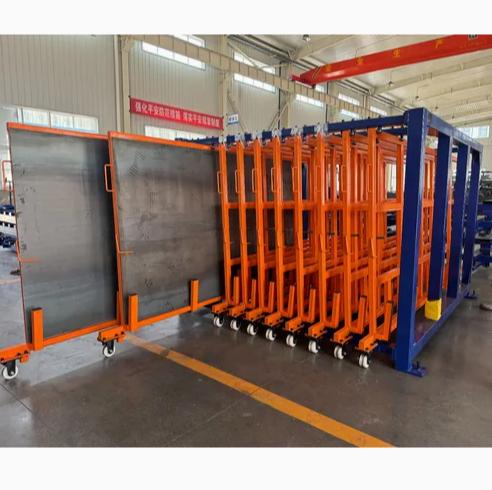
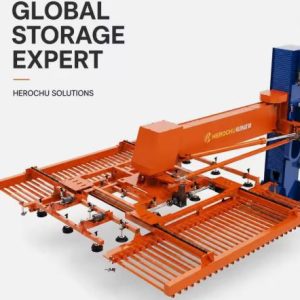
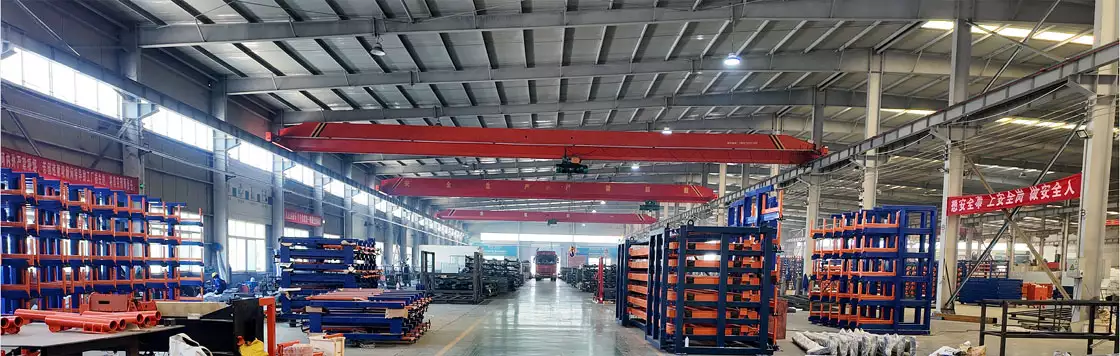
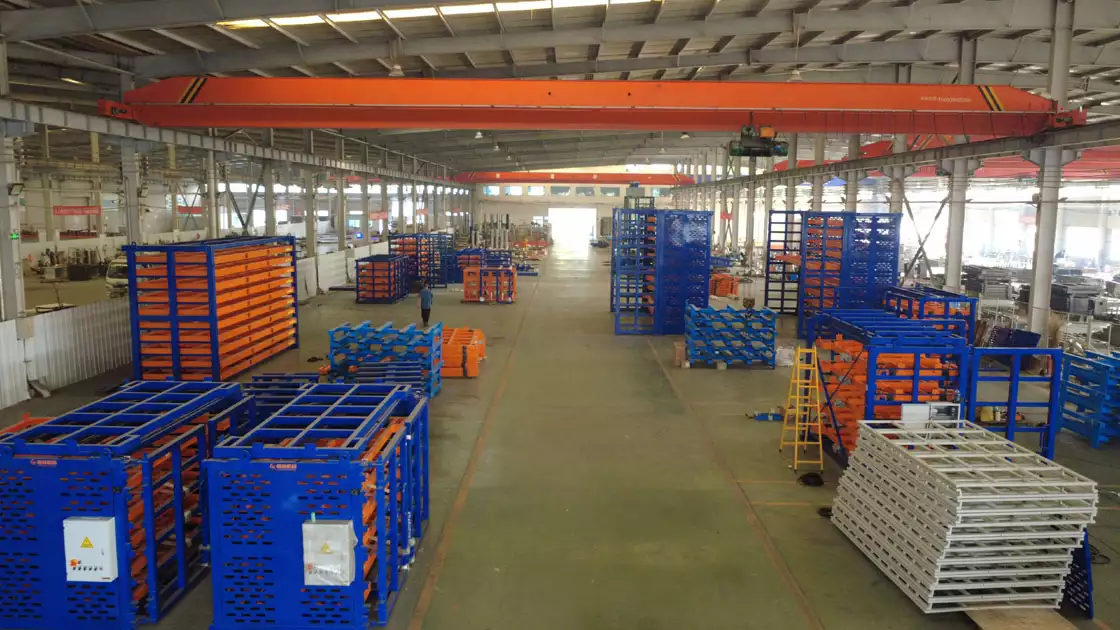
The Vertical Metal Plate Scrap Rack for Laser-Cutting Remnants from Herochu breaks this cycle by providing a structured, accessible storage location for every offcut the laser produces. The rack sits beside the laser. The offcut goes into a drawer. The next job that needs that material pulls it from the drawer. The recovery loop closes, and the material that was waste becomes inventory.
Machine-Adjacent Placement: The Design Principle
The single most important design decision in a remnant storage system is location. A rack that is placed in a remote storage area, away from the laser cutter, will not be used consistently. The operator who finishes a nest and has an offcut in hand faces a choice: walk the remnant to the storage rack and file it in the correct drawer, or set it down nearby and deal with it later. The path of least resistance is the second option, and it is how remnants accumulate in disorder.
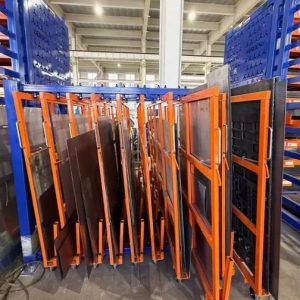
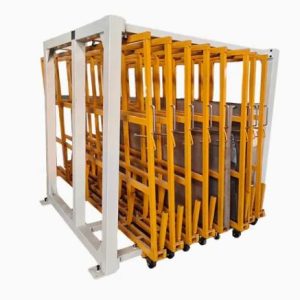
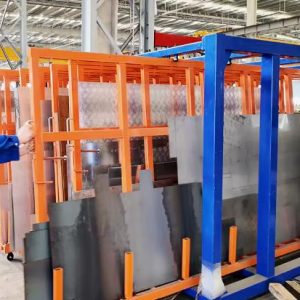
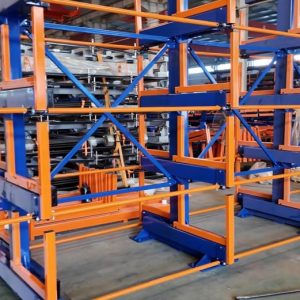
The Herochu vertical rack is designed to occupy a footprint small enough to sit directly beside the laser cutter. The vertical structure — eight tiers stacked vertically, not spread horizontally — compresses the storage into a floor area comparable to a single pallet position. This means the rack fits within the work cell. The operator finishes the nest, turns to the rack, opens the appropriate drawer, and places the remnant. The round-trip time is seconds, not minutes. The friction of storing the remnant is lower than the friction of discarding it, and that is the condition that makes the system work.
For shops with multiple lasers, multiple racks can be deployed — one at each machine cell, or a centralized rack serving two adjacent cells. The rack’s compact footprint makes this practical where horizontal storage would be impossible. The HC-V2513-8 model handles 2500 × 1000 mm sheet capacities in an eight-tier configuration, and the HC-V3015-8 handles 3000 × 1500 mm sheets — the two most common laser-cutting plate sizes.
Drawer System Designed for Laser Offcut Handling
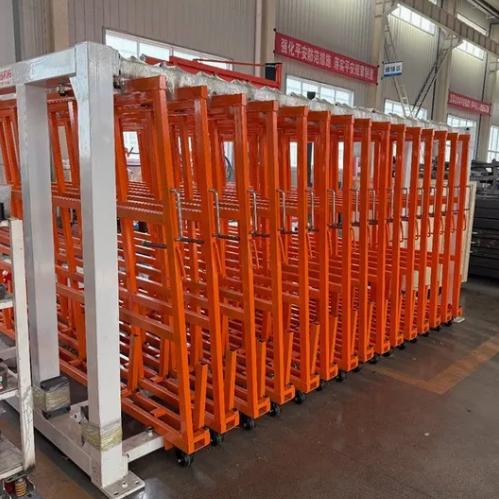
The remnants produced by a laser cutter are not uniform. They include the skeleton — the frame of the sheet after parts are cut from it — plus partial sheets that were only partially nested, and individual cut-to-size blanks held for later operations. The drawer system of the Herochu rack accommodates all of these forms.
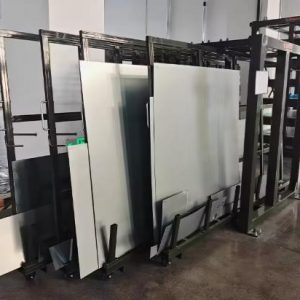
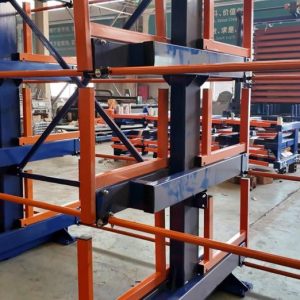
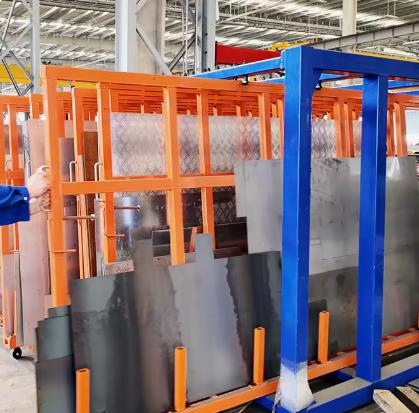
Each drawer extends 100 percent out of the rack on wheel-equipped guides. When the drawer is fully open, the entire stored remnant is accessible. There is no blind zone at the rear. The operator can see every piece in the drawer, select the one needed for the next job, and remove it without disturbing the others. This is the essential feature that makes remnant reuse practical — when every piece is visible, the operator can browse the inventory physically, the way one browses a filing cabinet.
Non-skid strips on the drawer floor hold the remnant in place during extension. This is especially relevant for laser-cut skeletons, which can have irregular geometries and sharp edges. A shifting skeleton on a smooth drawer surface is a handling hazard. The non-skid strips prevent movement, so the drawer extends smoothly and the operator can safely handle the piece.
The mechanical-assistance discharge method reduces the pulling force required to move a fully loaded drawer. A drawer holding 1000 kg of plate remnants still moves with a controlled, steady pull. This means a single laser operator — the person who knows the material best because they cut it — can manage the remnant inventory directly without calling a second person for material handling.
Material Sorting by Grade and Thickness
Laser-cutting shops typically work with multiple material grades and thicknesses: carbon steel in 2 mm, 3 mm, 4 mm, 6 mm, 8 mm, 10 mm, and thicker; stainless 304 and 316 in various gauges; aluminum alloy sheet in several grades. The remnant inventory must be sorted by grade and thickness to be useful. A drawer that mixes 3 mm carbon steel with 3 mm stainless is useless to an operator who needs one specific grade.
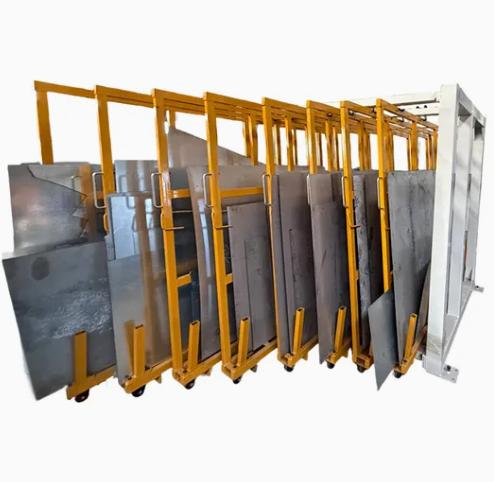
The multi-tier structure of the Herochu rack provides a natural sorting framework. With eight tiers — and up to fifteen tiers in the HC-V2010-15, HC-V2513-15, and HC-V3015-15 configurations — each drawer can be dedicated to a specific material and thickness. The operator who finishes a nest of 4 mm stainless 304 places the remnant in the 4 mm stainless drawer. The next job that calls for 4 mm stainless checks that drawer first, pulls the remnant, and avoids loading a new full sheet.
This sorting discipline transforms the rack from a storage unit into a material catalog. The vertical structure makes the catalog browsable — open a drawer, see what is available, select the piece. The clear space between tiers, customizable from the standard 60 mm, accommodates the thicknesses actually handled. For shops storing thicker plate remnants, greater clear spacing can be specified.
Workflow Integration With the Laser Cell
The remnant storage rack functions as part of the laser cell’s material flow. The full workflow works as follows: a full sheet is loaded onto the laser shuttle from the raw material storage. The laser cuts the nest. The cut parts are removed for downstream operations. The remnant — the skeleton and partial sheet — is placed in the Herochu rack’s appropriate drawer. When a subsequent job requires a piece that fits within an available remnant, the operator pulls that remnant from the drawer and loads it directly onto the shuttle.
This loop eliminates two costs. First, it reduces raw material consumption: the remnant is consumed before a new full sheet is committed. Second, it reduces scrap handling: the remnant is used productively rather than accumulating until a scrap dealer collects it. For a shop running multiple lasers across two or three shifts, the material savings compound rapidly.
The rack’s full-extension drawers also support the machine operator’s workflow directly. When a job requires a specific remnant, the operator opens the drawer, identifies the piece, and transfers it to the laser shuttle. With non-skid strips holding the remnant steady and the drawer fully extended, the operator can use a vacuum lifter or mechanical clamp to move the plate without manual lifting. The transfer is controlled, safe, and fast — compatible with the cycle time expectations of a modern laser cell.
Configuration, Delivery, and Installation
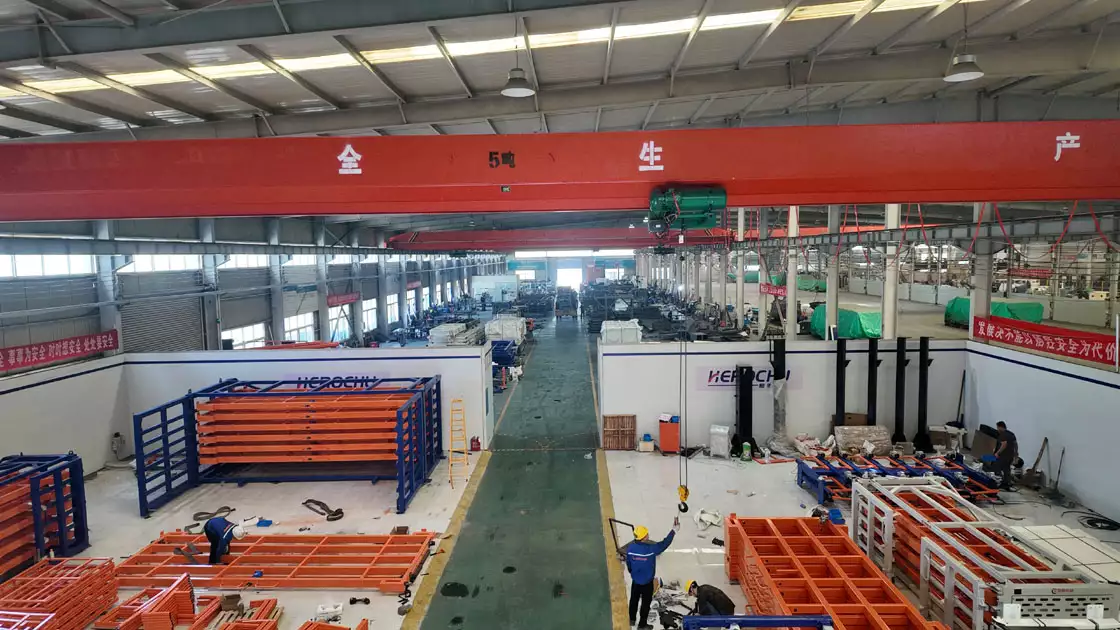
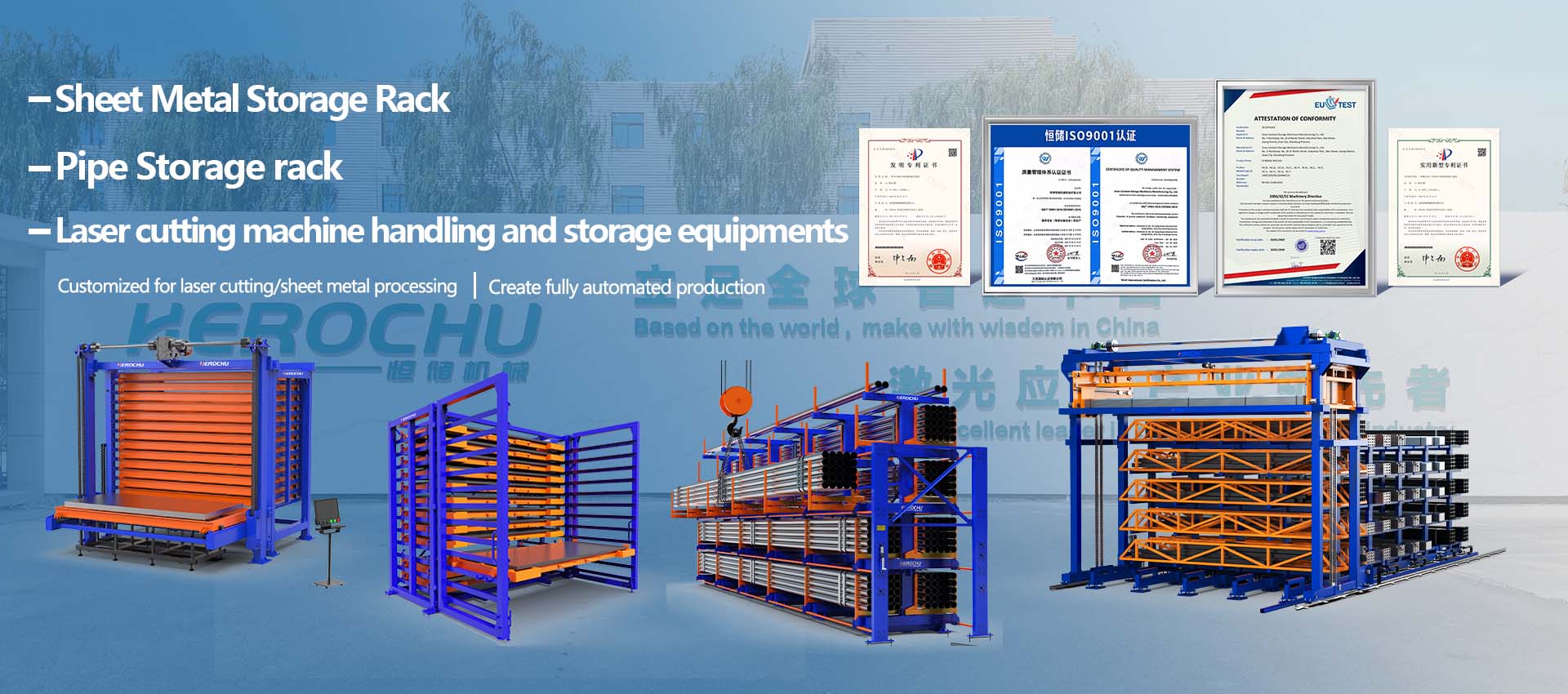
The Herochu vertical remnant rack is configured to the shop’s laser-cutting profile. The HC-V2513-8 and HC-V3015-8 models cover the standard 2500 × 1000 mm and 3000 × 1500 mm plate sizes with eight customizable tiers. The fifteen-tier HC-V2010-15, HC-V2513-15, and HC-V3015-15 models serve shops with higher remnant volumes and a need for finer sorting granularity. All models carry 1000 kg per layer with integrated pull-type drawer movement and mechanical-assistance discharge.
The maximum sheet length the system accommodates is 6000 mm, covering the range of laser-cutting table sizes from 2000 × 1000 mm entry-level machines through large-format 6000 mm systems. Drawer capacity options of 400 kg, 1000 kg, and 2000 kg cover light gauge through heavy plate. Delivery cycle is 30 days, with on-site installation and commissioning provided. Online guidance is available for self-installation, and Herochu’s engineering team works directly with the customer to configure tier count, clear spacing, and load capacity to the specific material profile.
Closing the Recovery Loop
The Vertical Metal Plate Scrap Rack for Laser-Cutting Remnants from Herochu is purpose-built for the most common and most material-intensive process in modern fabrication. Laser cutting produces remnants at a predictable rate and in predictable forms. The rack system is designed to capture those remnants at the point of generation — beside the machine — and hold them in a structured, accessible, single-operator format that makes reuse the default behavior rather than the exception.
For shops that have measured the gap between purchased material value and recovered material value, the answer is not better nesting software alone or better purchasing alone. It is a physical storage system that makes the right workflow behavior the easiest behavior. The rack sits beside the laser. The drawers open fully. The remnants are visible and accessible. The operator uses them. That is how the recovery loop closes — and that is what the Herochu system is engineered to deliver.