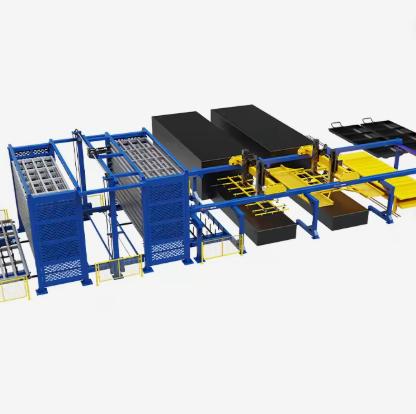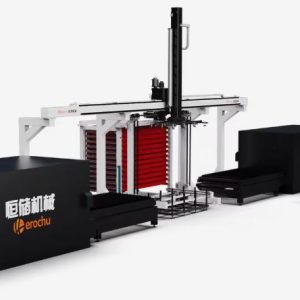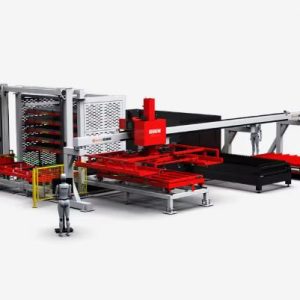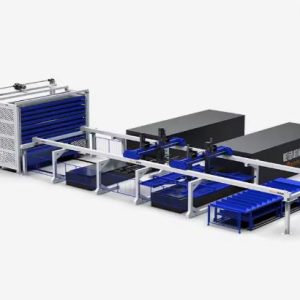
What does a sorting unit actually do?
After the nest is cut, a sheet is a mixture: finished parts, a skeleton, and offcuts that may still be worth keeping. Someone has to separate them. In a manual cell that someone is an operator with a pry bar and gloves, working on a sheet that is often warm and always awkward to handle.
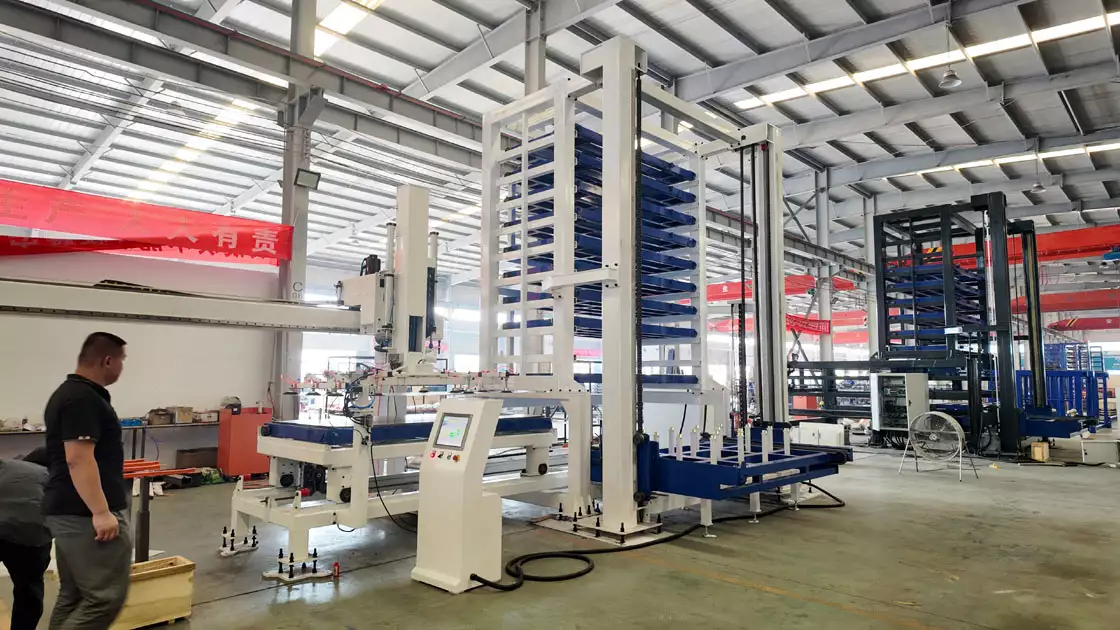
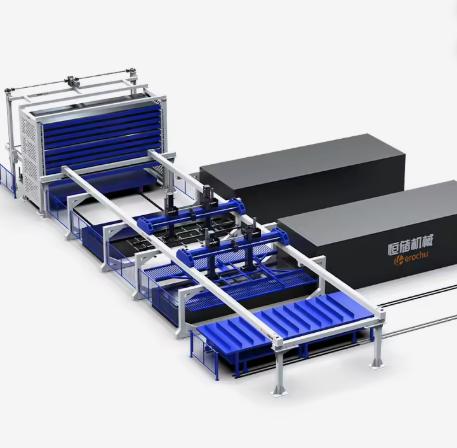
A sorting unit takes the cut sheet from the unloading position and picks parts out with vacuum grippers or magnetic tools. Parts go to bins, pallets or a conveyor in the order the next process needs them. The skeleton is tipped into a scrap container, and reusable offcuts can be routed to a remnant rack.
Two results matter commercially. The laser stops waiting for someone to clear the bed, and parts reach bending or welding already separated and grouped. Herochu plans sorting as part of the cell layout rather than an accessory fitted afterwards, because bin positions decide how far the gantry travels and how fast the output clears.
Where do parts stop moving?
Sorting rarely fails at the gripper. It fails at the boundaries: the sheet reaches the sorter late, the bins fill before the shift ends, or parts are separated faster than the press brake consumes them. Herochu checks the boundaries before the pick rate.
The unloading position is full. The sorter cannot start until the previous sheet moves, so the laser waits with a finished nest on the bed.
Parts accumulate before bending. Cutting has outrun the next process, and a faster sorter only builds a larger pile.
Skeletons stack up. Scrap handling stayed out of scope, so one manual job simply replaced another.
Mixed parts arrive in one bin. Without job-level routing, the operator sorts again at the brake.
Each finding points to a different fix: an output buffer, a takt-time review downstream, a scrap conveyor, or programmable bin assignment. None of them is solved by adding laser power.
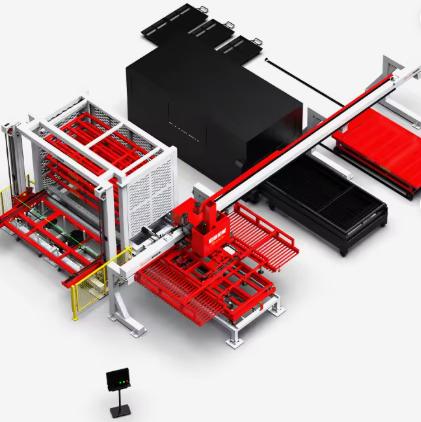
How does automatic loading and unloading feed the sorter?
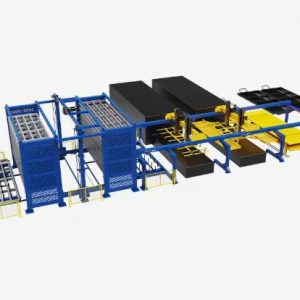
The sequence is fixed. A loader places a sheet on the table, the nest is cut, and the unloader moves the cut sheet to the sorting position. What varies is how much of that sequence overlaps.
On a single table the stages run one after another and the laser is idle during unloading and sorting. With a second table or a buffer position, the unloader clears the bed while cutting continues. That overlap, not the sorter’s pick rate, usually decides whether the cell gains hours per week.
Herochu sizes the buffer between unloading and sorting from the longest expected cut rather than the average, so a heavy nest does not block the next sheet.
Which parts should be sorted automatically?
Automation pays where parts are repeatable and light enough for vacuum or magnet. Large flat panels with a stable pickup area are the simplest case. Small parts that drop through the skeleton, parts with narrow webs, and parts that must stay nested for a second operation are harder.
A practical split is to automate the high-volume family and leave exceptions to a manual station at the end of the line. The cell then removes most of the handling without pretending every job can be picked reliably.
| Situation | Manual clearing | Sorting unit in the cell |
| Bed clearance | Laser waits for an operator | Unload and sort overlap with cutting where a buffer exists |
| Part separation | Pry bar, gloves, one sheet at a time | Vacuum or magnetic pick, routed by job |
| Scrap | Skeleton cut up or dragged out | Tipped or conveyed to a scrap container |
| Traceability | Counted by hand at the next stage | Parts grouped by nest and job at the bin |
| Labour profile | Operator tied to the machine | Operator tends stock, bins and quality |
How should the output side be sized?
Count three things before choosing bin capacity: how many part families run in a shift, how long a bin may sit before collection, and who collects it. If a bin fills in forty minutes and is emptied once a shift, the cell needs more bins or a removal routine the operator can perform without opening a fence.
Add the physical route. Bins that must be lifted over a fence, or pallets that block the loader envelope, turn an automated cell back into a manual one at the busiest moment. Separated parts also cut work in progress, because a cell that sorts to job bins holds less unfinished material on the floor than one that stacks cut sheets against a wall.
Does a sorting unit remove the skeleton as well as the parts?
It can, if skeleton handling is in scope. Many cells pick parts first and then discharge the skeleton to a separate container, so ask for both functions to be quoted separately.
Can sorting be added to a laser that already has automatic loading?
Often yes, provided the unloading position can present the cut sheet and the controller can pass nest data. The usual constraint is space and the height available for the gantry.
Is sorting worth it for low-volume, high-mix work?
Only where part families repeat enough to justify programming pick positions. Otherwise a buffer and a well-lit clearing station deliver most of the benefit for far less. Herochu quotes the sorter as a separate module so the choice stays open.
Automate the handover, not just the machine
Herochu configures smart laser automation around the handover points, from the storage position through the cutting table to the bin that feeds the brake, so the gain shows up in parts per shift rather than in a faster cut nobody can clear.