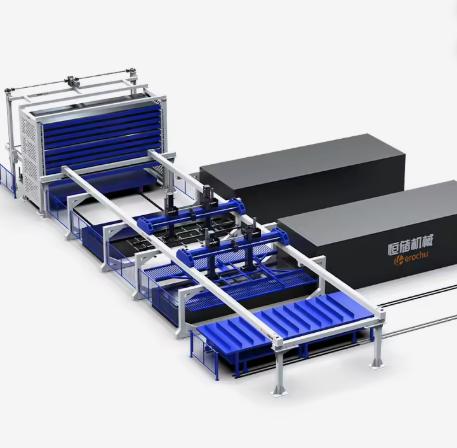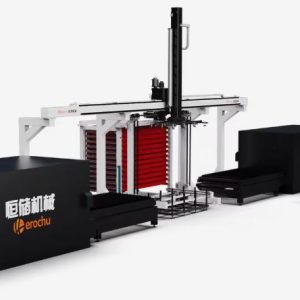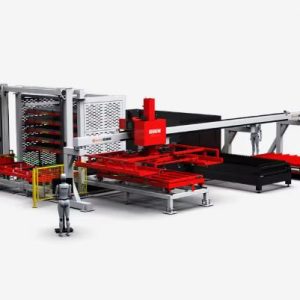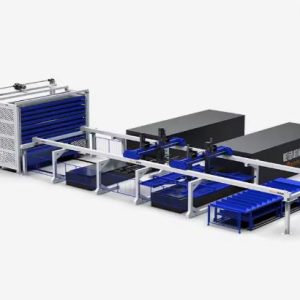
What does the system take off the operator’s hands?
On a fiber laser without automation, a sheet is handled three or four times before it becomes a part: off the pallet, onto the table, off the table as a cut sheet, then to a stacking point. Each move needs a crane, a vacuum lifter or two people.
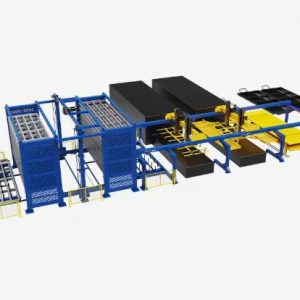
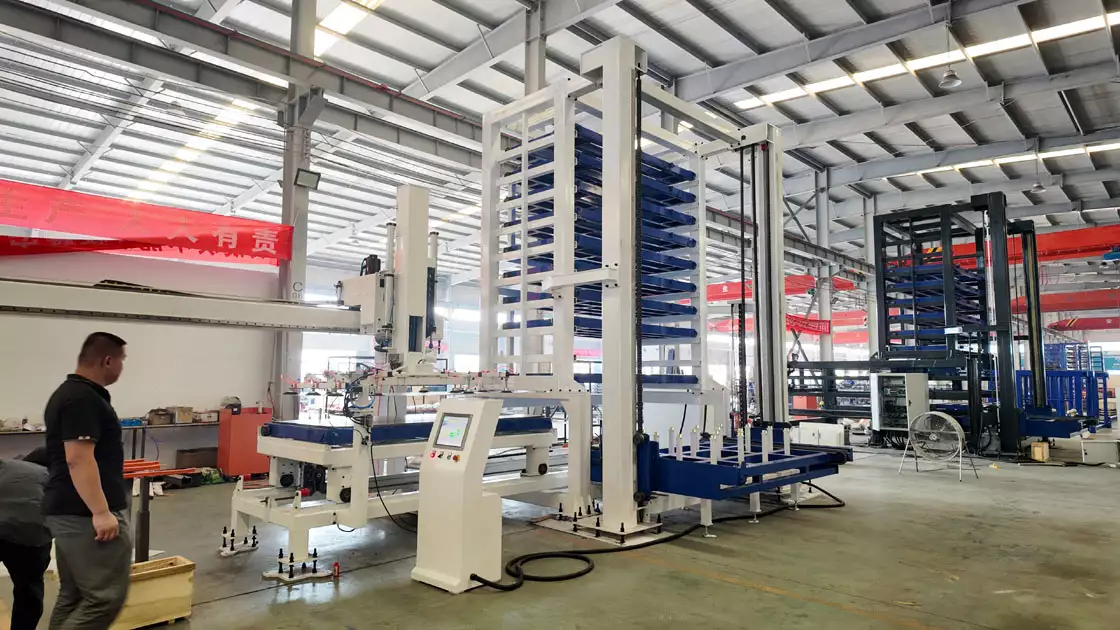
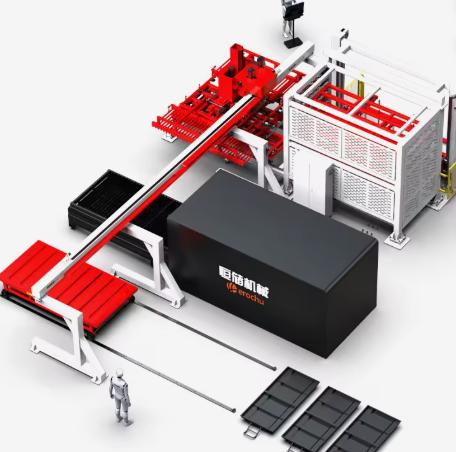
An automatic loading and unloading arrangement replaces those moves with a sequence the machine controls. The loader lifts one sheet from a prepared stack, checks for a double pick, squares it against the table datums and hands the cycle to the cutting program. When the nest ends, the unloader clears the sheet so the next program starts on time.
The cutting head does not run faster. What changes is the share of the shift spent cutting rather than waiting.
How does a sheet move through the cell?
Every automated cell runs the same six stages, and Herochu maps all six during a site survey. Walk them with a stopwatch and note where the sheet stands still.
1. Retrieve. Stock is located and brought to the input position, by a forklift or by a storage mechanism.
2. Separate and load. One sheet is lifted, checked for a double pick, squared and placed on the table.
3. Cut. The nest runs. Only the start time really changes with automation.
4. Unload. The cut sheet leaves the table. If nothing can receive it, the machine stands still.
5. Sort and clear. Parts are separated from the skeleton and scrap, then routed onward.
Record which stage holds the sheet longest. A stop that starts with missing stock is a storage problem, one that starts with an unfinished load is a loader problem, and one that starts because the unloading position is full is an output problem that extra loading speed will never clear.
Herochu builds the sequence around that measured walk rather than a nominal cycle figure, because the limiting stage differs between shops with identical machines.
Which delay points to which configuration?
| Observed delay | Configuration to evaluate | Check first |
| Stock is ready; the machine waits for handling | Automatic loading and unloading | Whether the complete handling cycle keeps up with cutting |
| The next material stack must be found or moved | Storage connected to sheet handling | Material identification, available positions, retrieval sequence |
| The unloading position is full | A suitable output buffer and a clearing routine | Where cut material goes and when that space becomes available |
| Parts accumulate before bending or assembly | Sorting and downstream workflow | Whether extra cutting output can actually be processed |
When is a standalone system the right scope?
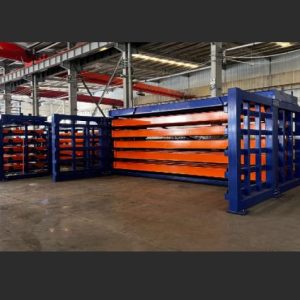
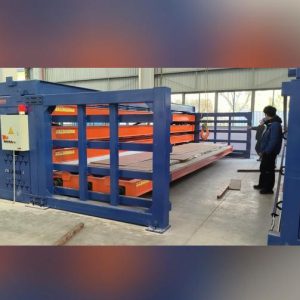
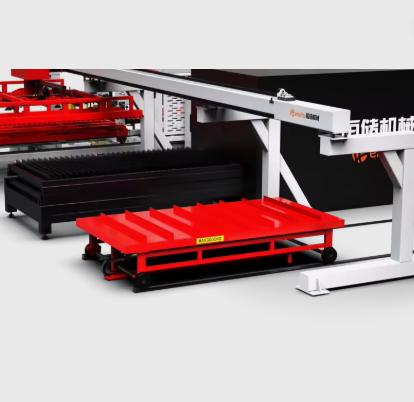
A standalone loading system draws from prepared stock beside the machine and delivers cut material to a defined station or pallet. It suits a narrow material mix, stock staged before the shift, and limited floor space at the machine. Three checks decide whether that scope holds:
Input capacity. How many sheets of each grade must be available at the start of a run, and who replenishes them without stopping the laser?
Output clearance. If a finished sheet sits longer at the unloading station than the cut cycle lasts, the cell stalls at the output, not the input.
Travel and access. The loader needs a clear envelope, a forklift route for refills and maintenance access that staged pallets do not block.
When should loading and storage work as one cell?
A storage tower still needs a way to transfer sheets to and from the laser, so the useful comparison is standalone handling against handling connected to managed storage. Combine them when the schedule needs both repeated sheet transfer and reliable access to several prepared stock types, or when input and output capacity limit the operating period.
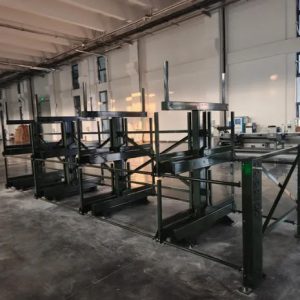
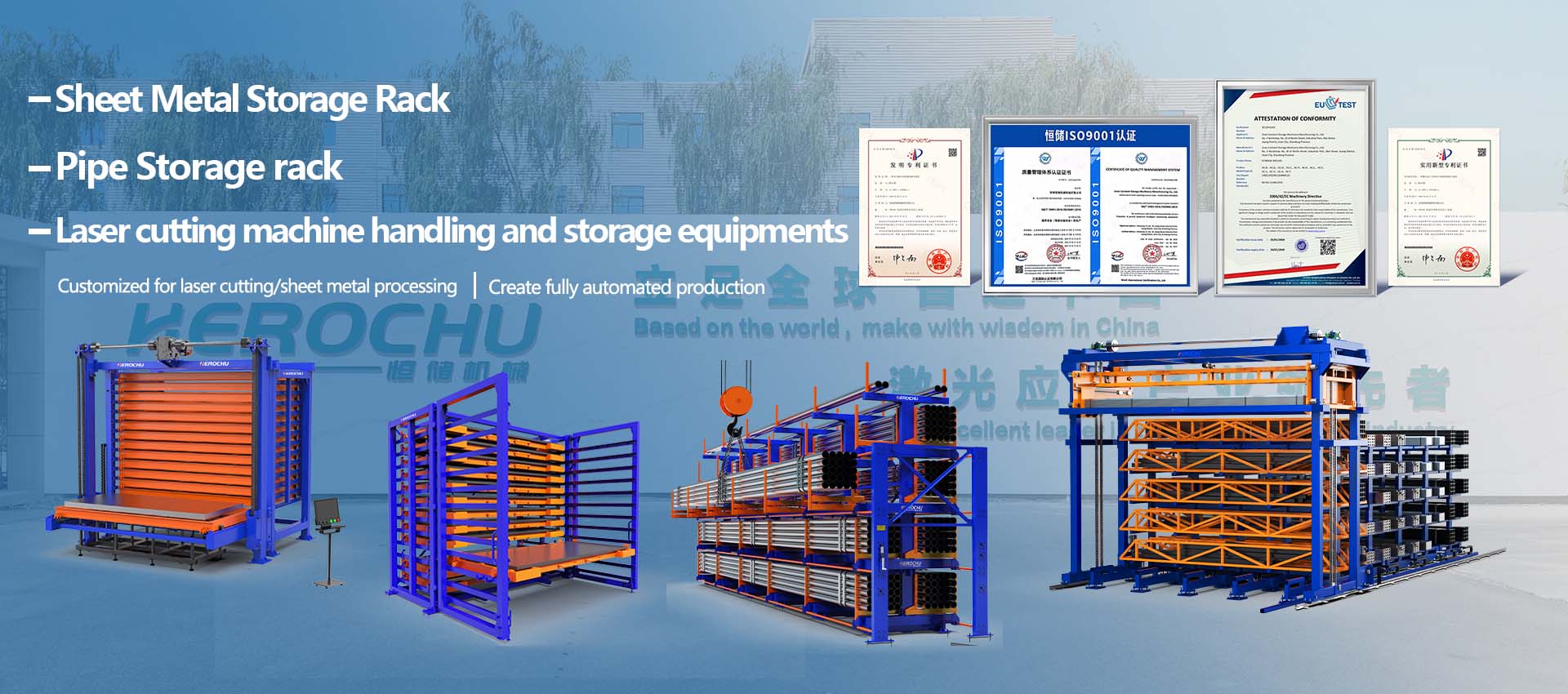
The tower-connected configuration in Herochu’s range shows the full loop: raw material leaves storage, the sheet is cut, and the cut sheet returns to storage instead of landing on the floor. Accounting for that return reserve, a tower with many physical levels can offer fewer usable positions than its height suggests.
Where two cutters share one handling resource, test the dispatch sequence before purchase: call both at once and see which waits.
What has to keep up with the laser?
Compare three figures on the nests you run most often: cut time per sheet, load time and unload time. If load plus unload is comfortably shorter than the cut, standalone handling is enough. If handling takes longer, the loader sets the pace regardless of laser power.
Four options close that gap at very different cost: an output buffer so unloading overlaps the next load, a two-station table, separate loading and unloading mechanisms, or storage. Test the first two before the last two, because buffer space is cheaper than a tower. Herochu sizes that buffer from the nests a shop actually runs, not from a catalogue average.
Can automatic loading be added to an existing fiber laser?
Usually, if the controller exposes a loading interface and there is space for the loader envelope and fencing. Check table height and datums, the handshake protocol, and whether the foundation carries the added load.
Does the loader handle different thicknesses in one stack?
Only where separation is reliable. Magnetic or pneumatic separation and double-sheet detection help; heavily oiled or bowed sheets belong in single-grade stacks.
Does unloading remove the skeleton as well?
Not by default. Skeleton removal and part separation are separate functions. Ask for loading, unloading, retrieval, return and sorting to be quoted separately.
Start from the stop, not from the catalogue
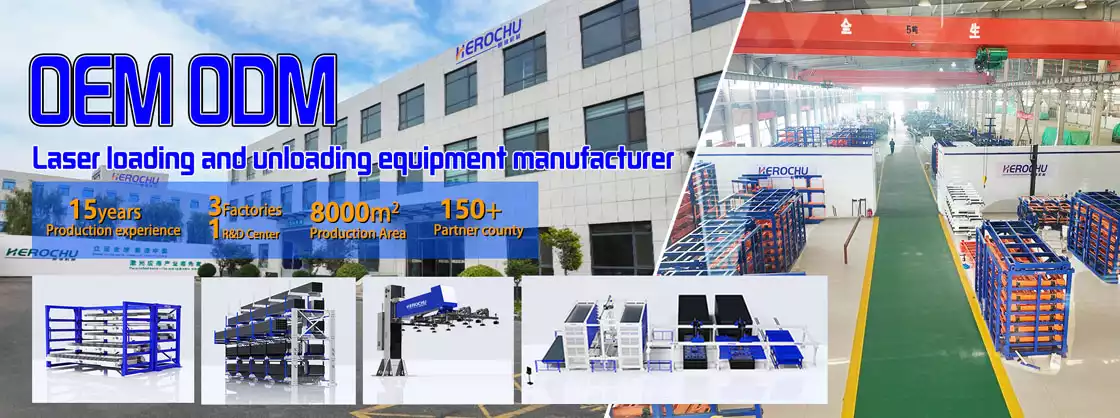
The cheapest automation removes a delay you can measure. If the laser waits for a sheet, automate handling; if it waits for stock, connect storage. Herochu supplies both as separate modules, so a shop can start with the stage that limits it and extend the cell later.