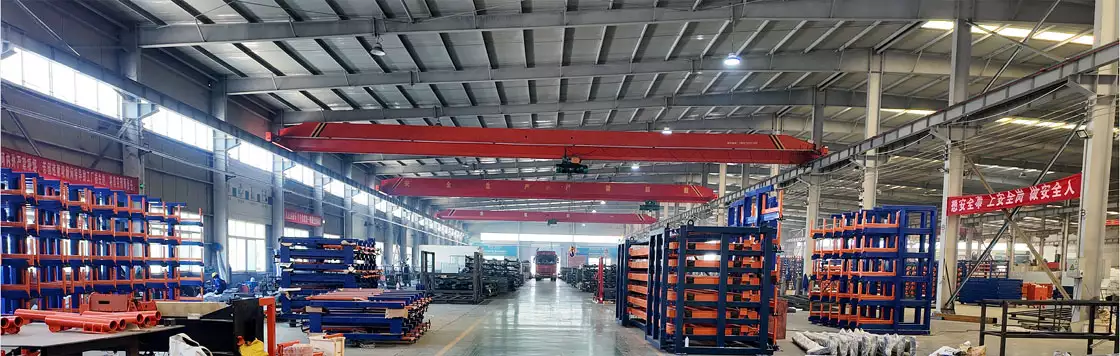
Steel plate is the foundational raw material of fabrication. Whether it is hot-rolled carbon structural plate, cold-rolled commercial grade, stainless 304 or 316, or specialty alloy plate, the material arrives in standard sizes and is consumed in nests, blanks, and cut-to-size pieces. What remains after the primary cutting operations are the offcuts — partial plates of varying dimensions, thicknesses, and grades that still carry the full per-kilogram value of the original purchase. How a shop manages those offcuts determines its material efficiency, its scrap rate, and ultimately its margin on every job.
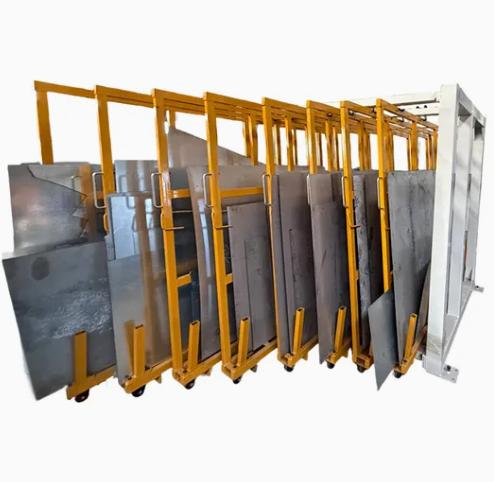
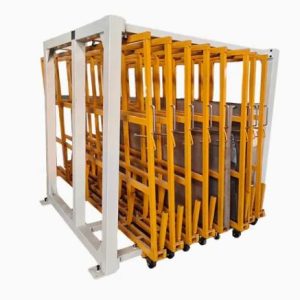
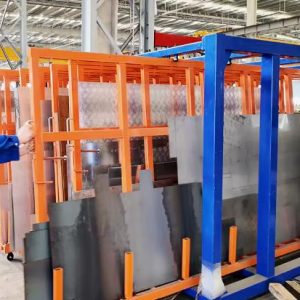
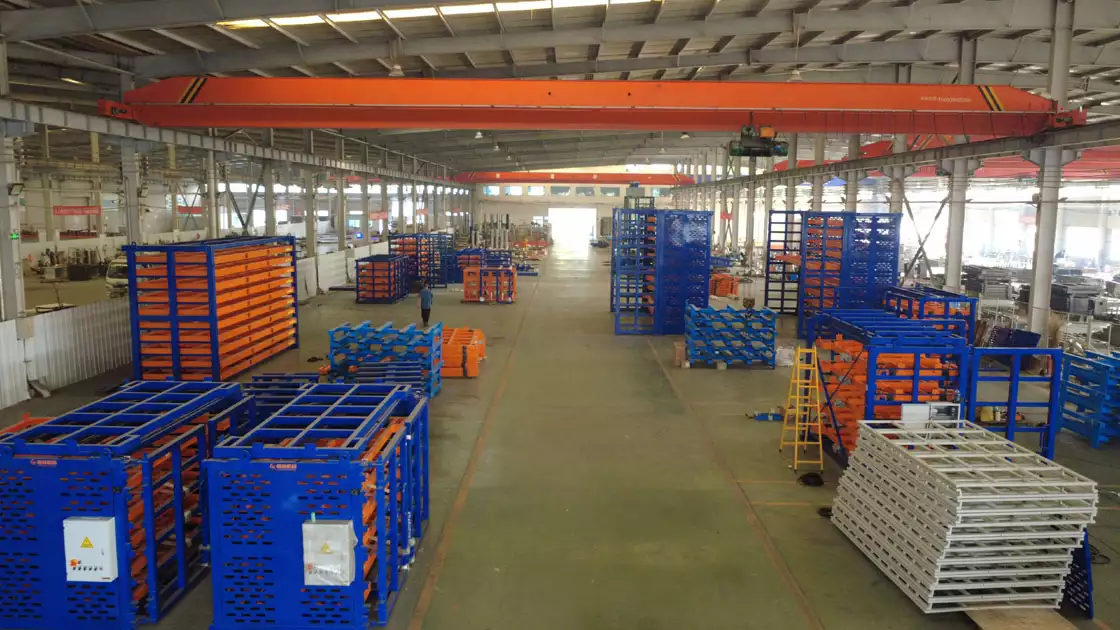
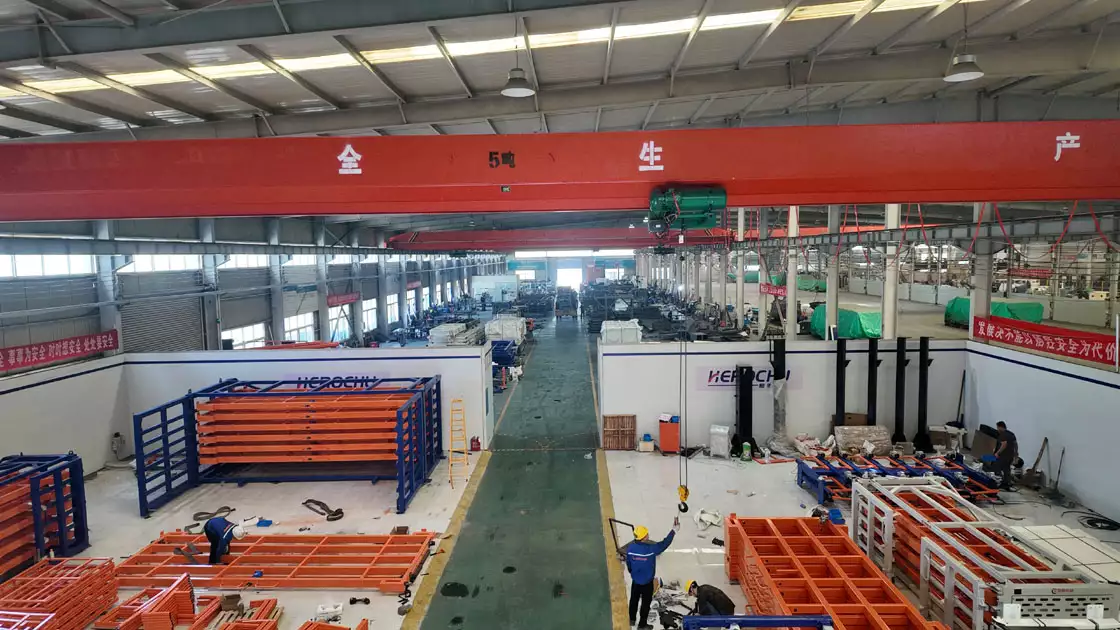
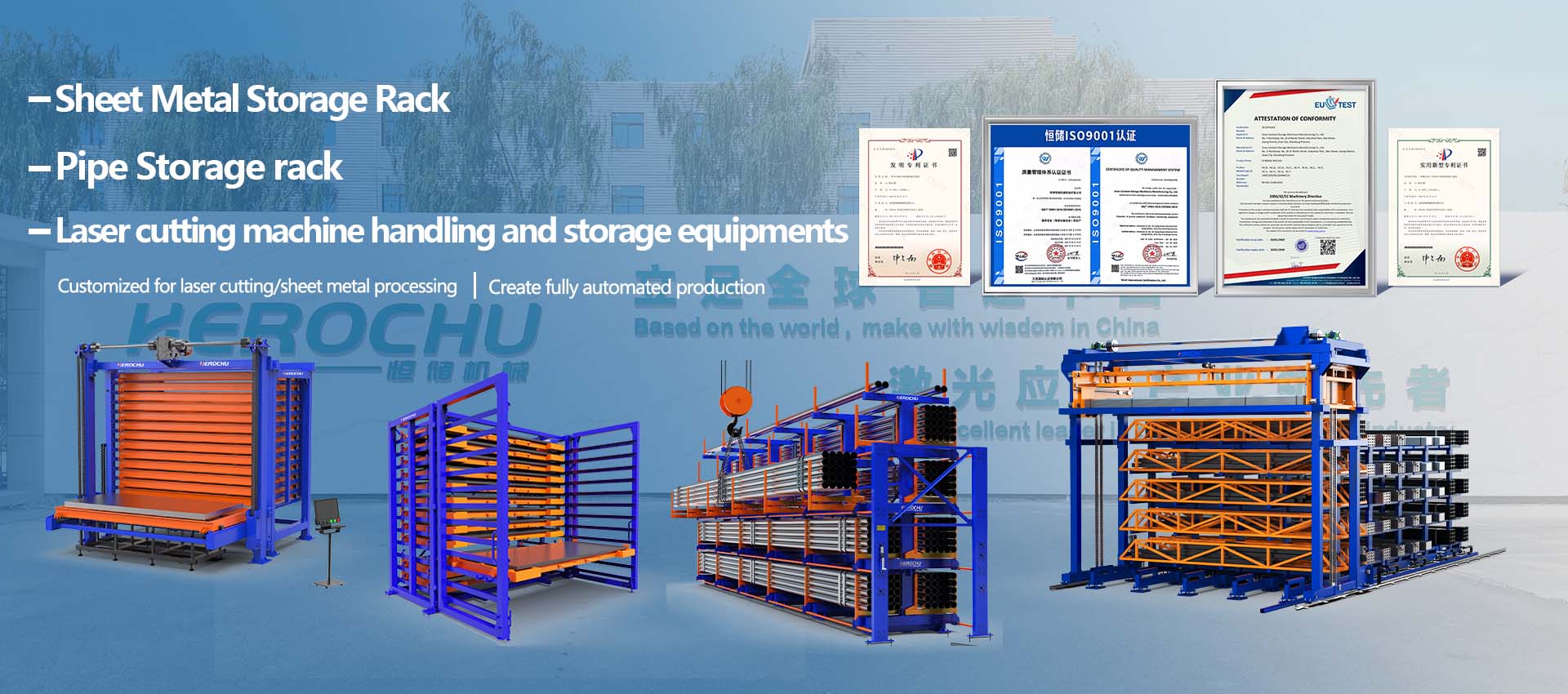
The Vertical Steel Plate Scrap Holder & Storage Rack System from Herochu treats remnant storage not as a passive shelf but as an engineered inventory system. Every element — the vertical frame, the drawer extension, the tier configuration, the load distribution, the access sequence — is designed to support the specific handling requirements of steel plate. The result is a storage system that integrates into the production workflow the way a tool integrates into a work cell: purpose-built, predictable, and efficient.
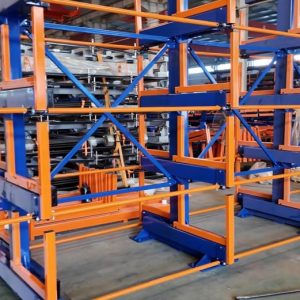
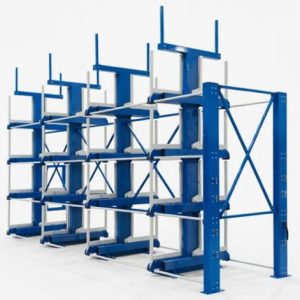
Frame Architecture for Steel Plate Loads
Steel plate is dense. A single 3000 × 1500 mm sheet of 10 mm carbon steel weighs approximately 353 kg. A drawer holding several such plates or a stack of partial sheets can easily reach the 1000 kg working load. The frame that supports this load must be engineered as a structural system, not a shelf.
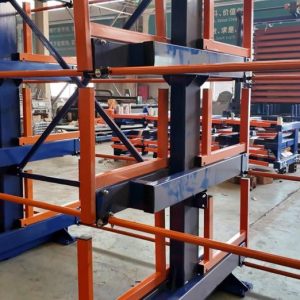
The Herochu rack frame is constructed from Q235B structural steel. The uprights are formed sections sized to carry the full vertical load of all tiers above, and cross-members tie the frame into a rigid box structure that resists the racking forces generated when a fully loaded drawer is extended. The moment arm of a 1000 kg drawer pulled 100 percent out of the frame is substantial — the front uprights must resist the overturning moment without relying on the back of the rack for support. This is achieved through a combination of heavy-gauge upright sections, welded corner joints, and cross-bracing that locks the frame geometry.
The frame is designed for floor mounting, not freestanding use. Anchor points at the base allow bolting to a concrete shop floor, which is the standard substrate in fabrication facilities. This anchoring is not optional — a rack carrying 8000 kg of distributed plate load across eight tiers, with drawers that extend fully, must be anchored to resist overturning. Herochu provides the anchor specification as part of the installation package.
Drawer System: Full Extension and Non-Skid Surface
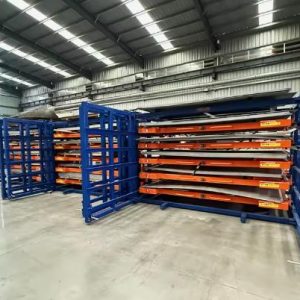
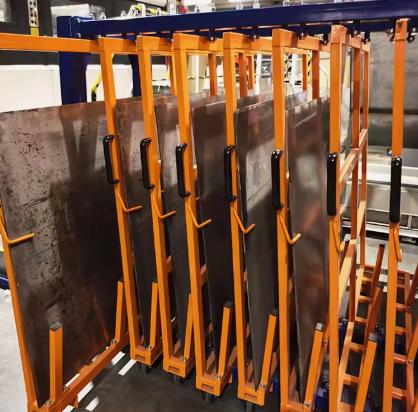
The drawer is the functional interface between the storage system and the operator. A well-designed drawer presents the material clearly, supports it safely during extension, and holds it steady during retrieval. The Herochu drawer system achieves this through three engineering choices: full-extension wheel guides, non-skid loading surfaces, and mechanical-assistance movement.
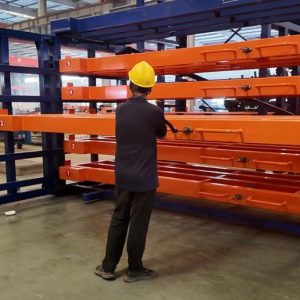
Full extension means the drawer travels its entire depth on the guides. When the drawer is open, the rear of the stored plate is at the same access position as the front. There is no reaching into the rack. The operator can see the full sheet, attach a lifting clamp or vacuum lifter at the optimal lift point, and remove the plate without repositioning. The wheel guides support the drawer throughout the full extension, so the load is never cantilevered off the end of the guide — it rolls out on supported rails.
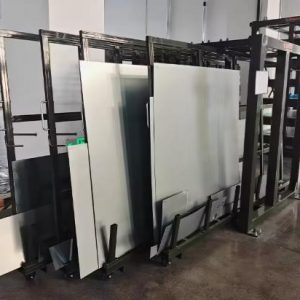
The non-skid strips on the drawer floor serve a dual function. They prevent the plate from sliding during drawer movement, which protects the operator. They also protect the plate edges from the damage that occurs when sheets shift and collide. For shops storing polished or coated plate where surface condition matters, this detail preserves material value.
Mechanical-assistance discharge reduces the pull force needed to move a loaded drawer. A drawer holding 1000 kg of steel plate on smooth wheels still requires meaningful force to start moving and to stop safely. The mechanical-assistance system, integrated into the guide mechanism, reduces that force so that one operator can extend and retract the drawer smoothly without the jerky motion that could destabilize the load.
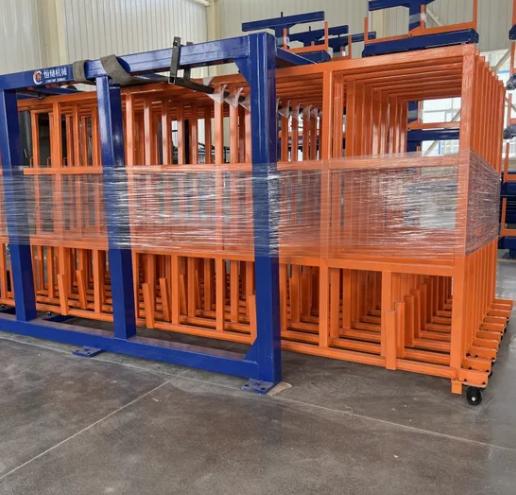
Tier Configuration and Material Sorting
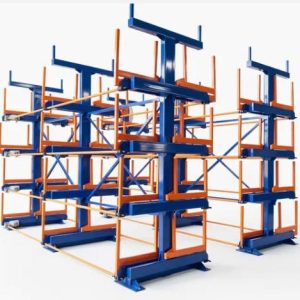
The tier count is one of the most powerful configuration variables in the system. The standard models — HC-V2513-8 and HC-V3015-8 — provide eight tiers for 2500 × 1000 mm and 3000 × 1500 mm sheet capacities respectively. For shops that need denser storage, the HC-V2010-15, HC-V2513-15, and HC-V3015-15 configurations provide fifteen tiers with 2000 × 1000, 2500 × 1500, and 3000 × 1500 mm capacities.
The clear space between tiers — the vertical opening a sheet fits into — is customizable. The standard 60 mm suits sheet thicknesses up to roughly 6 mm. Shops storing thicker plate, or storing multiple thinner sheets per tier, specify greater clear spacing. The tier configuration is determined by the shop’s actual material profile: the mix of plate thicknesses, the typical remnant dimensions, and the frequency of retrieval.
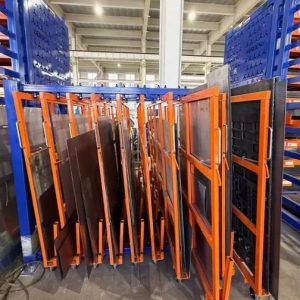
Beyond the physical dimensions, the tier structure provides a natural sorting framework. Dedicate tiers by material grade and thickness — tier one for 2 mm carbon, tier two for 3 mm carbon, tier three for 4 mm, tier four for 6 mm, and so on. The rack becomes a structured inventory where any operator can immediately locate the correct remnant category. This eliminates the searching behavior that wastes time and discourages remnant reuse.
Integration With Production Workflow
A storage system is only as effective as its connection to the production workflow. The Herochu vertical rack is designed for placement within the production cell — beside the laser cutter, the plasma table, the shear, or the press brake. When the rack is at the machine, the material flow is short and direct: the machine produces an offcut, the operator places it in the designated drawer, and the next job that needs that material pulls it from the same drawer.
This machine-adjacent placement is a core principle of the system design. The rack’s vertical footprint is compact enough to fit in the work cell without consuming the floor space that horizontal storage would require. The full-extension drawers present the material at a height that aligns with vacuum lifter or manual clamp operation, so the transfer from rack to machine table is a single controlled movement.
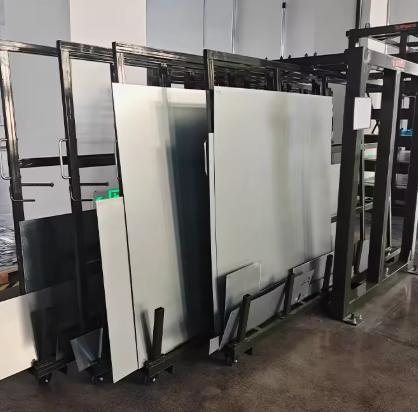
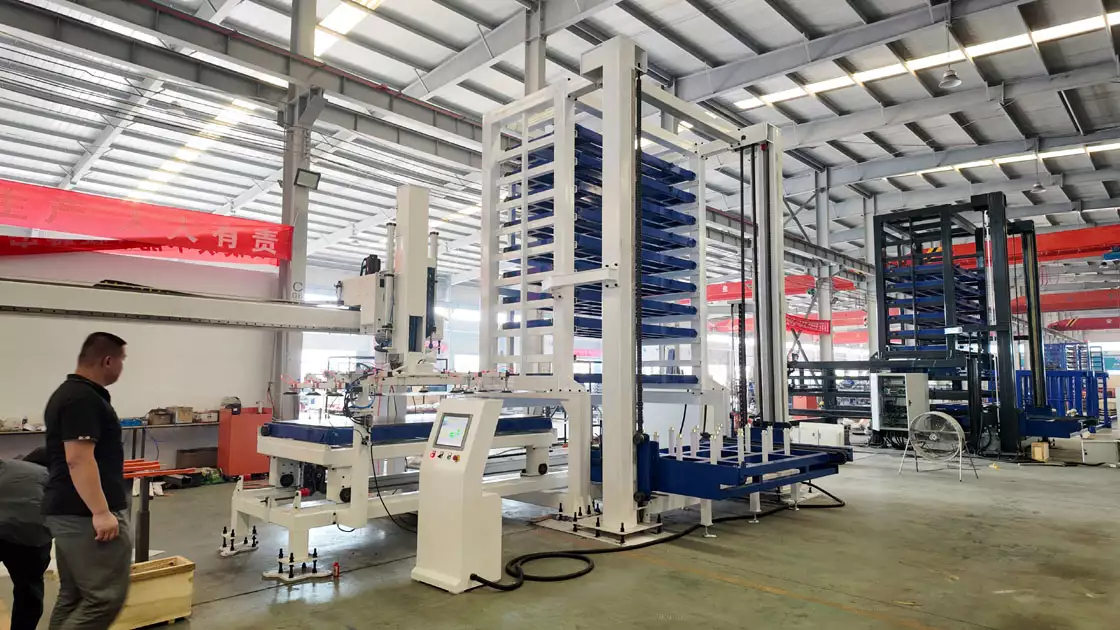
For shops running inventory management software, the drawer structure maps cleanly to a location-based inventory system. Each drawer is a bin location. When remnants are placed in a drawer, the inventory record is updated. When a remnant is pulled, the record is decremented. The physical rack and the digital inventory speak the same language — drawer by drawer, tier by tier.
Customization and Installation
Every installation of the Herochu system is tailored to the shop. The configuration process starts with the material profile: plate sizes, thickness range, grades handled, daily remnant volume. This profile determines the sheet capacity, tier count, clear spacing, and load per level. The HC-V2513-8 and HC-V3015-8 models are the starting configurations for eight-tier systems; the fifteen-tier HC-V2010-15, HC-V2513-15, and HC-V3015-15 models serve denser storage requirements. All models carry 1000 kg per layer with integrated pull-type drawer movement.
Maximum sheet length accommodated is 6000 mm. Drawer capacity options of 400 kg, 1000 kg, and 2000 kg cover the range from light gauge sheet to heavy structural plate. Delivery cycle is 30 days, and Herochu provides on-site installation and commissioning with online guidance for self-installation scenarios. Frame color, structural reinforcement, and special dimensions are available for non-standard applications.
A System, Not a Shelf
The Vertical Steel Plate Scrap Holder & Storage Rack System from Herochu is built as an integrated storage system — frame, drawers, guides, and access workflow engineered together for the specific demands of steel plate. The structure carries heavy loads without deflection. The drawers extend fully so every sheet is reachable. The tier configuration sorts material by grade and thickness. The footprint is compact enough for machine-side placement.
For fabrication shops that have recognized the gap between the material value stored in their remnants and the material value they actually recover, the path forward is structural. The Herochu system closes that gap — not through software alone or process changes alone, but through a physical storage architecture that makes the right behavior the easy behavior. The plate is visible. The drawer opens. The operator pulls what is needed. The system works.