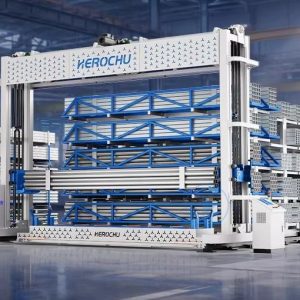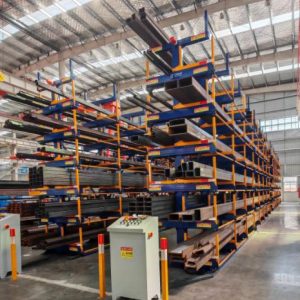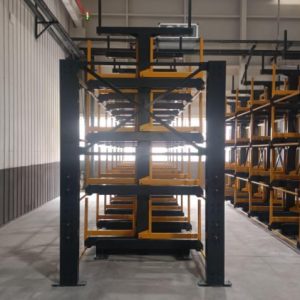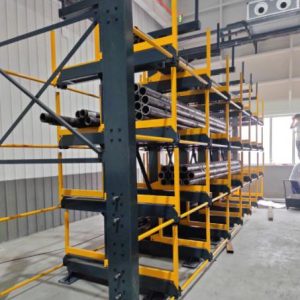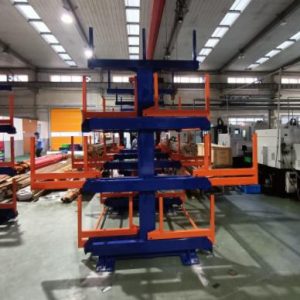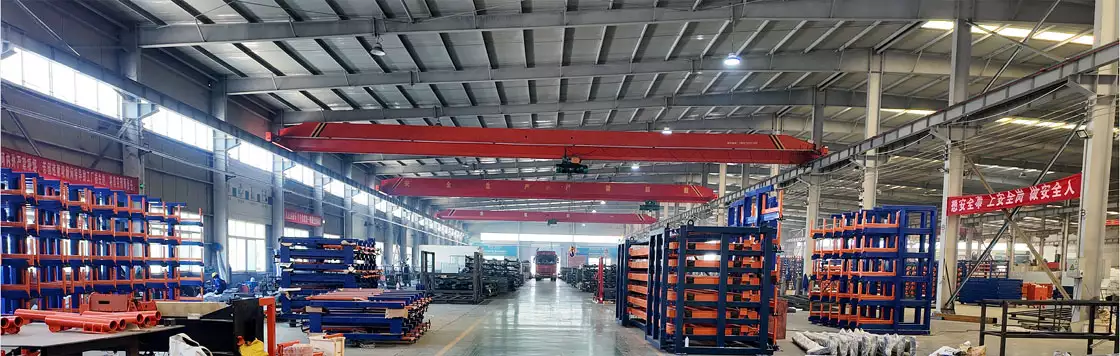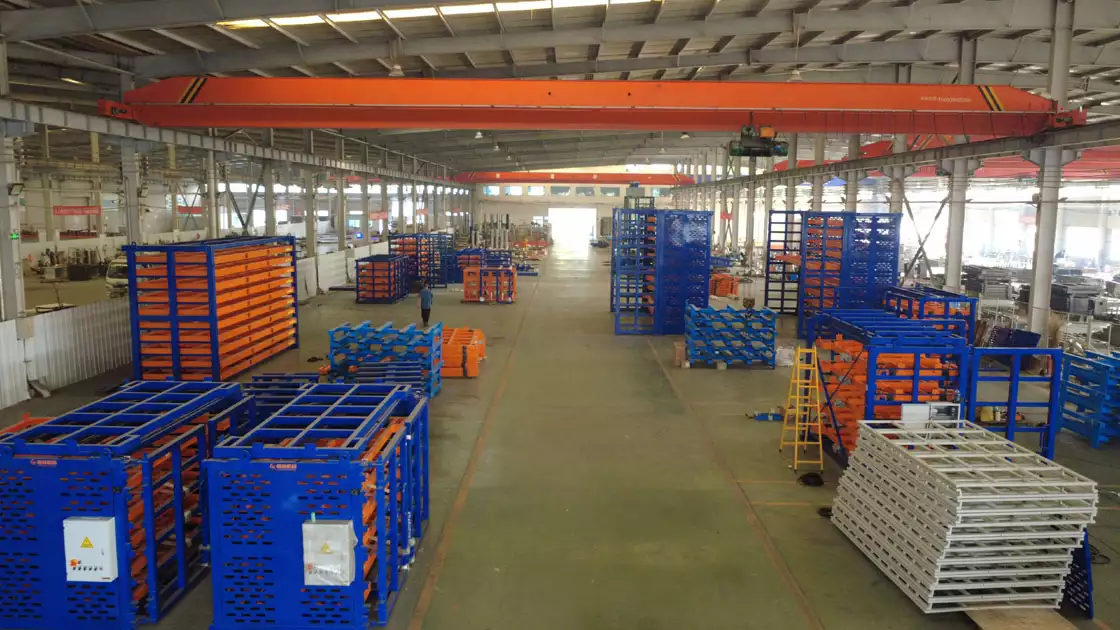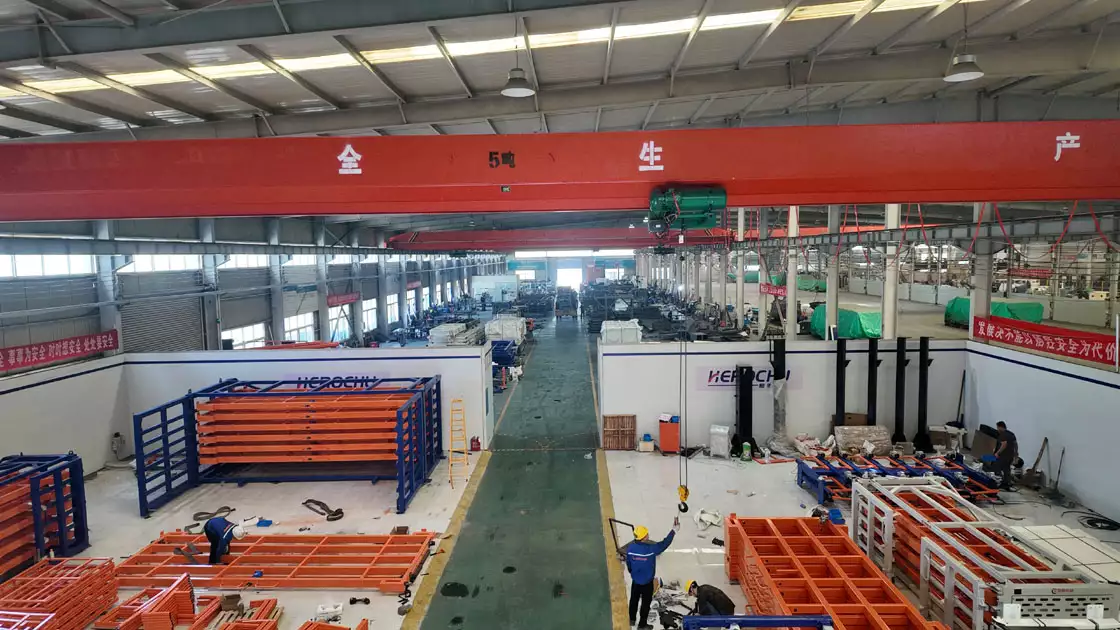
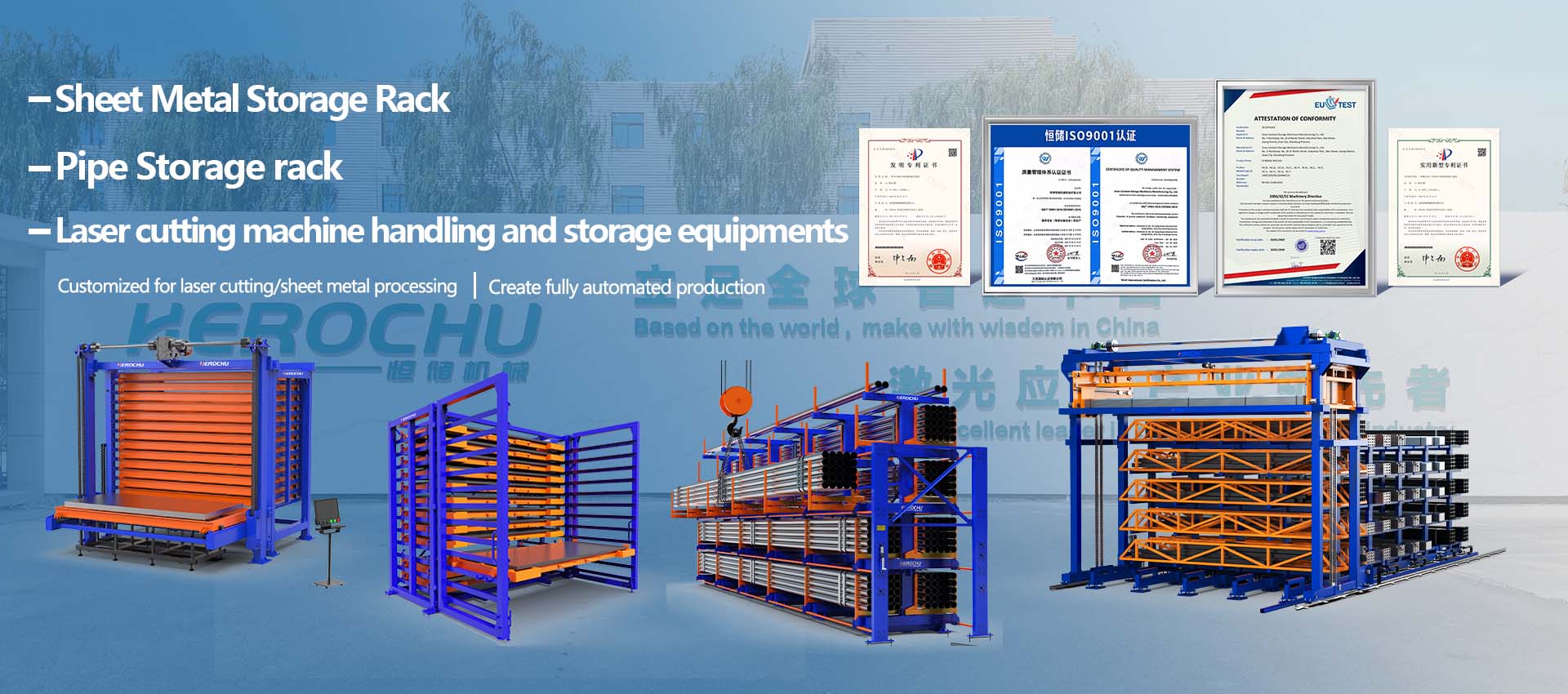
For most metal fabrication plants, steel profile stock is the hardest inventory to manage. Pipes and profiles are long, heavy, and expensive, and they occupy floor space that could be used for production. A Herochu automatic pipe storage system with Smart WMS solves both problems at once: it stacks profiles vertically in a dense tower structure and turns every storage cell into a live data point that the warehouse manager can see, query, and control from a single console.
What the Smart WMS Actually Does
The difference between an ordinary vertical rack and an automatic pipe storage system is not the steel structure — it is the software layer that runs it. Herochu’s Smart WMS keeps a real-time record of every cell in the tower: which bundle occupies it, what material grade it holds, when it was stored, and how long it has been sitting there. When a production order calls for a specific tube diameter or alloy grade, the operator enters the request at the console and the WMS locates the correct cell, queues the retrieval, and updates the stock record the moment the bundle leaves the rack.
This matters for two reasons. First, it removes the guesswork that slows down manual warehouses, where finding one bundle among hundreds means walking the aisles with a tape measure. Second, it gives management an accurate view of stock levels at any moment — something that is nearly impossible to maintain by hand in a facility that moves dozens of tons of profile per day. Overstocking and stock-outs both become visible on the same screen, so purchasing decisions are based on numbers instead of memory.
System Architecture: Gantry, Racks, Frames, and Guide Rails
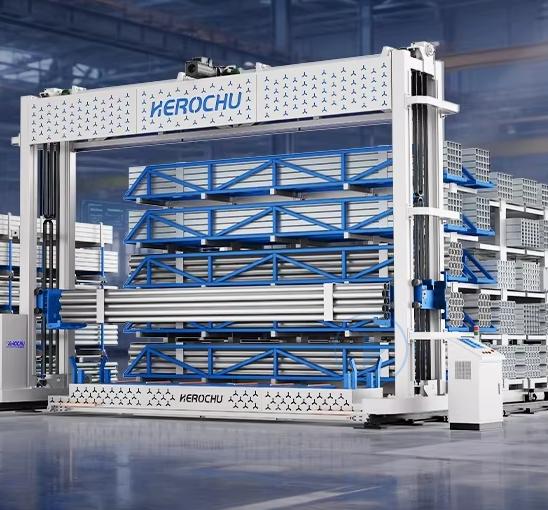
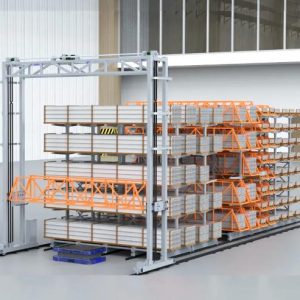
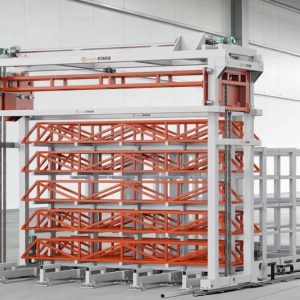
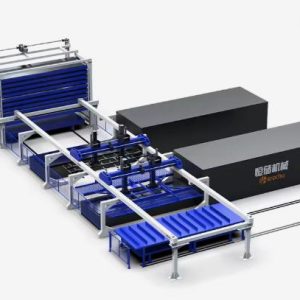
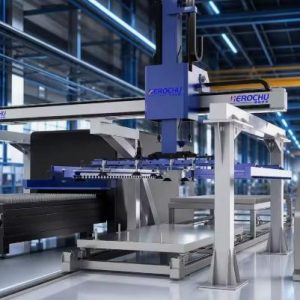
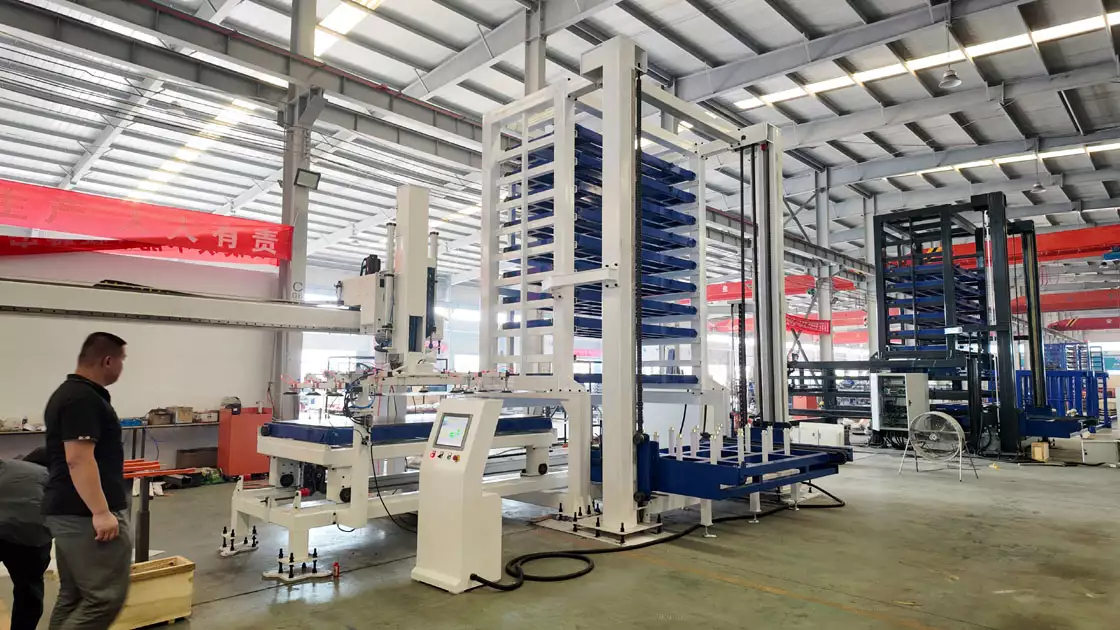
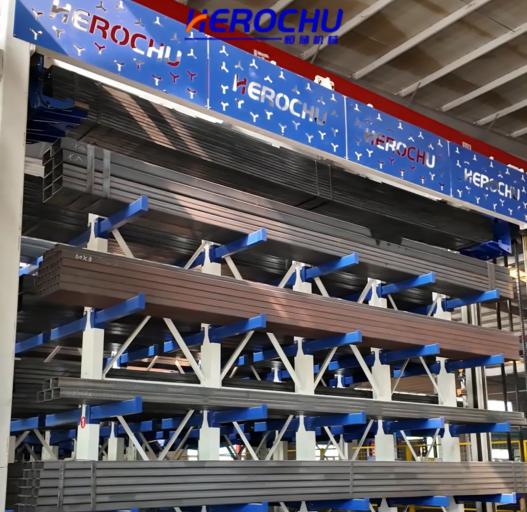
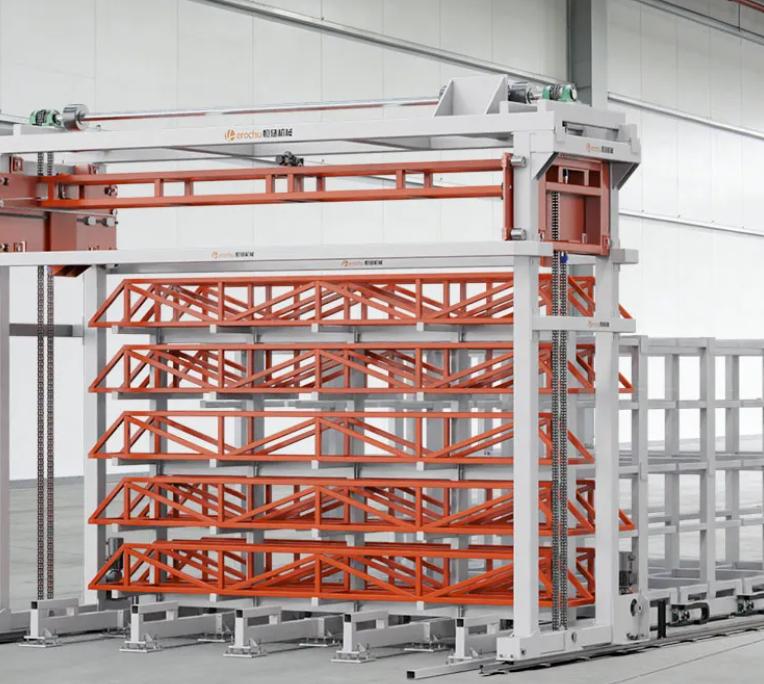
The physical system is built around four groups of components: a loading and unloading gantry, profile material racks, material frames, and floor-mounted guide rails. The gantry travels along the rails to reach any cell in the tower, while its Y-axis and Z-axis are driven separately. That separation is a deliberate design choice: it lets the machine carry out horizontal travel and vertical lifting as independent movements, which keeps the motion smooth and reduces the structural width needed around the rack. In practical terms, a plant that used to dedicate several forklift aisles to pipe storage can reclaim 50% to 80% of that ground area, because the tower concentrates the stock in a narrow footprint and the gantry serves the whole rack from one shared aisle.
The racks themselves are built to take the punishment of heavy steel. Each cell grid measures 600 × 500 mm, a size chosen so long profiles rest on evenly spaced support points rather than spanning unsupported gaps. The frame is fabricated from high-strength structural steel, so the tower holds its geometry under multi-ton loads without sagging or warping over years of service.
Data Flow from the Warehouse to the Production Floor
A Smart WMS is most valuable when it connects to the systems around it. Herochu designs the storage system for direct integration with factory ERP and MES platforms, so stock movements in the tower are reflected in the production planning system without manual data entry. When the laser cutting line requests a batch of profiles, the WMS can stage the correct bundles at the inlet and outlet station, and the gantry feeds them in the sequence the production schedule requires.
The control system runs on a PLC with a touchscreen interface, and the entire loading and unloading sequence is completed from the operation console. Because the machine handles the physical work, one operator can supervise the storage tower instead of several forklift drivers moving stock around the plant. The same setup supports around-the-clock operation: night shifts, weekend runs, and unattended feeding of downstream machines all happen without adding headcount.
Technical Specifications
| Parameter | Value |
|---|---|
| Material length | 6,000 mm standard; 8,000 mm available; bundles to 12,000 mm custom |
| Load per layer | 3,000 kg standard; up to 5,000 kg per compartment |
| Movement mode | Linear guide rail + chain |
| Transmission | Chain drive |
| Vertical lifting speed | 9 m/min (5–15 m/min range) |
| Inlet/outlet speed | 12 m/min |
| Traveling speed | 5–30 m/min |
| Cell grid size | 600 × 500 mm |
| Positioning repeatability | ±2 mm |
| Number of floors / units | Customized to factory layout |
Space and Manpower Payback
The economics of an automatic pipe storage system are easy to measure. Dense vertical stacking removes the wide access lanes that forklift-based storage requires, and the gantry’s ability to reach any cell from one aisle means the tower footprint stays small no matter how many levels it has. The WMS adds a second kind of payback: retrieval time. A bundle that took a forklift driver ten minutes to locate and extract can be brought to the outlet station in a fraction of that time, on demand, in the exact order the production schedule needs.
Configuring the System to Your Stock Profile
No two pipe warehouses hold the same mix of diameters, lengths, and grades, which is why Herochu treats configuration as part of the project rather than an option list. The number of floors, the number of storage units, and the bin dimensions are customized around the factory’s actual stock. Capacity can also be expanded or reduced later, as production volumes change, without rebuilding the system. Compartments are rated up to 5 tons each, and a full tower holds hundreds of tons of profiles, so the system scales with the plant rather than limiting it.
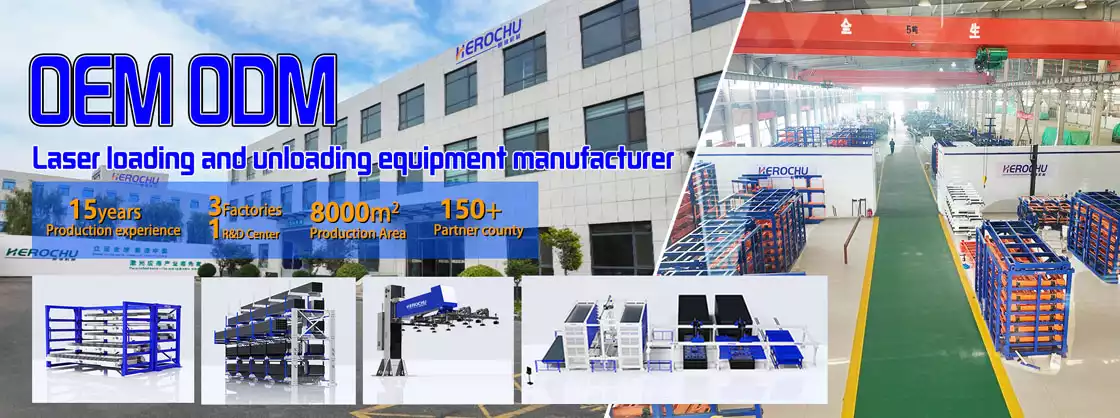
For plants that handle steel pipes, seamless tubes, alloy tubing, and structural profiles in single pieces or in bundles, the Herochu automatic pipe storage system with Smart WMS turns storage from a cost center into a controlled, data-driven operation. Engineering design, site installation, and pre-shipment load testing are included, and the system is delivered by an ISO9001 and CE certified manufacturer with more than 15 years in heavy storage equipment. Contact Herochu with your stock list and layout drawing to receive a configuration proposal.