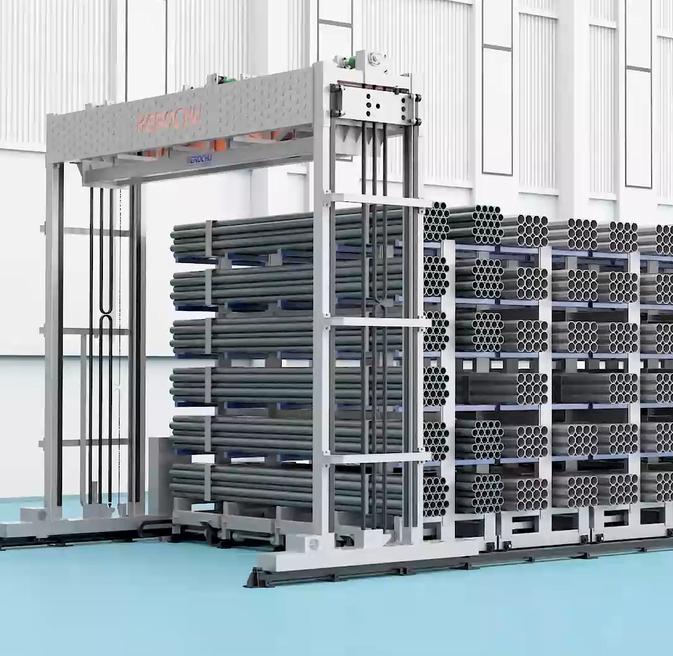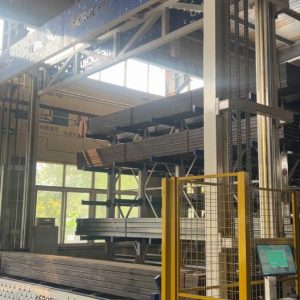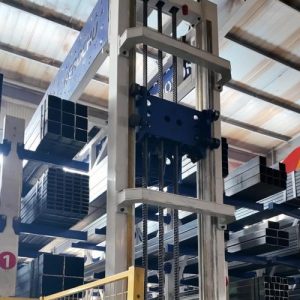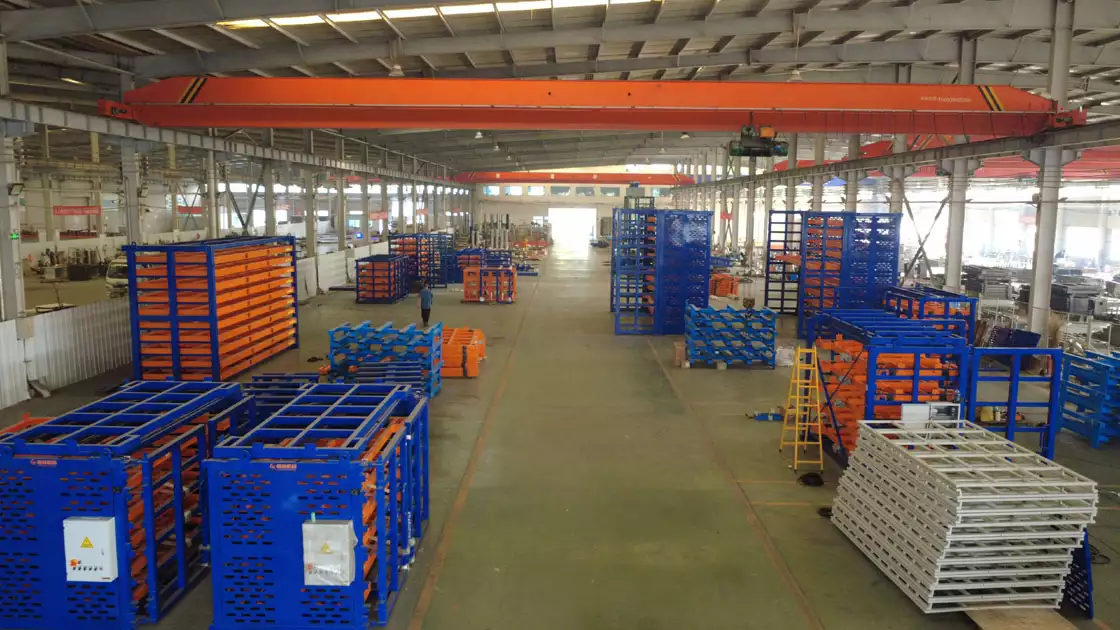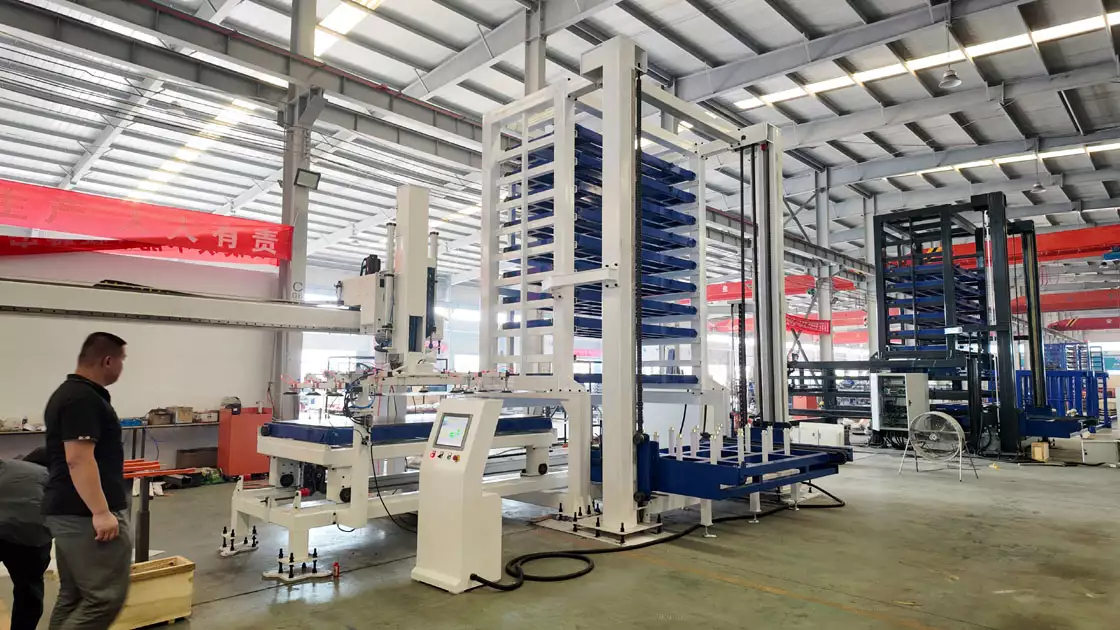
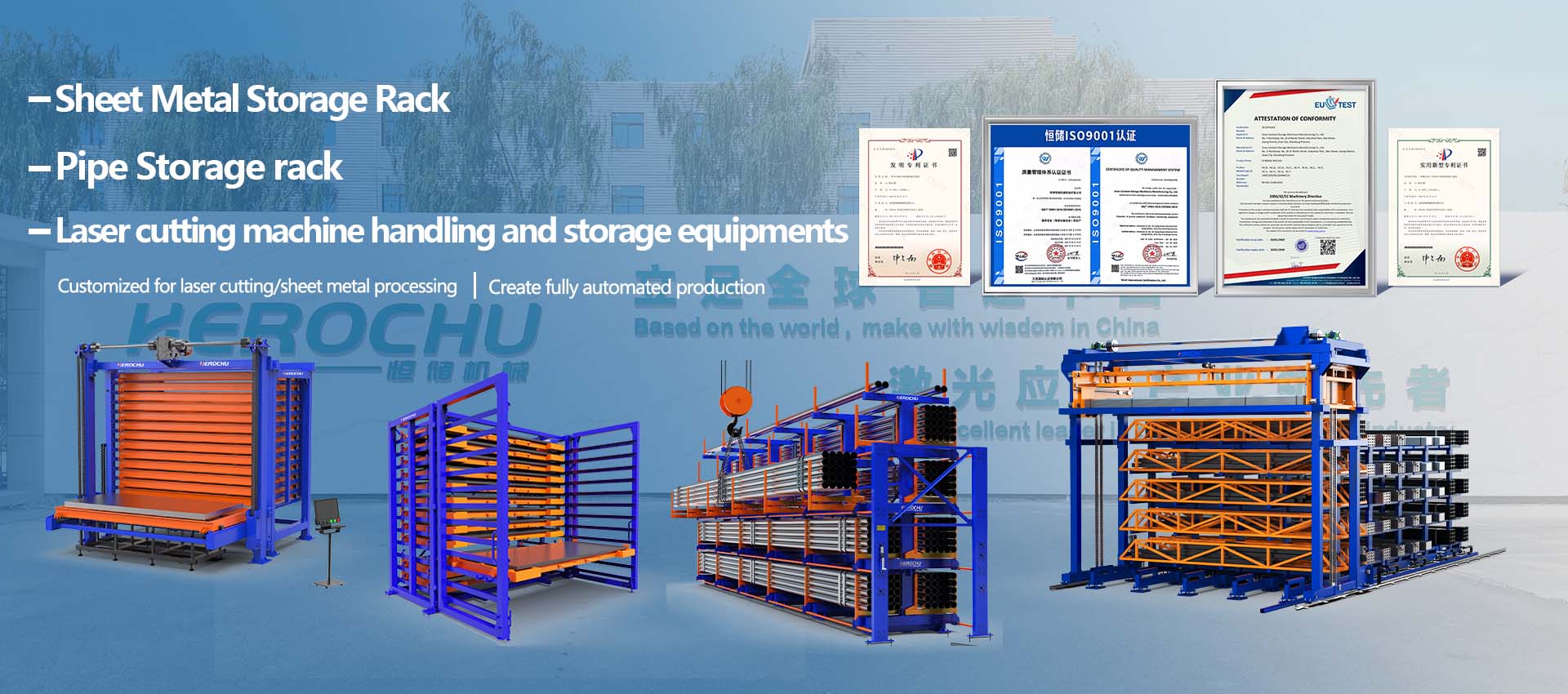
Purchasing an automatic pipe storage system represents a capital decision that manufacturing businesses evaluate against multiple criteria: throughput requirements, available floor space, material diversity, integration with existing production lines, and projected return on investment. Herochu’s vertical AS/RS pipe storage solutions are available for sale in configurable formats spanning 6,000 mm to 8,000 mm pipe length capacity, 3 to 5 tons per layer load rating, and tower counts that scale from single-unit installations to multi-tower warehouse arrays — each system engineered to the customer’s actual material handling profile rather than sold as a one-size-fits-all package.
The buying process begins with a material audit conducted jointly by the customer’s operations team and Herochu’s application engineers. Variables documented during this phase include the full range of pipe diameters, bar profiles, and tube sections in active inventory; the distribution of lengths handled daily; the peak retrieval rate required to sustain downstream production cells; the physical dimensions and floor loading capacity of the available installation area; and the IT infrastructure into which the inventory management system must integrate. This data feeds into a system configuration that specifies tower height, layer count, tray dimensions, gantry speed parameters, and control interface customization.
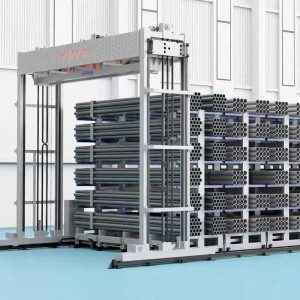
Three standard model families form the product line, each differentiated primarily by pipe length capacity and layer configuration. The HC-X6053 series handles stock up to 6,000 mm in length with five customizable layers and 3,000 kg per-layer capacity across eight rack positions. The HC-X7065 extends length capacity to 7,000 mm with six layers, 5,000 kg per layer, and ten rack positions. The HC-X8085 accommodates 8,000 mm stock across eight layers with 5,000 kg per-layer capacity and ten rack positions. Within each family, layer count, rack count, and tray configuration are adjustable to match the customer’s specific inventory mix.
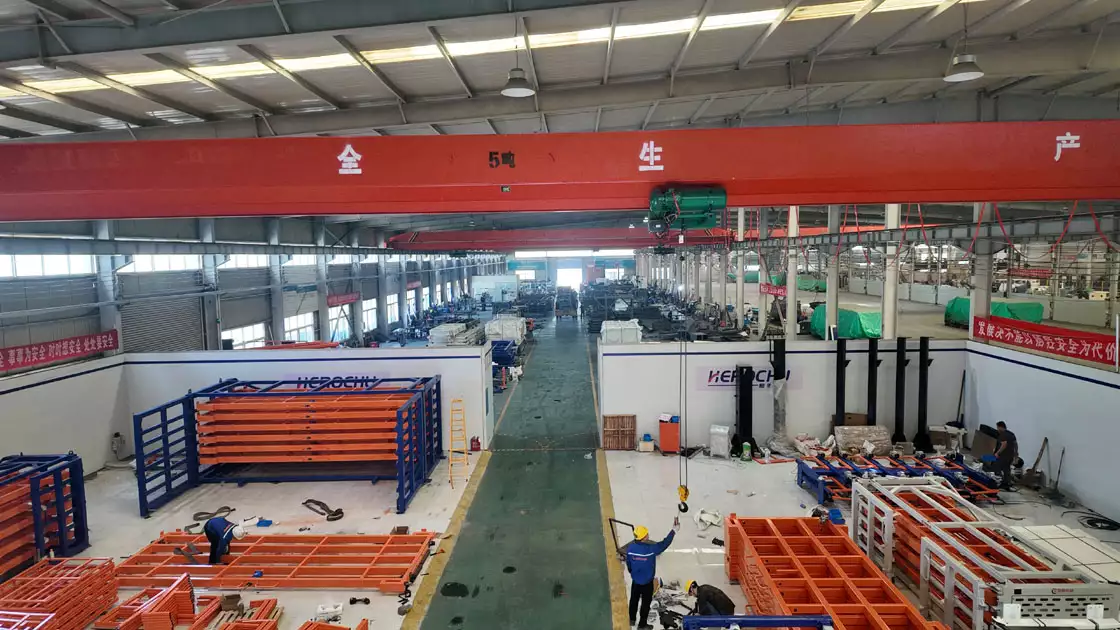
The procurement timeline from order placement to operational commissioning typically spans 8 to 14 weeks depending on system complexity and customization extent. This period covers final engineering drawings, structural fabrication, control panel assembly, factory acceptance testing of the PLC logic and gantry motion system, shipping, on-site installation, commissioning, and operator training. Herochu provides installation supervision and start-up support as part of the standard purchase package, with extended warranty and service contracts available for customers seeking ongoing technical support beyond the warranty period.
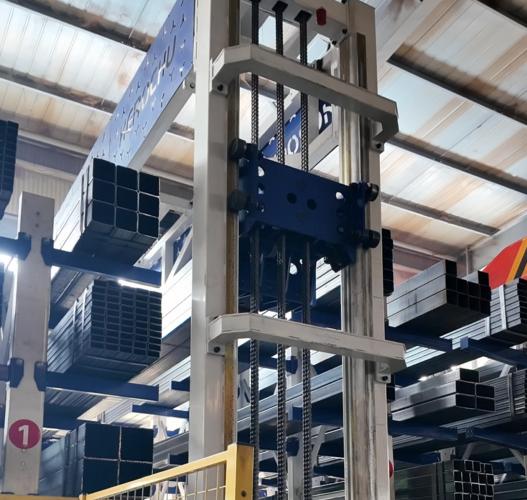
What differentiates this automatic pipe storage system from alternatives in the market is the integration of mechanical automation with digital inventory intelligence. Competitor offerings may provide vertical storage or may provide inventory software, but the Herochu system unifies both into a single operational workflow where material handling and inventory tracking are inseparable functions of the same control system. When an operator retrieves a tray, the system simultaneously updates stock records. When production planning software queries available material, the response reflects real-time physical inventory, not a batch-reconciled snapshot from the previous shift.
For businesses evaluating the purchase from a financial perspective, the operational cost savings fall into measurable categories. Labor reduction is the most visible — one operator managing automated retrieval replaces multiple workers engaged in manual searching, forklift operation, and material transport. Space savings translate into avoided expansion costs or the ability to repurpose freed floor area for additional production equipment. Material loss reduction — from handling damage, misplacement, and degradation during extended floor storage — protects working capital. Inventory accuracy improvements reduce the production downtime caused by material shortages that were not detected in time.
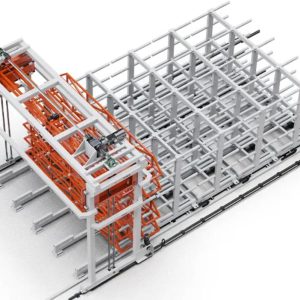
The system’s modular architecture also supports phased purchasing. A facility can start with a single two-tower configuration serving a specific production line, evaluate the operational results over six to twelve months, and then expand with additional towers along the same gantry rail as confidence and budget allow. This staged approach reduces the initial capital commitment while preserving the option to scale — a purchasing strategy that appeals to mid-sized manufacturers who need to demonstrate ROI on the first phase before securing budget for subsequent expansion.
Post-sale support includes remote diagnostics capability that allows Herochu service engineers to access the PLC via secure connection for troubleshooting without dispatching a technician to the site. Routine maintenance items — chain tension checks, guide rail lubrication, sensor cleaning — are documented in an operator-facing maintenance schedule with pictorial instructions. Spare parts for wear components are maintained in regional distribution centers to support replacement within standard service-level timeframes.
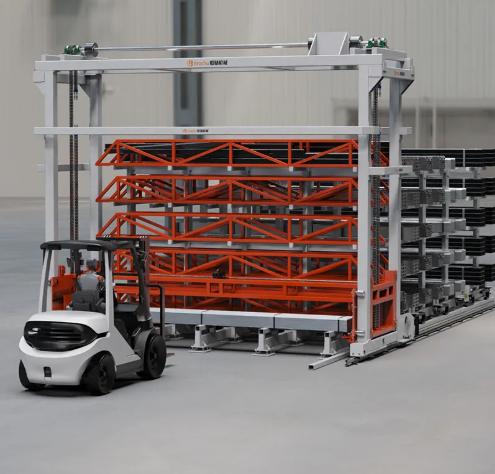
Buyers considering automation should also evaluate the compatibility of the system with their existing material flow. The Herochu AS/RS interfaces naturally with incoming material receiving areas where new stock is registered into inventory upon arrival, and with production cells where retrieved material is consumed. The picking station can be positioned adjacent to sawing, cutting, or machining workstations to minimize transport distance between retrieval and processing. This layout consideration is addressed during the application engineering phase to ensure the installed system integrates smoothly into the existing facility layout rather than creating new material handling gaps.
For manufacturing operations that have outgrown manual pipe storage methods — where inventory is growing faster than available floor space, retrieval times are slowing production throughput, or material handling labor costs are escalating — an automatic pipe storage system purchase represents a structural improvement rather than an incremental upgrade. Herochu’s vertical AS/RS solutions deliver the capacity, speed, and inventory intelligence that modern fabrication and processing facilities require to operate competitively. Inquiries for system configuration, pricing, and site evaluation can be directed to Herochu’s application engineering team for a proposal based on the customer’s specific material handling requirements.