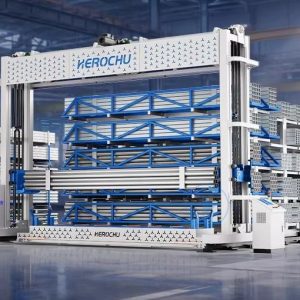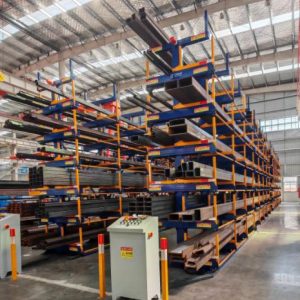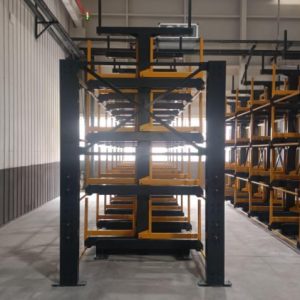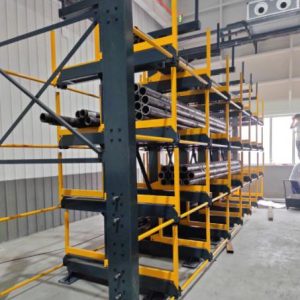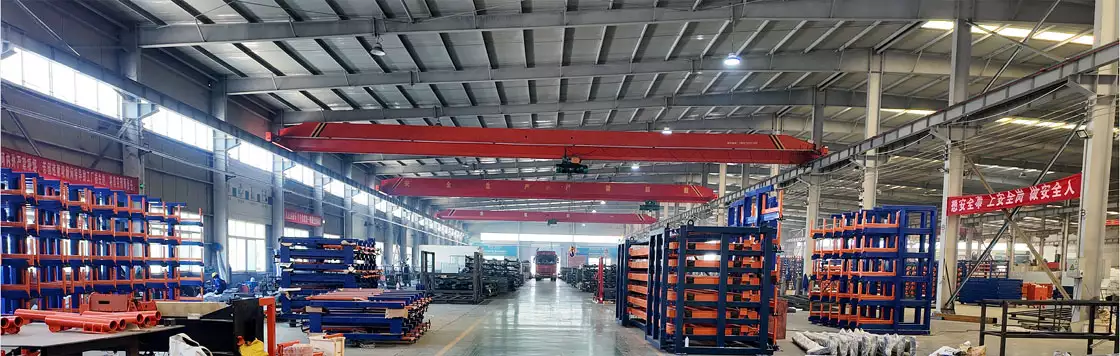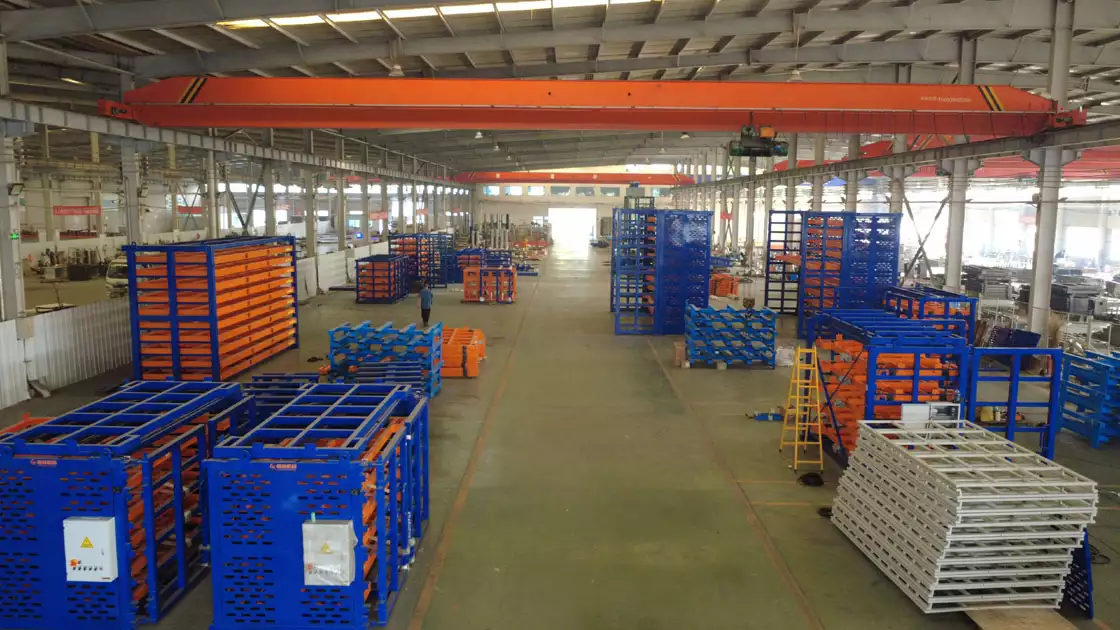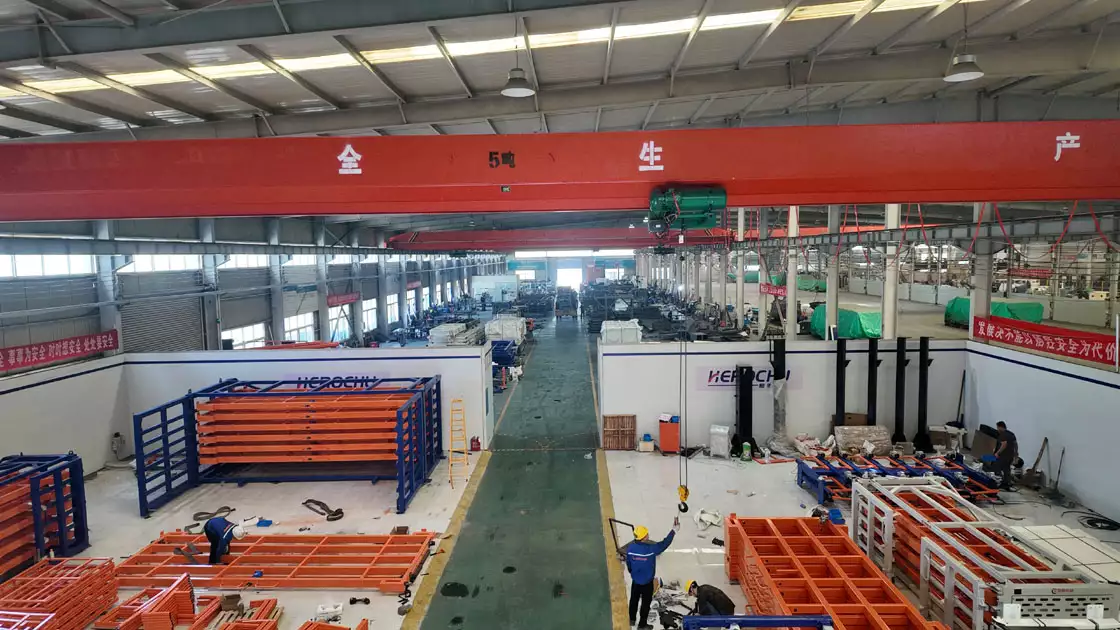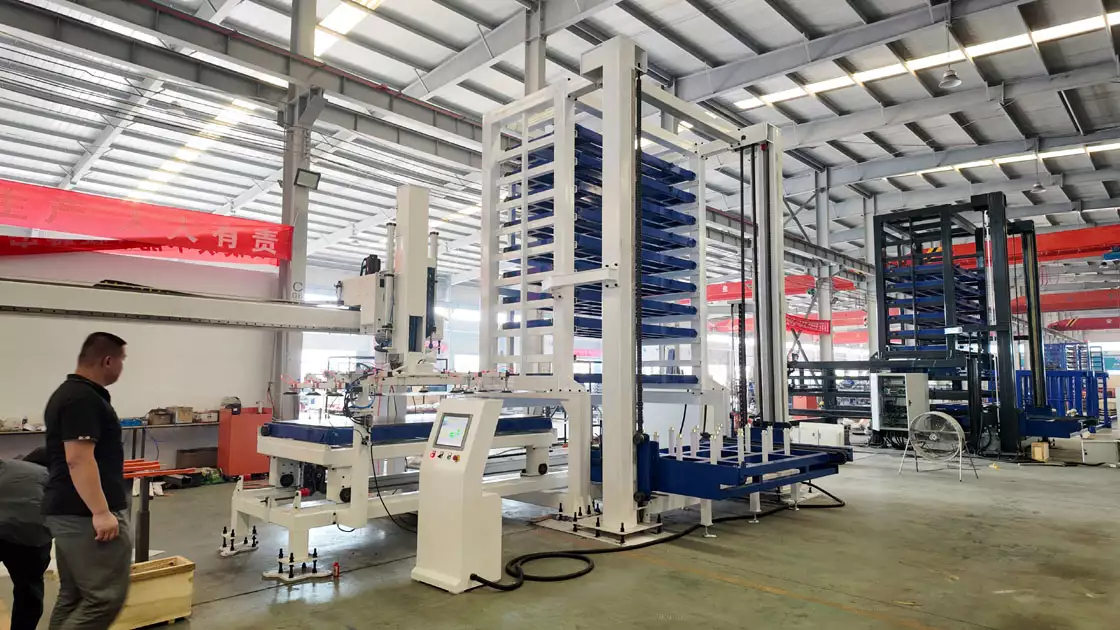
A storage system for steel profiles is judged by one number above all others: how much weight it can hold without sagging, binding, or losing alignment. A high capacity automatic pipe storage system from Herochu is engineered for the 1,000 to 10,000 kg working band — the range where manual racks stop being practical and the structure itself has to do the heavy lifting. This article explains how that capacity is achieved, level by level and ton by ton.
Load Ratings Explained
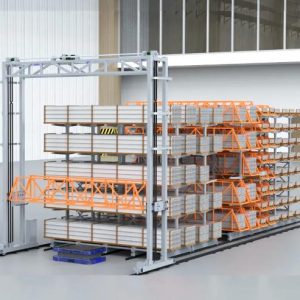
The load rating of the system is defined at two levels. Each layer is designed for a standard load of 3,000 kg, while each individual compartment can bear up to 5,000 kg. Multiply those numbers across a multi-floor tower and the arithmetic adds up quickly: a full system holds hundreds of tons of profiles in a footprint that a forklift-based yard would need many times over. The 1,000–10,000 kg range matters in practice because it covers both ends of the real workload — a single heavy bundle at one end, and multiple stacked layers of lighter tubes at the other.
What makes the rating trustworthy is how it is verified. Herochu load-tests every system before shipment, loading the racks to their rated capacity to measure actual deflection, drive performance, and safety response. The number on the datasheet is the number that was physically demonstrated on the machine being delivered.
Structural Design for High Tonnage
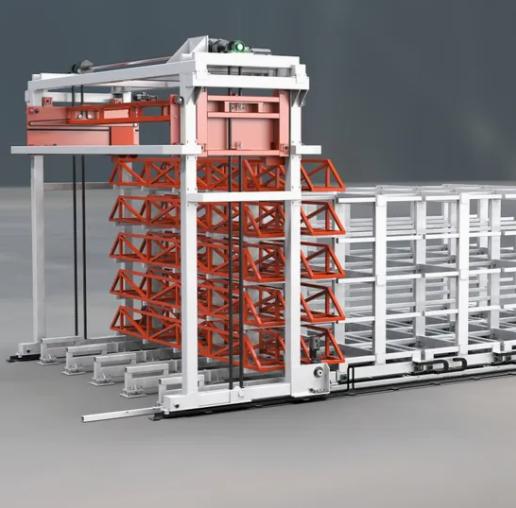
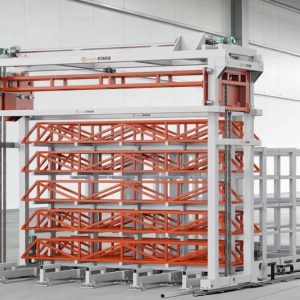
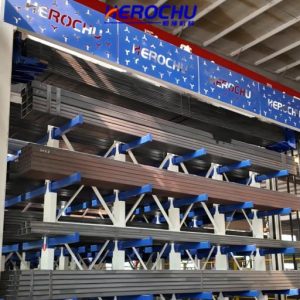
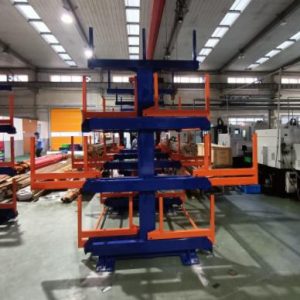
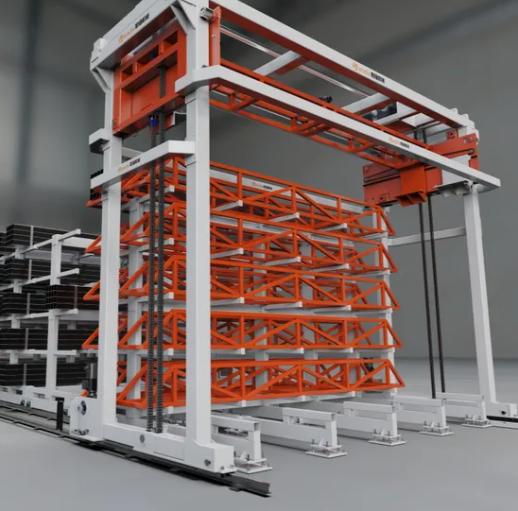
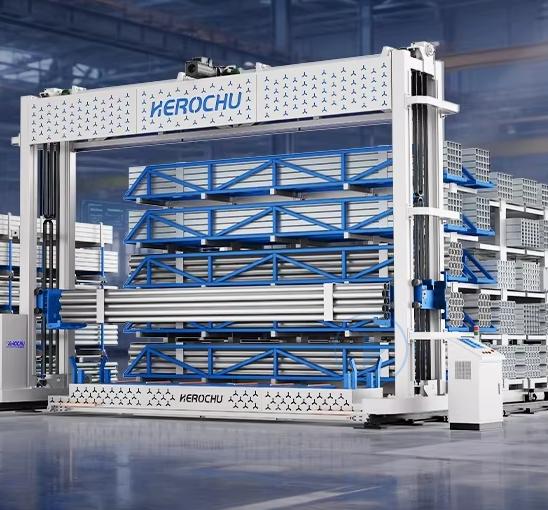
High capacity is not a matter of using thicker steel everywhere — it is a matter of putting the steel where the load demands it. The rack frames are built from high-strength structural steel sized to resist dynamic loads and structural deflection under multi-ton impacts. The critical detail is the cell grid: each compartment measures 600 × 500 mm, calculated so a long profile rests on evenly spaced support points across its full length. A 6,000 mm bundle in a properly supported cell cannot bow in the middle, which is exactly where sagging starts in under-engineered racks.
The drive train follows the same logic. Movement is transmitted by chain drive running on linear guide rails — the chain provides positive, slip-free motion under full load, and the linear guides hold the carriage on a precise path regardless of weight. A chain transmission does not stretch, slip, or lose engagement the way belt-based systems can under repeated heavy cycles, which is why it is the right choice for a tower that cycles multi-ton loads all day. Guidance and propulsion are deliberately separated: the linear rails carry the vertical load and define the travel path, while the chain delivers the pulling force. That separation gives the system a clear duty rating — drive components are sized for millions of cycles at rated load, not for occasional use.
Speed and Positioning at Full Load
Capacity would be useless if the machine could only move empty. The Herochu high capacity system is rated for full-load operation across its entire speed profile:
- Vertical lifting runs at 9 m/min, within a 5–15 m/min operating range
- Inlet and outlet exchange runs at 12 m/min
- Travel along the floor-mounted guide rails runs from 5 to 30 m/min
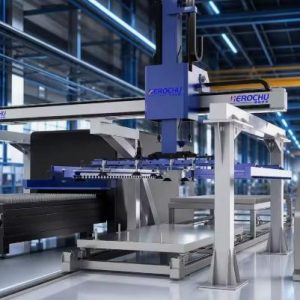
At those speeds, the gantry picker still holds ±2 mm positioning repeatability. That precision is what keeps transfers damage-free: a bundle is set down exactly where the cell expects it, every cycle, without scraping against adjacent stock. For expensive alloy and seamless tubes, the difference between a clean transfer and a dragged one is the difference between usable stock and scrap.
Handling Heavy Bundles and Single Pieces
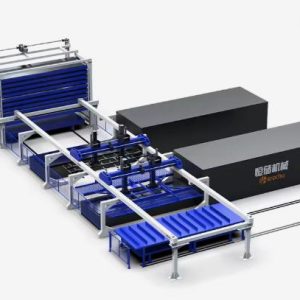
A pipe warehouse rarely stores everything the same way. Some material arrives as single pieces destined for immediate processing; other stock sits as strapped bundles waiting for a production batch. The Herochu system accepts both. The gantry loading and unloading unit handles single profiles and complete bundles alike, and the storage layout can be mixed — heavier bundles on lower floors, lighter single pieces higher up — without changing the machine configuration. The Y-axis and Z-axis of the gantry are driven separately, which gives the picker the freedom to position accurately in both planes while keeping the structural width of the system compact.
Configuring Capacity to Your Stock
The high capacity rating is a starting point, not a ceiling. Because the number of floors, the number of storage units, and the bin dimensions are all customized, the total capacity is matched to the factory’s actual inventory rather than forced into a standard model. Storage capacity can also be expanded or reduced at any time as production volumes change — added floors and cells when the business grows, or a reconfigured layout if the product mix shifts. Each compartment is rated up to 5 tons, so expanding the tower extends the total tonnage without changing the per-cell engineering.
Technical Specifications
| Parameter | Value |
|---|---|
| Load per layer | 3,000 kg standard |
| Load per compartment | Up to 5,000 kg |
| Total system capacity | Hundreds of tons |
| Material length | 6,000 mm standard; bundles to 12,000 mm custom |
| Cell grid size | 600 × 500 mm |
| Movement mode | Linear guide rail + chain |
| Transmission | Chain drive |
| Vertical lifting speed | 9 m/min (5–15 m/min range) |
| Inlet/outlet speed | 12 m/min |
| Traveling speed | 5–30 m/min |
| Positioning repeatability | ±2 mm |
| Number of floors / units | Customized |
For plants that move serious tonnage — structural profiles, seamless tubes, alloy tubing, and heavy pipe bundles — the Herochu high capacity automatic pipe storage system delivers the rated load every cycle, with the structure, drive, and precision engineered for decades of service. Share your stock list and load requirements with Herochu, and the engineering team will size the tower, floors, and cells to your actual tonnage, with pre-shipment load testing included in the project.