In metalworking operations, offcuts and remnants are unavoidable byproducts of every cutting, shearing, and nesting operation. A laser cutter running a nest on a 3000 × 1500 mm sheet of 6 mm carbon steel will leave behind a pattern of partial sheets and irregular offcuts that still carry full material value. The question is not whether remnants are generated — they always are — but what happens to them next. In most workshops, the answer is disappointing. Remnants get stacked horizontally on the floor, leaned against walls, or loaded onto open pallet racks where they are quickly forgotten. When a subsequent job requires a piece that matches a stored offcut, the time spent locating and retrieving it often exceeds the value of the material itself. The shop cuts a new full sheet instead, the remnant sits unused, and eventually the scrap dealer collects it at scrap value — a fraction of what the shop paid for it.
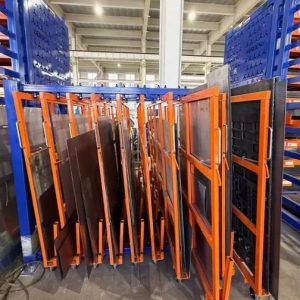
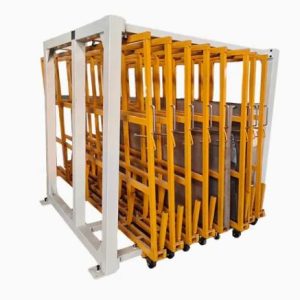
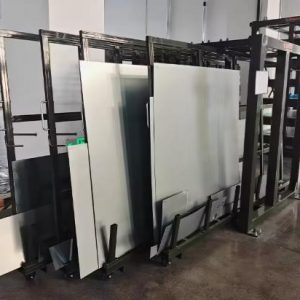
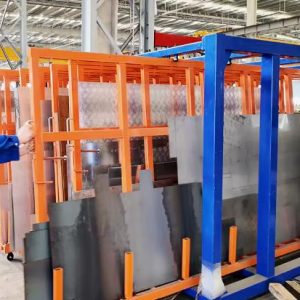
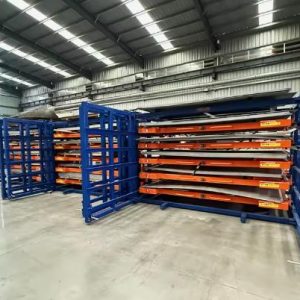
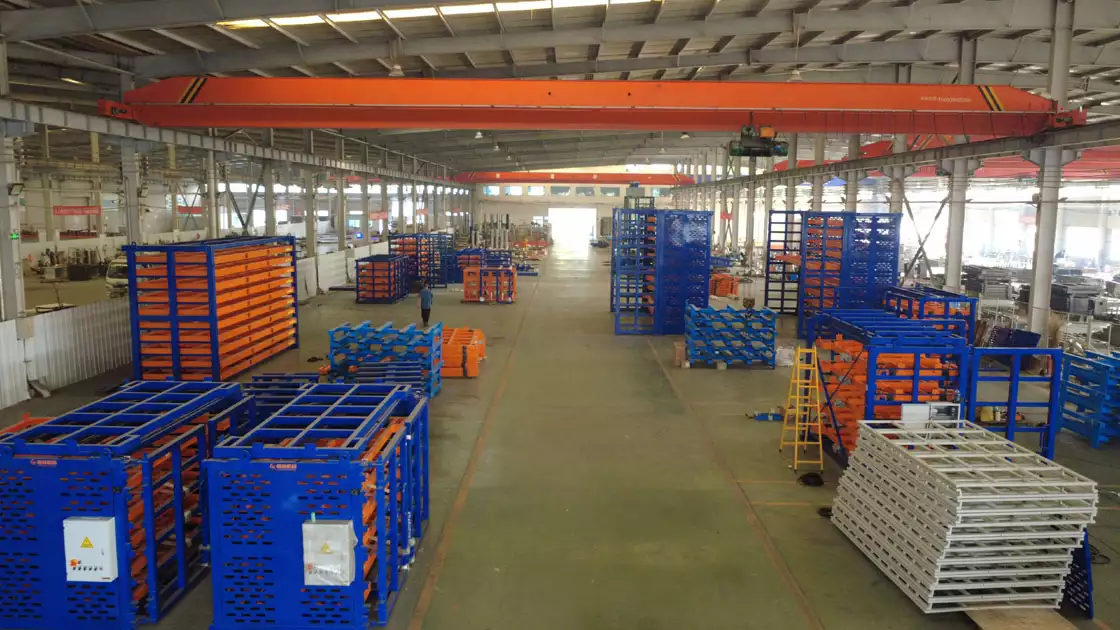
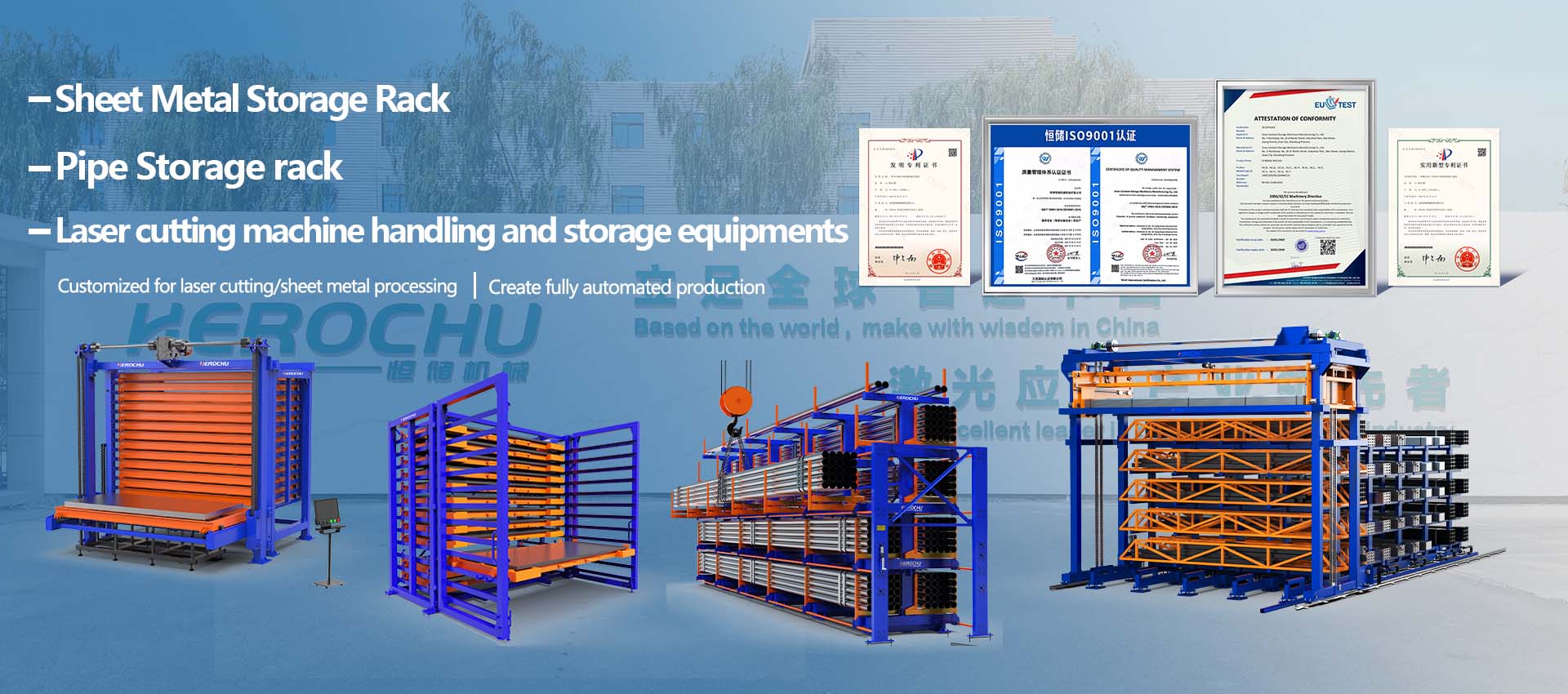
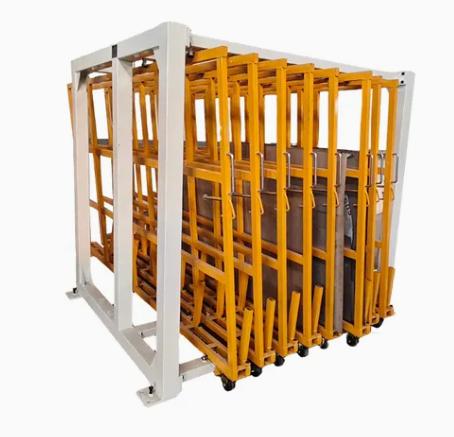
The Heavy-Duty Workshop Offcut & Metal Remnant Storage Rack from Herochu addresses this loss directly. It is a storage system engineered around the physical realities of heavy plate: the weight, the edge sharpness, the tendency to shift under gravity, and the difficulty of safe retrieval when material is buried at the bottom of a stack. The rack’s design makes every offcut accessible, organized, and retrievable by a single operator — turning what was waste into reusable inventory.
Structural Engineering for Sustained Heavy Loads
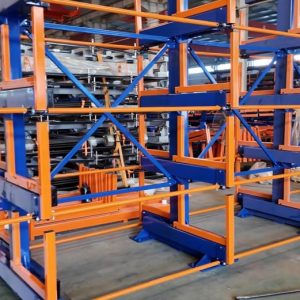
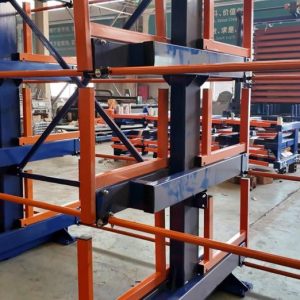
The defining characteristic of a heavy-duty rack is not the nameplate load rating — it is how the structure behaves under that load day after day. The Herochu remnant storage rack is constructed from Q235B structural steel, the same grade specified for heavy industrial mezzanines and storage platforms. The uprights, cross-supports, and drawer guides are engineered as an integrated frame, not a bolt-together shelf system. This matters because a rack holding 1000 kg per level across eight tiers is carrying 8000 kg of vertical load in total, and the frame must distribute that load into the floor without deflection or torsional twist.
Welded construction at critical joints eliminates the play that develops in bolted connections under cyclic loading. When drawers are pulled out fully loaded, the resulting moment force on the frame is significant — the weight of the drawer and its contents are cantilevered beyond the front uprights. A rack that is not rigidly built will rack — meaning twist laterally — under this load, and over time the drawer guides will bind, the frame will deform, and the system becomes unsafe. The Herochu frame is designed to resist this moment force through cross-bracing and reinforced upright sections, so the drawers extend smoothly even at maximum rated load.
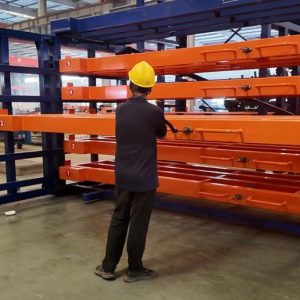
The per-level capacity of 1000 kg is not a peak rating. It is the working load the rack is built to carry continuously. For shops handling heavier plate, Herochu offers configurations with 2000 kg per drawer capacity. The drawer movement method — integrated pull-type with mechanical assistance — ensures that even at these loads, a single operator can pull the drawer without the physical strain that would normally require a forklift or overhead crane.
Full-Extension Drawers and Non-Skid Loading Surfaces
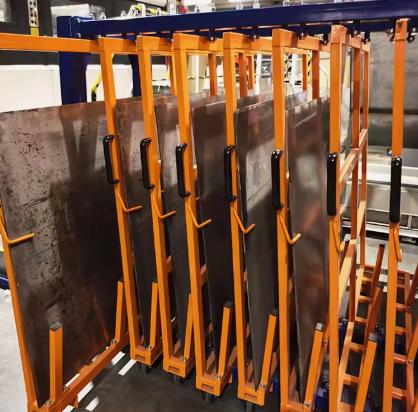
The drawer design is the functional heart of the Herochu system. Every drawer is mounted on wheels and can be extended 100 percent out of the rack frame. Full extension means the entire sheet is exposed when the drawer is open — there is no buried rear section that requires reaching into the rack or removing front sheets to access back ones. This is the feature that transforms remnant retrieval from a two-person material-handling task into a single-operator operation.
Each drawer base is fitted with non-skid strips. When a steel plate remnant is placed on a smooth steel drawer surface and the drawer is pulled out, the momentum of the moving load combined with the slight tilt that occurs as the drawer extends can cause the sheet to slide forward. On a smooth surface, a sliding 500 kg plate is a serious safety hazard. The non-skid strips grip the bottom of the sheet and hold it in position, so the drawer can be pulled and pushed without the material shifting. This is a detail that is easy to overlook in a specification sheet and critically important on the shop floor.
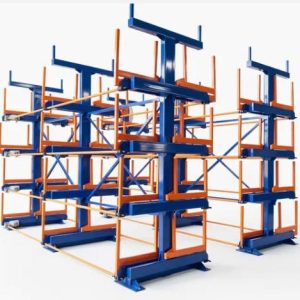
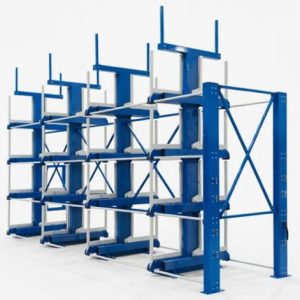
The clear space between tiers — the vertical distance a sheet must fit into — is customizable. The standard 60 mm clearance suits common sheet thicknesses, but shops working with thicker plate or stacked remnants can specify greater clearance. The HC-V2513-8 and HC-V3015-8 models accommodate 2500 × 1000 mm and 3000 × 1500 mm sheets respectively, and both offer eight customizable tiers. For deeper storage requirements, the HC-V2010-15, HC-V2513-15, and HC-V3015-15 configurations provide fifteen tiers with integrated pull-type drawer movement, rated at 1000 kg per layer.
Multi-Tier Storage as a Material Utilization Strategy
The vertical multi-tier design is not simply a space-saving feature — it is a material management strategy. When offcuts are stored horizontally, the natural limit is two layers: the sheet on top blocks access to the sheet below. An eight-tier vertical rack eliminates this constraint. Each tier is an independent drawer with independent access. An operator can pull the third drawer without disturbing the fourth, fifth, or sixth.
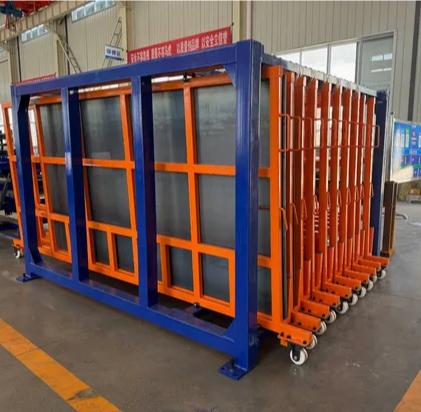
This tier independence changes how remnants are sorted. A workshop can dedicate drawer one to 2 mm carbon steel offcuts, drawer two to 3 mm carbon, drawer three to stainless 304, drawer four to stainless 316, and so on. The rack becomes a physical catalog of available remnants. When a programmer needs a specific material and thickness for a small job, the operator goes to the right drawer, opens it, and sees every available piece in that category. No searching, no guessing, no calling the warehouse to check stock.
The impact on material utilization is direct. Shops that implement organized remnant storage typically see a measurable reduction in full-sheet purchases. Jobs that would have consumed new material instead use existing offcuts. The remnant inventory that was previously invisible — buried in stacks and forgotten — becomes a visible asset that gets consumed before new stock is ordered.
Mechanical Assistance and Operational Safety
Heavy plate is dangerous to handle manually. A 2000 × 1000 mm sheet of 10 mm carbon steel weighs approximately 157 kg — too heavy for safe manual lifting, and the edges are sharp enough to cause serious lacerations. The Herochu rack addresses this through mechanical-assistance drawer movement. The drawer itself acts as a material-handling assist: it carries the weight, holds the sheet in position, and presents it at a height where the operator can use a vacuum lifter or mechanical clamp to lift the sheet from the drawer onto the machine table.
This separation of the load-handling function from the operator’s physical effort is the core safety principle of the system. The operator pulls the drawer — mechanical assistance reduces the force needed. The sheet sits on the drawer, held by non-skid strips. The operator attaches a lifting device to the sheet and moves it to the machine. At no point does the operator manually support the weight of the plate. This is how modern fabrication shops handle heavy material safely, and the rack is built to support that workflow.
Customization, Delivery, and Installation
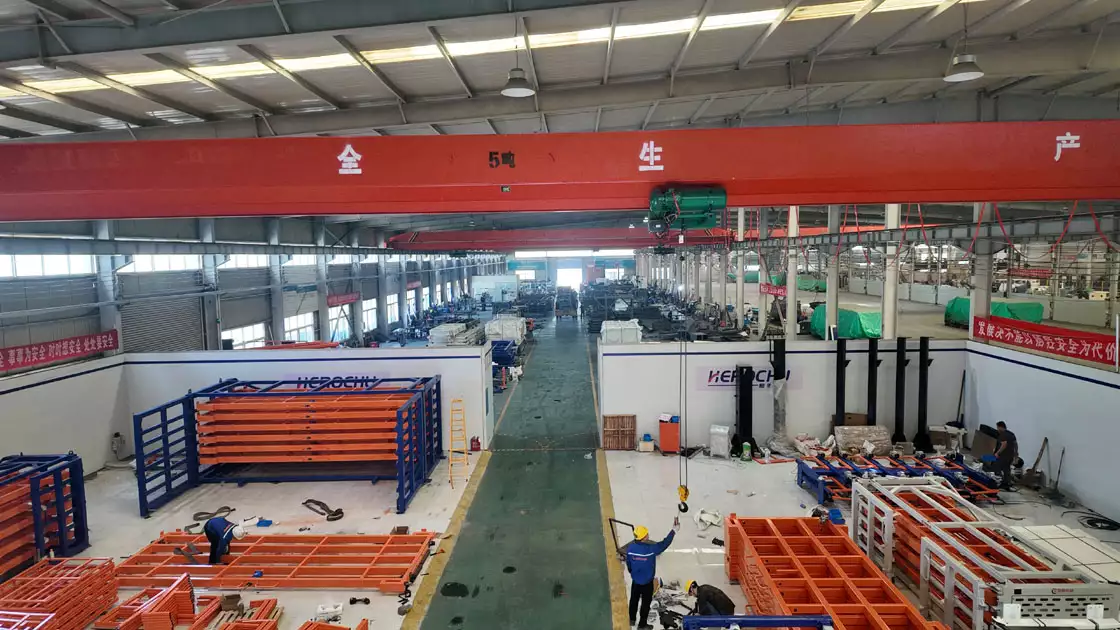
Herochu provides full customization of the heavy-duty remnant rack. Sheet dimension capacity, tier count, clear spacing, per-drawer load rating, and overall frame dimensions are all configurable to the shop’s material profile and available floor space. Color and structural reinforcement options are available for shops with specific environmental requirements or floor-loading constraints.
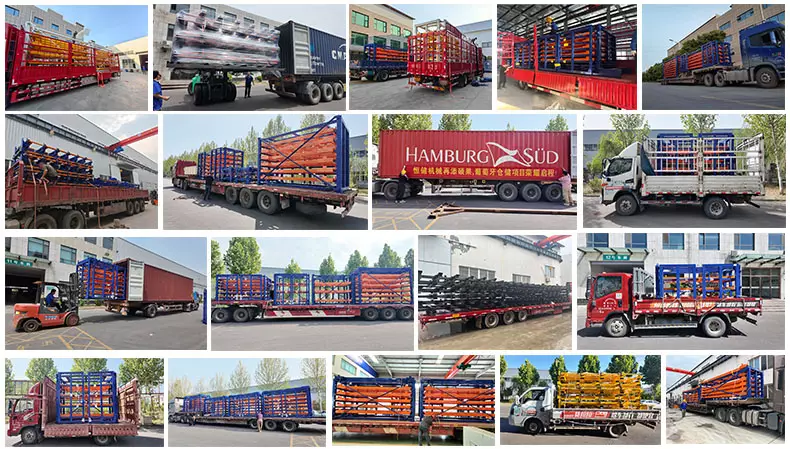
Delivery cycle is 30 days from order confirmation. Herochu provides on-site installation and commissioning, including leveling, frame squaring, drawer guide alignment, and load testing. Online guidance is available for shops that prefer self-installation, ensuring the rack is correctly assembled and operates at full rated capacity from the first day. The maximum sheet length the system can accommodate is 6000 mm, and drawer capacities of 400 kg, 1000 kg, and 2000 kg cover the range from light gauge sheet to heavy plate.
A Rack Built to Carry the Load
The Heavy-Duty Workshop Offcut & Metal Remnant Storage Rack from Herochu is engineered for shops that need a storage system capable of carrying real industrial loads, day in and day out, without the structural degradation that undermines lighter-duty shelving. The frame is rigid. The drawers extend fully and carry up to 2000 kg each. The non-skid surfaces hold the material steady. The vertical design compresses the footprint and places the rack where it is most useful — beside the machine.
For operations that have calculated the cost of remnant waste — the material value lost, the labor hours spent searching, the full sheets consumed unnecessarily — the case for organized remnant storage is straightforward. The Herochu rack is built to make that organization possible, and built to carry the weight that makes it practical.