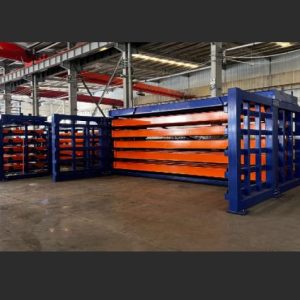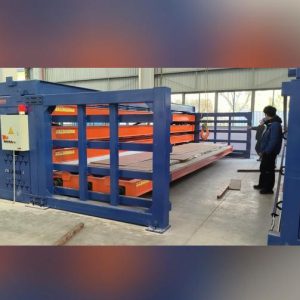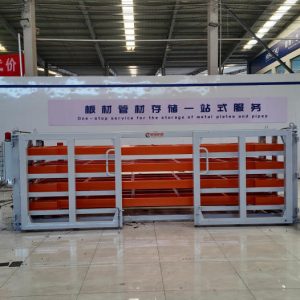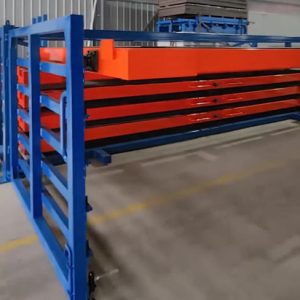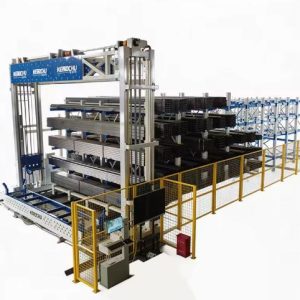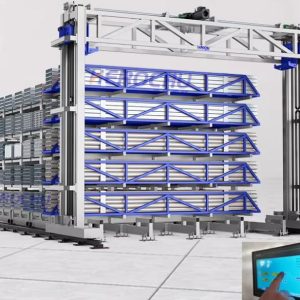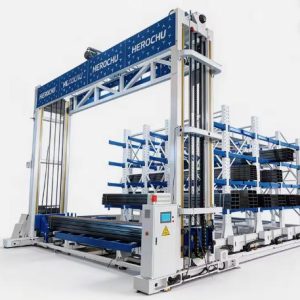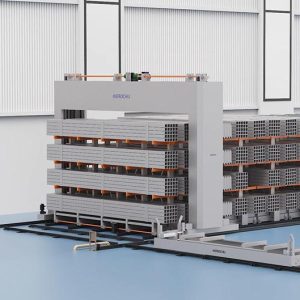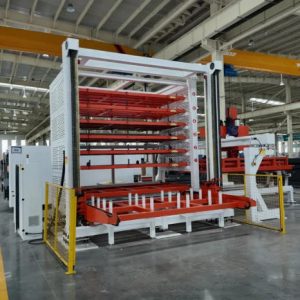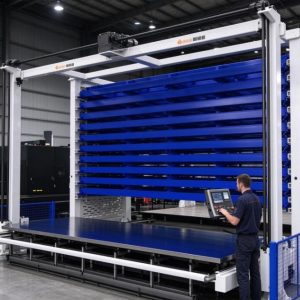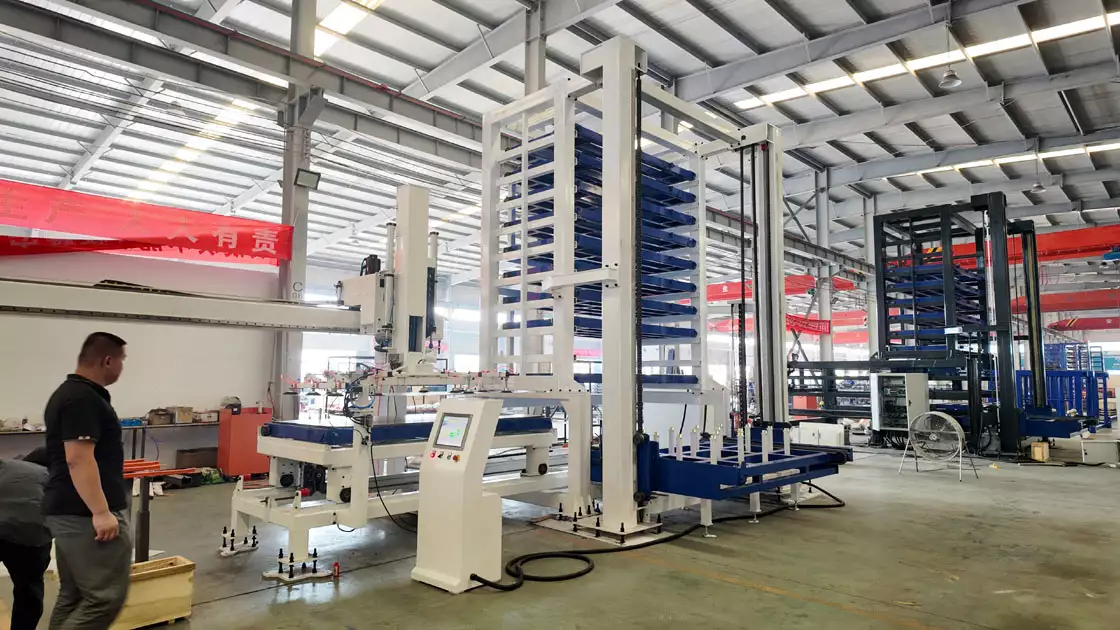
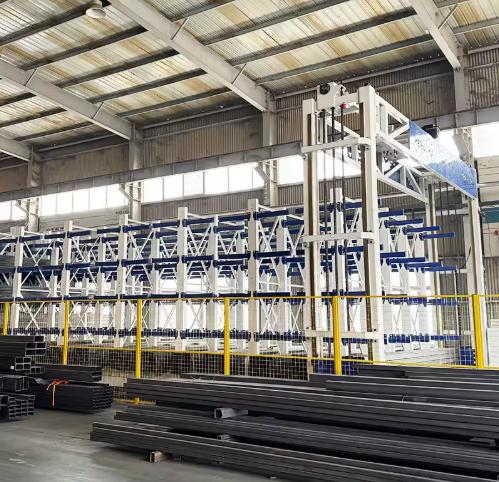
What is the difference between a gantry ASRS and a stacker-crane ASRS? A stacker-crane ASRS moves within a fixed aisle and retrieves from racks on either side of that aisle. A gantry ASRS travels along the rack face on floor rails and services multiple rack columns from a shared picking aisle. The gantry approach suits long goods because it avoids dedicating a wide aisle to each rack line.
How much floor space can a gantry ASRS recover? For pipe and profile storage, Herochu reports 60 to 70 percent recovery of floor area previously used for horizontal racks and laydown yards. Actual recovery depends on ceiling height, rack layout, and the length mix of stored material.
What repeatability does the gantry achieve? Herochu’s HC-X6053-8, HC-X7065-10, and HC-X8085-10 models all hold ±2 mm repeatability, with traveling speeds of 5–30 m/min and lifting speeds of 5–15 m/min.
Can the system handle both pipe and loose short materials? Yes. The bin design accommodates long and short materials and loose pieces, though the rack and bin configuration should be specified around the actual material mix to avoid underusing the tower volume.
How much floor does a high-density gantry ASRS save?
About 25 to 35% compared with a four-high cantilever layout served by forklifts, for the same number of storage positions.
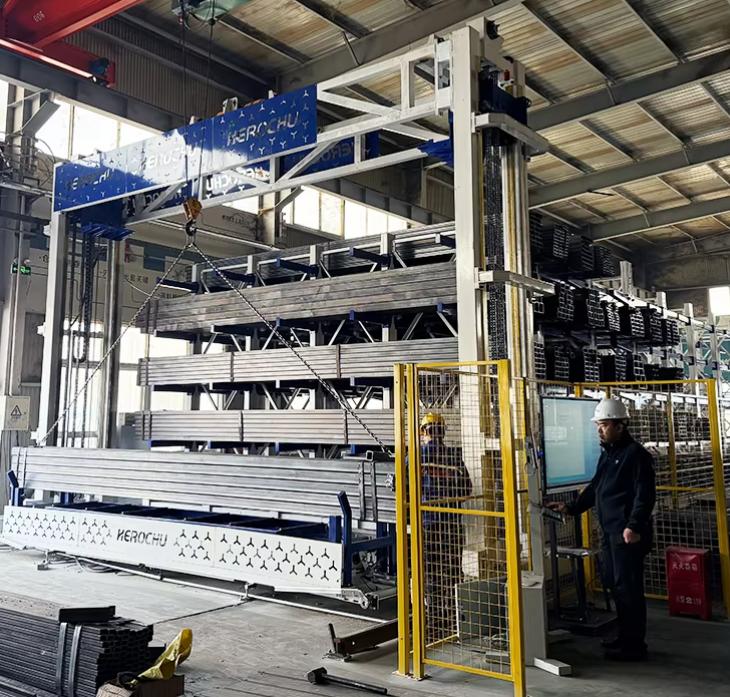
Can it handle both 6 m tube and longer profiles?
The standard range covers 6,000, 7,000 and 8,000 mm, with rail and rack length customized to the longest product the site expects to stock.
What building height is needed?
Roughly 10 to 11 m under the eaves for an eight-level tower. Fewer levels reduce the requirement in steps of about 1.1 m.
Is a WMS mandatory?
No. The PLC holds position-level inventory and runs standalone; a WMS or ERP link is optional and typically added when order allocation moves to the ERP.
How many moves per hour does one gantry deliver?
About 35 to 40 single-command cycles, which is the figure to use when sizing the number of gantries against peak shift demand.
Can a gantry ASRS replace an overhead crane?
For storage work, yes. Most sites keep the crane for inbound unloading and for loads that never enter the tower, which removes the queue at the hook rather than the crane itself.
How accurately does the system place a bundle?
The Herochu gantry repeats to ±2 mm at the pick face, which allows fork entry into divided bins and reliable label reading without contact.
Is a pit required for the rails?
No. Rails sit on grouted base plates on the existing slab, and a separate foundation is only needed where the slab cannot take the concentrated rail loads.
How long is the bay out of service?
Typically two to four weeks for rails, rack modules, gantry assembly and load testing, with commissioning scheduled around production where possible.
What happens if a bundle is overweight?
The control compares the booked weight against the position rating before the cycle starts and refuses the move, which protects the rack and the mast.