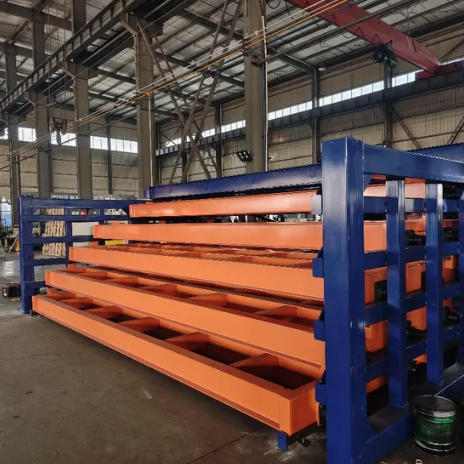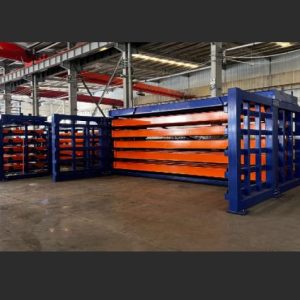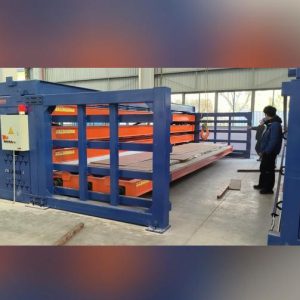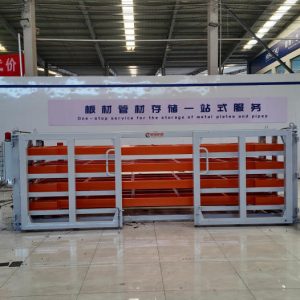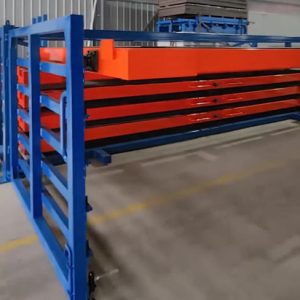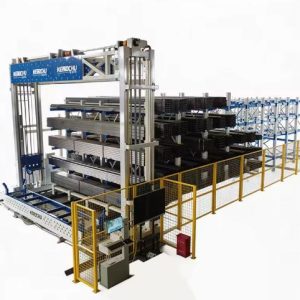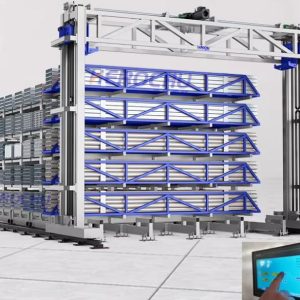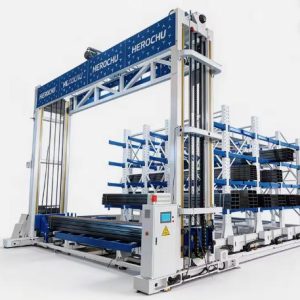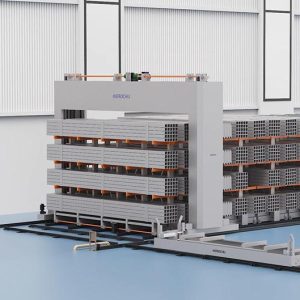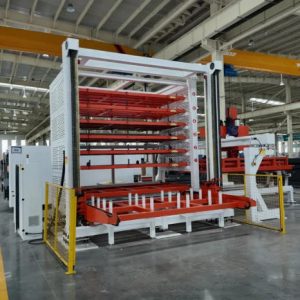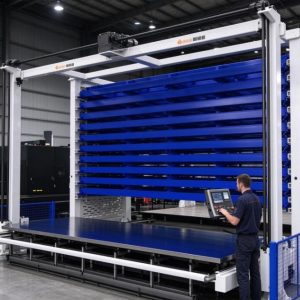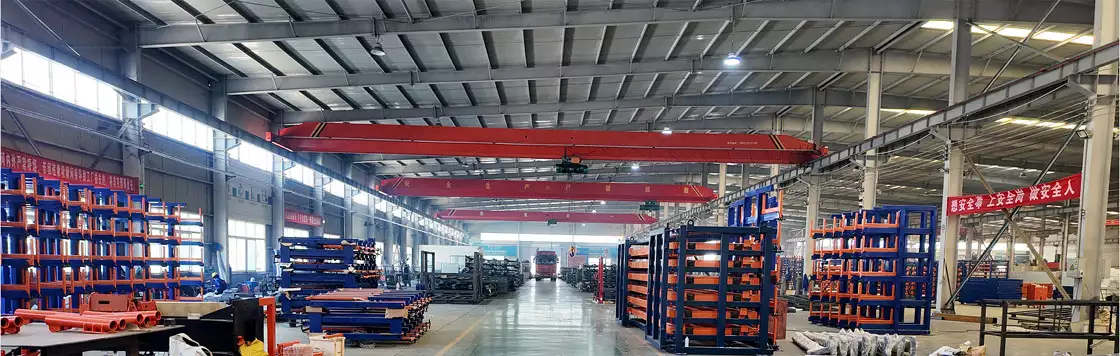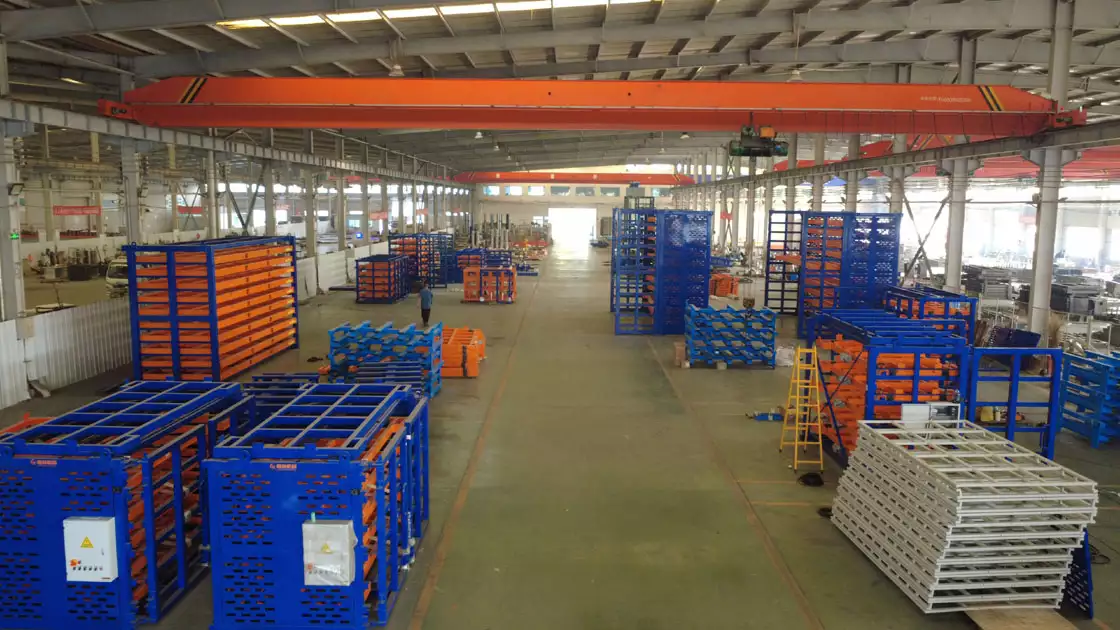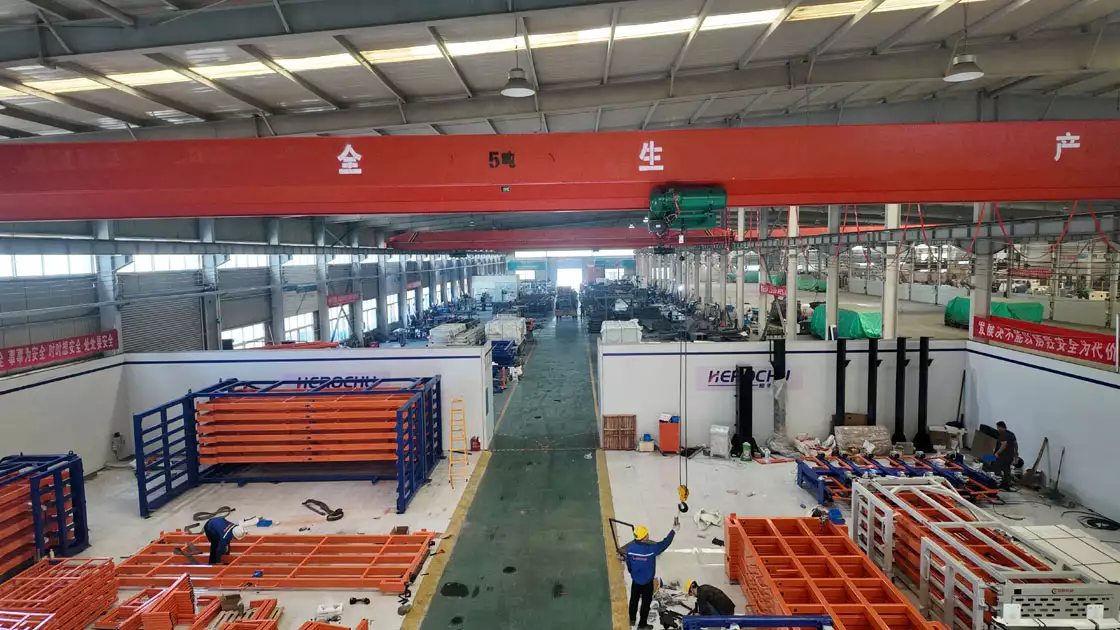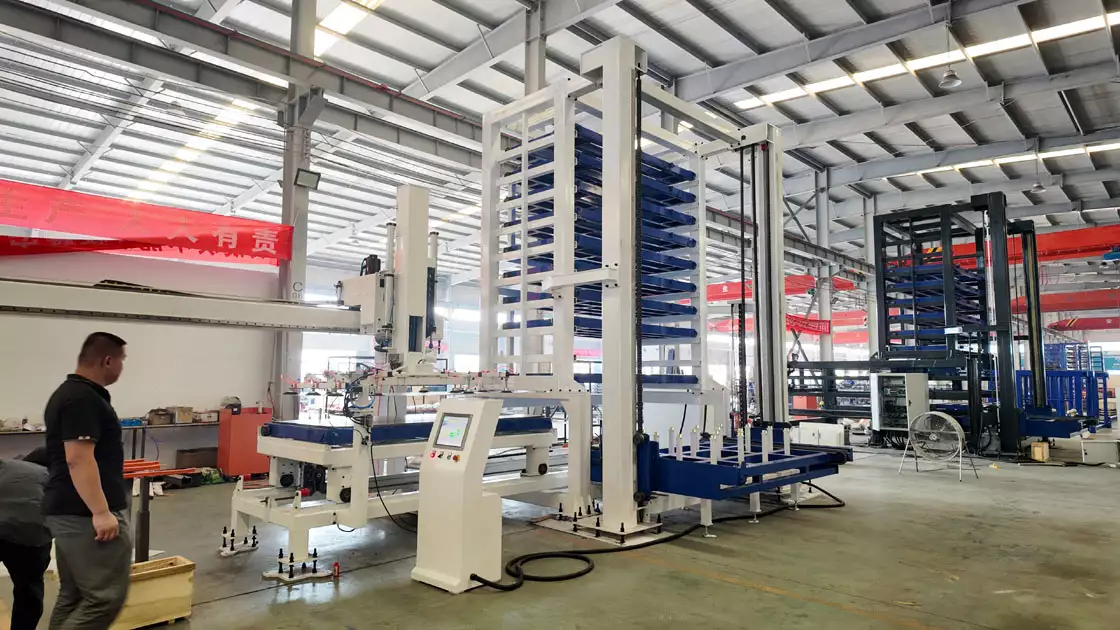
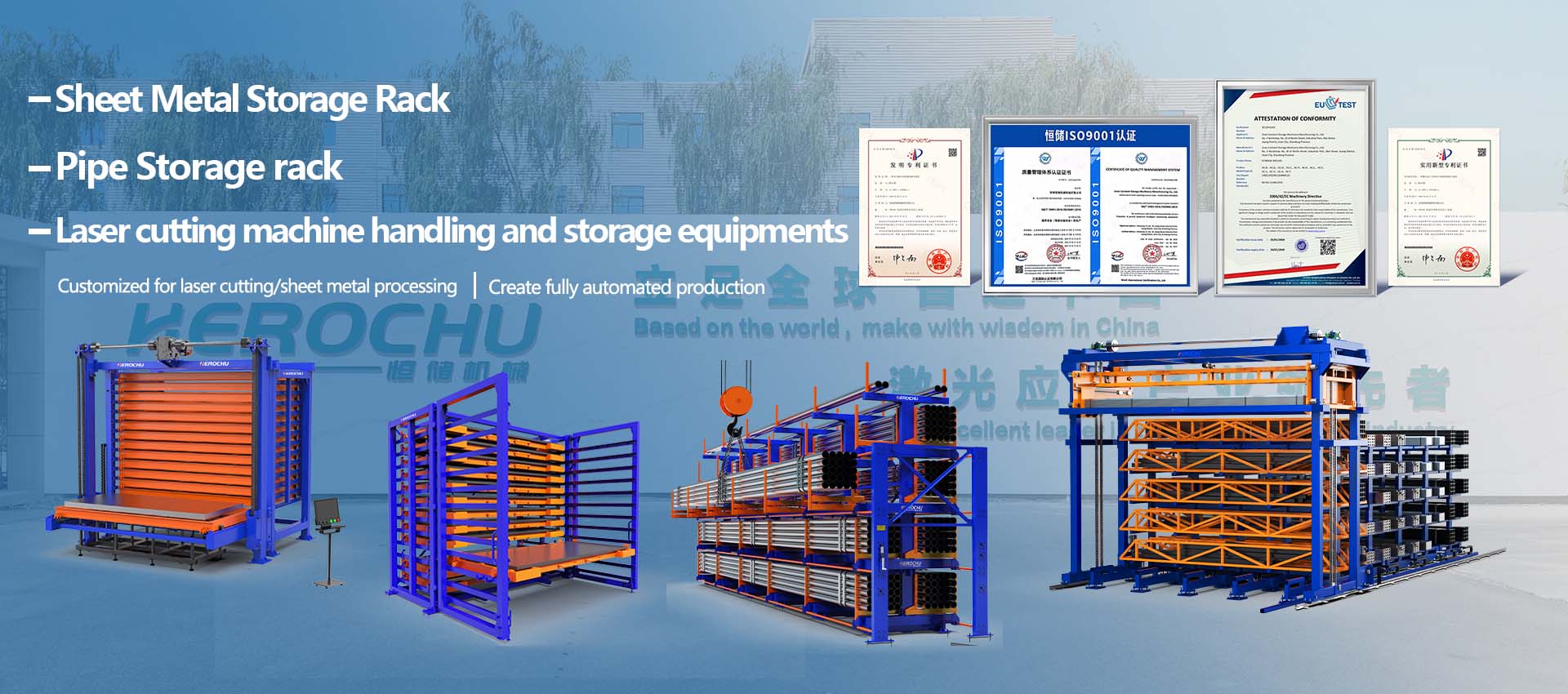
A manual roll-out rack and a motorized roll-out rack store plate in the same horizontal, drawer-style format. The sheet sits flat, the drawer extends, and the crane or forklift picks from the exposed tray. The difference is not the storage principle—it is the force required to move the drawer and the ceiling that force places on how much steel or aluminum you can put on each level.
Manual cranking works well within a defined envelope. A hand-cranked drawer with 3,000 to 5,000 kg of plate is manageable for a trained operator, especially in a six-level rack where the drawer height stays within comfortable reach. Below that range, manual systems are straightforward, require no electrical supply, and carry a lower upfront cost.
The threshold arrives when drawer weight, rack height, and retrieval frequency begin to compound. Once a single drawer passes roughly the 3,000 kg mark, the physical effort of cranking becomes a shift-long burden rather than an occasional task. Operators apply force at the drawer face, often from an awkward stance, and repeat that motion every time a sheet is needed. A fabrication shop accessing the rack twenty to forty times per shift accumulates that strain quickly.
Herochu builds its motorized plate magazine line around that operational reality. The electric drive replaces the crank with a remote-controlled extension system, so the operator stands clear of the load and presses a button rather than pulling against several tons of plate. The drawer extends smoothly under motor power, and the load stays controlled throughout the travel.
Capacity is where the two architectures diverge most clearly. Manual roll-out racks typically top out around 5,000 kg per level. Motorized systems move into a higher range—5,000 to 7,000 kg per level in standard configurations, with Herochu’s heavy-duty models extending further depending on sheet format and rack height. For stainless steel plate, aluminum plate, and mixed-material storage where a single drawer may carry multiple bundles, that additional headroom changes what a single rack footprint can hold.
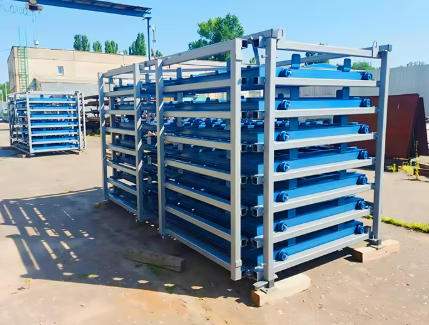
The specification table tells the rest of the story. Herochu’s HC-B3015E-63 handles 3,000 × 1,500 mm sheets across six customizable layers at 3,000 kg per level. The HC-B12025E-520 moves into 12,000 × 2,500 mm plate at 20,000 kg per level—a range that manual cranking cannot address at all. Pallet traveling speeds range from 2.28 to 5.27 m/min depending on the model, and the Q235B high-strength steel frame with dual-beam crossbar construction carries the load without relying on the operator for stability.
The practical decision rule is not “motorized is better.” It is: match the drive to the drawer weight, the rack height, and how often the drawer moves. Below 3,000 kg per level and six layers or fewer, manual remains a rational choice. Above that, or when the rack grows tall enough that the operator is reaching upward to crank, the electric system stops being a convenience and becomes the safer, faster, and more sustainable way to run the storage cell.
For buyers comparing quotes, Herochu’s motorized magazine systems are configured around sheet size, layer load, and discharge method rather than sold as a fixed catalog item. A 3,000 × 1,500 mm stainless steel drawer and a 12,000 × 2,500 mm aluminum plate drawer do not need the same drive architecture, and the specification should reflect that difference.