Aluminum Is Not Steel: Why Storage Method Matters More
Aluminum sheet is softer than steel. It scratches more easily, deforms under point loads, and shows handling marks that would be invisible on hot-rolled carbon steel. A storage system designed for steel plate will store aluminum—but it will not protect it.
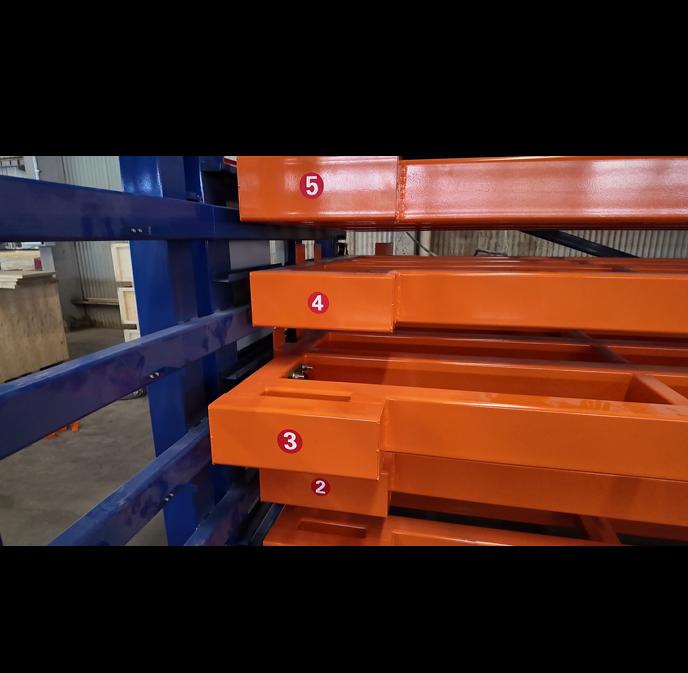
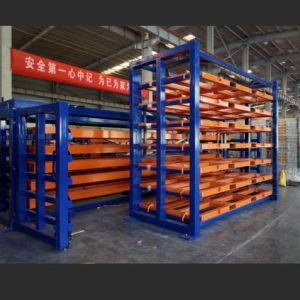
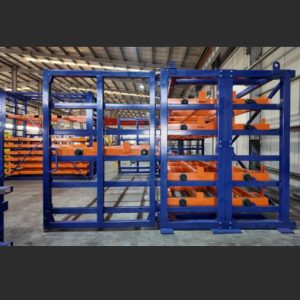
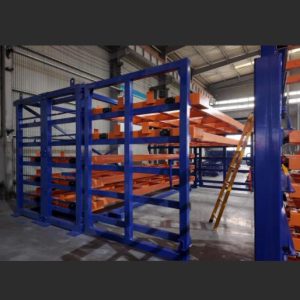
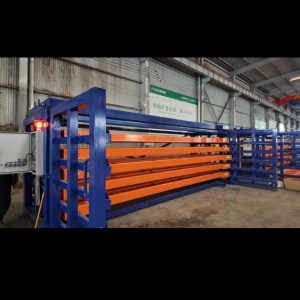
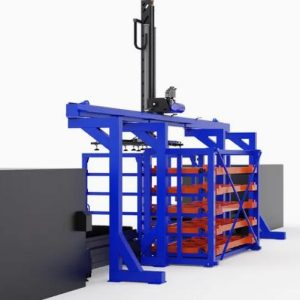
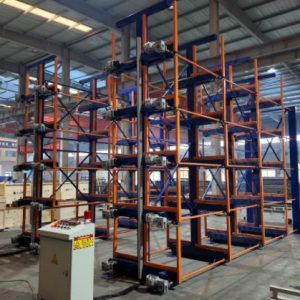
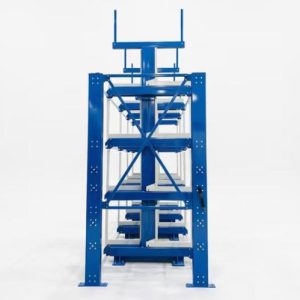
Herochu’s multi-layer aluminum sheet storage rack addresses the specific requirements of aluminum stock in the 4000×1500 mm format. The HC-B4015-63 model provides six independent drawers, each rated for 3,000 kg, with full-extension travel that exposes the entire sheet surface for lifting. The drawer bed is flat and continuous, supporting the aluminum across its full area rather than at discrete points.
For fabricators processing aluminum for aerospace, transportation, architectural, or marine applications, this level of protection is not optional. A single deep scratch can render a sheet unsuitable for visible or structural use.
The Damage Mechanisms That Drawer Storage Eliminates
Understanding how aluminum gets damaged in storage clarifies why the Herochu design works.
Edge contact during stacking. When sheets are stacked directly on each other, the burr on one sheet’s edge presses into the surface of the sheet below. Under the weight of additional layers, this contact creates indentations that cannot be polished out. The Herochu drawer separates each sheet or stack onto its own tier. There is no sheet-to-sheet contact under load.
Sliding friction during retrieval. Pulling a sheet from the middle of a stack drags it across the sheets above and below. Aluminum oxide is abrasive, and the friction leaves visible scratch patterns. The drawer system eliminates sliding retrieval: the drawer moves, the sheet stays in place on the drawer surface.
Point loading from supports. Cantilever racks and improvised storage often support sheets on a few narrow arms. Under load, the aluminum deflects between supports, leaving permanent bends. The Herochu drawer bed is a continuous steel plate that supports the sheet across its entire length and width.
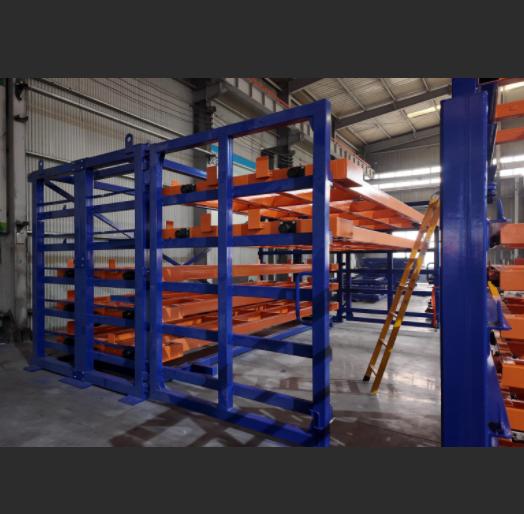
Contamination from mixed materials. When aluminum is stored in contact with steel, galvanic corrosion can occur in the presence of moisture. Separate drawers allow physical separation of material types, reducing this risk.
Load Capacity and Structural Design for 4 × 1.5 m Sheets
A 4000×1500 mm sheet of aluminum plate varies widely in weight depending on alloy and thickness. A 5 mm sheet of 6061 aluminum weighs approximately 81 kg. A 20 mm plate weighs roughly 324 kg. Even stacked several deep on a single drawer, the load remains well within the 3,000 kg per tier rating.
The structural system supporting this capacity includes:
- Q235B steel main frame with dual-beam reinforcement under each drawer
- Telescopic rails rated for the full drawer load
- Lock-in and lock-out mechanisms that secure the drawer in both positions
- Mechanical assistance for smooth movement at rated capacity
The clear space between tiers is adjustable to accommodate stacked sheets or thicker plate. Herochu configures the tier spacing to the actual material profile, avoiding wasted vertical space above thin sheets.
Multi-Layer Organization: Sorting by Alloy, Temper, and Thickness
Aluminum inventory in a fabrication shop often includes multiple alloys—5052, 6061, 7075—in different tempers and thicknesses. Mixing these in a single stack creates retrieval errors and increases the risk of using the wrong material for a job.
The six-drawer configuration provides six discrete storage locations. Each drawer can be dedicated to a specific alloy, thickness range, or job number. Label holders mounted on the drawer front allow clear identification without opening the drawer.
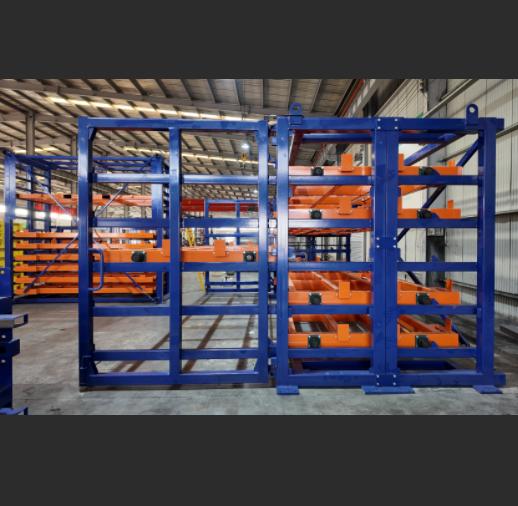
This organizational structure serves two purposes. It reduces search time—the operator goes directly to the correct drawer rather than checking multiple stacks. And it provides inventory visibility: a supervisor can see at a glance what material is on hand by reading the drawer labels.
For shops using inventory management software, the drawer locations can be mapped to the database, so the system directs the operator to the correct tier.
Full-Extension Access for Vacuum Lifters and Cranes
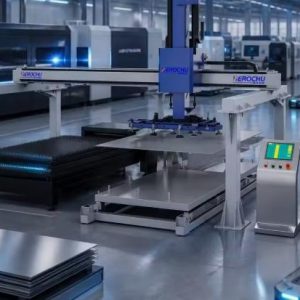
Aluminum sheets in the 4000×1500 mm format are typically handled with vacuum lifters rather than magnets (aluminum is non-magnetic) or forklift tines (which can damage edges). The vacuum lifter requires clear access to the sheet surface—it cannot operate effectively if the sheet is partially buried in a stack.
The Herochu drawer extends 100% of its length, presenting the full sheet surface to the vacuum lifter. The operator positions the lifter on the sheet, activates the vacuum, and lifts. No part of the sheet is trapped under the tier above. No adjacent material needs to be moved.
The drawer remains locked in the extended position during lifting, preventing accidental retraction that could damage the sheet or injure the operator. Once the sheet is clear, the drawer releases and returns to the closed position.
Space Efficiency for 4 × 1.5 m Stock
A 4000×1500 mm sheet consumes 6 m² of floor area when stored flat. Six sheets stored in separate floor stacks would occupy 36 m² plus access aisles—a significant portion of a typical shop floor. The Herochu rack compresses those six storage locations into a vertical column with a footprint of approximately 7–8 m² including drawer extension clearance.
The space savings matter most in shops where aluminum is one of several materials stored. A dedicated aluminum rack that consumes minimal floor area leaves more room for steel storage, work-in-progress, or production equipment.
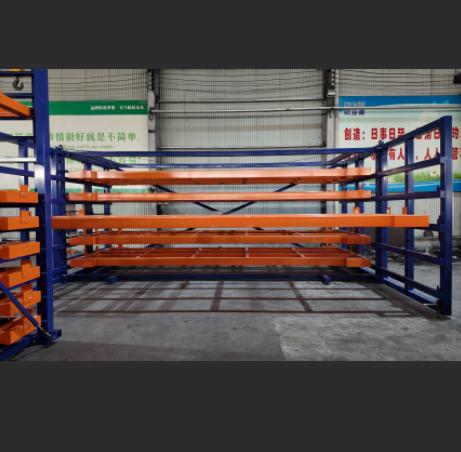
The rack can be positioned against a wall or between columns, with drawers opening into an aisle that serves other functions as well. Because retrieval does not require forklift access to the rack face, the aisle width can be determined by foot traffic and vacuum lifter movement rather than vehicle turning radius.
Technical Specifications: HC-B4015-63
| Parameter | Specification |
|---|---|
| Sheet dimensions | 4000×1500 mm |
| Number of layers | 6 (customizable) |
| Max load per layer | 3,000 kg |
| Clear space between tiers | 120 mm (adjustable) |
| Drawer extension | 100% full extension |
| Frame material | Q235B high-strength steel |
| Discharge method | Mechanical assistance |
| Safety features | Lock-in/lock-out, anti-tip interlock |
| Certification | ISO 9001, CE |
For heavier aluminum plate—thicknesses above 20 mm or stacked configurations approaching the 3,000 kg limit—Herochu offers the HC-B4020-65 and HC-B6020-65 models with 5,000 kg per tier capacity.
Customization for Aluminum Processors
Aluminum sheet often arrives with protective film or interleaving paper that must be preserved during storage. Herochu can specify drawer surfaces that are smooth and free of burrs, reducing the risk of tearing the protective layer during loading and unloading. Optional non-marking liners are available for polished or anodized material.
For shops that process both aluminum and steel, color-coded drawer fronts or labeling systems help maintain material separation without requiring separate racks. The drawers are independent, so aluminum and steel can be stored in the same structural frame as long as the load ratings are respected.
Why Herochu for Aluminum Storage
Herochu manufactures sheet metal storage racks at a 16,000 m² facility in Shandong, China. The company holds ISO 9001 and CE certification for its industrial racking products. Every rack is load-tested at 125% of rated capacity before shipment, with test data logged for traceability.
The drawer system is designed for the realities of metal storage: heavy loads, repetitive access, and the need to protect material from handling damage. For aluminum processors, those design priorities translate directly into preserved material value and reduced scrap.
Request a Quote for Your Aluminum Storage
To receive a factory-direct proposal for a 4 × 1.5 m aluminum sheet rack, provide:
- Alloy and thickness range of the aluminum stored
- Maximum stack weight per drawer
- Number of material types that require separation
- Available floor space and ceiling height
- Handling equipment (vacuum lifter, crane capacity)
Herochu’s engineers return a configuration drawing, load calculation, and quotation tailored to your aluminum inventory.