The Storage Problem That Costs Fabricators Every Shift
Walk through most metal fabrication shops and you will find the same scene: stacks of steel plate on the floor, sheets leaning against walls, and an operator spending fifteen to thirty minutes digging through inventory to find a specific gauge. The material may be perfectly good, but the storage method has turned a valuable asset into a productivity bottleneck.
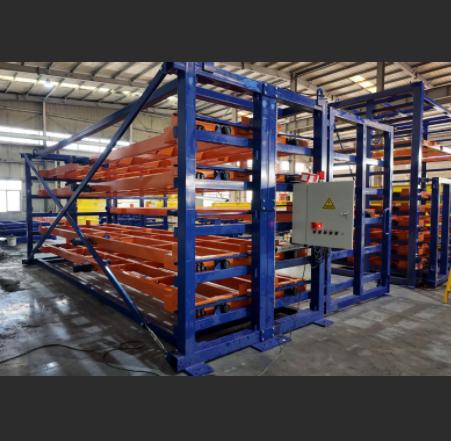
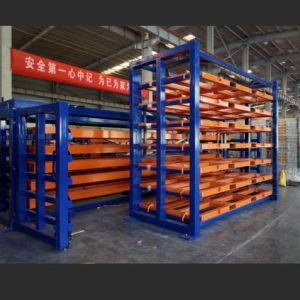
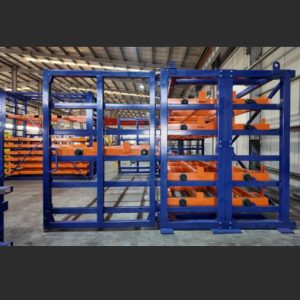
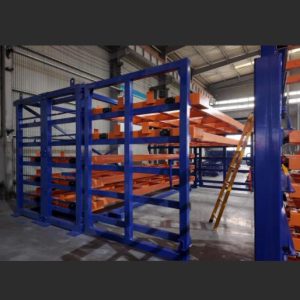
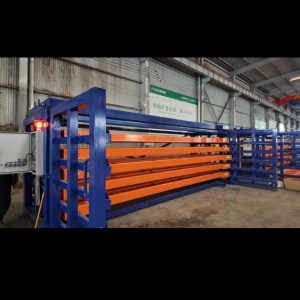
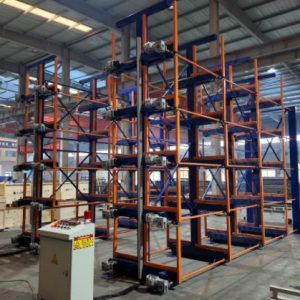
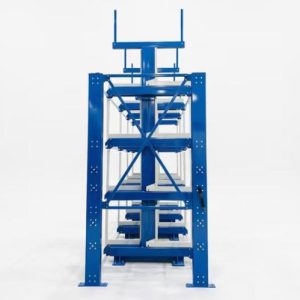
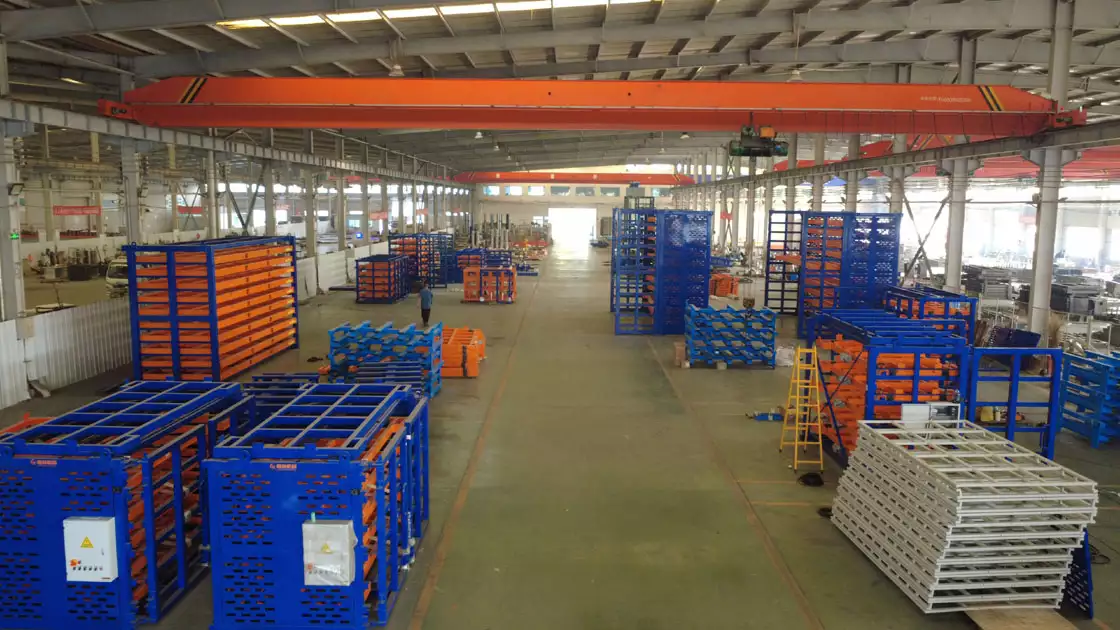
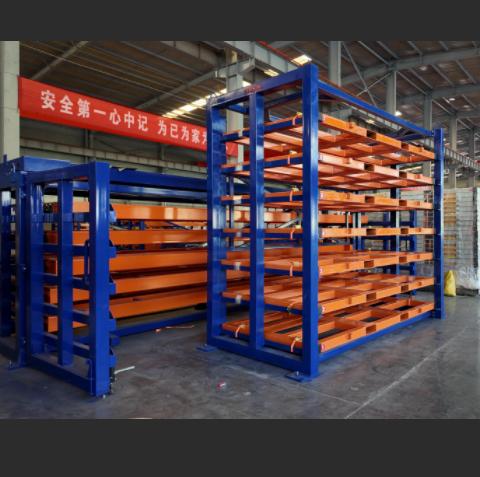
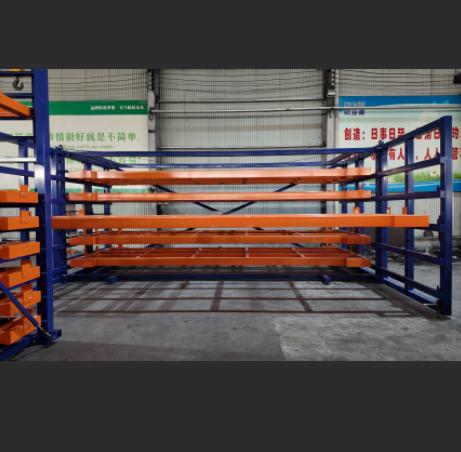
Herochu built the HC-B3015-63 flat sheet storage rack to eliminate that bottleneck. This drawer-type system stores 3000×1500 mm sheets across six or seven independent tiers, each rated for 3,000 kg. For heavier applications, the HC-B4020-65 and HC-B6020-65 models scale capacity to 5,000 kg per level while accommodating sheets up to 6000×2000 mm. Every drawer extends completely, giving operators full access to the material without disturbing adjacent loads.
What “Heavy-Duty” Actually Means in This Rack
The term gets used loosely in industrial equipment. At Herochu, heavy-duty is a specification, not a marketing label.
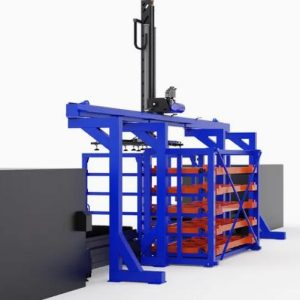
The main frame is constructed from Q235B high-strength structural steel with a dual-beam design. Each drawer rides on heavy-gauge telescopic rails that support the full rated load without deflection during extension. The drawer bed is formed from thick plate with an upturned front lip that prevents sheets from sliding forward during operation. Mechanical interlocks permit only one drawer to open at a time, eliminating the tip-over risk that plagues multi-tier storage systems.
Load testing is performed at 125% of rated capacity before any unit ships. For a rack rated at 3,000 kg per level, the factory applies 3,750 kg of calibrated steel billets arranged to simulate actual sheet distribution. Deflection is measured at mid-span, and any unit exceeding the allowable limit is rejected .
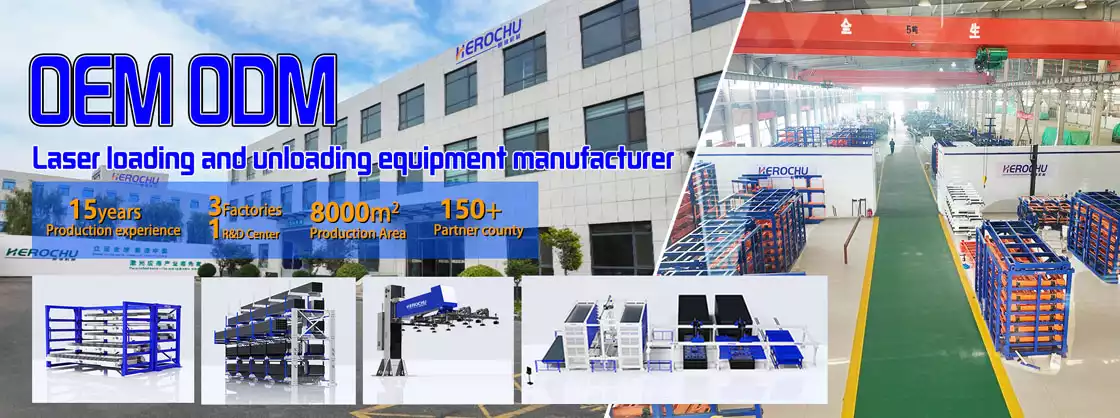
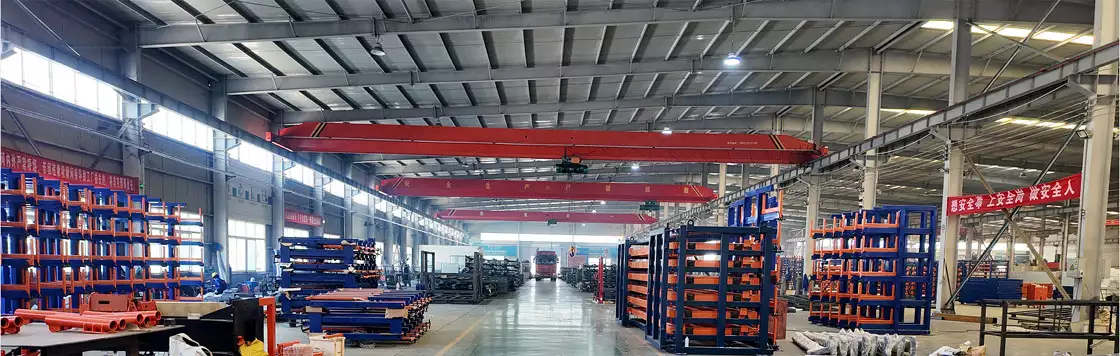
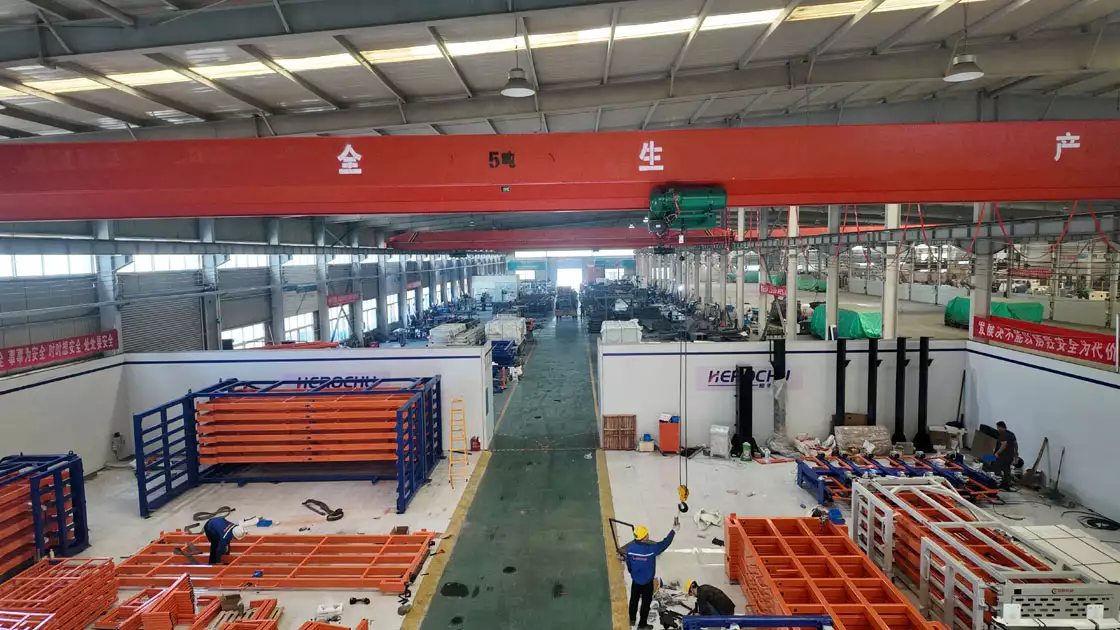
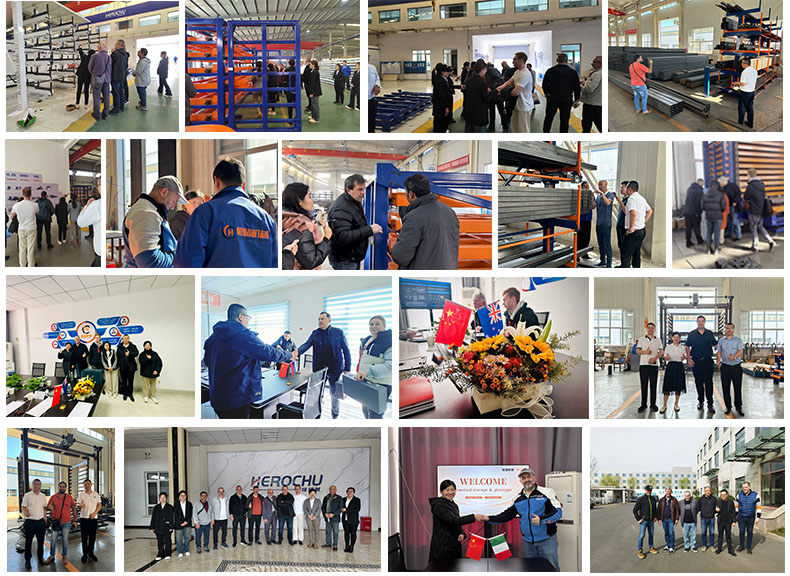
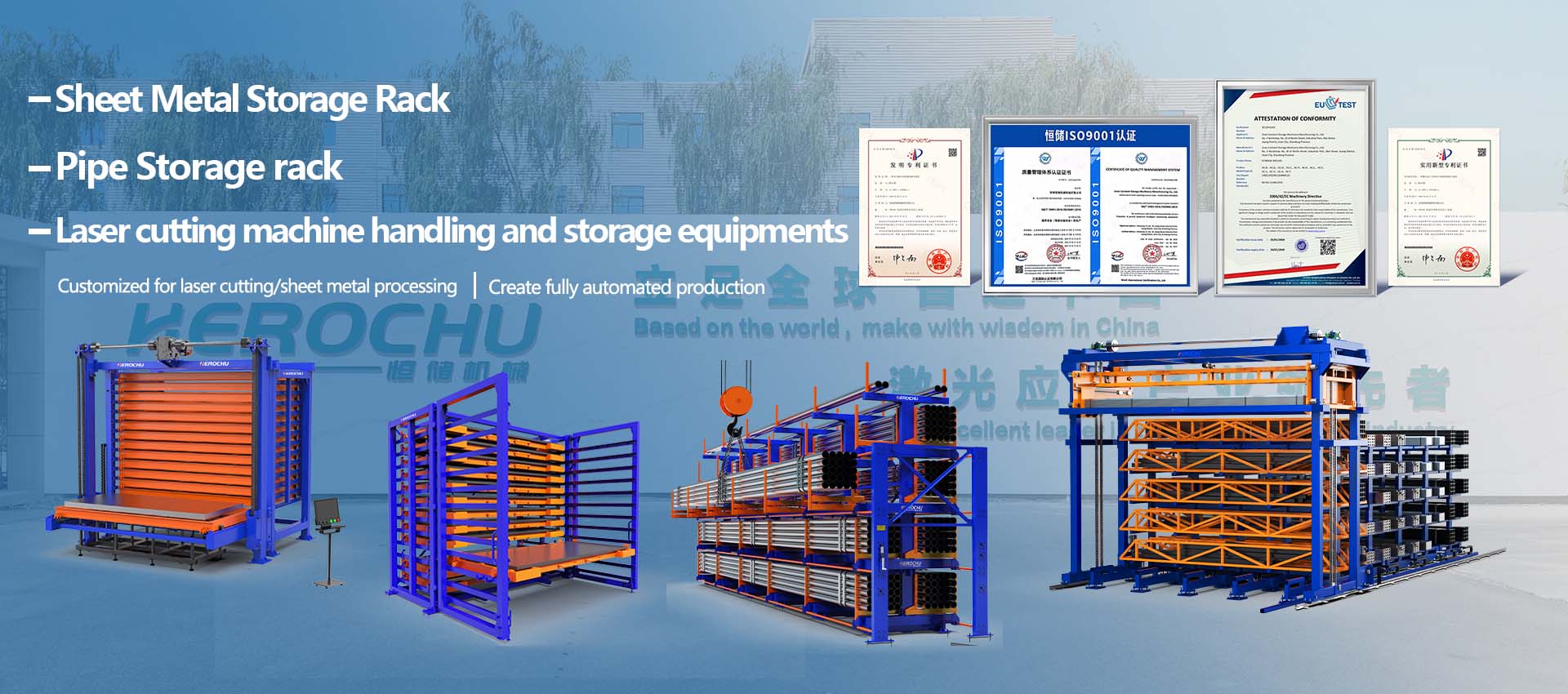
Herochu operates a 16,000 m² manufacturing facility in Jinan, Shandong, with ISO 9001 and CE certification covering the full production process. Raw steel is sourced from approved mills and verified by spectrometer before cutting begins.
How the Drawer System Changes Material Flow
The operational logic behind the roll-out drawer is straightforward: bring the material to the operator rather than forcing the operator to reach into a rack.
With conventional floor stacking or static cantilever racks, retrieving a sheet from the middle of a pile requires moving everything above it. A forklift may be needed just to expose the correct layer. The process is slow, creates handling damage, and consumes floor space that could be generating revenue.
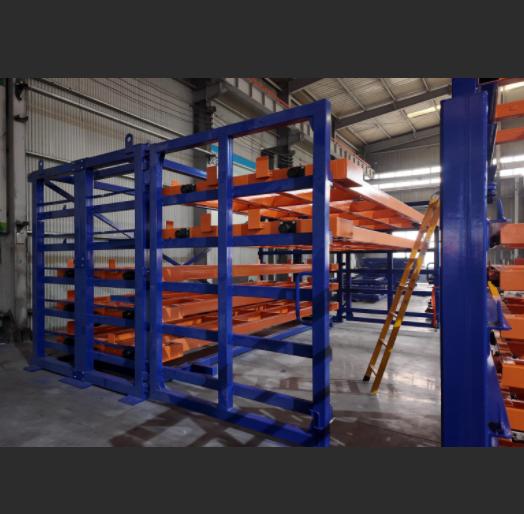
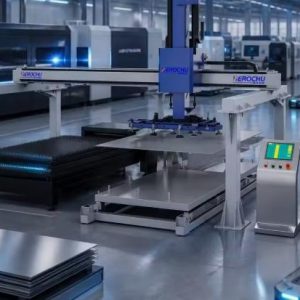
Herochu’s drawer system reverses this dynamic. The operator pulls the required tier into the aisle. The entire sheet surface is exposed to an overhead crane, vacuum lifter, or magnet. The sheet is lifted clear without contacting adjacent material. The drawer returns to its closed position, and the next tier remains undisturbed.
Documented results from shops that have adopted drawer-based storage show retrieval time dropping from 30–60 minutes per pick to under 3 minutes. Material search efficiency improves by approximately 90%, and production waiting time falls accordingly . One operator can complete the retrieval independently—no second person needed to stabilize the load or guide the sheet.
Space Density: The Numbers Behind the Footprint
Floor space in a fabrication shop is expensive. A storage system that consumes 100 m² to hold material that could fit in 20 m² is not neutral—it is actively costing the business money in lost production area.
The Herochu drawer rack compresses storage vertically. Under equivalent storage requirements, a drawer-style rack occupies roughly 20% of the floor area needed for traditional ground stacking. The vertical column rises to six or seven tiers, using airspace that would otherwise sit empty above the shop floor.
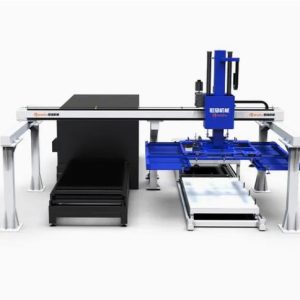
For a facility handling 3000×1500 mm sheets, this density translates directly into layout flexibility. The rack can be positioned beside the laser cutter or press brake rather than in a remote storage zone. Material flows from storage to machine in seconds rather than minutes.
Material Protection and Loss Reduction
Traditional stacking damages material. Sheets scratch against each other during handling. Edges deform under the weight of layers above. The surface finish on coated or polished stock degrades with every pile-to-pile transfer. Industry estimates place scratch and deformation rates at 3–5% for floor-stacked material—a loss that compounds across thousands of sheets annually.
The Herochu drawer system addresses this at the point of contact. Each sheet rests on a flat, supported drawer surface fitted with non-skid strips. The sheet is placed once and retrieved when needed. There is no sliding against adjacent sheets, no leaning, no stacking under heavier material. The drawer contains the load within a defined space, preventing the edge damage that occurs when sheets shift against each other in a pile.
For shops processing aluminum, stainless steel, or pre-finished material, this protection alone can justify the investment. A single scratched sheet of specialty alloy can represent hundreds of dollars in scrap value.
Technical Specifications at a Glance
| Model | Sheet Dimensions (mm) | Layers | Max Load per Level |
|---|---|---|---|
| HC-B2513-63 | 2500×1300 | 6 (customizable) | 3,000 kg |
| HC-B3015-63 | 3000×1500 | 6 (customizable) | 3,000 kg |
| HC-B4015-63 | 4000×1500 | 6 (customizable) | 3,000 kg |
| HC-B4020-65 | 4000×2000 | 6 (customizable) | 5,000 kg |
| HC-B6020-65 | 6000×2000 | 6 (customizable) | 5,000 kg |
Clear space between tiers is adjustable to match material thickness and handling requirements. Material discharge is mechanical-assistance assisted, reducing operator effort even at full load.
Who This Rack Is Built For
The HC-B3015-63 and its larger siblings serve fabrication shops, metal service centers, laser cutting facilities, and any operation that stores flat metal sheets in volume. It is particularly suited to facilities that:
- Handle multiple gauges and alloys that require physical separation
- Operate overhead cranes or vacuum lifters for material movement
- Have limited floor space relative to storage demand
- Experience material damage from current stacking methods
- Need one operator to manage retrieval independently
Herochu engineers can customize tier count, clear space, and load rating to match a specific material profile. Drawer dimensions can be adjusted for non-standard sheet sizes. Color coding and labeling options support inventory management systems.
Getting a Quote
Herochu provides factory-direct pricing with no intermediary markup. To receive a customized proposal, provide the following:
- Sheet dimensions (length × width in mm)
- Maximum weight per sheet or per stack
- Number of layers required
- Available floor space and ceiling height
- Handling equipment in use (crane, forklift, vacuum lifter)
Application engineers return a 3D layout, load calculation, and transparent quotation—typically within one business day.