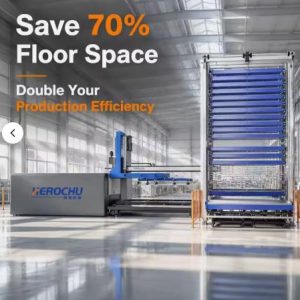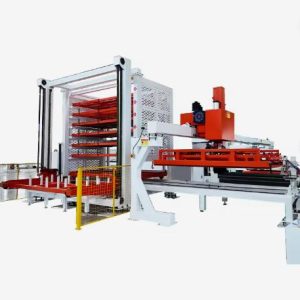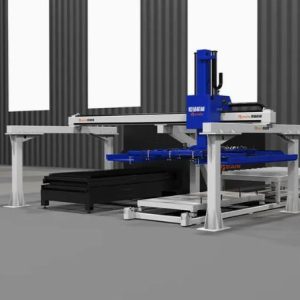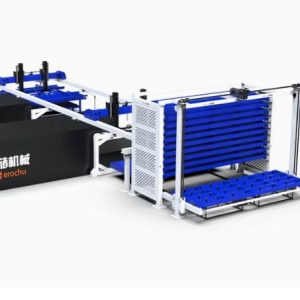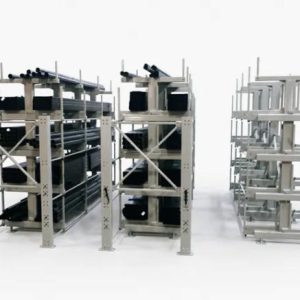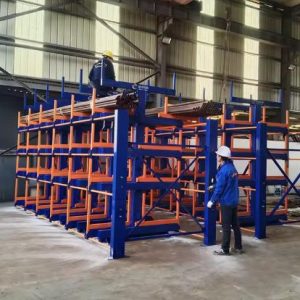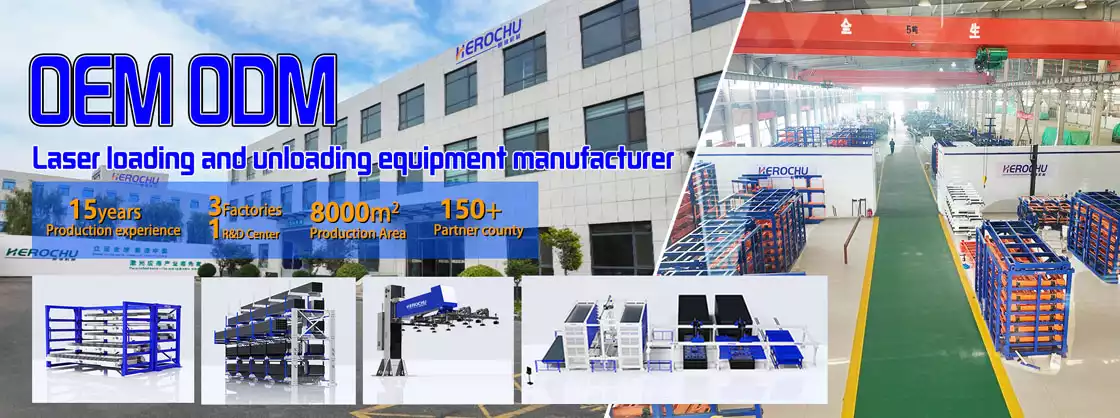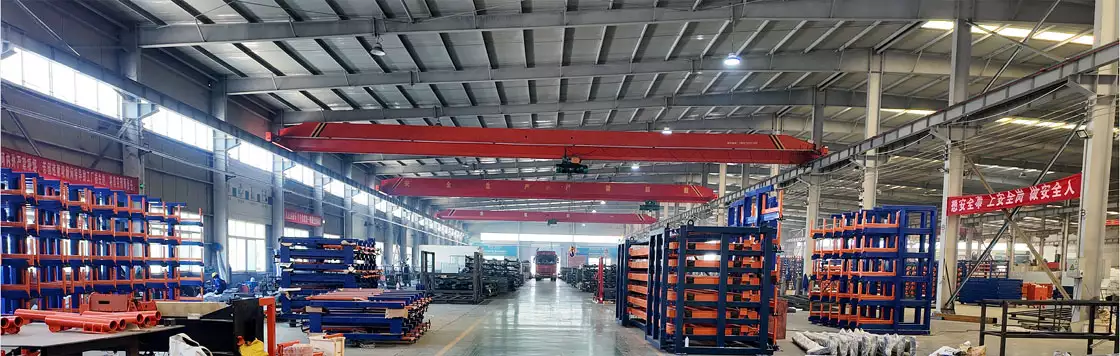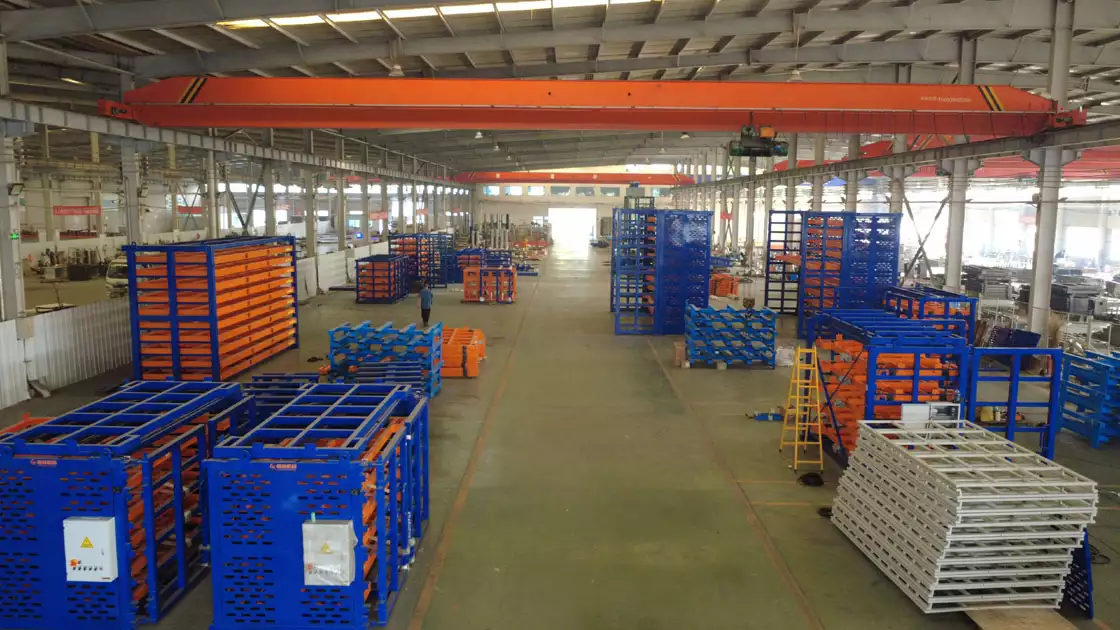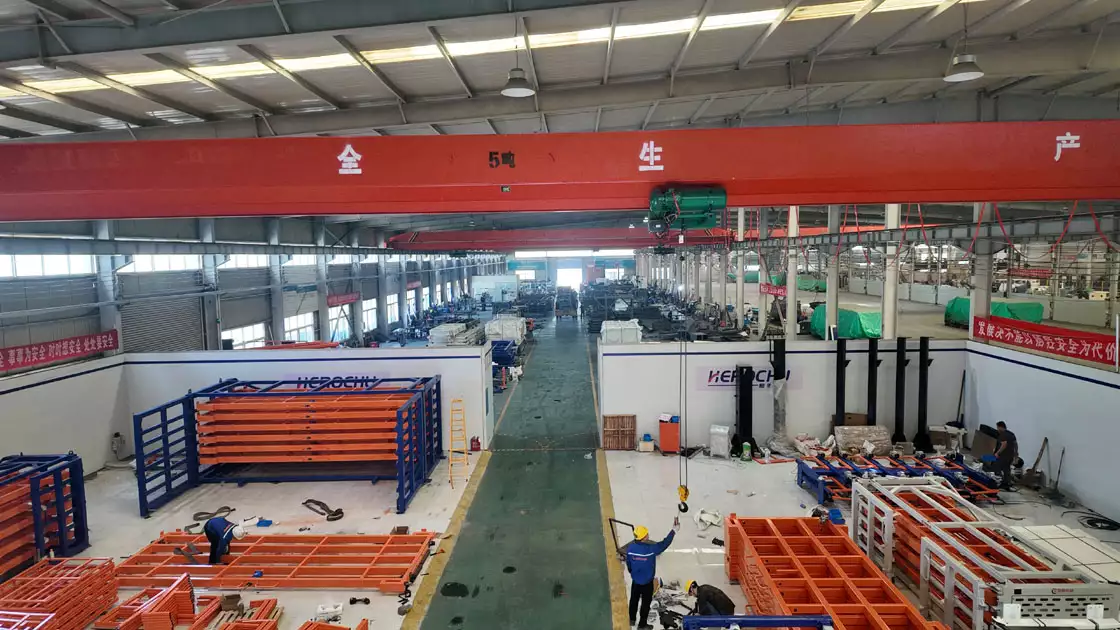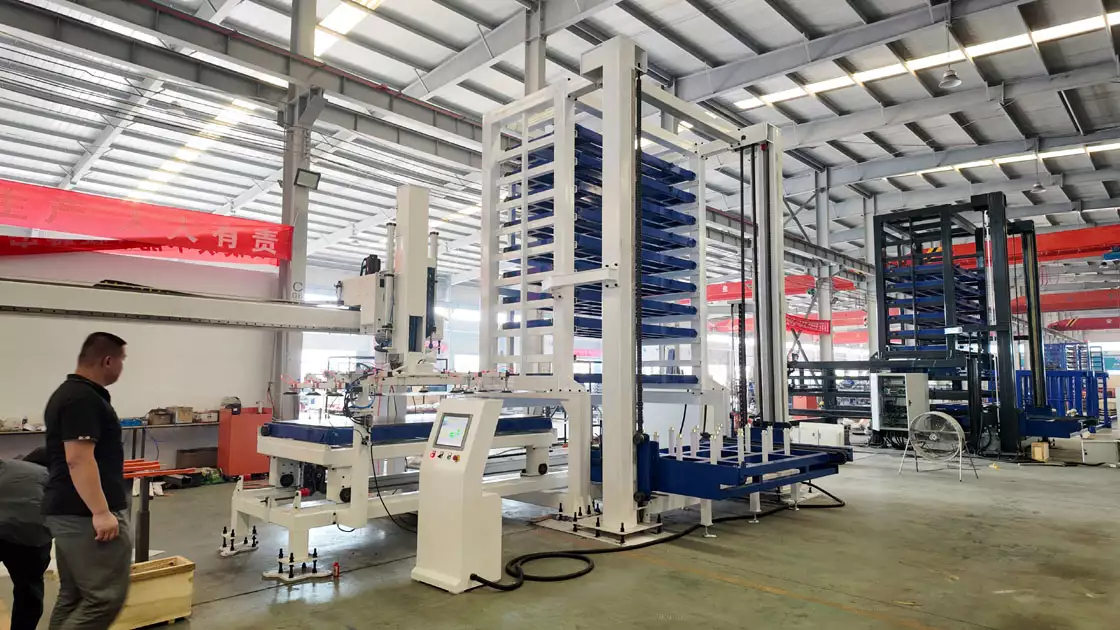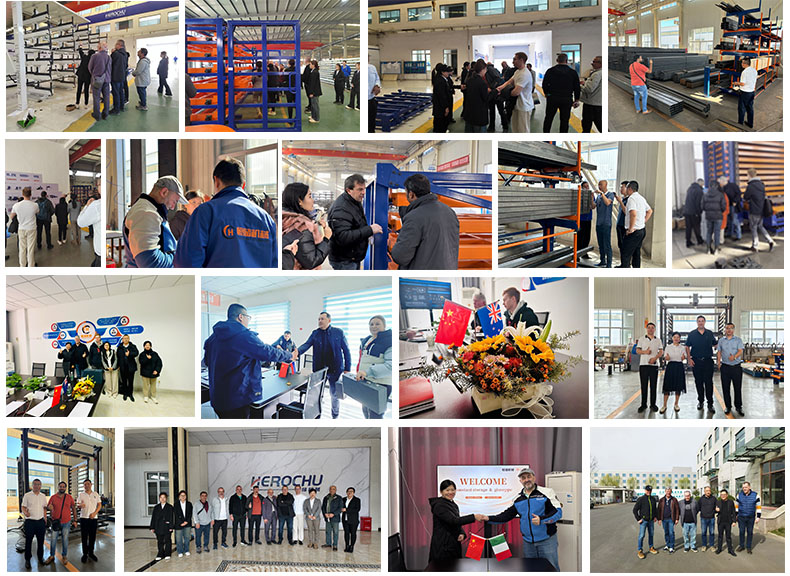
The economics of sheet metal storage are simple and unforgiving. Floor space costs money. Material handling costs time. Misplaced remnants cost both. Herochu’s high-density vertical plate rack addresses all three by converting the vertical dimension of the workshop into usable storage capacity.
Most fabrication facilities treat vertical space as an afterthought. Pallets sit on the floor. Sheets lean against walls. Offcuts accumulate in corners until someone decides they are no longer worth keeping. This approach wastes the most abundant resource in any industrial building: the air above the floor. Herochu’s rack system captures that resource, stacking storage tiers upward rather than outward.
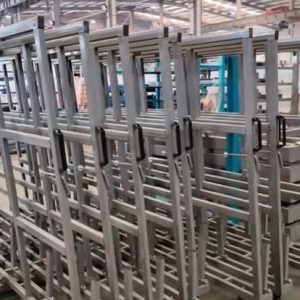
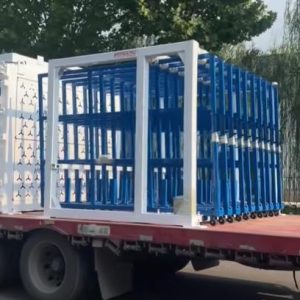
The high-density configuration delivers storage capacity that would require a substantially larger floor area in a horizontal layout. A single Herochu tower can hold the equivalent of twenty floor pallets within a footprint as compact as 1.2 meters wide. For shops in leased facilities or facilities where every square meter has an alternative productive use, this density translates directly into economic advantage.
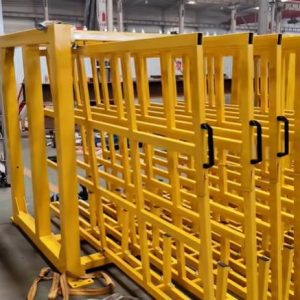
Multi-tier organization goes beyond mere capacity. The tier structure creates a natural sorting system. Shops dedicate levels by material type, thickness, or remnant category. One tier holds 2 mm carbon steel. Another holds 3 mm stainless. A third holds aluminum blanks. The physical organization mirrors the inventory logic, and any operator can locate the correct material without consulting a database or asking a supervisor.
This sorting discipline changes behavior. When remnants have a designated home, they get returned to that home. When every offcut has a labeled location, the barrier to reuse drops to nearly zero. The rack does not just store material; it creates the conditions for material utilization that shops talk about but rarely achieve without a physical system to support it.
The pull-out drawer mechanism is the functional core of the system. Each tier extends fully, bringing the stored sheet to the operator rather than requiring the operator to reach into the rack. Full extension means the rear edge of the sheet reaches the front edge of the rack. The entire face of the material becomes accessible in a single movement.
This matters for shops using vacuum lifters or overhead cranes. The drawer presents the sheet at a consistent, predictable position. The lifter attaches at the optimal point without repositioning. The sheet transfers to the machine table in one controlled movement. The alternative—reaching into a fixed rack, working around the frame, and improvising attachment points—introduces risk and delay into a process that should be routine.
Load ratings are specified to match the material profile. Standard Herochu configurations carry up to 1000 kg per tier. Heavier ratings are available for shops storing thick plate or stacking multiple sheets per level. The guide system and frame structure are engineered to the specified load, not to a generic average that leaves heavier applications under-supported.
The non-skid drawer surface and mechanical-assistance discharge work together to make heavy loads manageable. The surface keeps the sheet in place during movement. The assistance system reduces the force required to start and stop the drawer. The combination means a single operator can retrieve a 1000 kg sheet without waiting for a second person or a forklift.
Space efficiency has a compounding effect in production environments. Floor space recovered from storage becomes available for additional equipment, additional inventory, or additional workflow capacity. A shop that installs a Herochu rack often discovers it has room for a second laser, an additional press brake, or a dedicated quality inspection station. The rack does not just solve a storage problem; it unlocks operational options that were previously blocked by material clutter.
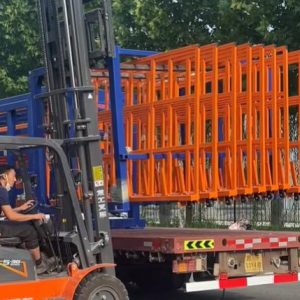
The vertical design also improves aisle clearance. Forklifts and personnel move through the shop without navigating around pallets of sheet stock. The rack’s narrow profile keeps the central circulation paths open, reducing the bottlenecks that develop when storage expands horizontally into working areas.
Material protection is an engineering consideration, not a marketing claim. Vertical storage with individual drawer compartments eliminates the sheet-on-sheet compression that occurs in stacked storage. Each sheet rests on its own surface, supported along its length. Surface finishes remain intact. Edges remain undamaged. The material that goes into the rack comes out in the same condition, ready for the next operation.
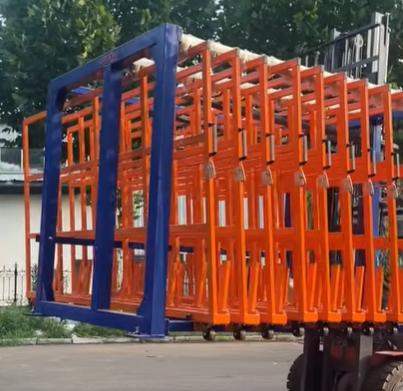
For shops handling coated, polished, or pre-finished sheet, this protection has direct cost implications. A scratched sheet is a sheet that requires rework or replacement. A bent remnant is a remnant that becomes scrap. The rack’s drawer surfaces and non-skid strips prevent the contact damage that erodes material value during storage and retrieval.
Herochu configures each high-density rack to the customer’s material dimensions, load requirements, and available ceiling height. The result is a storage system that fits the shop rather than forcing the shop to adapt to a standard product. Every layer, every drawer, every structural element is specified for the application.
The long-term value of the system lies in its effect on material behavior. When every sheet has a home and every remnant is accessible, the shop stops treating offcuts as waste and starts treating them as inventory. That shift in perspective—enabled by the physical system—delivers returns that accumulate across every job.