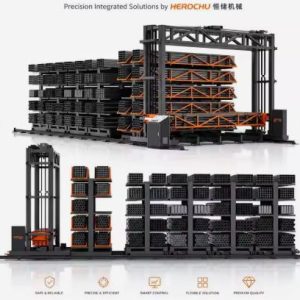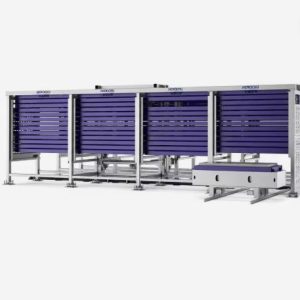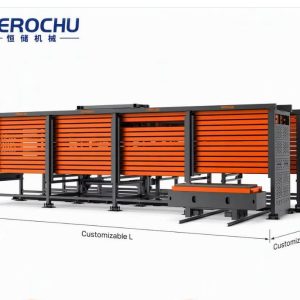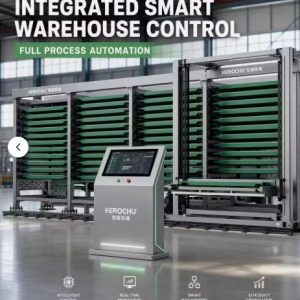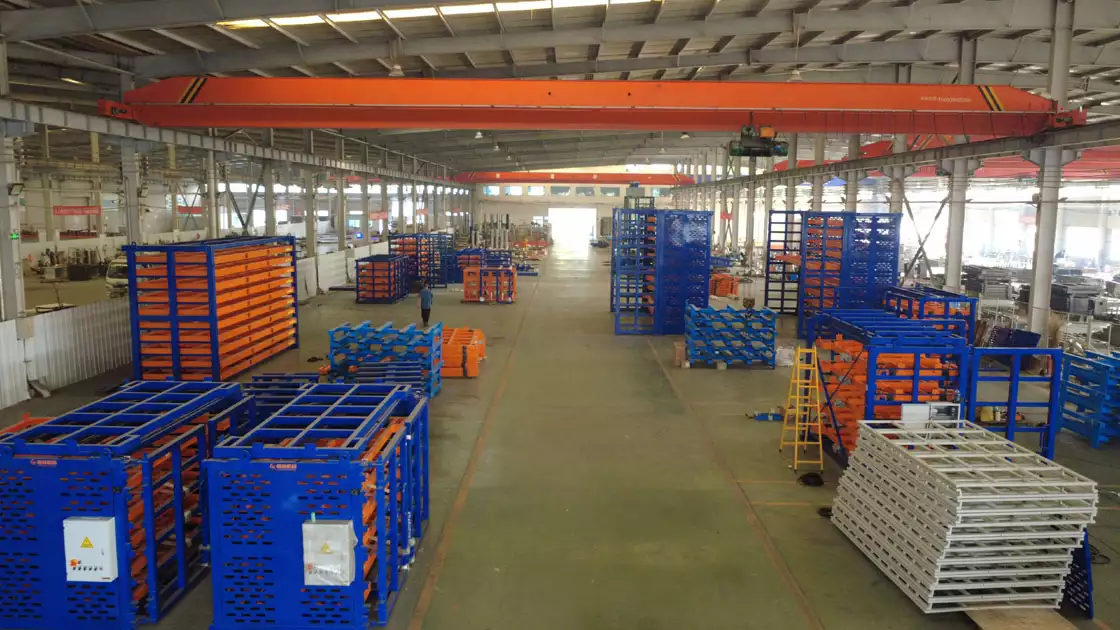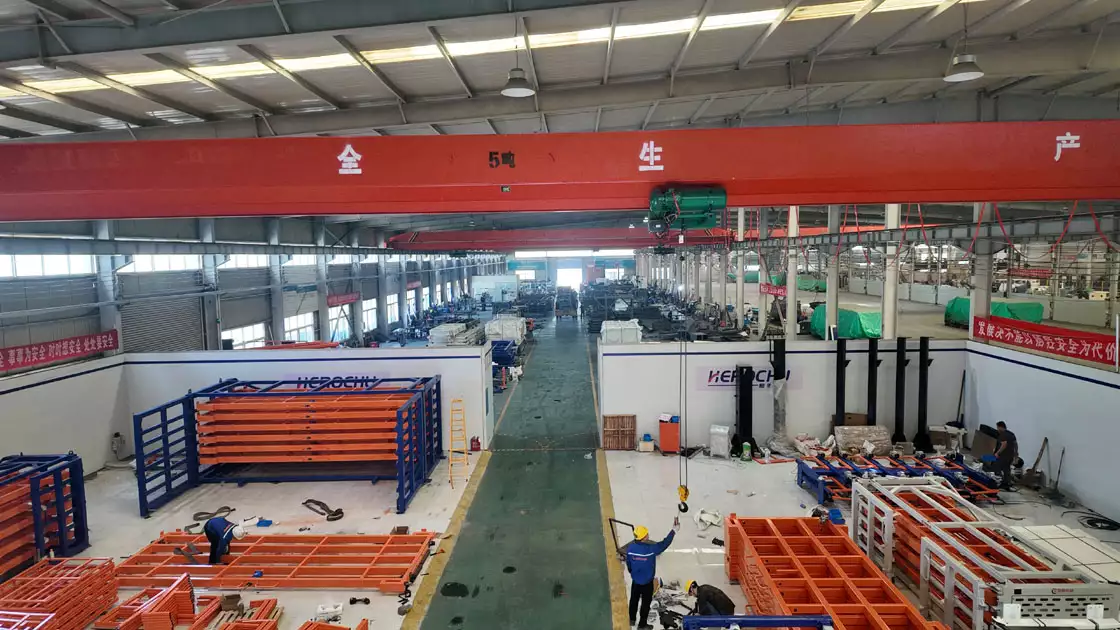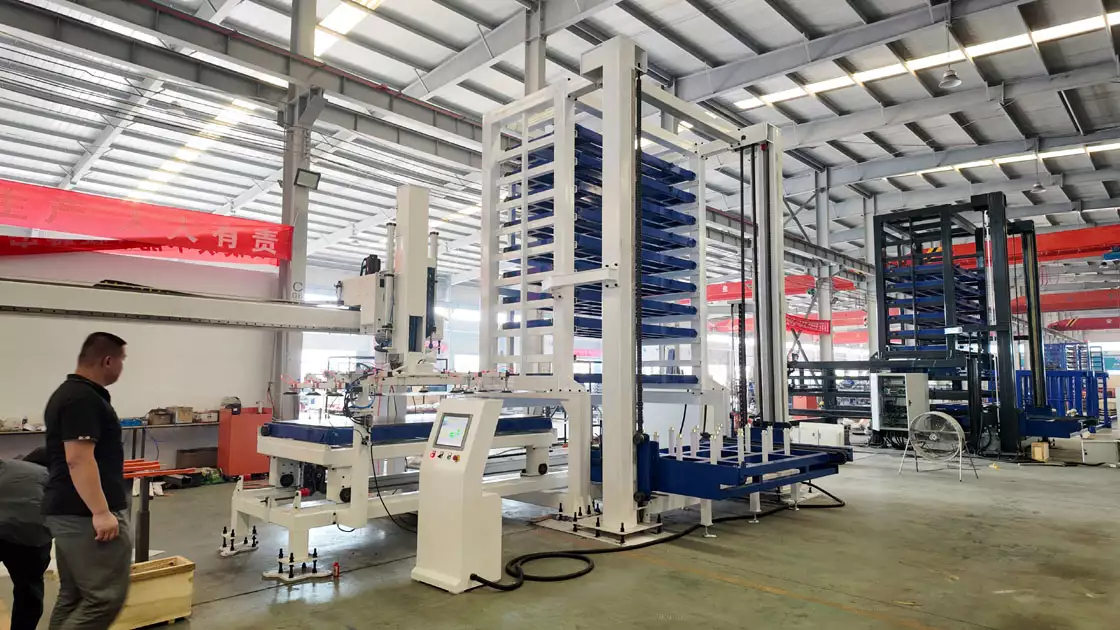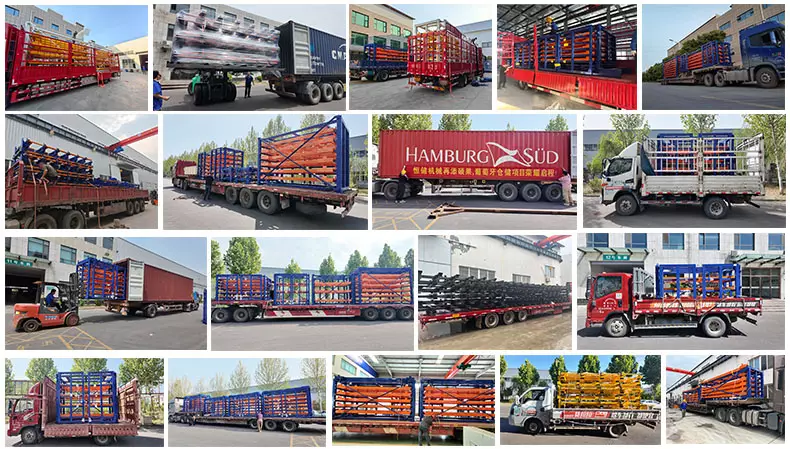
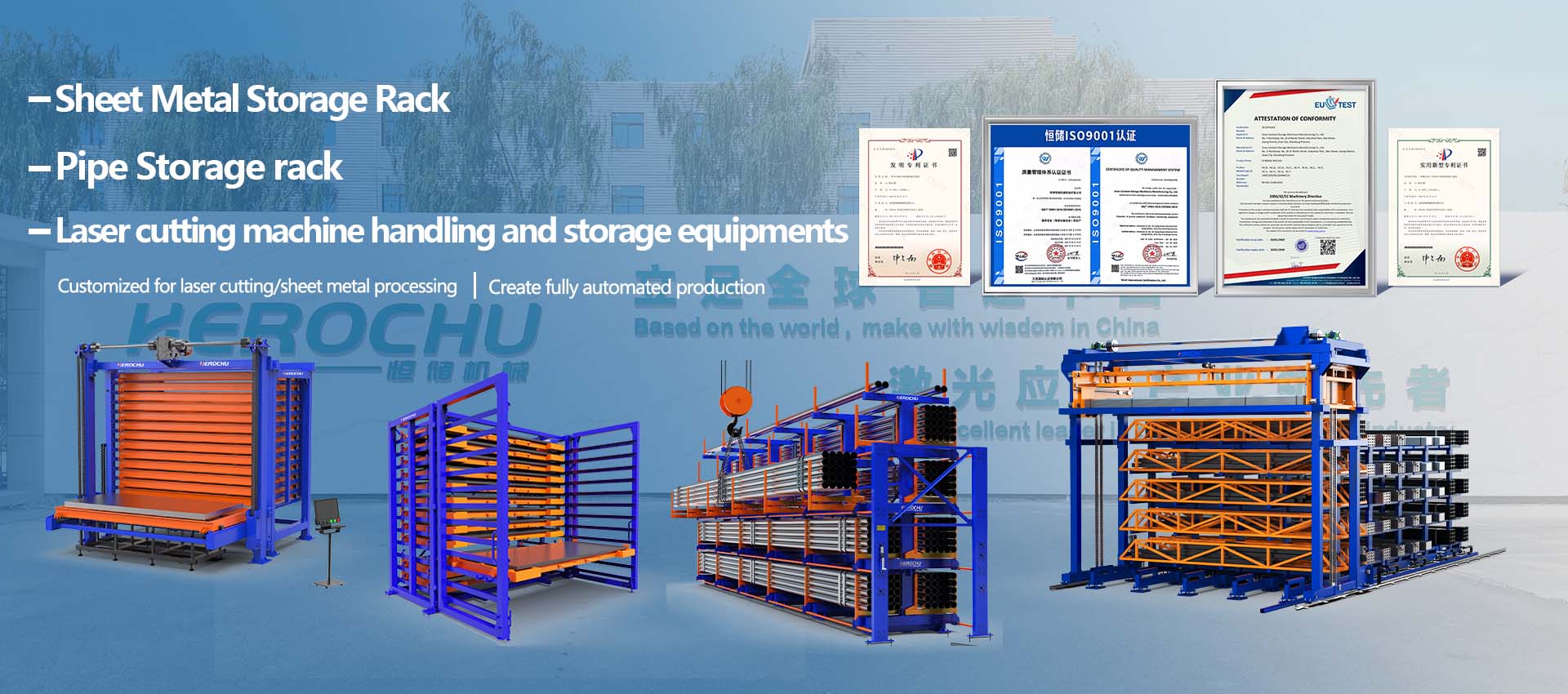
Herochu’s automated vertical storage system converts long profiles and tubes from horizontal floor stacks into vertical tower storage. A typical installation reclaims over 80% of ground space within a 200–300 sq ft footprint while cutting material retrieval time from 15–20 minutes to under 90 seconds. Independent shelf movement, gantry-based retrieval, PLC touchscreen control, and ±2 mm repeatability form the core of the design.
Why Long Profile Storage Becomes a Production Bottleneck
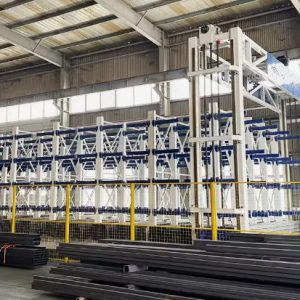
Metal fabrication shops face a structural contradiction. The materials that drive heavy manufacturing—steel pipe, aluminum extrusions, structural alloy profiles—are precisely the materials that resist efficient storage. An 8-meter structural tube laid horizontally consumes dozens of square feet of aisle space and is exposed to self-weight deflection and point-loading deformation. Cantilever racks address part of the problem, but every access aisle means adjacent zones cannot be used for other operations.
The deeper issue is retrieval efficiency. When material is stacked by heat number or batch, a SKU at the bottom requires moving everything above it. This process typically depends on forklifts or overhead cranes, bringing 15–20 minutes of manual searching, safety exposure, and unavoidable human error.
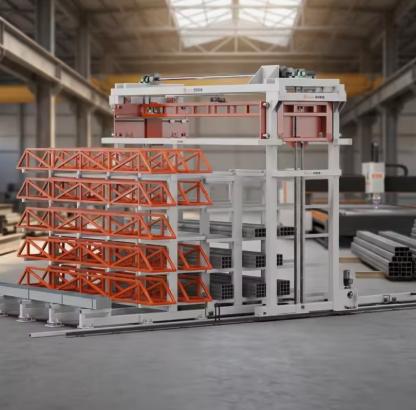
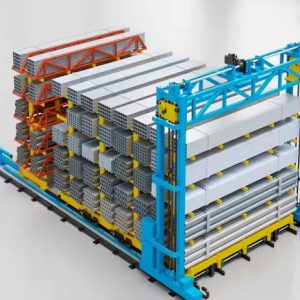
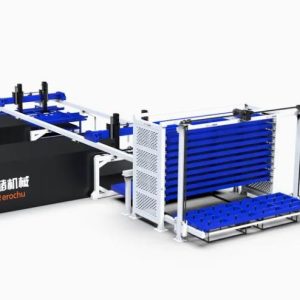
Herochu’s approach changes the logic entirely. The automated vertical storage system lifts long profiles off the floor and into a multi-level vertical tower structure. Only one shared picking aisle remains at ground level. The rest of the floor is released for production equipment or logistics traffic.
System Architecture: Gantry Drive and Independent Shelf Movement
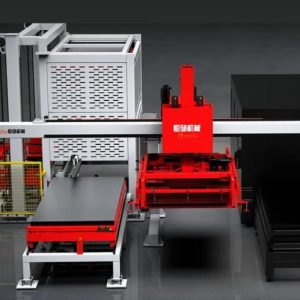
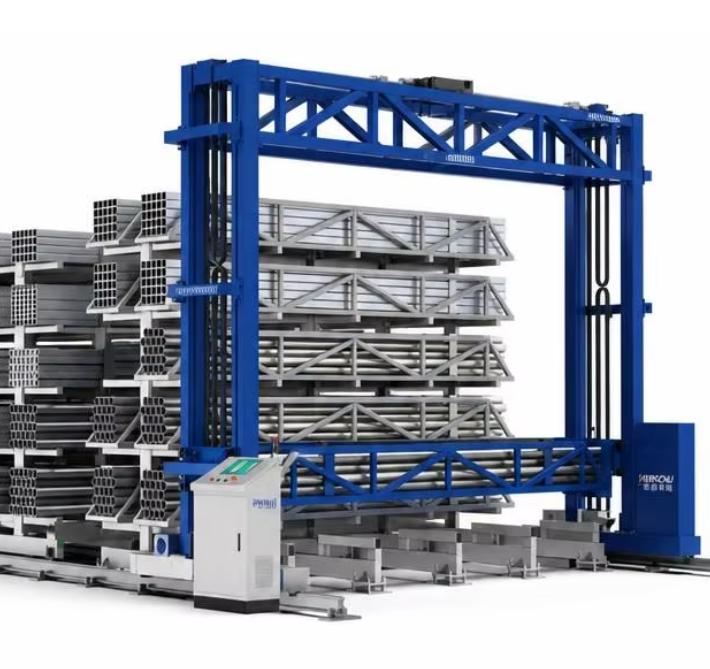
The core of Herochu’s automated vertical storage system is a Cartesian gantry robot engineered for long, heavy loads. Unlike belt drives, the system uses chain drive paired with hardened linear guide rails. Under the inertial forces generated when moving a 5-ton structural steel bundle, belts slip and stretch. Chain drive on guide rails maintains ±2 mm repeatability after thousands of cycles.
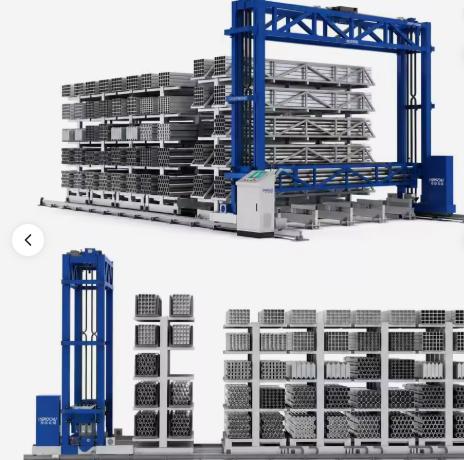
Horizontal travel and vertical lift are controlled by independent servo axes. This separation carries two practical implications. Control logic is more direct: each axis follows its own motion profile without cross-coupling. Mechanical footprint is more compact: the gantry column height only needs to match the highest pick point, not reserve extra space for simultaneous motion.
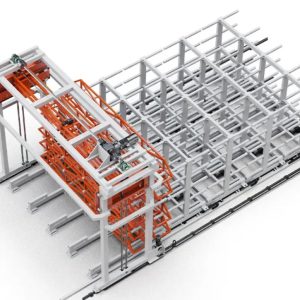
The shelf system uses independent movement. Each shelf unit can move individually, with storage and retrieval executed through a shared picking aisle. The system can access material at any position without moving adjacent shelves, eliminating the retrieval barriers created by block stacking.
The Quantitative Logic of Space Efficiency
Conventional floor storage has a linear relationship between footprint and inventory capacity: double the inventory, double the footprint. Vertical storage breaks that relationship.
A typical Herochu configuration occupies 200–300 sq ft of floor space and reaches heights of 30–52 ft (9–16 m). Compared with conventional floor storage layouts requiring 1,500 sq ft or more, ground space release exceeds 80%.
This space efficiency does not come from simple upward stacking. The key lies in the shelf grid design. Each storage cell starts with a 600 mm × 500 mm module built from high-strength steel that resists deflection under full load. For round pipe, square tube, rectangular hollow sections, channel, angle, I-beam, and flat bar, Herochu engineers customize the support—V-cradles, profile recesses, or lateral restraints—to prevent bundles from rolling during gantry acceleration and deceleration.
Digital Inventory Management: From Searching to Calling
Manual warehousing accuracy depends on tags, chalk marks, and spreadsheets. Once a night-shift operator moves a bundle without logging it, the data is wrong. Herochu binds inventory management directly to the PLC.
When the gantry places a bundle into a tower position, the system records location, material grade, heat or batch number, and remaining quantity. The touchscreen interface displays a live color-coded map of every occupied and empty slot. Supervisors can pull inventory reports, set minimum stock alerts, and plan replenishment on the same screen.
For plants already running a WMS or ERP, the Herochu controller pushes inventory data upstream through standard industrial protocols (PROFINET, Ethernet/IP, Modbus TCP). The ERP knows how much steel is on site without anyone walking the yard. Production scheduling software can reserve material for upcoming work orders, and the ASRS stages the corresponding bundle at the pick station before the shift begins.
Technical Specifications and Model Parameters
Herochu offers three standard models covering mainstream long profile requirements:
HC-X6053-8 supports 6,000 mm pipe length, 5 layers (customizable), 3,000 kg maximum load per level, and 8 racks (customizable). HC-X7065-10 supports 7,000 mm pipe length, 6 layers (customizable), 5,000 kg maximum load per level, and 10 racks. HC-X8085-10 supports 8,000 mm pipe length, 8 layers (customizable), 5,000 kg maximum load per level, and 10 racks.
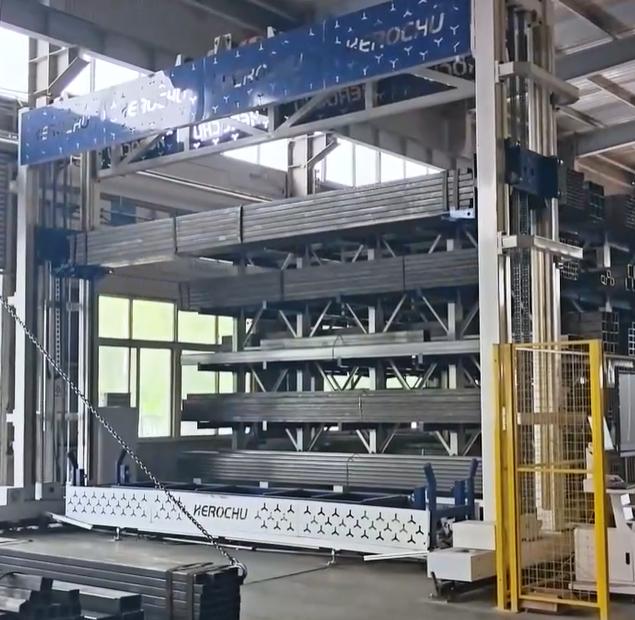
Gantry traveling speed ranges from 5–30 m/min, lifting speed from 5–15 m/min, with repeatability of ±2 mm. Bin configurations accommodate long, short, and loose materials.
For applications requiring longer material, Herochu can customize configurations supporting 12,000 mm lengths, with column structures pre-shipment load tested.
Safety and Operational Continuity
The risks of manual forklift handling for multi-ton steel bundles—overturning, dropping, pedestrian collision, crush injury—are cost items familiar to safety managers and insurers. Herochu’s automated retrieval removes personnel from exposure under suspended loads.
The system includes overload sensors, emergency stop circuits, and anti-collision algorithms. When a laser distance sensor detects an obstacle in the travel path—a forgotten maintenance tool, a misaligned stillage, or an operator entering a restricted zone—travel stops immediately, and recovery requires manual reset by a supervisor through the HMI.
For multi-shift operations, the system supports lights-out running. During night shifts and shift gaps, material is automatically delivered to buffer positions, ready for direct feeding when day shift begins. This translates directly into higher cutting equipment utilization.
Conclusion
Herochu’s automated vertical storage system solves a material flow problem, not a storage problem. When long profile retrieval shifts from a 15-minute manual task to a 90-second automated delivery, the bottleneck moves from the yard to the downstream equipment—exactly where manufacturing operations want the bottleneck to be. The value of the system is not the height of the tower but the ground space reassigned to revenue-generating activity.