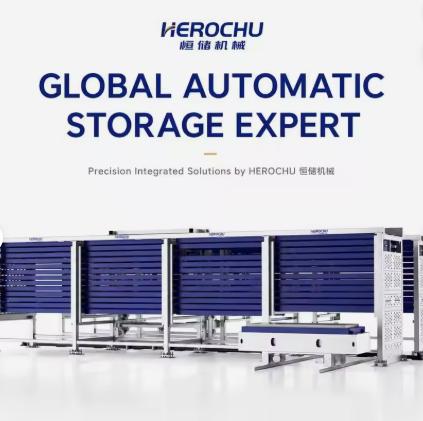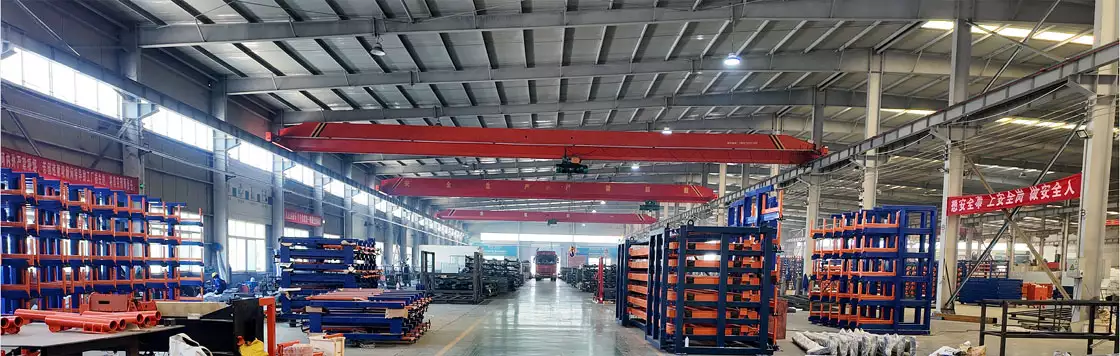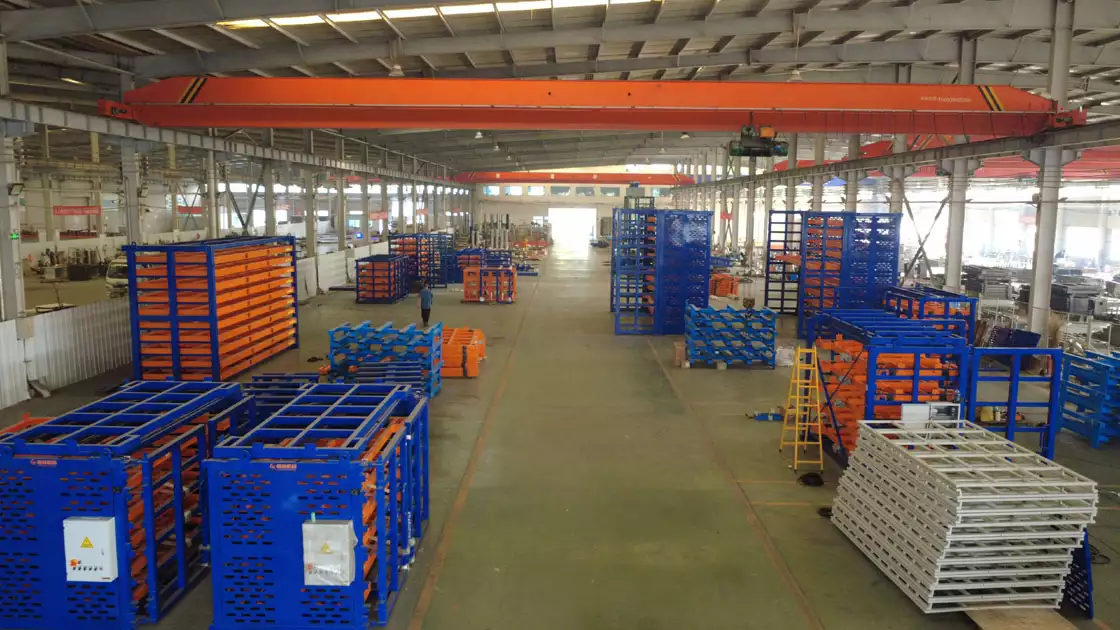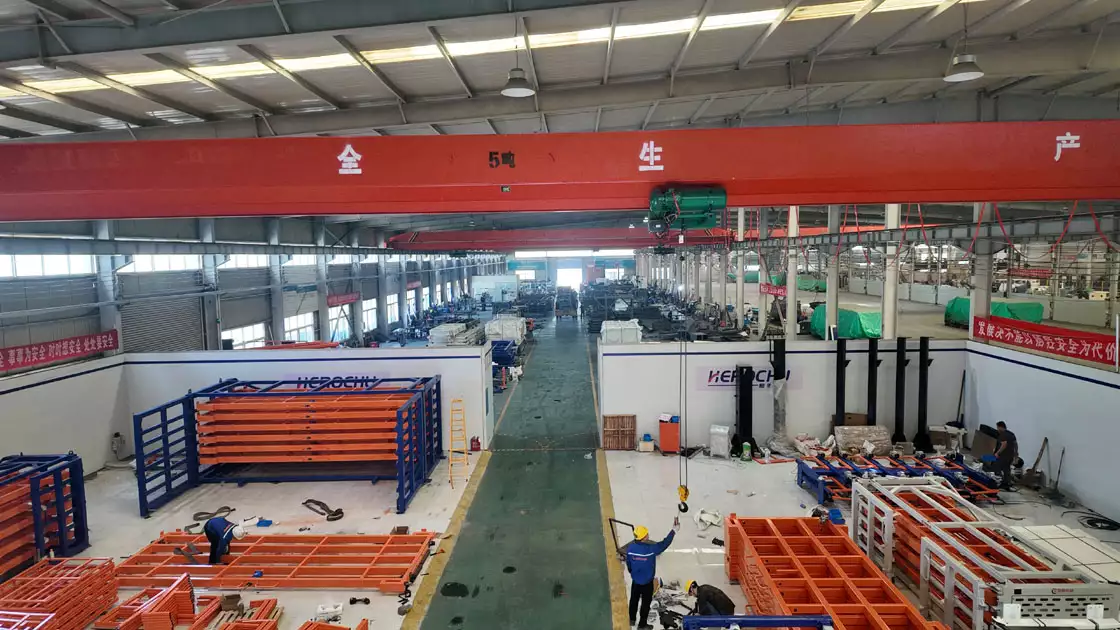
Steel plate is not a delicate material, but storing and moving it without damage requires engineering discipline. A 6,000 by 2,000 millimeter plate at 20 millimeters thick weighs roughly 1,900 kilograms. Stack several on a storage level and the structure must carry that load without deflection. Retrieve it repeatedly for years and the mechanism must maintain alignment.
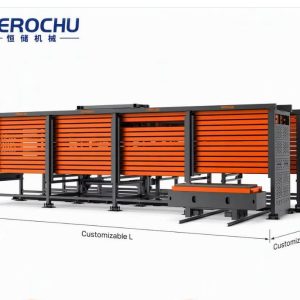
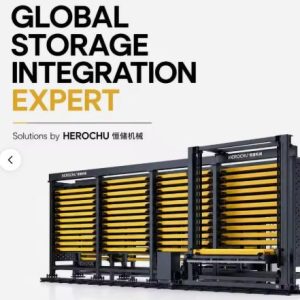
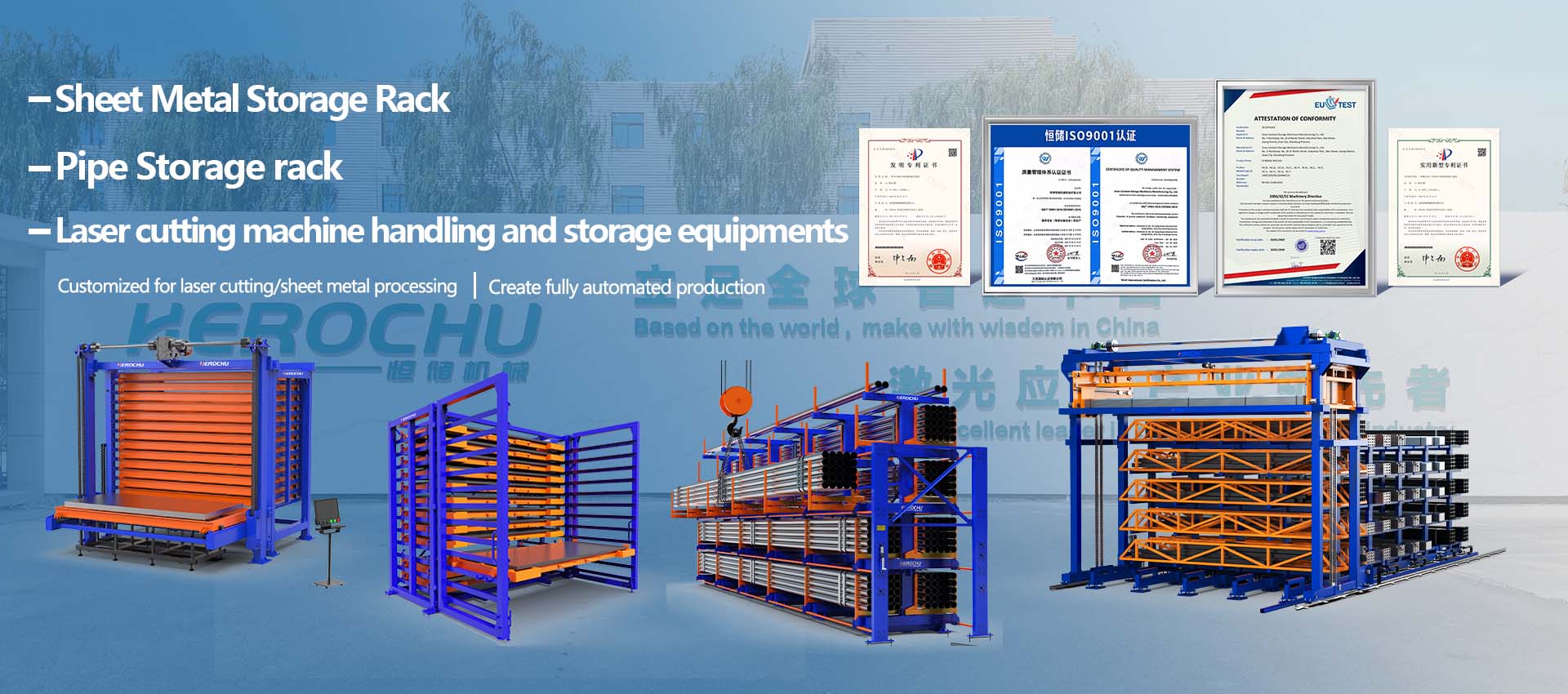
Herochu’s Heavy Duty Multi-Tower Automatic Steel Plate Vertical Warehouse ASRS addresses both demands. The standard HC-S3015-2-63 supports 3,000 kilograms per layer. The larger HC-S4015-3-85, HC-S4020-4-105, and HC-S6020-4-125 models raise that to 5,000 kilograms per layer. These ratings are not marketing figures. They reflect the structural design of each storage level and the load-bearing capacity of the tower frame.
The load matters for two reasons. First, thick plate for heavy fabrication does not fit neatly into light-duty storage. A shipyard or structural steel shop storing 25 millimeter plate needs a system that treats 5 tons as routine, not exceptional. Second, the total system capacity multiplies across towers and layers. A four-tower, twelve-layer configuration at 5 tons per level holds up to 240 tons of steel plate in a footprint that would hold a fraction of that on the floor.
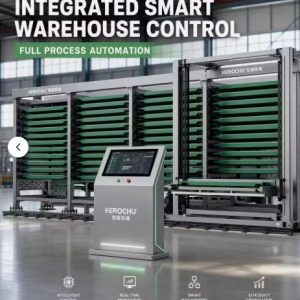
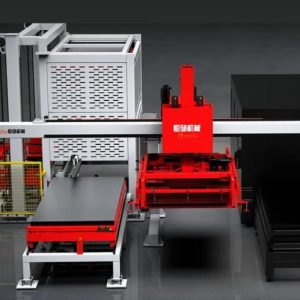
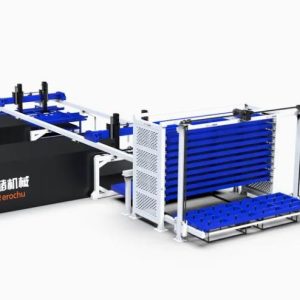
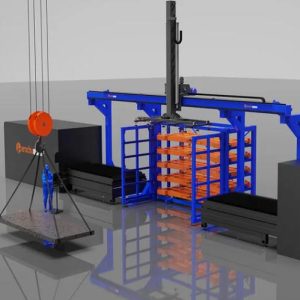
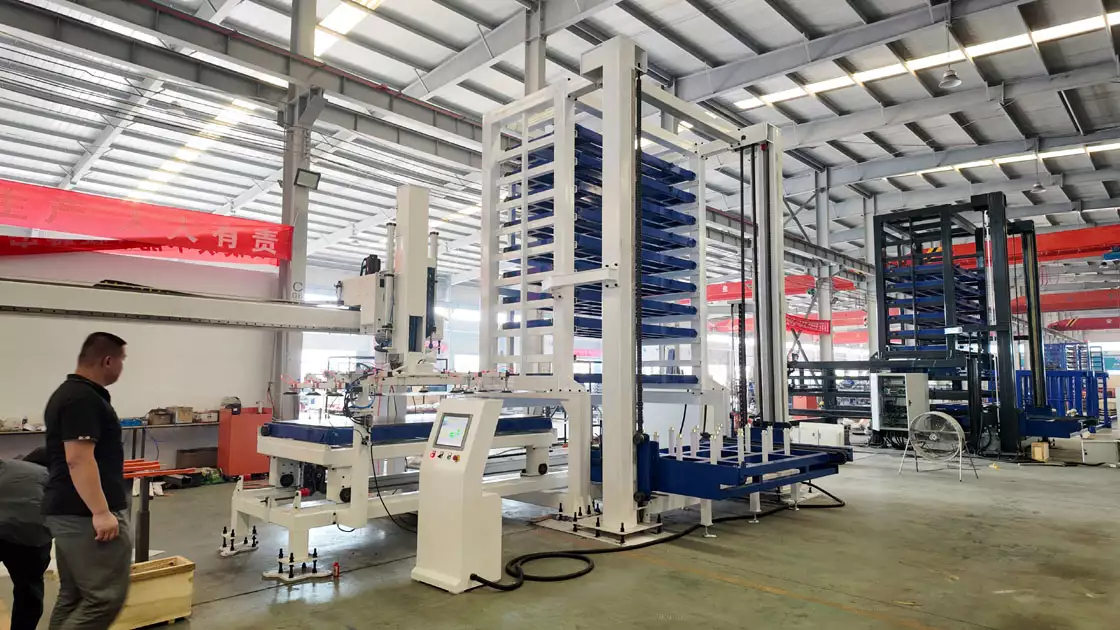
Handling that weight safely requires more than strong steel. The Herochu Automated Tower Storage System for Panels and Sheet Metal uses a chain-driven lifting mechanism with linear guide rails. Transfer speed runs 5 to 15 meters per minute, with repeatability of ±2 millimeters. That precision prevents the edge collisions and surface scuffs that occur when a heavy plate is misaligned by even a few millimeters during extraction.
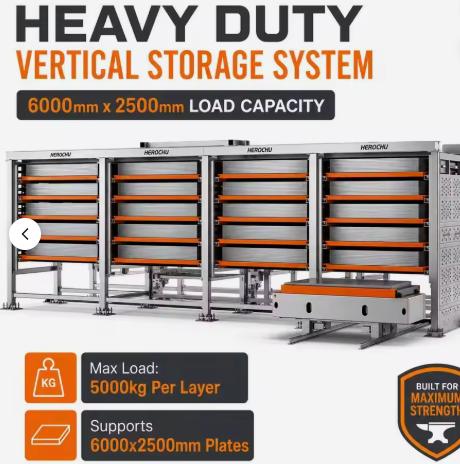
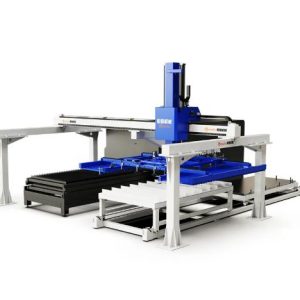
The material cart plays a specific role in this. It receives the plate from the shuttle and holds it stable during transport to the output point. For shops feeding a laser cutter or punch press directly, the cart aligns with the machine’s loading height. The plate transfers without manual lifting, flipping, or repositioning.
Herochu also builds the storage layer spacing to accommodate real material. Standard clear space between levels is 240 millimeters, customizable for thicker stacks or palletized material. A shop storing 3 millimeter sheet alongside 20 millimeter plate can configure different clear heights across towers or levels, rather than accepting a single spacing that wastes vertical capacity on thin material and constrains thick material.
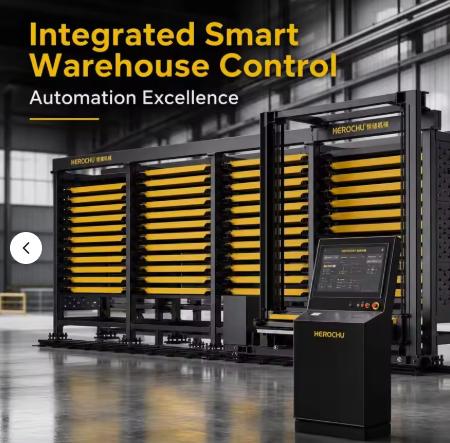
The safety dimension is straightforward. Floor-stacked plate at 5 tons per lift creates fall hazards, pinch points, and struck-by risks. An enclosed tower with interlocked access removes those hazards from the shop floor. The automated retrieval cycle does not require an operator to stand near the stack while a plate is being picked.
For fabrication managers comparing automated storage options, the load rating is the first filter. A system rated at 3 tons per level cannot safely store 5-ton plate, regardless of its footprint or speed. Herochu offers both ratings in the same product family, so a shop can match the specification to its actual material mix rather than overbuilding or underbuilding. The Heavy Duty Multi-Tower Automatic Steel Plate Vertical Warehouse ASRS exists because heavy plate storage is a different problem from light sheet storage, and it deserves a different answer.