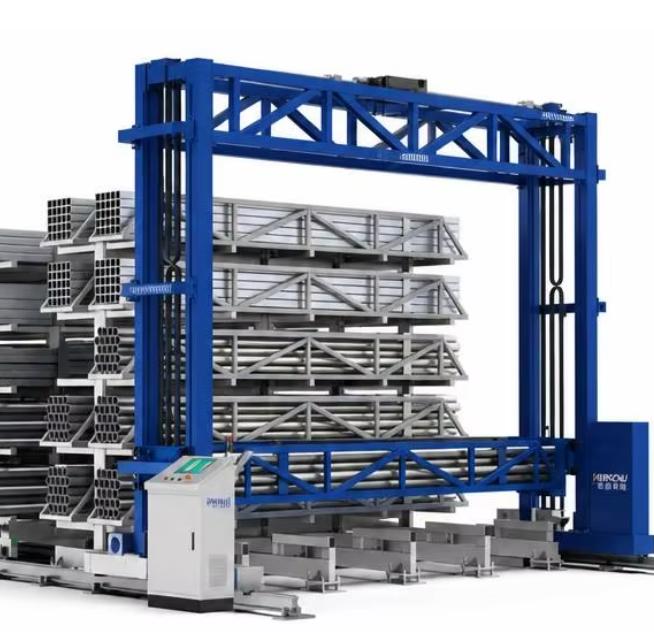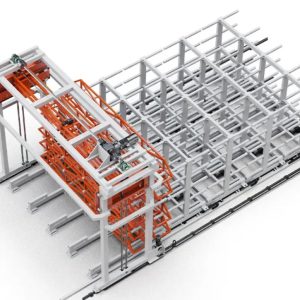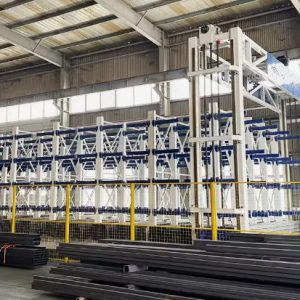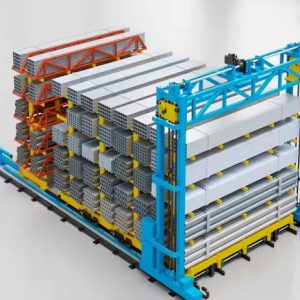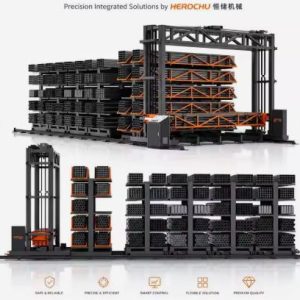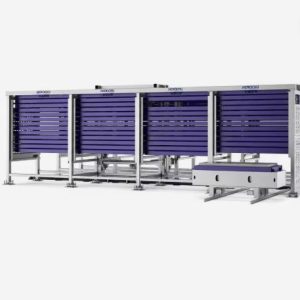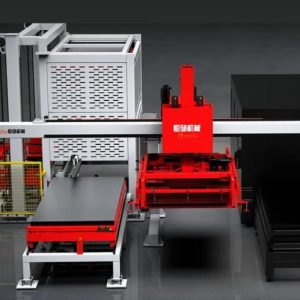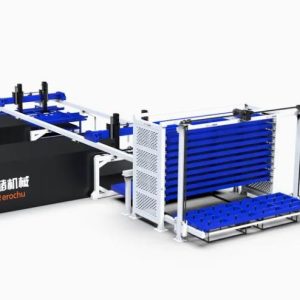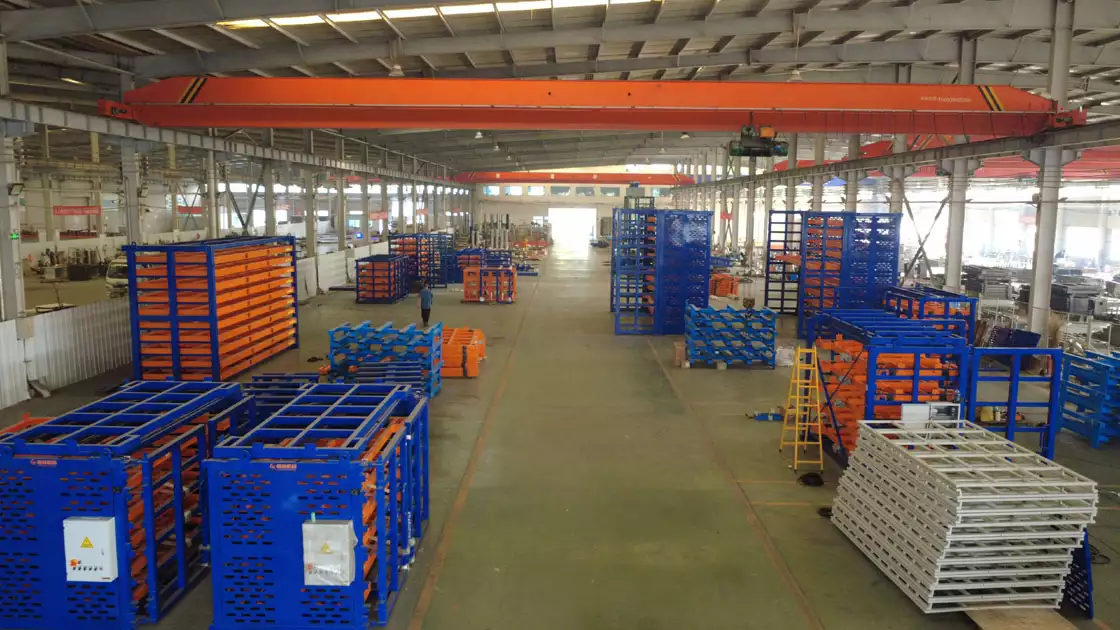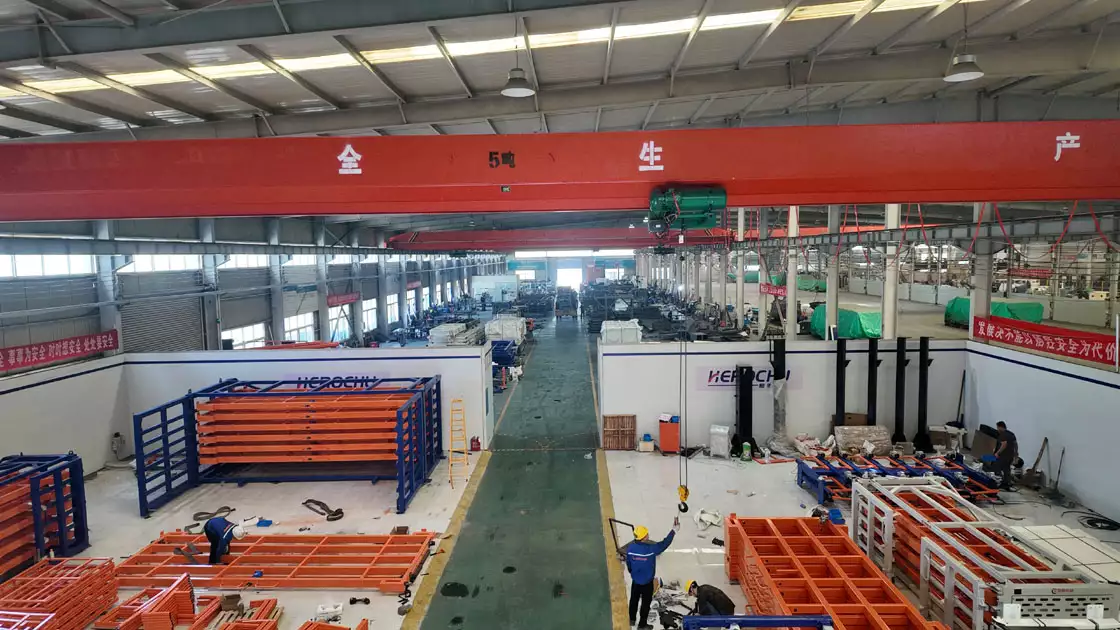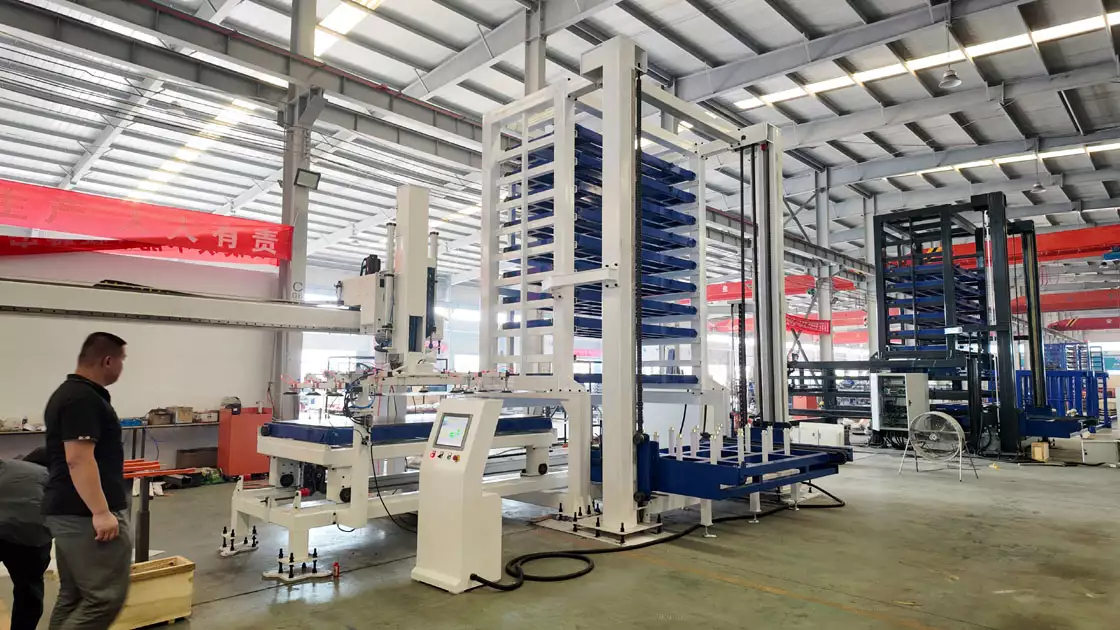
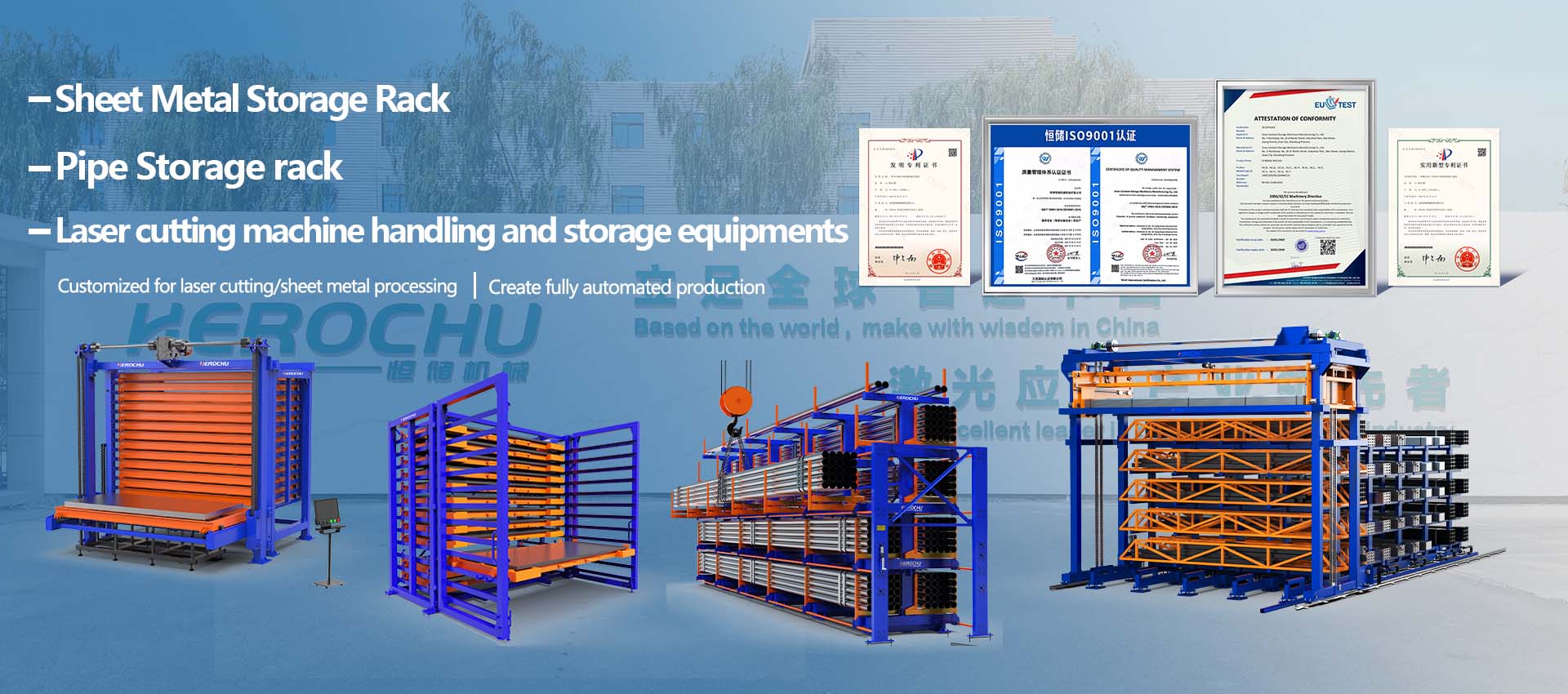
Herochu’s intelligent vertical warehouse converts aluminum and steel profiles from material stacked on racks into trackable, plannable, auditable digital assets through PLC-controlled inventory management, per-level load sensing, and bi-directional ERP/WMS synchronization. Each level supports 3–5 ton loads, repeatability is ±2 mm, and retrieval cycles run under 90 seconds.
What “Intelligent” Actually Means in Profile Storage
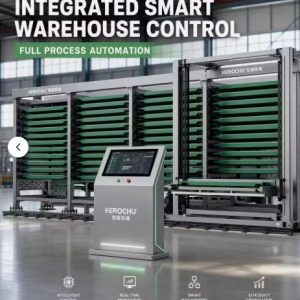
“Intelligent warehouse” is an overused term. In most contexts it means nothing more than a touchscreen. Herochu’s intelligent vertical warehouse defines intelligence as the coordination of four capabilities: PLC control, ergonomic interface, per-level load sensing, and integration with the plant ERP/WMS.
Together, these four capabilities answer an operational question: does the warehouse know what it has, where it is, how much remains, and what downstream equipment needs next?
The Specific Storage Requirements of Aluminum Profiles
Aluminum profiles differ fundamentally from steel in storage characteristics. Aluminum is softer, and surface treatments—anodizing, painting—are highly sensitive to scratching and contact damage. A single scratch on a 6-meter anodized 6020 profile during storage or handling can scrap the entire length.
Herochu’s system uses dedicated support configurations for aluminum profiles. V-grooves, flat cradles, or custom molded inserts are selected according to profile cross-section, ensuring fine surfaces are not scratched during storage and gantry acceleration. Open-bottom drawers allow aluminum chips and coolant to pass through after machining, preventing accumulation.
For steel profiles—angle, channel, I-beam—the focus shifts to deflection resistance and rolling restraint. The bin grid’s spaced supports prevent self-weight sagging over long spans, while lateral restraints prevent profiles from rolling during gantry movement.
How Digital Inventory Management Works
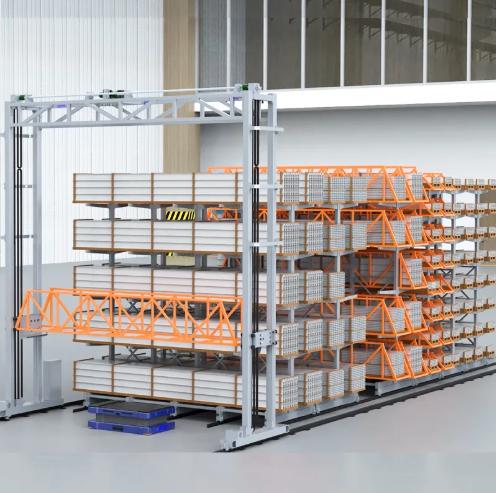
When material arrives at the inbound station, the operator scans the bundle, verifies material grade and heat number against supplier documents, and places the bundle on the handling stand. The WMS queries the cell map, finds the nearest empty slot matching bundle dimensions and weight, assigns an address, and dispatches the gantry for putaway.
The operator does not decide where material goes. The system does. The system applies logic to optimize travel distance for frequently picked SKUs and keeps heavier units in lower rack levels to reduce lift energy consumption.
Every storage position—every slot in every tower—maps to a unique three-dimensional address in the warehouse control system database: rack row number, compartment number within the row, and level number within the compartment. The database stores this address alongside material SKU, heat or batch code, quantity in the cell, length, and putaway timestamp. Every movement is a PLC-logged transaction. Inventory counts reflect a running balance of all gantry moves, reconciled against receiving and shipping logs. Discrepancies surface immediately rather than at year-end physical inventory.
For industries requiring batch-level traceability—aerospace, automotive, pressure vessels—the system supports barcode and QR code scanning. A detailed view of each slot shows material grade, dimensions, remaining quantity, total weight, last putaway date, and last retrieval date.
Load Sensing and Real-Time Inventory Accuracy
A differentiating feature of Herochu’s system is the per-level load cell. Each storage drawer is equipped with load sensors that continuously track the exact weight of material—not only at putaway, but throughout the storage cycle.
This capability serves several purposes. First, it eliminates the common problem of “the system says 12 pieces remain but there are actually 9.” Weight data provides an independent verification layer separate from manual entry. When ERP issues a work order consuming a specific quantity, the system’s actual issue quantity is written back; discrepancies between planned and actual consumption are flagged without manual counting.
Second, load sensing supports predictive replenishment. When on-hand quantity for a material grade drops below a user-defined reorder point, the system generates an automatic replenishment request to the ERP purchasing module. This closed-loop connection between physical inventory and procurement prevents stockout downtime.
Third, overload protection. The system prevents placing a 5-ton bundle on a level rated for lower load, or placing heavy loads in high positions where center-of-gravity stability is compromised.
Integration with ERP and MES
Herochu’s intelligent vertical warehouse connects to plant ERP systems through standard industrial protocols—Ethernet/IP, PROFINET, Modbus TCP. Bi-directional data flow enables automatic inventory reconciliation.
For job shops and toll processing operations, the system’s transaction log provides an auditable chain of custody from receiving to consumption. Each retrieval is time-stamped with date, time, operator ID, work order number, and material heat number where available. This granularity supports accurate customer billing and material traceability documentation.
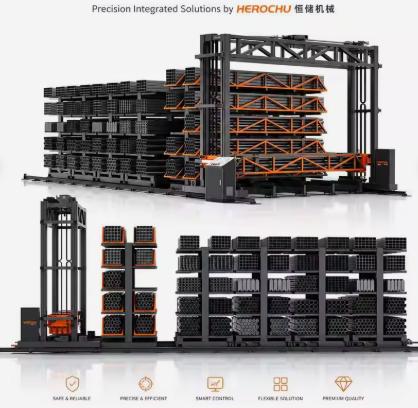
The system also supports MES integration for production scheduling. When a production work order is released, the system retrieves the exact profile bundle required. Material can be staged at the pick station before the shift begins, eliminating production startup waiting time.
Speed and Ergonomics
Retrieval cycles run under 90 seconds. Vertical lift speed is 9 m/min, entry/exit speed is 12 m/min. The significance of these speed metrics is not the numbers themselves but the comparison with manual retrieval: typically 15–20 minutes.
The source of speed is not only mechanical motion. It is automation of the entire chain: the machine signal initiates the cycle, the PLC confirms drawer identity, the shuttle retrieves material, and the inventory display updates before the operator reaches the pick point. No paper steps, no walking to a terminal, no secondary label verification.
Ergonomic benefits are equally significant. Pick points are at waist height. Operators do not bend, climb, or walk between racks. For facilities running 24/7, this improvement directly affects operator fatigue curves and long-term productivity.
Scalability and Customization
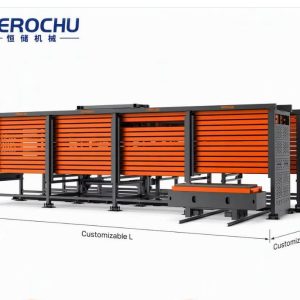
Herochu offers configurations from 8 to 13 layers, with level heights from 330 mm to adjustable ranges. Per-level loads run 3 to 5 metric tons, with total system capacity reaching 50 tons. Width options include 6015 mm, 6020 mm, and 6025 mm.
Customization options include layer count, rack quantity, support type (V-type, flat, comb), load rating, and software configuration. The system can expand physical layers and software functions without rewiring.
Conclusion
Intelligence in profile storage should not be a touchscreen decoration. It should be the data foundation for operational decisions. The core value of Herochu’s intelligent vertical warehouse is converting physical inventory into a real-time, accurate, integrable data stream. When purchasing, scheduling, and finance work from the same numbers as the shop floor, inventory accuracy shifts from an annual counting event to a continuous state. For processors with diverse profile inventories and strict batch traceability requirements, the operational value of that shift exceeds storage density itself.