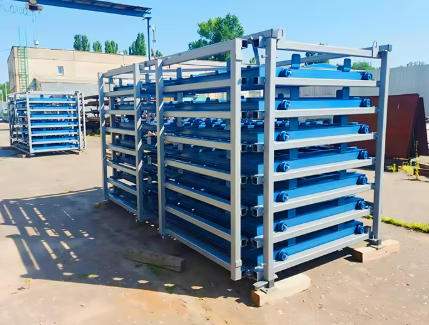
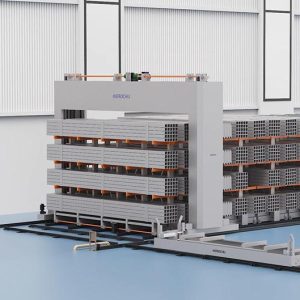
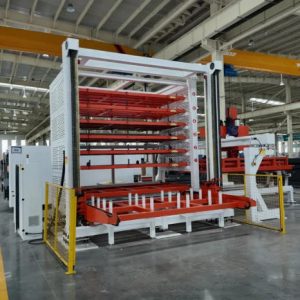
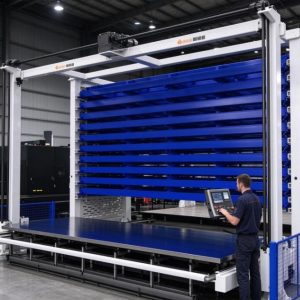
A pallet of steel plate on the shop floor looks inexpensive because the pallet costs little and the floor appears to be free. Neither assumption survives a simple operational audit. The floor space under that pallet cannot hold a laser cutting machine, a staging table, or a WIP buffer. The labor required to retrieve one sheet—moving the crane, rigging the load, lifting the top sheets to reach the needed gauge, restacking the remainder—accumulates across every retrieval until it becomes a fixed operating cost that no one budgets for.
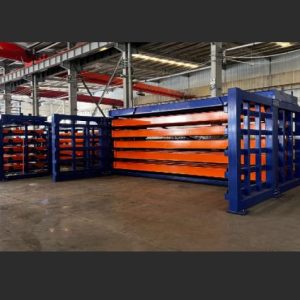
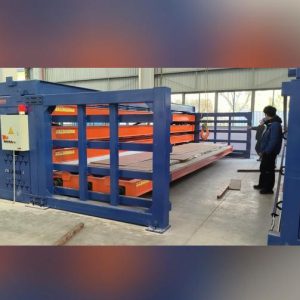
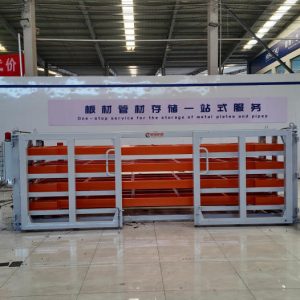
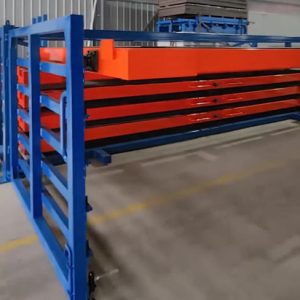
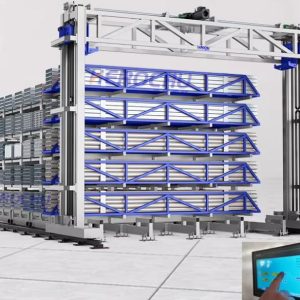
The motorized plate magazine changes that calculation in two directions at once. It compresses the storage footprint vertically, and it removes the manual handling time from the retrieval cycle. Herochu’s compact storage configurations occupy roughly 20 square meters of floor area for a standard six-level setup, replacing the scattered floor pallets with a single indexed structure. The plate stays flat on a labeled drawer, and the drawer extends under motor power to the access point. The crane or forklift picks from a controlled surface rather than from a stack that must be unpacked and rebuilt.
The labor effect is easier to measure than the floor-space effect because it appears in every shift. A manual retrieval that takes two to three minutes longer than a motorized one, repeated twenty to forty times per shift, removes roughly one hour of productive time from a single rack per shift. In a two-shift operation, that is two hours per day per rack. At a skilled operator rate, the annual labor value of that time alone often exceeds the incremental cost of the motorized drive.
Herochu’s own project experience points to a 12-to-18-month payback for systems installed in high-mix, low-volume job shops running two shifts, driven by labor savings, reduced scrap, and higher laser uptime. The scrap reduction comes from the storage method itself: a drawer that supports the full sheet area keeps the plate flat, reduces edge damage from repeated handling, and prevents the surface scratches that occur when bundles are dragged or restacked. For stainless steel and aluminum, where surface finish is part of the material’s value, that protection is a direct cost avoidance.
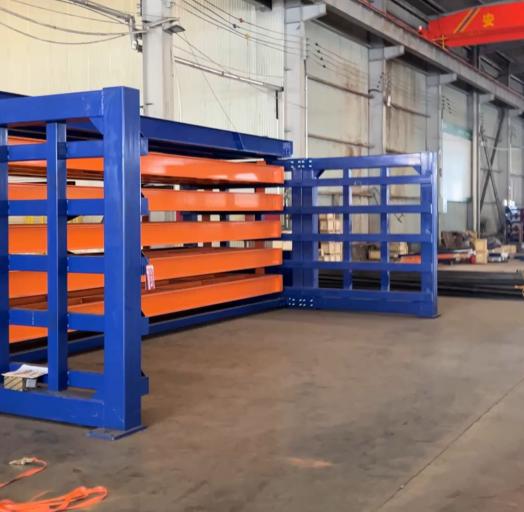
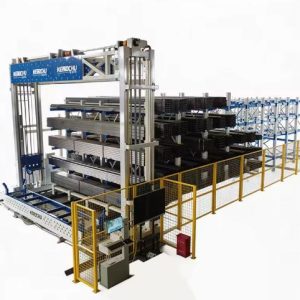
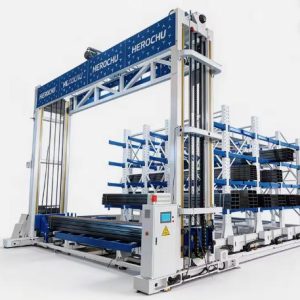
The space economics become more pronounced when the rack is integrated with the cutting process. A storage tower or magazine that presents the correct sheet to the laser or press brake at the right time reduces the buffer stock that would otherwise sit on the floor waiting for a crane. Herochu’s automated storage configurations link the rack control to the production schedule so that material movement follows the cutting plan rather than a separate retrieval routine. The floor space saved is not just the rack footprint—it is the staging area that no longer needs to exist.
There is a limit to the ROI case. A low-volume shop with one shift, limited sheet variety, and a single rack accessed fewer than ten times per day may not generate enough retrieval cycles to justify the motorized drive on labor savings alone. In that setting, a manual roll-out rack within its capacity range remains a rational choice. The motorized magazine earns its place when retrieval frequency, drawer weight, and floor cost intersect—when the rack is used often enough that the time savings compound, and when the floor area it frees has a productive alternative use.
The practical ROI test is therefore three numbers, not one: the loaded drawer weight in kilograms, the daily retrieval count, and the floor area currently occupied by floor-stored plate. If the drawer weight is above 3,000 kg, the retrieval count is high, and the floor area has a production use, the motorized plate magazine is not a storage upgrade—it is a capacity decision. Herochu’s specification process is built around those numbers, because the rack that saves the most space and labor is the one sized to the actual material flow rather than the catalog maximum.