The aluminum profile problem: long, light, and easily damaged
Aluminum profiles present a storage paradox. They are light relative to steel, but their length and surface finish make them vulnerable to handling damage. A system designed for steel pipe may impose grip forces or bin geometries that mark or deform thin-wall aluminum extrusions. At the same time, aluminum profile warehouses typically carry a wide mix of lengths and cross-sections, which makes a single-length storage assumption impractical. An automatic gantry profile storage system addresses both issues by keeping material in dedicated bins, moving it with a gantry rather than a forklift, and mapping every length variant to a defined storage position.
The operational case is well documented in the aluminum sector. A French manufacturer handling around 3,500 tonnes of aluminum profiles per year, with lengths reaching 7.5 metres, doubled the volume it could store within the same warehouse footprint after installing automated honeycomb storage systems served by a gantry crane. The newer installation stands 13 metres high and incorporates 2,000 storage cassettes, with sensors identifying cassette type and location so the gantry can control braking and load transfer automatically. That case illustrates the core proposition: density comes from height and from eliminating the aisle that a forklift would otherwise require, not from compressing the material into tighter horizontal stacks.
How the gantry serves a mixed profile inventory
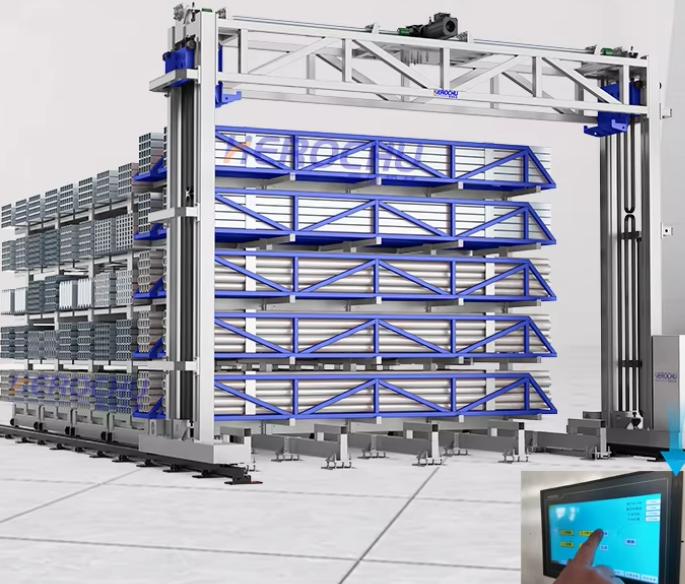
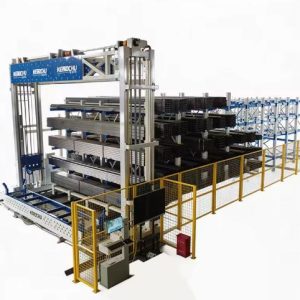
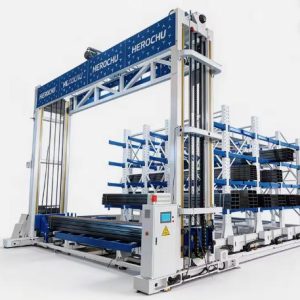
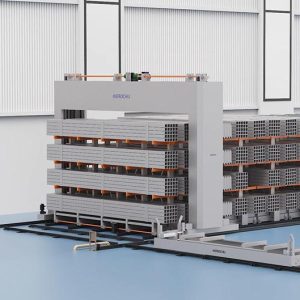
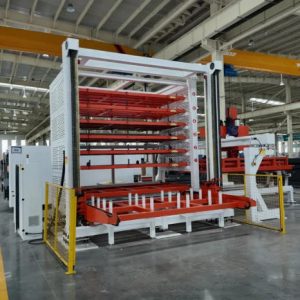
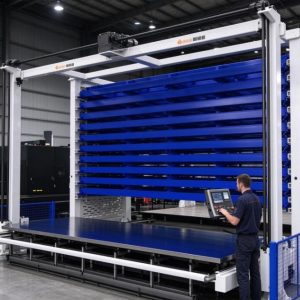
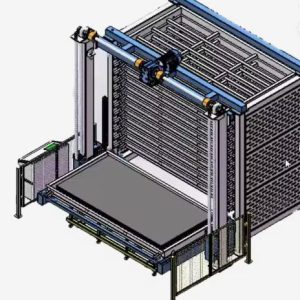
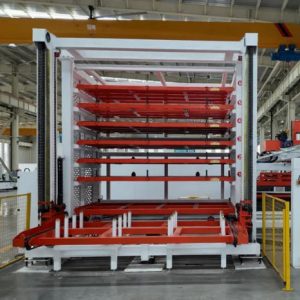
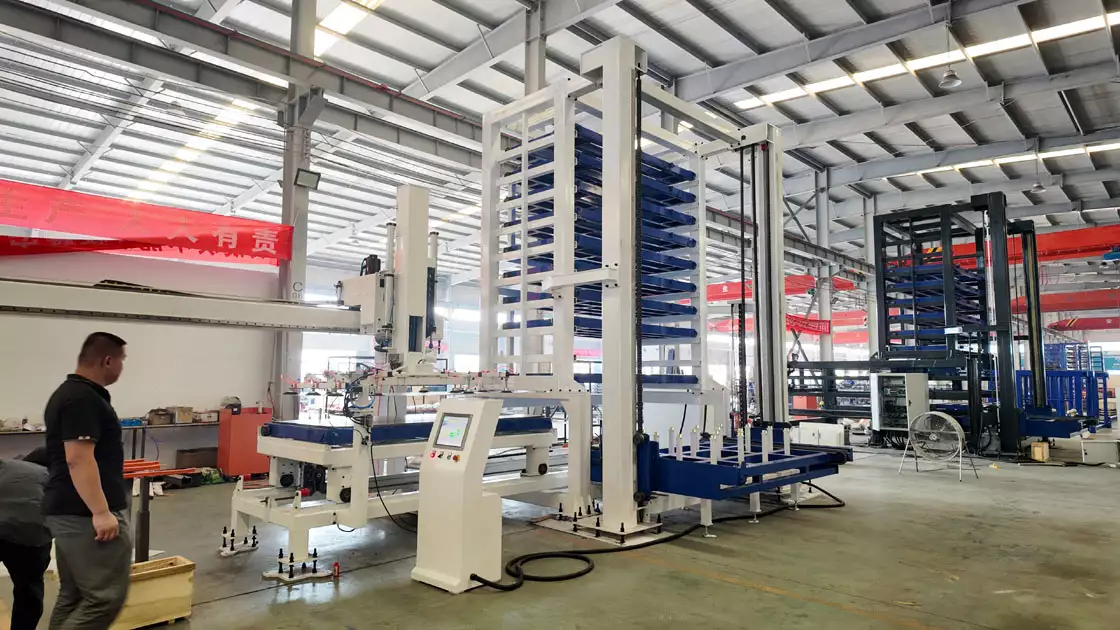
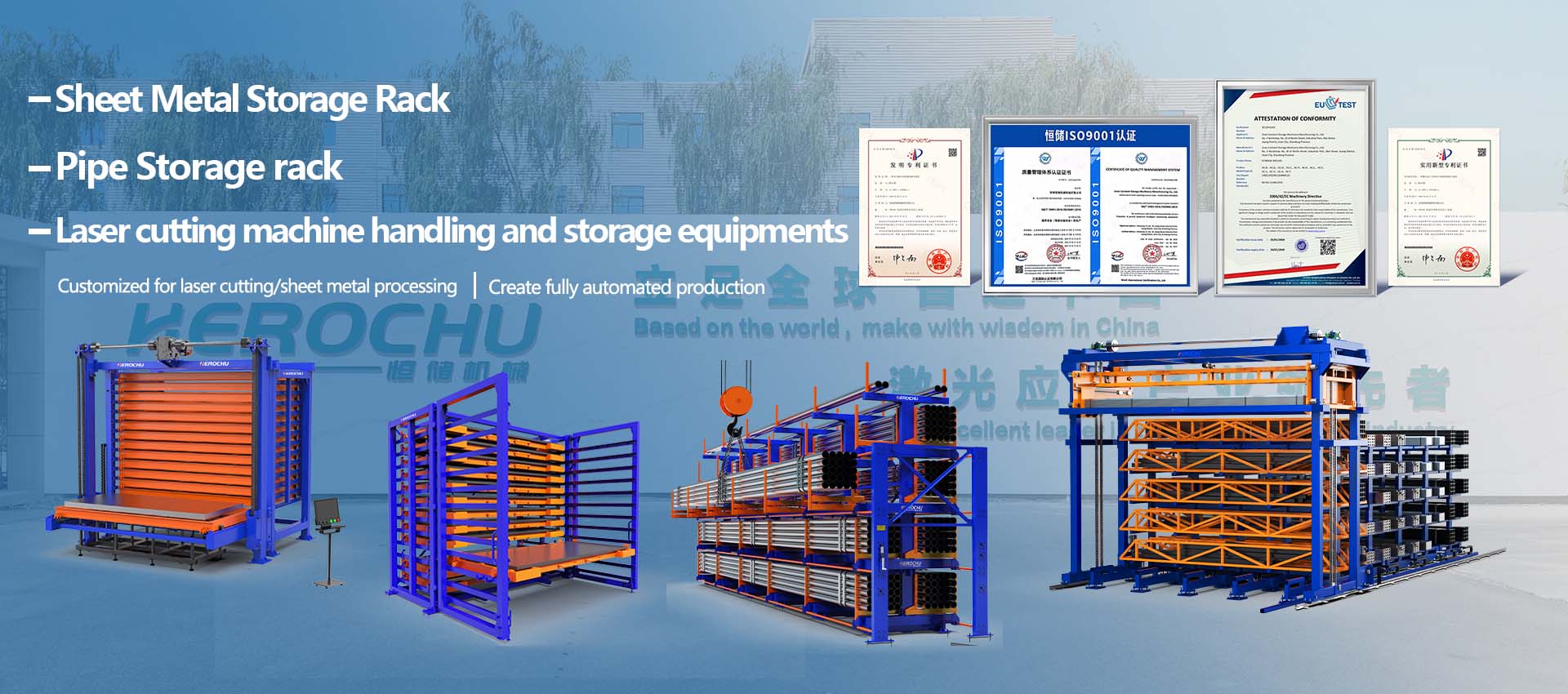
A gantry profile storage system uses the same Cartesian logic as a heavy-duty pipe ASRS, but the bin and fork design is adapted to profile handling. The gantry travels along floor rails at the rack face, lifts to the target level, and engages the bin. Herochu’s HC-X series applies this architecture to profile storage with traveling speeds of 5–30 m/min, lifting speeds of 5–15 m/min, and ±2 mm repeatability. The ±2 mm tolerance is not a marketing figure; it is the difference between a fork that slides cleanly under a profile bundle and one that nudges the bundle against the rack guide, risking surface damage.
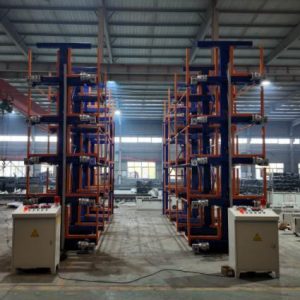
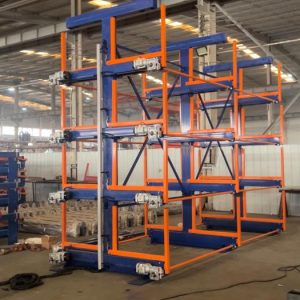
The bin design accommodates long and short materials as well as loose pieces. For an aluminum extruder or fabricator running 6 m standard lengths alongside shorter cut-to-order pieces, that means the same tower structure can hold both without creating a separate floor-stack zone for remnants. The rack count and layer count are customized: the HC-X series offers 5, 6, or 8 layers depending on model, with per-level loads of 3,000 kg or 5,000 kg. For aluminum, the load limit is rarely the binding constraint; the binding constraints are length mix, surface protection, and retrieval frequency.
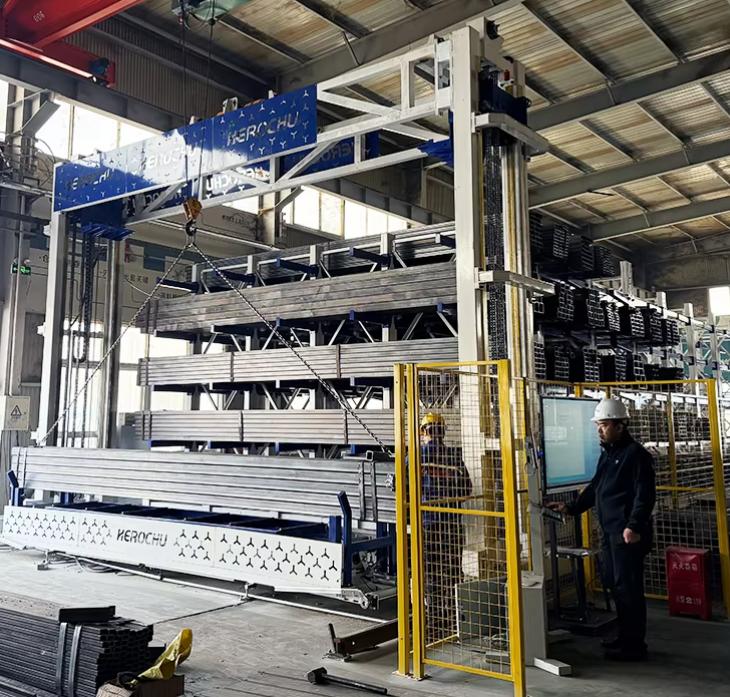
Density in practice: what changes when profiles go vertical
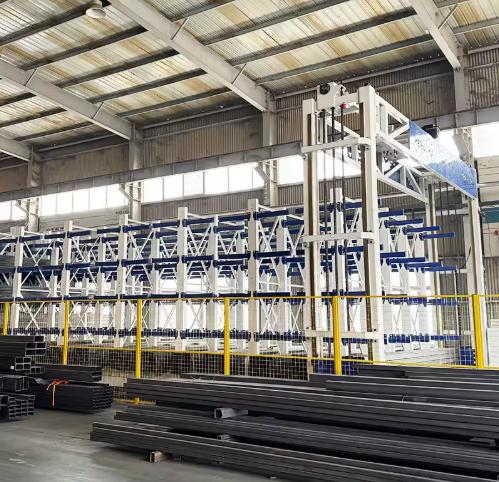
Horizontal profile storage consumes floor area in proportion to length. A 6 m profile laid flat requires 6 m of floor length plus clearance for the forklift or crane that retrieves it. Stacked horizontally, retrieval of one bundle often requires moving another. A gantry profile tower converts that floor length into vertical storage: the profile length becomes the depth of the bin, and the tower height becomes the storage multiplier. The shared picking aisle at the gantry face serves all rack columns, so the aisle width is paid once rather than repeated per rack line.
For a profile fabricator, the density gain translates into either avoided expansion or freed floor area for processing equipment. The same principle that Herochu applies to pipe storage—60 to 70 percent recovery of floor area previously used for horizontal racks and laydown areas—applies to profile storage when the material is moved into a gantry-served tower. The exact figure depends on ceiling height and length mix, but the direction is consistent: vertical storage with a shared aisle uses cubic space in a way that horizontal racks cannot.
Protecting surface finish and profile geometry
Aluminum profiles are more sensitive to handling than steel pipe. The gantry approach reduces damage risk in two ways. First, it eliminates the forklift fork-to-profile contact that occurs in manual retrieval; the gantry engages the bin, not the material directly. Second, digital inventory management means the system knows which bin holds which profile and retrieves that bin without disturbing adjacent bundles. The French case noted that bringing material into a dry, protected environment reduced the need for protective packaging, cutting material waste and packaging volume. For aluminum, that packaging reduction is both a cost saving and a surface-quality improvement.
The gantry frame itself is designed as a high-rigidity structure with anti-vibration and anti-deformation characteristics, which matters for profile handling because vibration during travel can cause bundles to shift within the bin. A stable frame keeps the positioning repeatability at ±2 mm across long travel distances, reducing the micro-corrections that would otherwise increase contact between the fork and the bin.
Frequently asked questions
What profile lengths can an automatic gantry storage system handle? Herochu’s HC-X series accommodates 6,000 mm, 7,000 mm, and 8,000 mm material across its standard models, with rack and bin layouts customized to the on-site length mix. The bin design allows long and short profiles to be stored in the same system.
How does a gantry system protect aluminum profiles from damage? The gantry engages the storage bin rather than the profile surface, eliminating direct fork-to-material contact during retrieval. Digital inventory management retrieves the specific bin requested without moving adjacent bundles, reducing unnecessary handling.
Can an aluminum profile warehouse achieve the same density gains as a steel pipe warehouse? The mechanism is the same: vertical storage in multi-level towers with a shared picking aisle. Actual density depends on ceiling height, profile length mix, and the proportion of short versus long material. The French aluminum profile case doubled stored volume within the same footprint after moving to automated gantry-served honeycomb storage.
What repeatability is required for profile handling? Herochu specifies ±2 mm repeatability on the HC-X series. For aluminum profiles, that tolerance supports clean bin engagement without the lateral contact that can mark anodized or painted surfaces.
Bottom line
An automatic gantry profile storage system is not a scaled-down pipe rack. It is a density tool for a material class that is long, mixed in length, and sensitive to handling. Herochu’s HC-X configuration—vertical towers, floor-rail gantry, PLC inventory control, and ±2 mm positioning—converts floor-bound profile storage into cubic storage while keeping each profile variant in a defined, retrievable bin. For an aluminum fabricator facing floor-space constraints and surface-quality requirements simultaneously, the gantry profile tower addresses both without choosing one over the other.