An Automated Storage and Retrieval System (ASRS) for sheet metal is not a cabinet with a motor. It is a data node in the production workflow — one that tracks material by grade, thickness, weight, and quantity, feeds that information to the factory ERP in real time, and delivers the correct plate to the correct machine on command. The distinction between a storage rack and an ASRS tower is the data layer. Herochu engineers that data layer as carefully as the steel structure.
Goods-to-Person Retrieval: Eliminating the Search Cycle
Traditional sheet metal storage operates on a person-to-goods model. An operator walks to a storage area, visually identifies the correct plate among dozens of similar sheets, extracts it with a forklift or vacuum lifter, and transports it to the cutting machine. The cycle takes 15 to 30 minutes on a good day — longer when the plate is buried under other material or when the identification label is damaged.
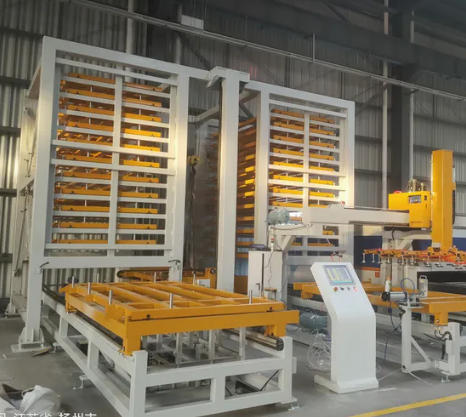
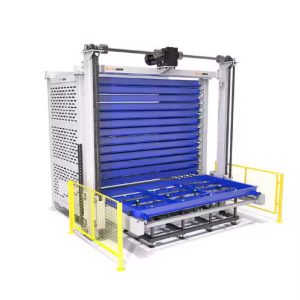
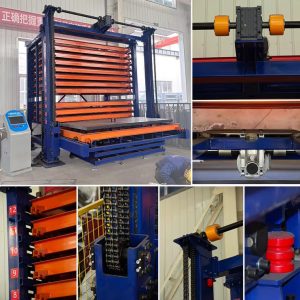
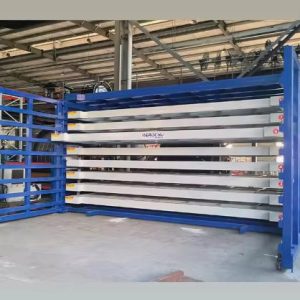
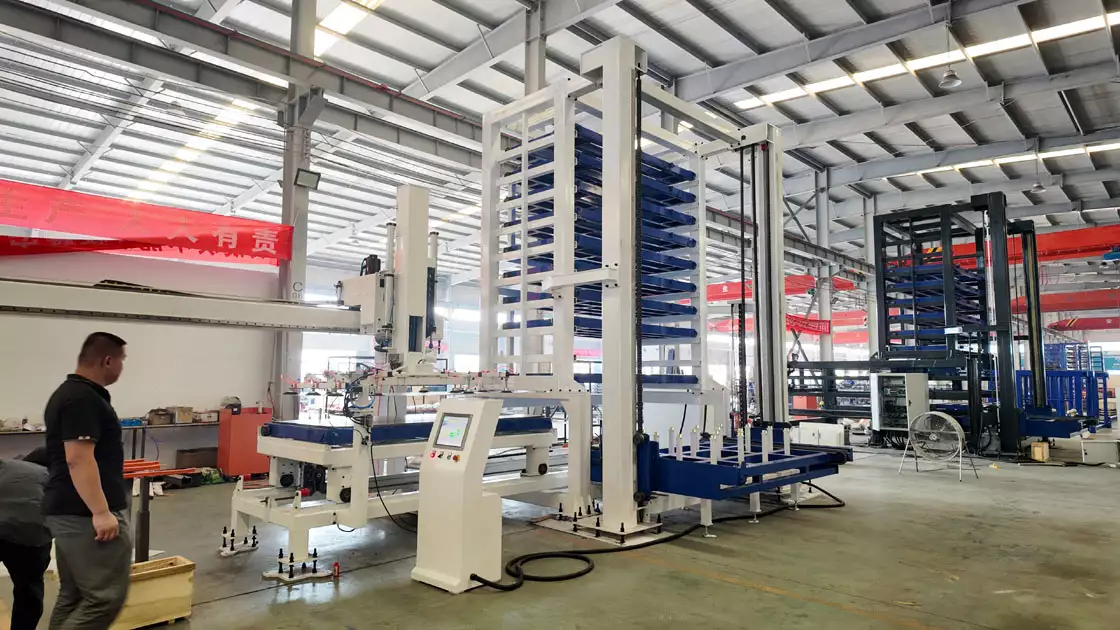
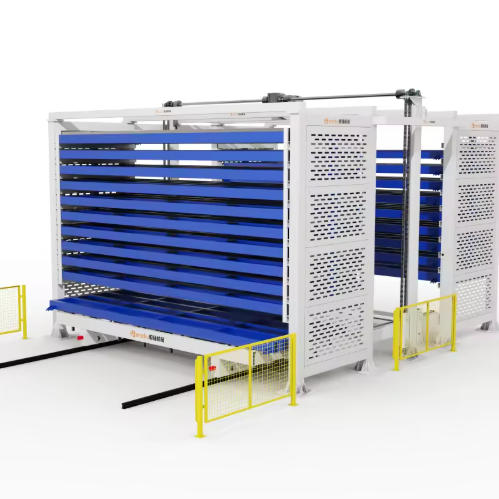
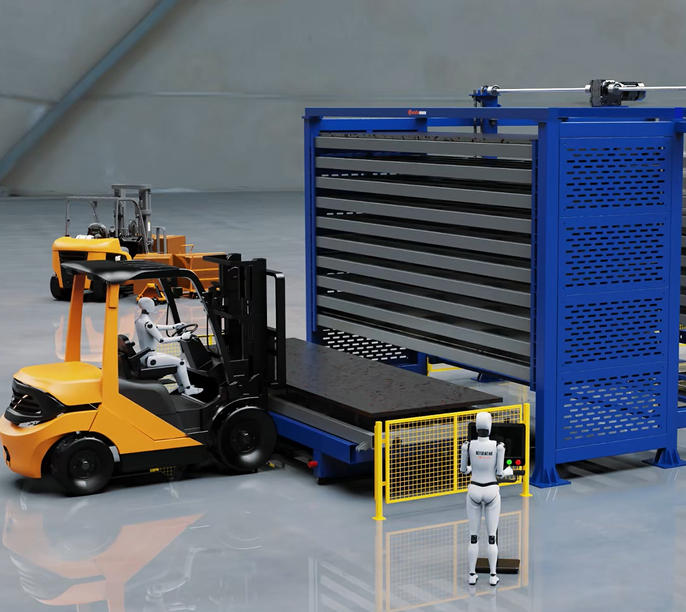
The Herochu Smart ASRS Sheet Metal Vertical Storage Tower reverses this model. Goods come to the person. An operator enters a material request on the PLC touchscreen — or the request originates from the ERP system based on the production schedule. The PLC identifies the tray holding the requested material, commands the vertical lift to retrieve it, and presents it at the access bay. The retrieval cycle completes in under 60 seconds. No searching, no visual identification, no plate buried under other sheets.
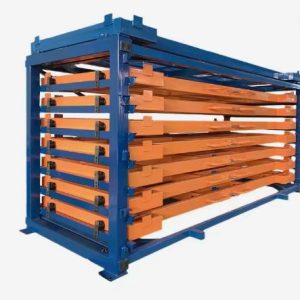
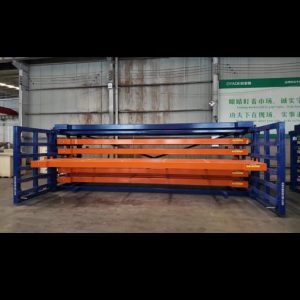
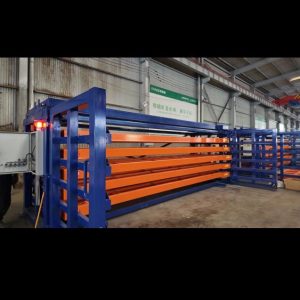
This goods-to-person architecture eliminates the three chronic inefficiencies of traditional storage: lost time, misidentified material, and surface damage. Because each sheet rests in its own tray, plates do not contact each other. Scratches from sliding one plate off a stack disappear. The 100% scan-based tray identification means the operator never pulls the wrong grade — the PLC confirms the match before the tray leaves its storage position.
ERP Integration: From Manual Stocktaking to On-Demand Inventory
The data layer of the Herochu Smart ASRS tower connects to the factory ERP system through a standardized interface. This connection changes how the shop manages inventory at a fundamental level.
Stocktaking becomes a data query rather than a physical count. A production manager opens the ERP interface and sees real-time sheet quantities, material grades, thicknesses, and weights across every tower in the facility. The built-in weighing function on each tray records the exact weight of stored material — not an estimate, not a theoretical calculation, but a measured value that updates the inventory database on every retrieval and return cycle.
When inventory drops below a user-defined threshold, the system triggers a restocking alert. Purchasing receives consumption trend data showing which grades and gauges are depleting fastest, enabling just-in-time material orders instead of buffer-stock purchasing. Production planning gains visibility into material readiness — machine time is scheduled against confirmed plate availability rather than estimated stock levels. The ERP connection converts the storage tower from an information blind spot into a transparent, queryable node in the factory’s digital infrastructure.
Classification Logic: Structured Storage by Design
The PLC touchscreen interface in a Herochu Smart ASRS tower lets operators define storage rules based on material grade, thickness, dimensions, and type. When a new plate arrives, the system assigns it to the appropriate tray based on these classification parameters — not the next available slot.
This classification logic produces two operational outcomes. First, retrieval is direct. When a fabricator needs 316L stainless at 6 mm, the WMS retrieves it from the designated tray — no searching through mixed-grade stacks. Second, material traceability is built in. Each tray links to heat numbers, supplier lots, and remaining quantities. For shops working to ISO 9001 or ASME material control requirements, the automatic classification provides the audit trail needed for certification inspections.
CNC Integration and Automated Workflow
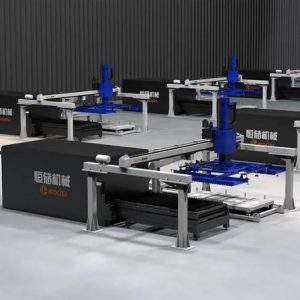
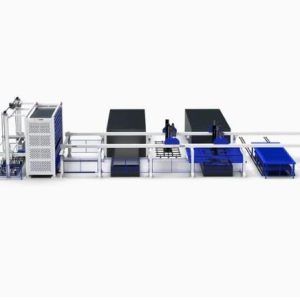
The Herochu Smart ASRS tower connects directly to downstream fabrication equipment. In a configuration serving a fiber laser cutting machine, the tower delivers a tray to the access bay, and an automated loading arm extracts the sheet and places it on the cutting bed. The tower then prepares the next tray while the laser cuts the current sheet. This sequenced handoff — storage, retrieval, loading, cutting — runs without operator intervention.
For facilities pursuing lights-out manufacturing, the ASRS tower interfaces with 6-axis robotic loading arms. A robot arm extracts the designated sheet from the access station, places it on the cutting bed, and signals the tower to prepare the next piece. Production continues through night shifts with no human presence on the shop floor. The PLC coordinates the sequence: the tower delivers, the robot loads, the laser cuts, the robot clears the finished part, and the cycle repeats. The only energy consumed is electricity; the only constraint is material supply.
Weight Monitoring and Pick/Count Tracking
Each tray in the Herochu Smart ASRS tower incorporates a weighing function that records material weight in real time. This data feeds the WMS inventory database, where the PLC touchscreen displays material dimensions, weight, and quantity. Operators see exactly what is stored, how much remains, and where it sits — without leaving the control station.
The pick and count tracking function logs every retrieval and return. When an operator removes three sheets from a tray holding twelve, the system updates the count to nine. When the tray returns to storage, the weighing function confirms the weight reduction matches the recorded removal — a physical verification of the digital count. This dual verification catches discrepancies that manual counting misses: a partial sheet returned to the wrong tray, a thickness misidentification, or a plate damaged during handling and removed without a system update.
Model Range and Capacity Scaling
The Herochu Smart ASRS tower scales across four models, from the HC-S3015-63 (3,000 kg per level, six layers, 3000 x 1500 mm sheets) to the HC-S6020-105 (5,000 kg per level, ten layers, 6000 x 2000 mm sheets). Transfer speed ranges from 5 to 15 m/min across the range, and positioning repeatability holds at ±2 mm — the precision figure that makes automated loading possible. The tower structure, built from Q235B high-strength steel with full-penetration welds, carries the rated loads without deflection, verified through Simsolid and Ansys finite element analysis before fabrication begins.