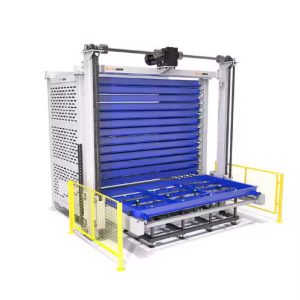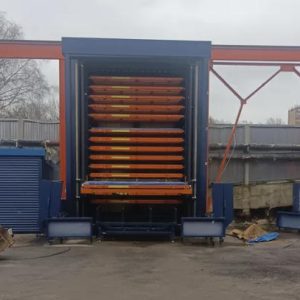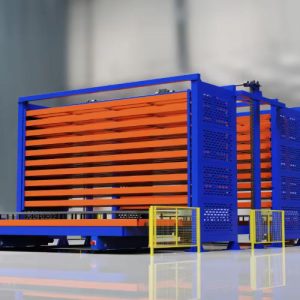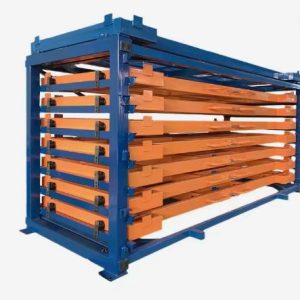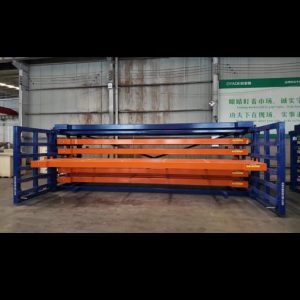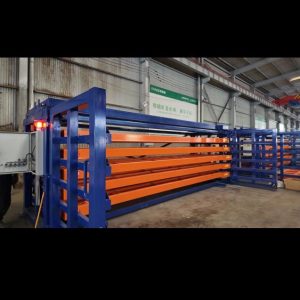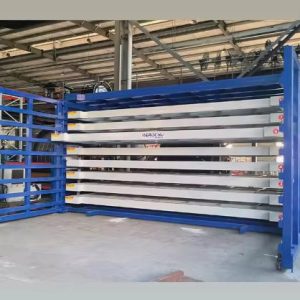
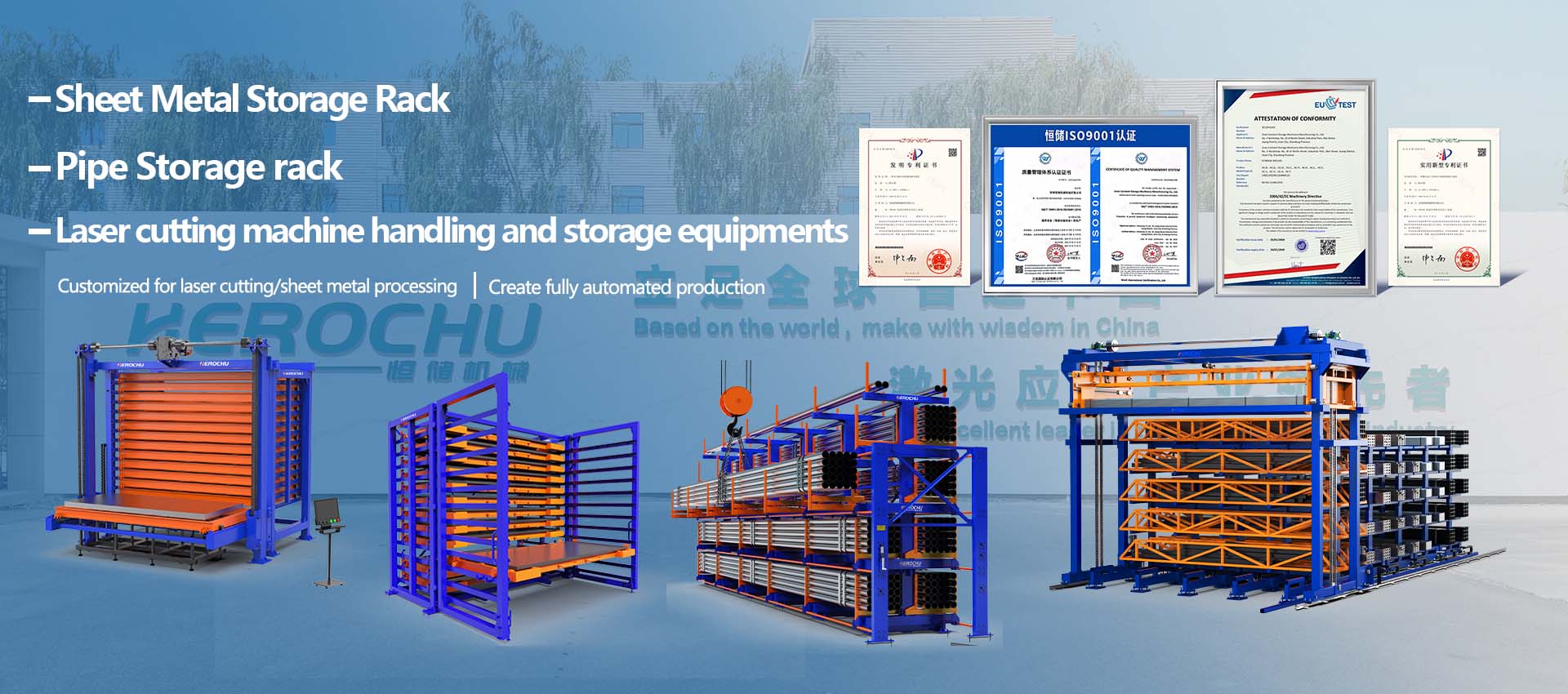
The core of an automated vertical lift sheet metal storage tower is not the steel frame or the tray count — it is the vertical motion system. A tower that stores 50 tonnes of plate across ten levels means nothing if the lift mechanism cannot retrieve a specific tray, move it to the access bay, and return it with consistent precision across thousands of cycles. Herochu designs the lift system as the primary engineering subsystem, with the frame, trays, and control logic built around its performance characteristics.
The Vertical Lift Mechanism
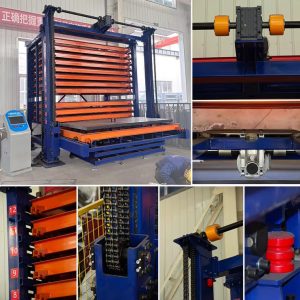
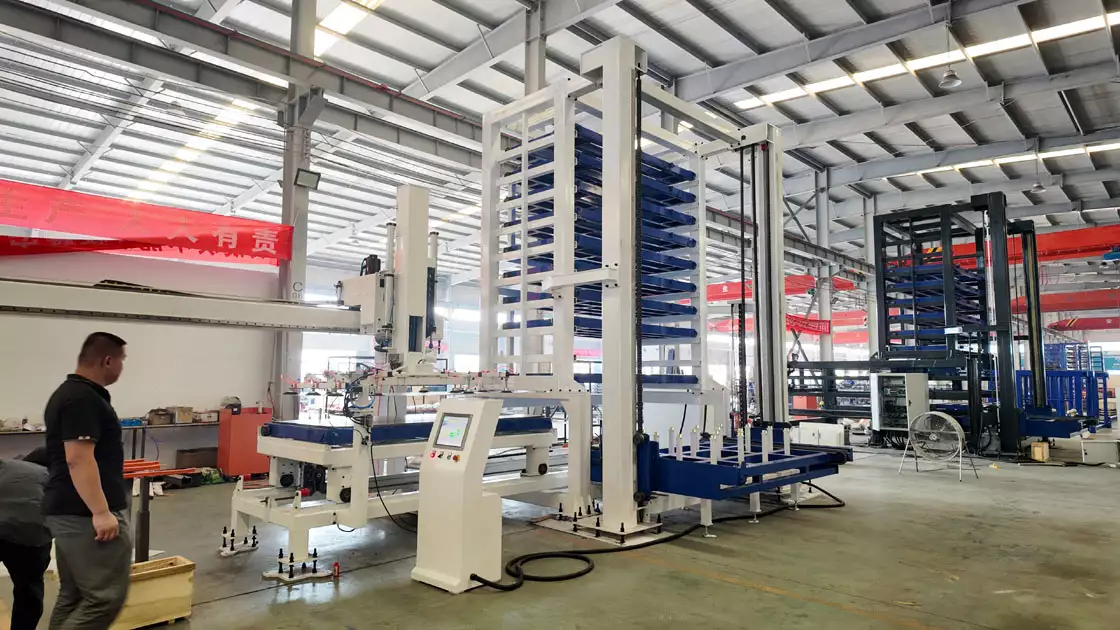
The Herochu automated vertical lift uses a heavy-duty drive system that moves the lifting carriage along precision guide rails within the tower’s central column. The carriage engages individual trays, extracts them from their storage position, transports them vertically to the access bay, and returns them after the operator or robot completes material pickup.
Two performance parameters define the lift’s operational character. Transfer speed ranges from 5 to 15 m/min — the operating envelope that covers the full range of tower configurations. At the lower end, a tower with closely spaced trays holding heavy plate runs at speeds that keep the load stable during vertical travel. At the upper end, a tower with lighter sheets and longer travel distances moves faster to minimize cycle time. The PLC adjusts speed dynamically based on the tray load and the travel distance, not a fixed setting.
Repeatability is the second parameter: ±2 mm. This figure represents the positional accuracy of the tray at the access bay — every retrieval, regardless of which level the tray originated from, delivers the sheet to the same position within a 2-millimetre tolerance. That consistency is what makes automated loading possible. A robotic arm that picks a sheet from the access bay needs to know exactly where that sheet sits. A tray that arrives at a different position each cycle defeats the automation.
Drive Technology: Gear-and-Rack System
The Herochu lift uses a gear-and-rack drive system rather than a chain drive for the primary vertical motion. The selection is deliberate. A rack-and-pinion system transmits torque through direct gear tooth engagement — no chain stretch, no backlash accumulation, no positional drift over time. The gear teeth maintain their engagement geometry across the full vertical travel range, which is why the ±2 mm repeatability figure holds constant over weeks of continuous daily operation.
The drive motor sits within a sealed housing at the tower base, isolated from workshop dust, cutting debris, and airborne particulates that accumulate in metal fabrication environments. Maintenance access panels allow lubrication and gear inspection without dismantling surrounding equipment. The guided rail assemblies that constrain the lifting carriage laterally are manufactured to tolerances that prevent side-to-side movement during vertical travel — a tray holding 5,000 kg of plate moves vertically without lateral oscillation that would stress the rail mounts and degrade positioning accuracy.
Structural Rigidity Under Dynamic Load
The tower frame carries two load conditions: static and dynamic. The static condition is the weight of all stored trays at full rated capacity — up to 50,000 kg in a ten-level HC-S6020-105 configuration. The dynamic condition is the force transmitted when the lifting carriage accelerates and decelerates with a loaded tray. Both conditions act on the same structural frame.
Herochu constructs the frame from Q235B high-strength steel, assembled with full-penetration welds and stress-relieved after fabrication. The column design uses bilateral structural members reinforced with diagonal bracing — a geometry that distributes load paths efficiently and resists the lateral forces generated during rapid vertical movement. Simsolid and Ansys finite element analysis models the frame under both static and dynamic conditions before fabrication begins, verifying that deflection stays within structural tolerances at every level.
The tower base anchors to a levelled concrete pad engineered for the point loads transmitted during full-capacity operation. This foundation specification is part of the Herochu installation package — the engineering team provides the anchor bolt layout, the pad thickness requirement, and the load distribution diagram so the facility prepares the foundation before the tower arrives.
Safety Interlocks and Fail-Safe Architecture
A tower lifting multi-tonne trays vertically requires a safety architecture that prevents uncontrolled movement under every foreseeable condition. Herochu integrates safety at two levels: mechanical and control.
The mechanical level includes a positioning safety device on each tray that locks the tray in its storage position during idle periods. The lock engages automatically when the tray returns to its storage level and releases only when the lifting carriage is in position to support the tray. A tray cannot slide from its storage position under vibration, seismic activity, or accidental contact.
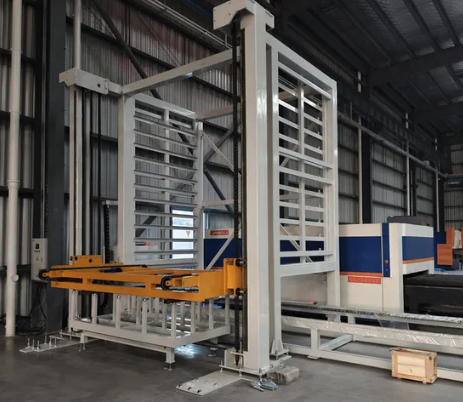
The control level uses PLC-interlocked logic. The lift does not move until the access bay is confirmed clear. A tray is not released while the access bay is occupied. The PLC verifies tray position on every cycle — a position sensor confirms that the tray is fully seated in the storage position before the carriage disengages and moves to the next retrieval. If the sensor detects an incomplete return — a tray that stopped 10 mm short of its home position — the system flags the fault and halts operation rather than continuing with a misaligned tray.
Equipment Compatibility at the Access Bay
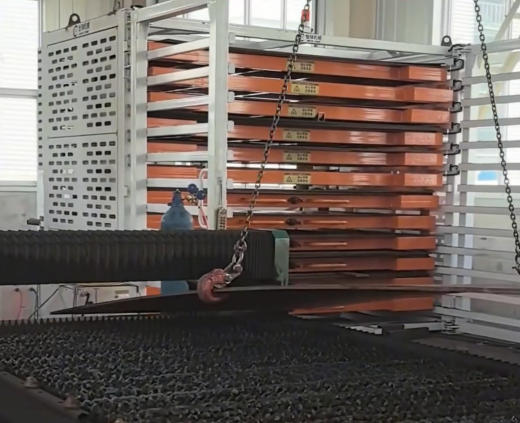
The access bay where trays are presented for material pickup is engineered for compatibility with the full range of material handling equipment. Forklift engagement points match standard forklift fork dimensions. Overhead crane access is unobstructed — the tray extends to a position where a crane hook can engage the plate without interfering with the tower structure. For automated lines, the access bay height is set to match the loading arm’s pickup position, and the tray presents the sheet at the orientation the robot expects.
This multi-mode compatibility means a single Herochu tower serves manual operations during the day shift — an operator picks a sheet with a forklift — and automated operations during the night shift — a robotic arm picks the same tray position without adjustment. The lift mechanism delivers the tray to the same position regardless of what retrieves it.
Pre-Shipment Load Testing
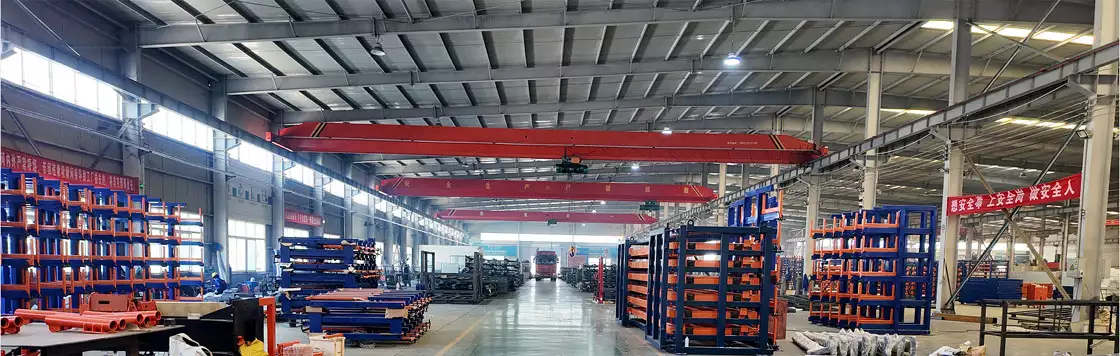
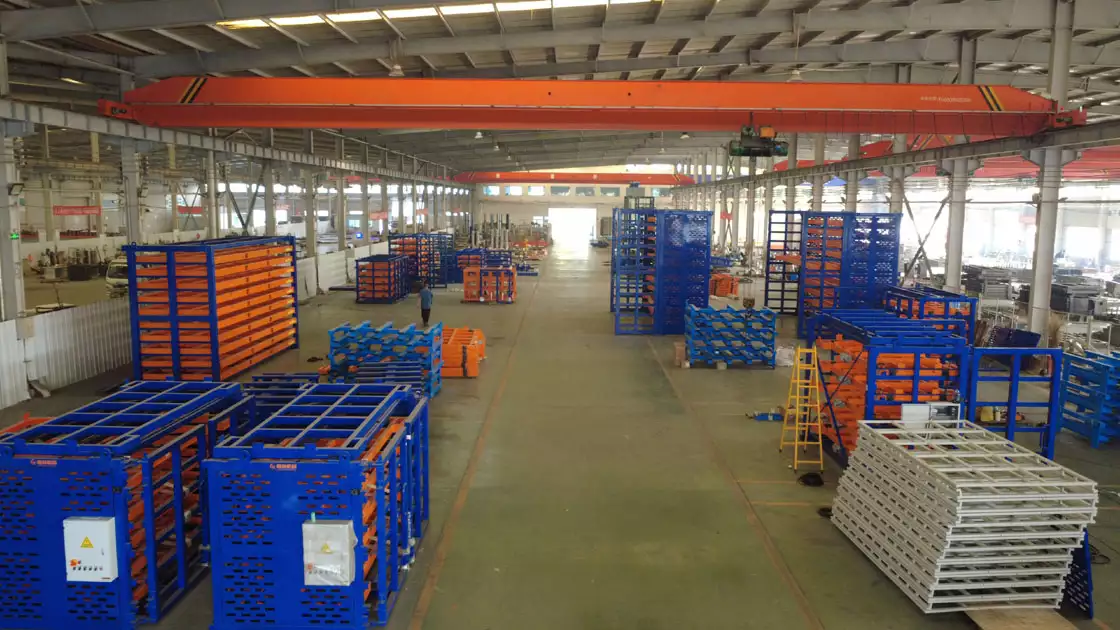
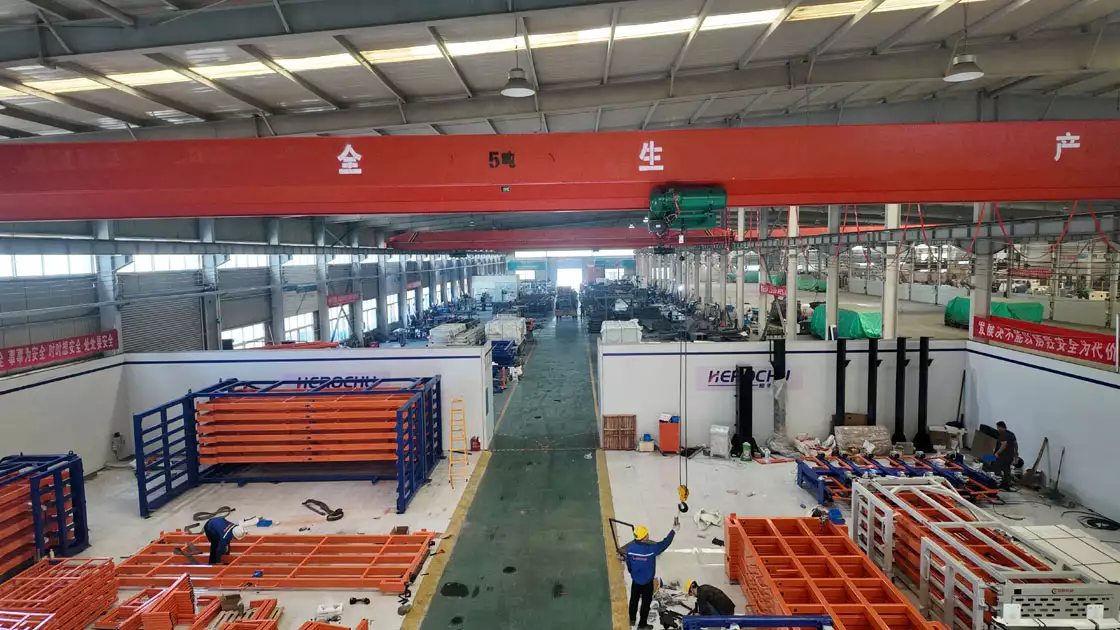
Every Herochu automated vertical lift tower undergoes load testing at the manufacturing facility before shipment. The test cycle loads each tray to its rated capacity, runs the lift through full vertical travel, and verifies positioning repeatability at the access bay. The 10,000-square-metre Jinan facility accommodates full-tower assembly and testing, so the tower arrives at the installation site verified, not experimental. The PLC, drive system, and safety interlocks have already cycled under load before the tower is crated.