Sheet metal is a deceptively fragile product. A 3mm mild steel sheet can support significant structural loads, yet its surface scratches under minimal friction and its edges deform against modest impact. When dozens of sheets are stacked horizontally, the cumulative weight creates pressure points that damage the lower layers, and every retrieval disturbs the entire pile. The material cost of this damage—rework, scrap, downgraded stock—accumulates silently until it becomes a visible line item on the production budget.
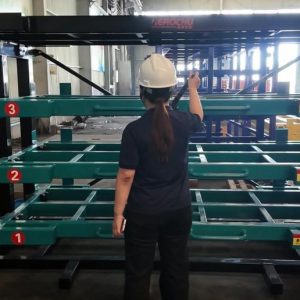
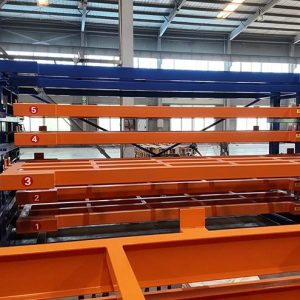
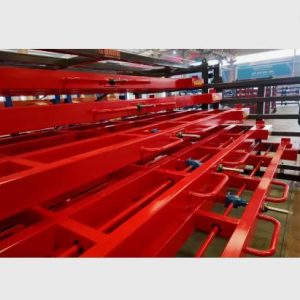
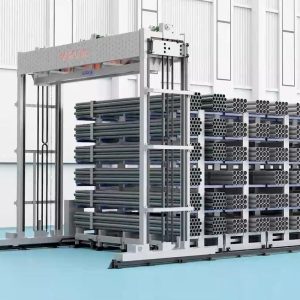
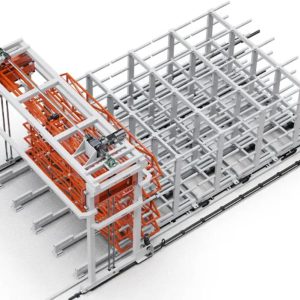
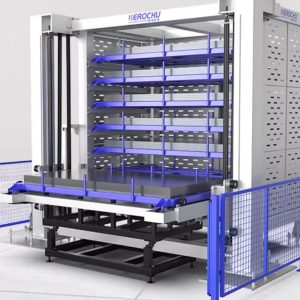
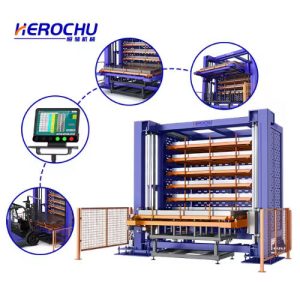
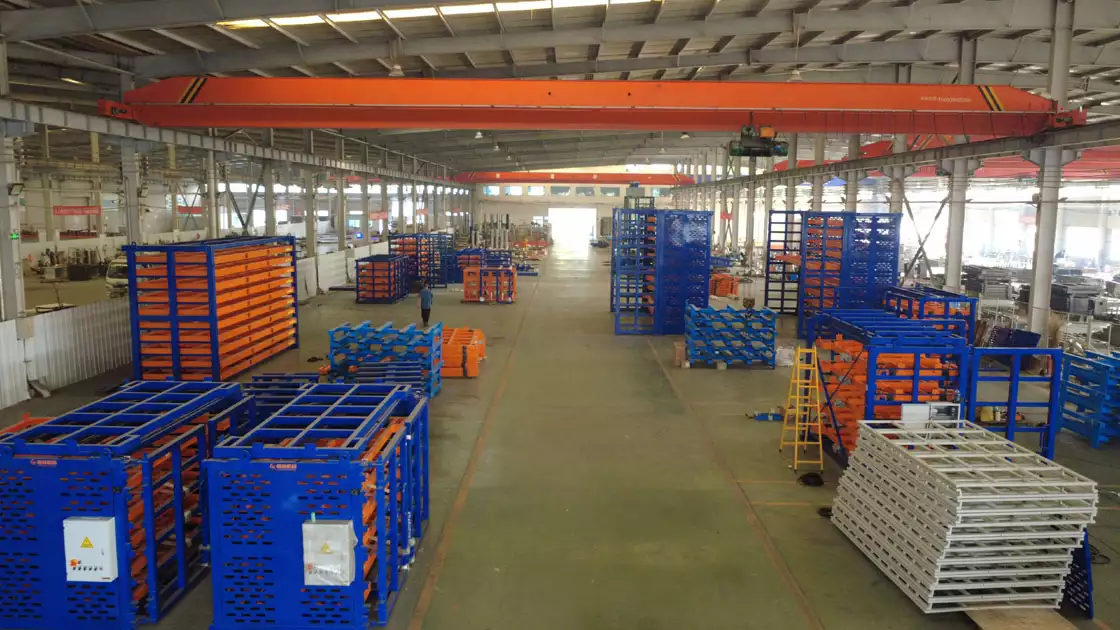
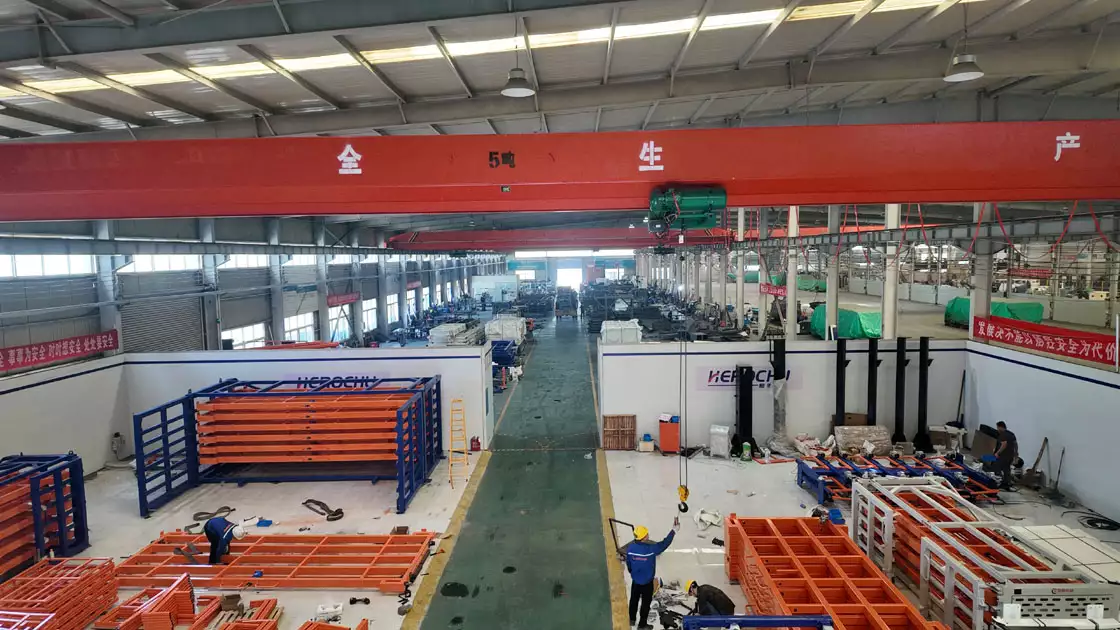
Herochu’s motorized drawer storage system was designed to eliminate this category of loss. By giving every sheet or bundle its own drawer plane, the rack prevents the inter-sheet contact that produces scratches, dents, and deformation.
The Physics of Sheet Stacking Damage
Understanding why conventional storage damages material requires examining the load path. In a horizontal stack, the bottom sheet carries the weight of everything above it. A pile of twenty 3000×1500mm steel sheets at 3mm thickness weighs approximately 2.1 tons. The bottom sheet experiences that load across its entire surface, but any surface irregularity—a weld spatter, a cutting slug, a bit of grit—creates a concentrated pressure point. Over time, those points produce permanent indentations.
The top sheets face a different problem. Every time an operator slides a sheet from the pile, friction against the adjacent sheet abrades both surfaces. The damage may be microscopic initially, but it accumulates through repeated handling until the surface finish falls outside specification.
Aluminum is particularly vulnerable. Its softer surface scratches more readily than steel, and the oxide layer that forms naturally does not protect against mechanical abrasion. For aerospace, automotive, and architectural applications where surface appearance and corrosion resistance are critical, stacked storage represents an unacceptable risk.
Drawer Isolation: The Protective Mechanism
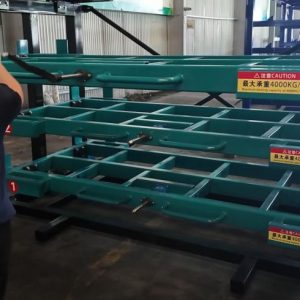
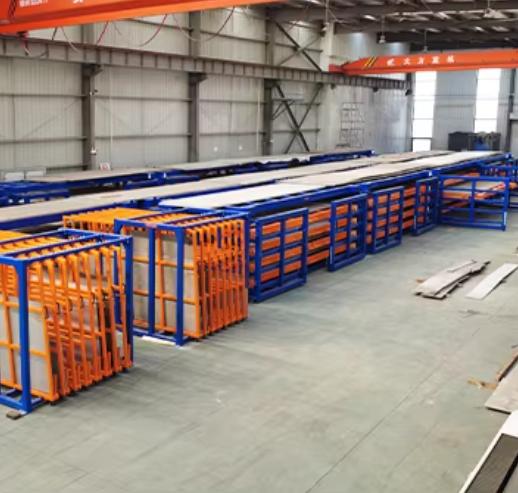
Herochu’s drawer design interrupts the damage cycle at its source. Each drawer provides a dedicated, flat support surface for a single sheet or thin bundle. Sheets do not contact each other during storage, and they do not experience the point-loading that occurs in stacks.
The drawer supports incorporate inclined plastic elements that hold the sheet in position during drawer travel. These supports prevent sliding without applying surface pressure, and they are replaceable wear components that can be renewed as needed without replacing the drawer itself.
When the motorized drawer extends, the sheet arrives at the aisle fully exposed and accessible. The crane or vacuum lifter removes it from above without dragging or sliding. The drawer retracts, and the next sheet remains undisturbed. This cycle repeats without the cumulative damage that defines stacked storage.
Electric Drawer Rack for Steel & Aluminum Sheet Storage
The Herochu electric drawer rack serves both material families with equal effectiveness, though the considerations differ slightly.
For steel, the primary concern is load management. The HC-B4015-63 model handles 4000×1500mm sheets at up to 3,000 kg per tier, while the HC-B4020-65 and HC-B6020-65 versions accommodate 5,000 kg per tier for heavier plate. The dual-beam crossbeam frame distributes this load across the full structure, preventing the localized stress that causes rack deformation.
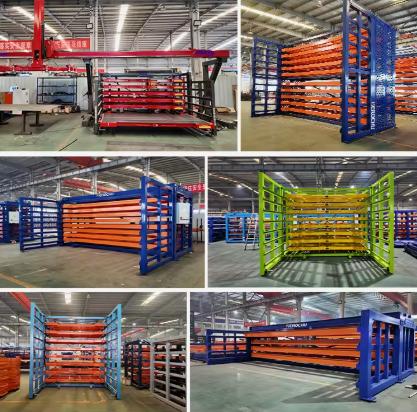
For aluminum, surface protection takes priority. The drawer support design and the elimination of inter-sheet contact address the scratch risk. The powder-coated finish on the drawer surfaces prevents the aluminum from contacting bare steel, which can cause galvanic corrosion in humid environments.
Both steel and aluminum benefit from the FIFO capability. Drawers can be labeled by alloy, temper, thickness, and receipt date, creating a visual inventory system that ensures older stock moves first.
Automated Drawer Sheet Metal Storage for 3000x1500mm Format
The 3000×1500mm sheet is the workhorse format of the fabrication industry. It fits standard laser cutting beds, shear capacities, and press brake tooling. Herochu’s HC-B3015-63 model is engineered specifically around this dimension, with drawer width and depth matched to the sheet footprint and clear space calibrated for common thickness ranges.
For operations running multiple shifts or high retrieval frequencies, the automated drawer function becomes an efficiency multiplier. The operator selects the drawer by label or control panel input, presses the button, and the motorized mechanism delivers the sheet to the access position. There is no waiting for a forklift, no repositioning of material piles, and no physical strain on the operator.
The automation also improves safety. The drawer locking system prevents movement during loading and unloading, and the interlock logic prevents multiple drawers from extending simultaneously—a safeguard against tip-over that is particularly important when heavy plate is stored at upper levels.
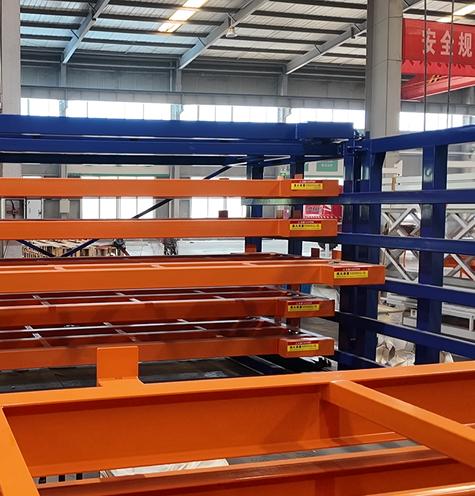
Crank-Out Steel Plate Drawer Rack for 3m x 1.5m Sheet
The crank-out variant provides the same protective storage benefits without electrical dependency. The ergonomic crank mechanism reduces the force required to move a loaded drawer to approximately one-fifth of a direct pull, making it feasible for single-operator use with 3-ton loads. This configuration suits facilities where retrieval frequency is lower, where power availability at the rack location is limited, or where maintenance simplicity is prioritized.
The crank-out rack accepts the same 3m x 1.5m sheets as the motorized version and shares the Q235B steel frame, dual-beam crossbeams, and drawer support system. The choice between motorized and manual operation is a workflow decision, not a compromise in storage quality.
Space Utilization and Inventory Control
Vertical drawer storage recovers floor space by using height instead of area. A single Herochu rack with six layers stores the equivalent of six floor stacks within a footprint of approximately 3.5 by 1.5 meters. The aisle requirement is limited to the drawer extension distance, which is shorter than the maneuvering space a forklift needs to approach a floor stack.
The drawer labeling and FIFO capability transform inventory management from a guess to a controlled process. Material that previously disappeared into the bottom of a pile—and was often reordered unnecessarily—becomes visible and trackable. Dead stock decreases, and the frequency of urgent material purchases falls.
Handling Equipment Compatibility
Herochu racks integrate with the lifting equipment standard in metal fabrication: overhead cranes with magnetic or vacuum lifting attachments, forklifts with sheet handling booms, and portable vacuum lifters. The drawer locking mechanism secures the tray during loading, and the 100 percent extension provides unobstructed vertical access for crane hooks.
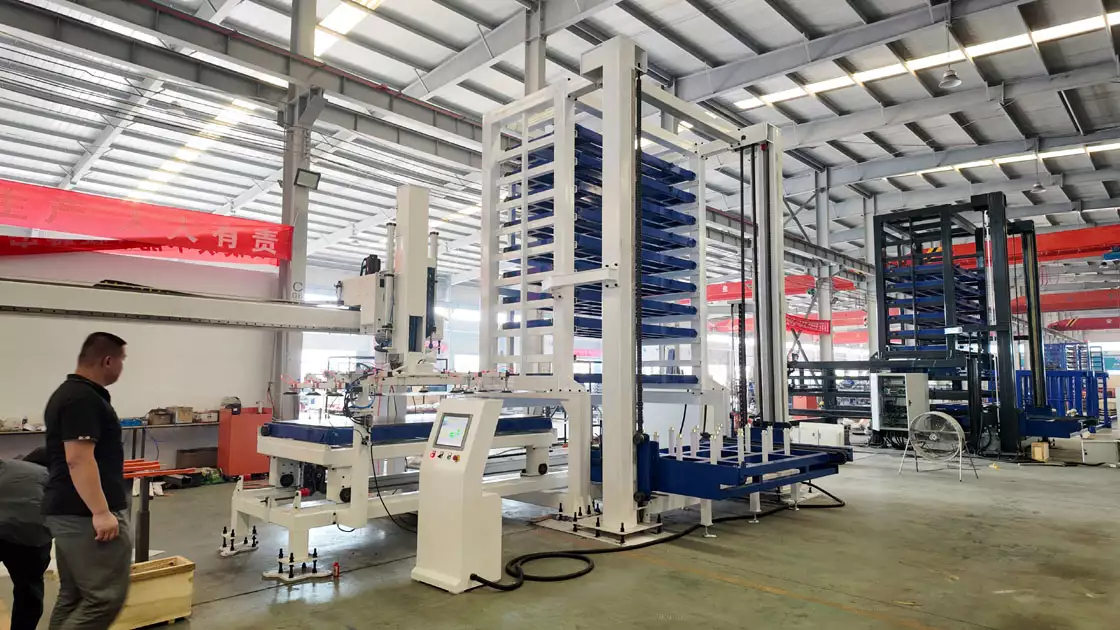
For automated laser cutting cells, the rack can serve as the material buffer feeding the cutting machine. Gantry loaders and servo swing arms can retrieve sheets directly from the extended drawer, reducing the labor content of the cutting cycle.
Conclusion
Material damage from improper storage is a controllable cost. Herochu’s motorized drawer storage system for steel and aluminum sheets eliminates the inter-sheet friction and point loading that produce scratches and deformation, while the electric drawer operation reduces labor and improves safety. For facilities storing 3000×1500mm sheets or 3m x 1.5m plate, the HC-B3015-63 series provides a purpose-built solution that protects both the material and the operation.