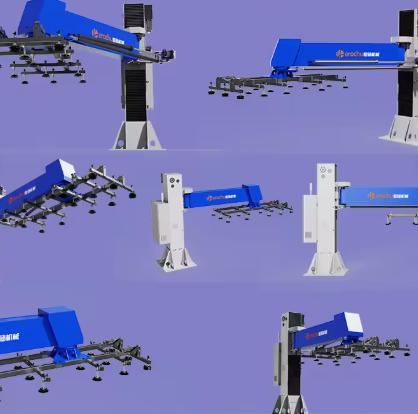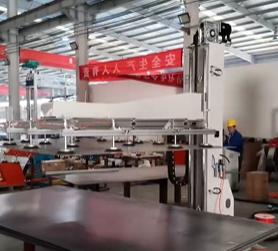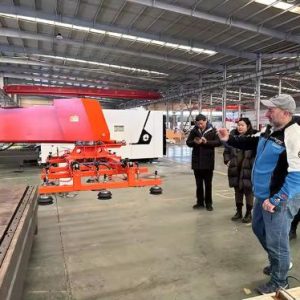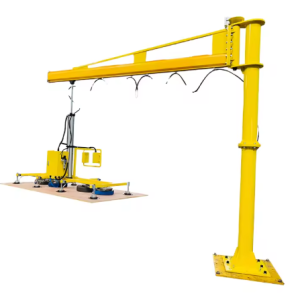
When a fabrication cell handles plates that weigh between 100 and 300 kilograms, the choice of lifting technology narrows sharply. Mechanical clamps risk surface gouging on pre-finished stock, slings and chains lack the positional precision CNC loading requires, and magnetic equipment excludes the aluminum and stainless grades that now account for a growing share of contract manufacturing orders. A heavy-duty sheet metal suction lifter addresses all three constraints simultaneously: it secures the sheet through distributed vacuum force without mechanical contact that could mar the surface, it positions the panel with repeatable accuracy for laser cutting or bending nests, and it functions across ferrous and non-ferrous materials without reconfiguration.
Herochu heavy-duty sheet metal suction lifters build on a modular vacuum circuit architecture that warrants a closer look. Each suction pad connects to the main vacuum reservoir through an independent solenoid valve rather than a shared manifold. When the gripper descends onto a sheet, individual cups that make solid contact open their valves and begin evacuating air, while cups straddling a cutout, a datum hole, or the sheet edge remain isolated and do not bleed the system vacuum. The result is that a 300 kg rated lifter maintains full holding capacity on sheets with irregular geometry — laser-cut blanks with internal windows, panels with pre-punched holes, or stock with deliberate edge notching from the service center.
The vacuum generation subsystem on Herochu industrial lifters uses a venturi-based ejector pump rather than a motor-driven rotary vane unit, which removes a common failure mode from the equation: there is no oil reservoir to change, no carbon vanes to wear, and no motor winding to overheat during continuous cycling. Compressed shop air — typically supplied at 6 to 8 bar — drives the ejector, and the vacuum level stabilizes at roughly 85% of absolute vacuum within two seconds of cup contact. This response speed matters on high-throughput lines where the total lift-and-place cycle budget might be only 35 seconds gate to gate. The ejector also tolerates particulate ingestion better than precision rotary pumps, which counts in fabrication environments where airborne scale, cutting dust, and grinding residue are ambient realities.
One of the engineering decisions that separates purpose-built industrial vacuum lifters from generic suction handlers is the redundancy logic built into the vacuum retention system. Herochu integrates a check valve and accumulator tank downstream of the ejector, sized such that if compressed air supply fails entirely — a line rupture, a compressor trip, a plant-wide power outage — the accumulator holds sufficient vacuum volume to keep a fully loaded sheet suspended for a minimum of 20 minutes. This is not a marketing safety margin; it is the interval a maintenance team needs to isolate the zone, position a scissor lift underneath the load, and lower it under controlled conditions. The air-cut protection triggers faster than any operator can react, latching all vacuum circuit valves closed on the first detectable pressure drop.
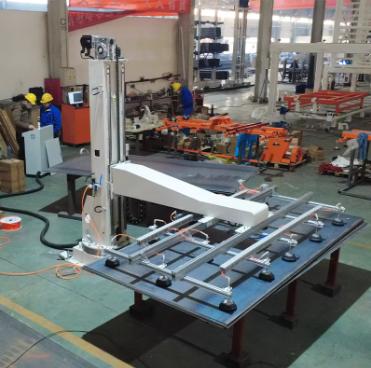
Surface preservation is the economic driver behind many Herochu heavy-duty sheet metal suction lifter installations. Consider a shop processing 304 stainless steel with a No. 4 brushed finish destined for architectural cladding panels. Any scratch, scuff, or handling mark on that surface becomes a rejection at final inspection — and at the installed cost of brushed stainless sheet, each rejected panel represents hundreds of dollars in wasted material and the labor already sunk into cutting and forming it. The suction cups on Herochu lifters are specified in nitrile or silicone compounds with Shore hardness values matched to the surface requirement: softer durometer for polished finishes and coated metals, firmer for hot-rolled mill scale where cup longevity outweighs conformability. The cup array spacing is calculated so that sheet deflection between attachment points stays under 2 mm even on the thinnest gauge in the shop’s typical inventory, preventing the subtle creasing that manual handling with straps or chains can introduce.
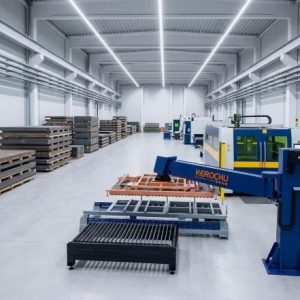
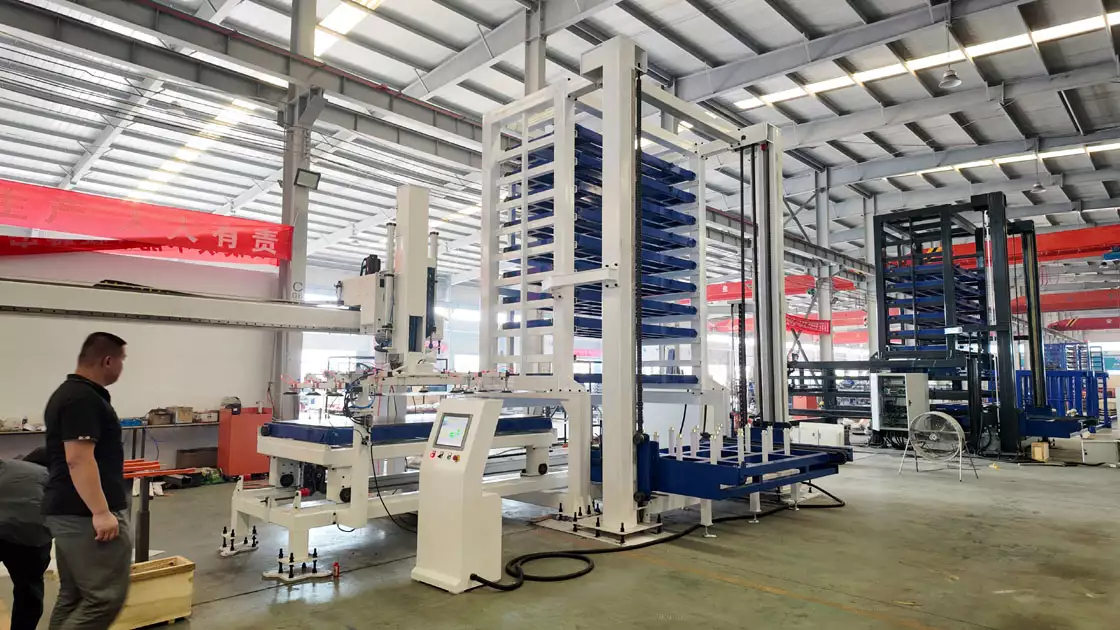
The integration between a Herochu heavy-duty sheet metal suction lifter and the upstream and downstream equipment forms a continuous material artery rather than a disconnected island of automation. The lifter retrieves sheets from a powered roller conveyor or a stationary staging table, raises the panel, traverses horizontally into the laser cutting machine’s work envelope, and lowers it onto the slat bed to within ±2 mm of the programmed zero point. As soon as the vacuum releases and the lifter retracts, the cutting head fires and processing begins. While the laser executes its nest program, the lifter returns to the infeed zone to pick the next sheet, maintaining a buffer of one panel staged and ready so the machine never waits for material. This synchronized cadence pushes machine utilization into the 85–90% range, compared with the 50–65% typical of manually fed cells.
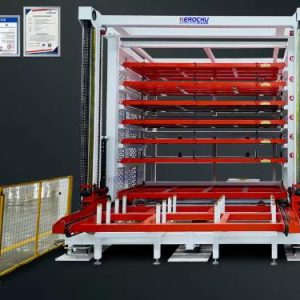
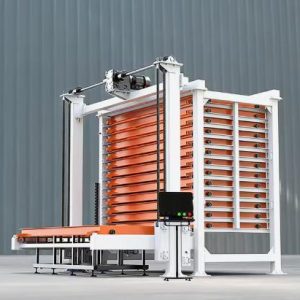
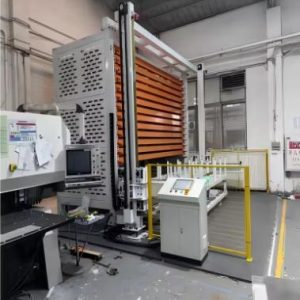
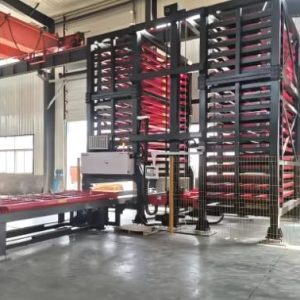
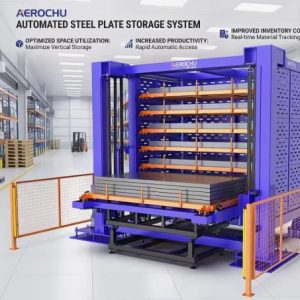
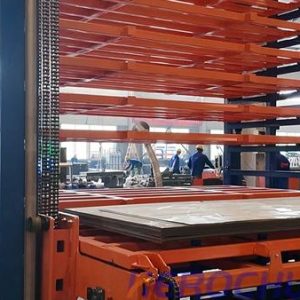
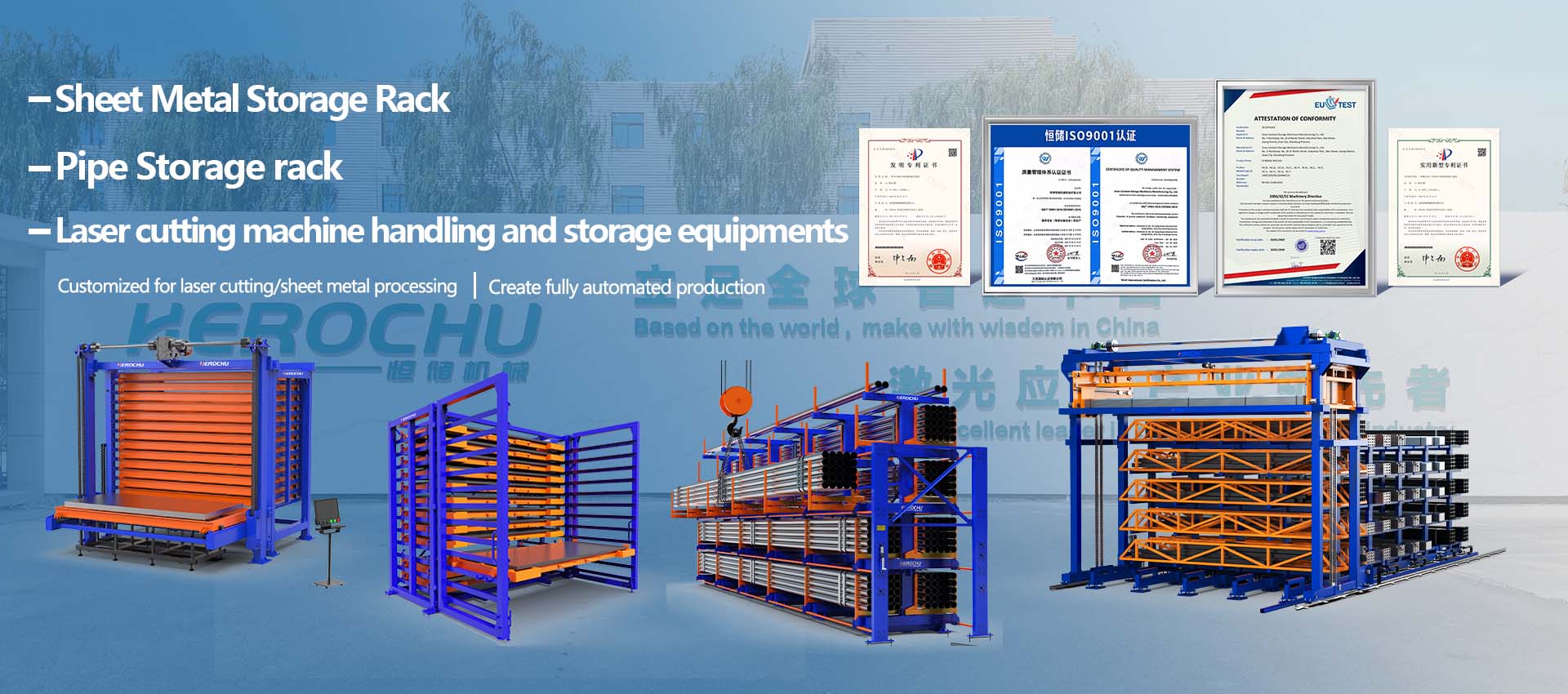
For operators moving between high-density vertical storage racks and the suction lifter’s pick zone, Herochu addresses loading ergonomics by positioning the pick station at a fixed comfortable height with a powered roller infeed. The operator uses a pendant to call the next sheet from the storage system, the sheet rolls into the pick zone, and the lifter executes the lift automatically. No awkward reaching, no climbing onto rack platforms, and no two-person coordinated lifts that go wrong when communication breaks down in a noisy shop environment. The combination of automated vacuum handling and proper material staging turns a physically punishing job into a supervisory role that experienced metal trades workers can perform across a full career without cumulative injury.
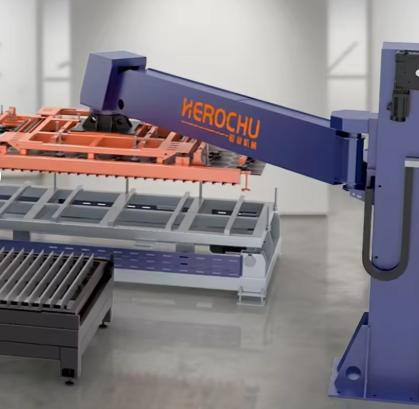
Installation of a Herochu heavy-duty sheet metal suction lifter typically completes within three to five working days, depending on whether the facility already has compressed air infrastructure at the planned mounting location. The lifter frame bolts to the shop floor using chemical anchor bolts into a reinforced concrete pad — a detail that civil engineers should verify during the site survey, as inadequate slab thickness under the mounting points can transmit vibration into the lifting structure and degrade positioning accuracy over time. Compressed air supply requires a dedicated drop with a coalescing filter to remove oil aerosol and a desiccant dryer if the ambient humidity regularly exceeds 60 percent, since water condensation inside ejector throats reduces vacuum generation efficiency by up to 30 percent. Herochu commissioning technicians run a full test matrix during sign-off: maximum load at maximum reach, emergency stop response time measurement, vacuum decay rate logged over a 30-minute static hold, and 50 consecutive automated cycles with position verification at each drop point. This commissioning protocol catches installation variables — air supply pressure fluctuation, floor anchor settling, electrical noise on sensor circuits — before they affect production reliability.