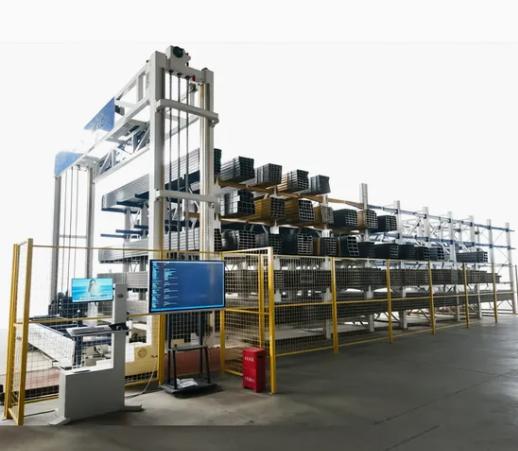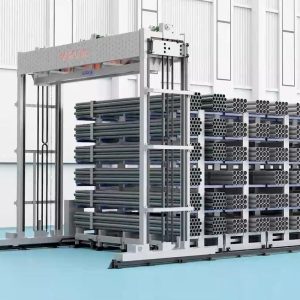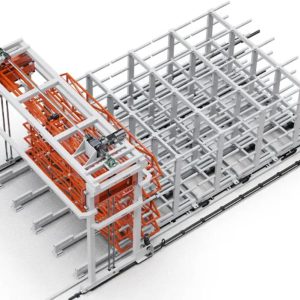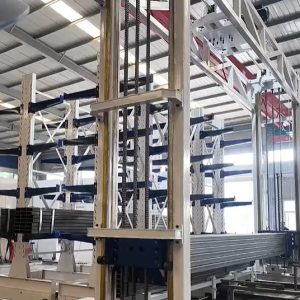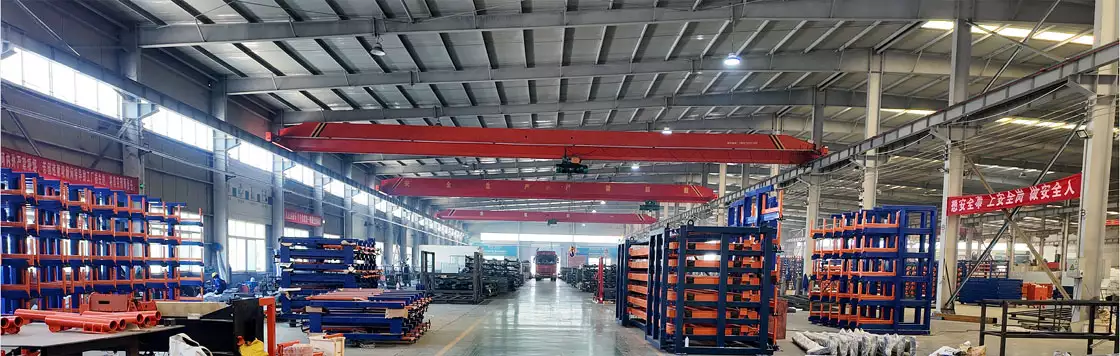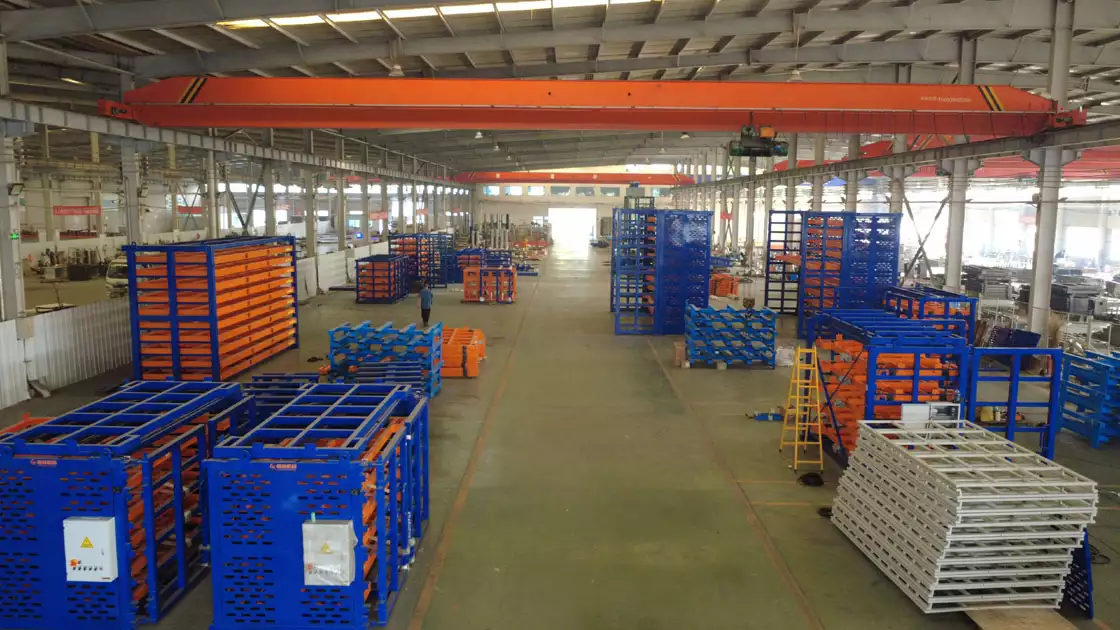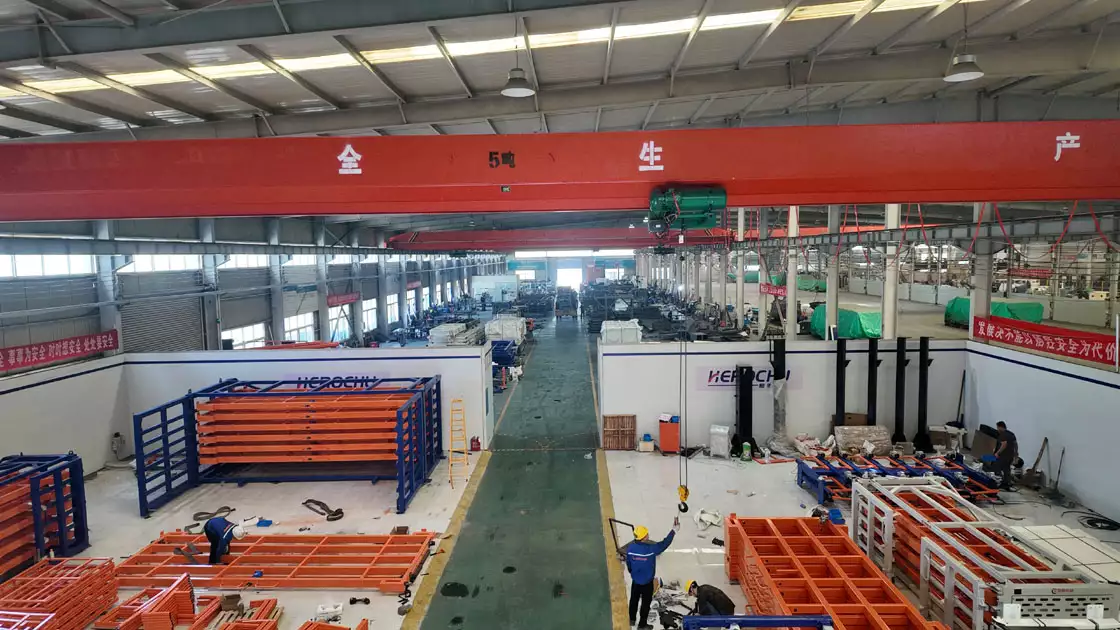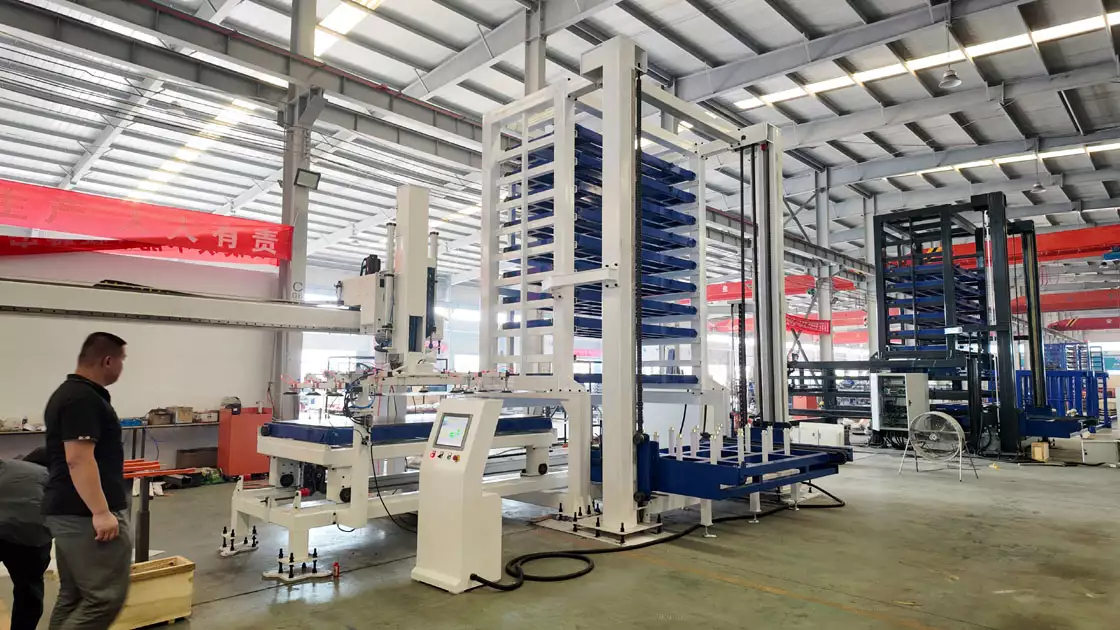
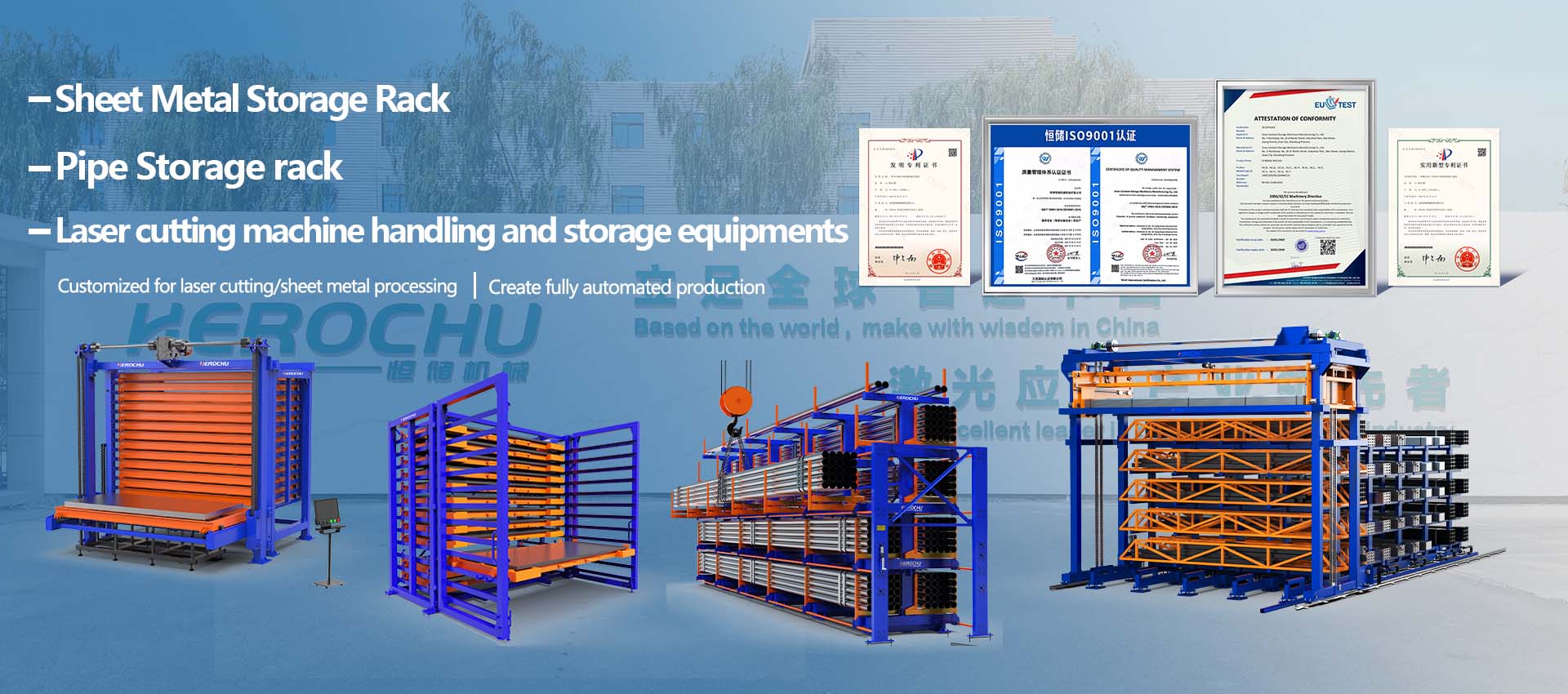
Vertical storage is not a new concept in warehouse design. High-bay racks and vertical lift modules have served industry for decades. The distinction of Herochu’s Automatic Overhead Vertical Profile Storage System lies in its application to long materials — pipes, profiles, and structural sections that conventional vertical storage cannot accommodate.
The Vertical Storage Challenge for Long Materials
Standard vertical storage systems are designed for palletized goods, totes, or cartons. The storage medium — typically a tray or bin — moves through a fixed extraction point at the base of the tower. Long materials break this model. A 12-meter pipe cannot be extracted from a vertical tower through a conventional pallet-sized opening.
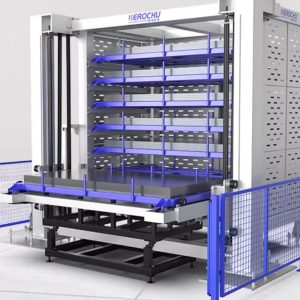
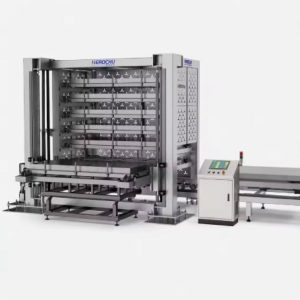
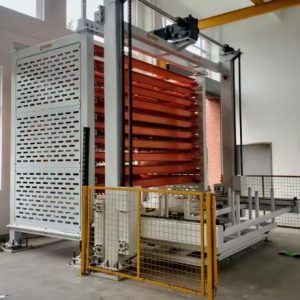
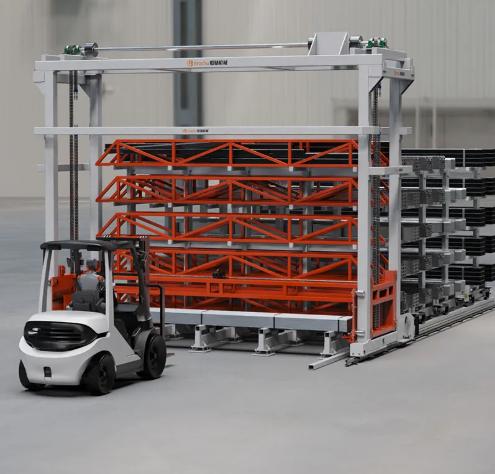
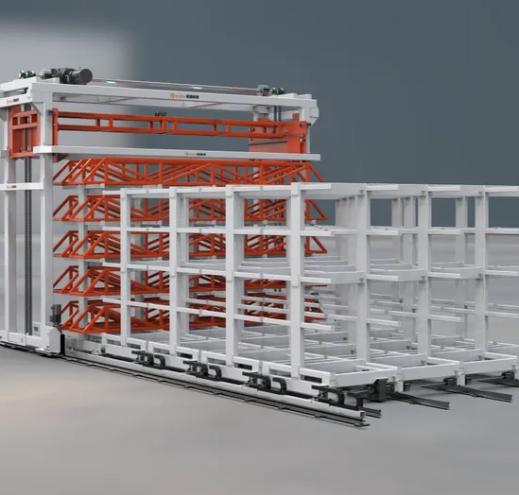
Herochu’s system addresses this constraint through a gantry-based extraction architecture. The storage trays themselves are long-format, matching the material dimensions. The gantry engages the tray from the storage tower, extracts it horizontally, and presents it to the operator or transfer station. The tower structure accommodates the full material length without the dimensional compromises required by conventional vertical storage.
Overhead Travel Architecture
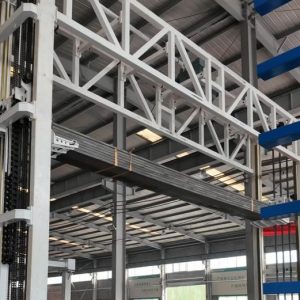
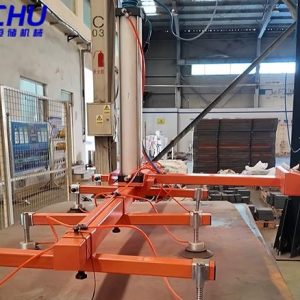
The gantry in this configuration operates on an overhead rail system rather than floor-mounted rails. The bridge structure spans the storage towers from above, with the lifting carriage suspended beneath. This configuration offers several operational advantages over floor-based gantries.
First, the overhead configuration eliminates floor-level obstruction. The space beneath the gantry remains clear for personnel movement and material transfer. Second, the overhead design permits access to storage towers from both sides, enabling flexible layout configurations in facilities with constrained floor dimensions. Third, the elevated rail structure is isolated from floor-level impacts and debris, reducing wear on critical guide surfaces.
The gantry travels the full length of the storage line at speeds of 5 to 30 meters per minute. Lifting speed ranges from 5 to 15 meters per minute, with positioning accuracy held within ±2 millimeters.
Storage Configuration for Long Profiles
The storage towers are configured with tray slots matched to the material profile. Standard configurations accommodate lengths from 6,000 to 8,000 millimeters, with extended options for longer stock. Layer counts are customized during design, with typical installations ranging from 5 to 8 layers per tower.
Each layer supports loads up to 5,000 kilograms. The tray design includes cradles or supports at calculated intervals along the material length, preventing sag during extended storage. This protection is critical for precision materials — aluminum extrusions, polished stainless tubing, and pre-machined profiles — where dimensional deviation compromises downstream processing.
The system accepts both individual pieces and bundled loads. Tray configurations can be adapted to different material types within the same installation, allowing a single system to store pipes, profiles, and structural sections with material-specific support arrangements.
Control and Inventory Management
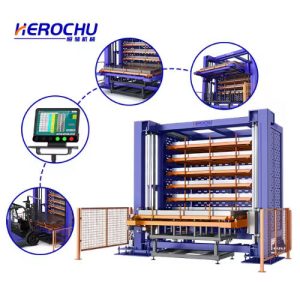
The control platform is a PLC with touchscreen HMI. Operators select material by specification from the digital inventory display. The gantry retrieves the corresponding tray and delivers it to the pick station. The inventory record updates automatically.
The software tracks material by specification, dimension, quantity, heat number, and storage location. FIFO rotation can be enforced automatically, or the operator can override to consume specific inventory. The system generates low-stock alerts based on configurable thresholds and produces inventory reports on demand.
Integration with ERP and MES platforms is supported through standard protocols. When a production order is released, the system can confirm material availability, reserve stock, and queue the retrieval. Consumption data returns to ERP in real time.
Space Efficiency
The vertical configuration recovers floor space by using building height. A system storing 100 tons of pipe in a conventional horizontal rack layout may require 2,500 square feet of floor area. The same inventory stored in a multi-layer vertical tower system occupies approximately 800 to 1,000 square feet — a reduction of 60 to 70 percent.
The recovered space can be reassigned to processing equipment, material flow corridors, or storage for other material types. In facilities where floor space is the binding constraint on production capacity, this recovery translates directly to revenue-generating capability.
Operational Characteristics
The system is designed for continuous operation across multiple shifts. The gantry drive components — motors, gearboxes, bearings — are standard industrial parts with predictable service intervals. The overhead rail system is protected from floor-level debris and impact, reducing wear and extending service life. The PLC monitors operating conditions and logs alarm history, supporting condition-based maintenance.
Retrieval cycle time depends on tower height and gantry travel distance. For lower and mid-level shelves, the cycle typically runs 60 to 90 seconds. Upper-level retrieval extends to approximately 120 seconds. These times represent the complete cycle from operator command to material presentation at the pick station.
Application Scope
The system is suited to metal fabrication shops, steel service centers, and manufacturing facilities handling long stock. It accommodates pipe, tube, bar, beam, channel, angle, and flat material in individual pieces or bundles. Typical installations serve production lines feeding laser cutters, saws, and machining centers.
Herochu engineers each system to the facility’s specific material profile, throughput requirements, and building geometry. The result is a vertical storage installation that addresses the unique constraints of long-material handling while delivering the density, automation, and inventory intelligence of modern ASRS technology.