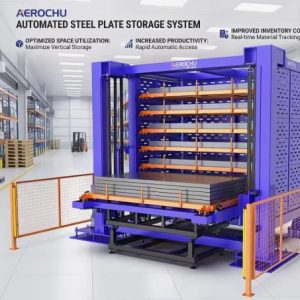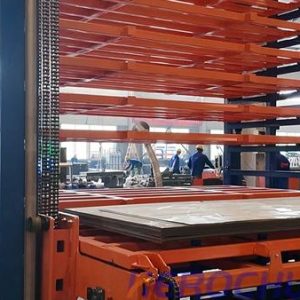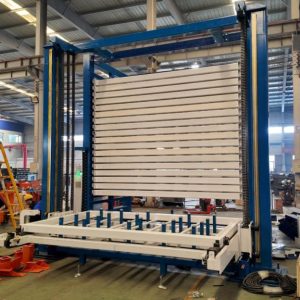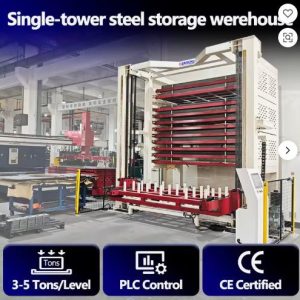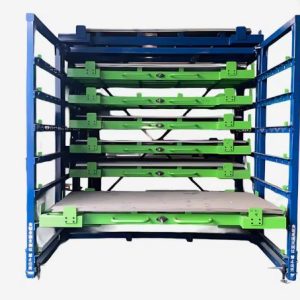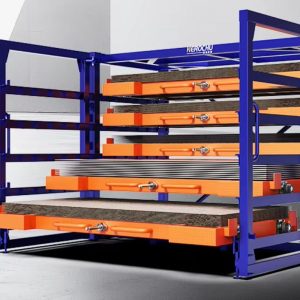
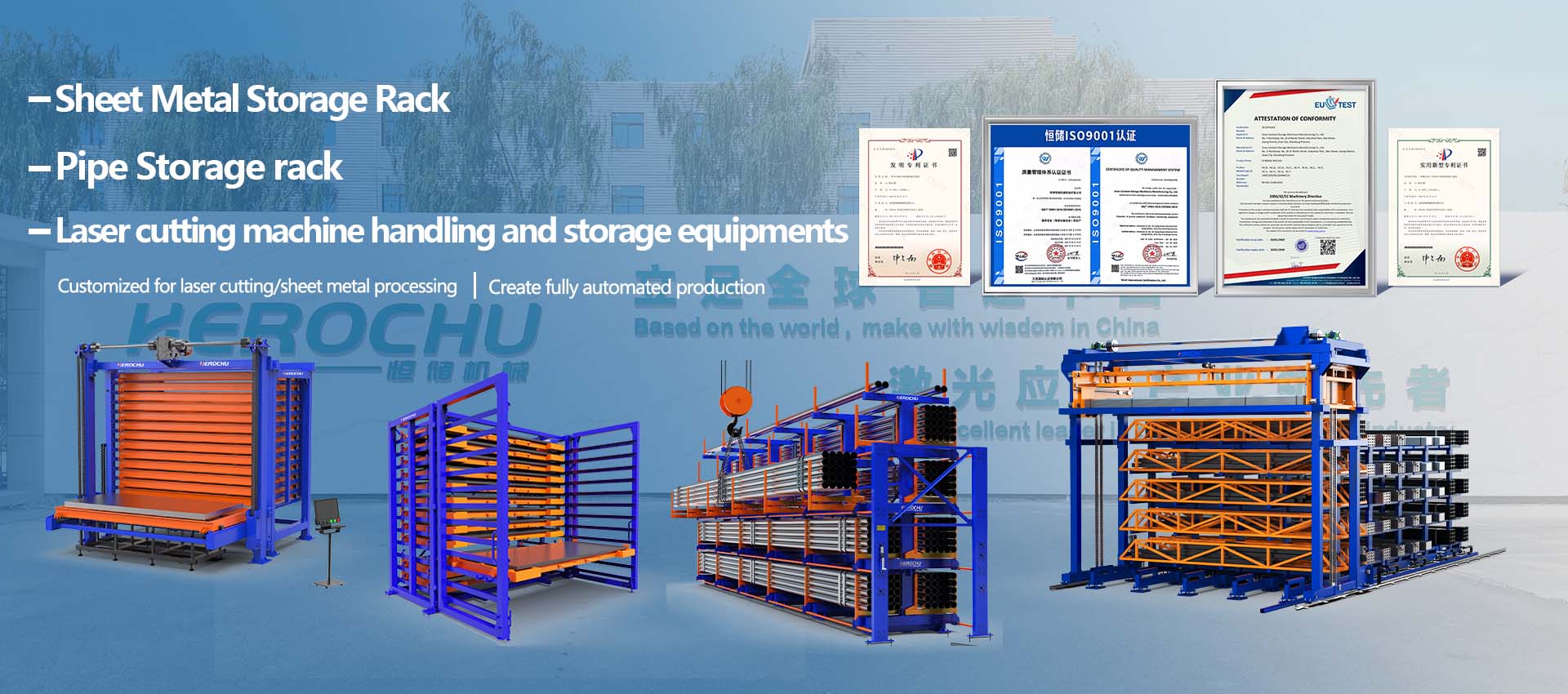
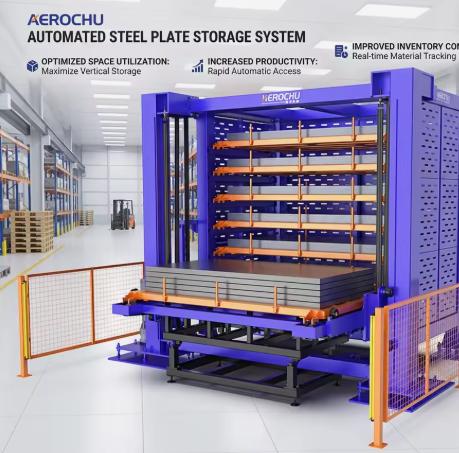
A fabrication workshop that processes 200 plates per shift generates a continuous flow of material movement: incoming deliveries, staged inventory, retrieval for cutting, return of remnants, and dispatch of finished parts. Managing this flow with paper records or spreadsheet tracking introduces errors, delays, and wasted machine time. A smart high-capacity automatic plate storage system from Herochu embeds inventory intelligence directly into the storage infrastructure, transforming the material warehouse from a passive holding area into an active node within the factory’s digital control network.
PLC Control and Human-Machine Interface
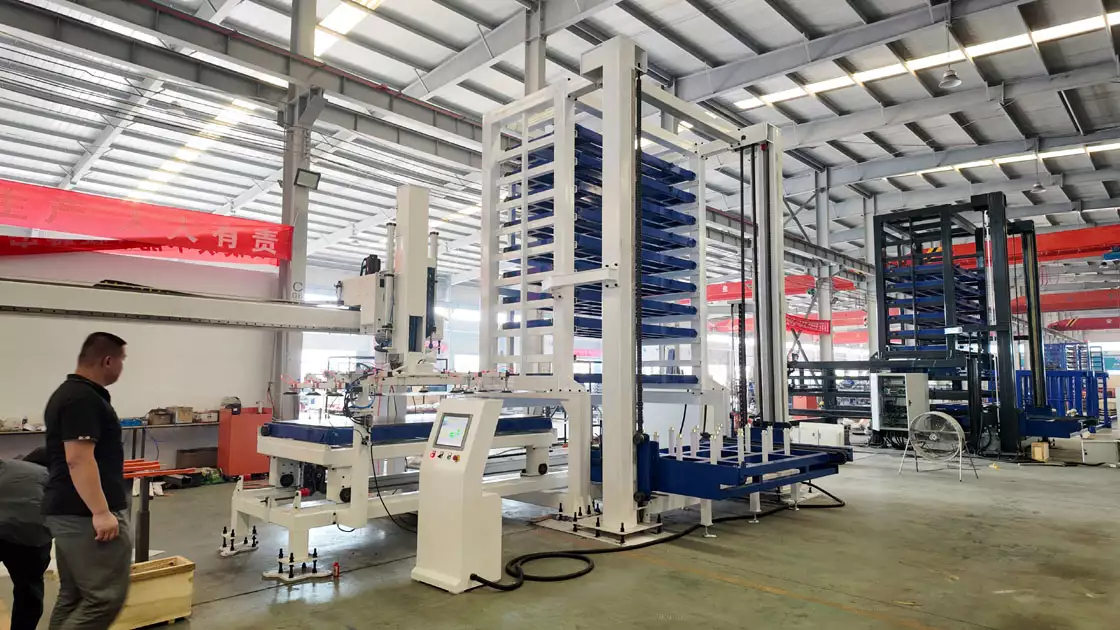
At the core of a Herochu smart plate storage system sits a programmable logic controller paired with an industrial touchscreen interface. The PLC executes the motion sequences that position the lifting carriage at the correct vertical level, extend the target drawer, and retract it after retrieval. Simultaneously, the controller logs every transaction — which sheet was accessed, at what time, by which operator or automated instruction — into an onboard data buffer that syncs with the facility’s higher-level management software.
The touchscreen presents operators with a graphical layout of the tower interior. Each drawer appears as a labelled cell showing its contents: material grade, thickness, sheet dimensions, and current weight. Operators select the required plate by tapping its cell, and the tower executes the retrieval sequence. There is no manual logbook, no handwritten material tags to misread, and no ambiguity about whether a particular sheet of 2 mm 316L stainless remains in inventory.
Weight monitoring runs continuously. Load cells integrated into the drawer support structure measure the mass of stored plates in real time. If an operator returns a remnant sheet that weighs less than the original full-size plate, the system records the updated weight and adjusts the inventory database accordingly. This automated remnant tracking closes a common inventory gap — the gradual accumulation of partial sheets whose exact dimensions and quantities drift out of sync with purchasing records.
Material Classification and Barcode Integration
The Herochu smart high-capacity automatic plate storage system organises inventory by multiple classification fields: material alloy, thickness, sheet dimensions, supplier heat number, and job priority. When incoming material arrives, an operator scans the supplier barcode or enters the material certificate data through the touchscreen. The system assigns the plate to an available drawer location and records the allocation.
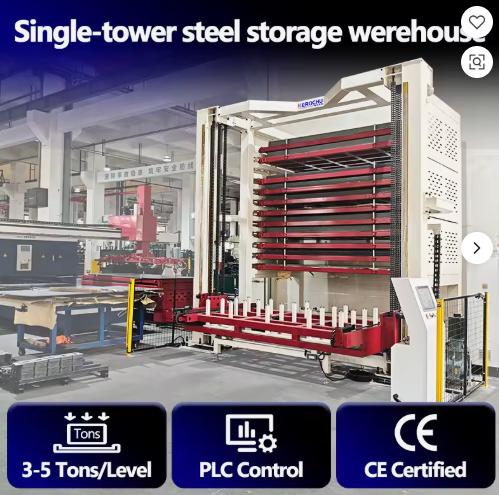
For production scheduling, the PLC can prioritise retrieval based on upcoming job requirements. If the cutting schedule calls for 15 sheets of 3 mm S275 in the next four hours, the tower pre-positions those drawers for rapid sequential access. This look-ahead scheduling reduces the idle time between material changeovers at the cutting station.
Barcode labels printed at the tower access point accompany each retrieved sheet to the production machine. The operator at the laser cutter or plasma table scans the barcode to confirm material receipt, closing the loop between inventory withdrawal and production consumption.
ERP and WMS Integration
A Herochu smart plate storage system connects to enterprise resource planning (ERP) and warehouse management system (WMS) platforms through standard industrial communication protocols. The tower reports real-time inventory levels, consumption rates, and material aging to the ERP, enabling purchasing departments to trigger reorders based on actual usage rather than periodic physical counts.
The WMS integration layer handles multi-tower coordination. A facility operating three Herochu towers — perhaps one for stainless steel, one for carbon steel, and one for aluminium — sees a unified inventory view through the WMS dashboard. The software routes retrieval commands to the correct tower based on material location, optimising the combined throughput of the storage array.
For manufacturers operating under ISO 9001 or AS9100 quality management requirements, the transaction log provides an auditable chain of custody for every sheet. Material traceability from supplier certificate to finished part becomes a database query rather than a document search.
Lights-Out Operation and Robotic Integration
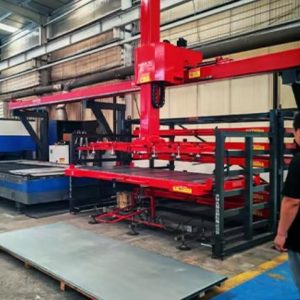
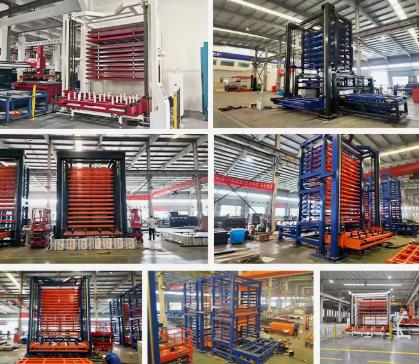
The smart plate storage system enables 24-hour unmanned operation when paired with automated material handling equipment. A typical lights-out configuration includes the Herochu tower, a 6-axis industrial robot, and an automated guided vehicle (AGV) or rail-guided vehicle (RGV) for inter-machine transport.
The sequence runs without operator presence: the WMS issues a production order; the tower retrieves the specified sheet and presents it at the robot pickup station; the robot loads the sheet onto the laser cutting bed; the cutting cycle runs; the robot removes the cut nest and skeleton; the cycle repeats for the next sheet. The tower tracks every withdrawal, every returned remnant, and every completed job.
For facilities not yet ready for full lights-out automation, the same control architecture supports attended operation during day shifts with the option to enable unattended night runs for non-critical work.
Data-Driven Inventory Management
The weight monitoring and transaction logging within the Herochu smart plate storage system generate the data foundation for analytical inventory management. Consumption velocity by material grade, remnant generation rates, and retrieval frequency by sheet size become measurable metrics rather than anecdotal estimates.
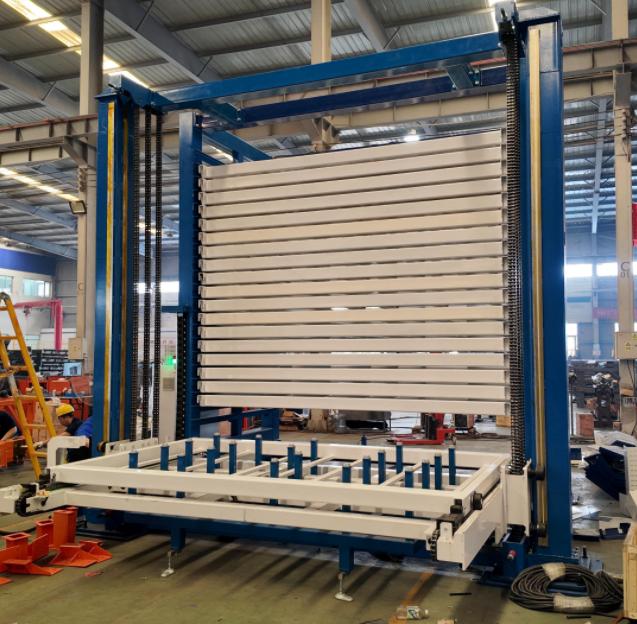
A purchasing manager can review the previous quarter’s data and see that 3 mm 304 stainless steel in 3015 mm format moved at 8.2 sheets per week while 2 mm 316L in 4020 mm format moved at 2.1 sheets per week. Order quantities adjust to match actual consumption velocity, reducing both stockouts and excess inventory carrying costs.
The data also supports equipment utilisation analysis. If retrieval logs show that tower access peaks between 09:00 and 11:00 but drops sharply after 15:00, production scheduling can smooth the workload by shifting non-urgent cutting jobs to the afternoon window.
Implementation Pathway
Deploying a Herochu smart high-capacity automatic plate storage system typically follows a phased approach. The physical tower installation and commissioning occur first, giving operators time to familiarise themselves with the touchscreen controls. ERP integration follows, with the Herochu engineering team working alongside the customer’s IT department to configure the communication interface and data mapping. Robotic integration — if planned — deploys last, after the tower has demonstrated reliable standalone operation.
The result is a material storage asset that participates in the factory’s digital ecosystem, contributing real-time data to planning, scheduling, purchasing, and quality management workflows. Inventory ceases to be a blind spot and becomes a managed, measured, and optimised resource.