Material handling in a sheet metal fabrication facility eats into production margins in ways that are easy to overlook. Moving raw steel sheets from storage to the cutting table, transferring cut blanks to the press brake, feeding stamping lines from inventory — these non-value-added movements consume labor hours, introduce quality risks from handling damage, and create idle time at expensive processing equipment. The harder the shop pushes for throughput, the more the manual handling bottleneck constrains actual output.
Servo swing material handling equipment addresses this constraint by automating the most repetitive and physically demanding transfer operations. Unlike overhead cranes that require an operator at the pendant, or forklifts that need a driver and clear aisle space, a servo swing arm unit handles the load autonomously once the operator selects the appropriate program from the control panel.
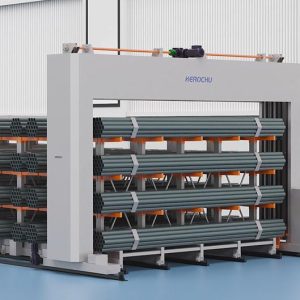
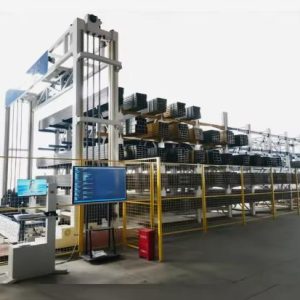
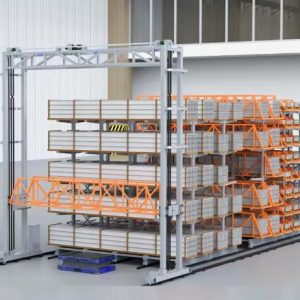
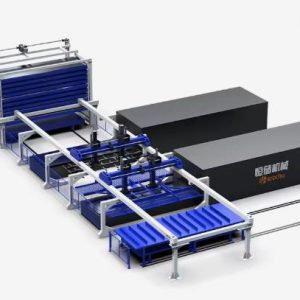
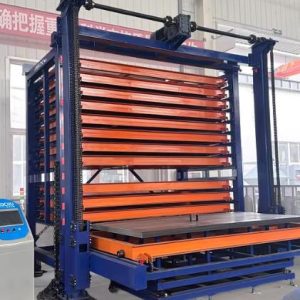
Herochu’s servo swing material handling equipment line spans payload ratings from 500 kilograms to 800 kilograms, with arm geometries, end-effector configurations, and control program complexity customized to the specific material flow requirements of each installation. This article covers the technology platform, application versatility, and economic rationale for servo swing automation in sheet metal and heavy fabrication environments.
The Technology Platform: Servo Swing Architecture Explained
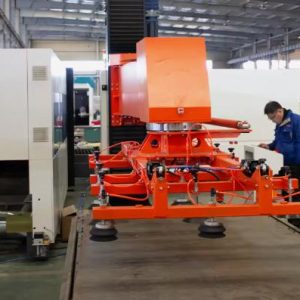
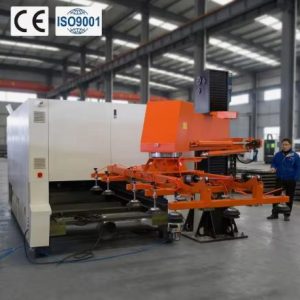
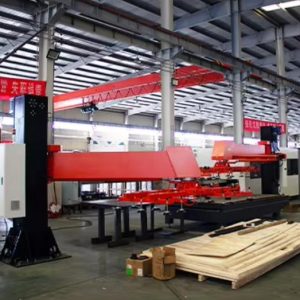
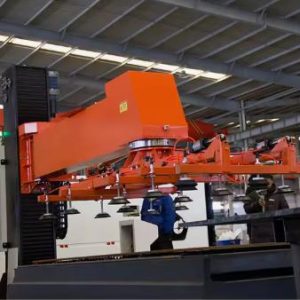
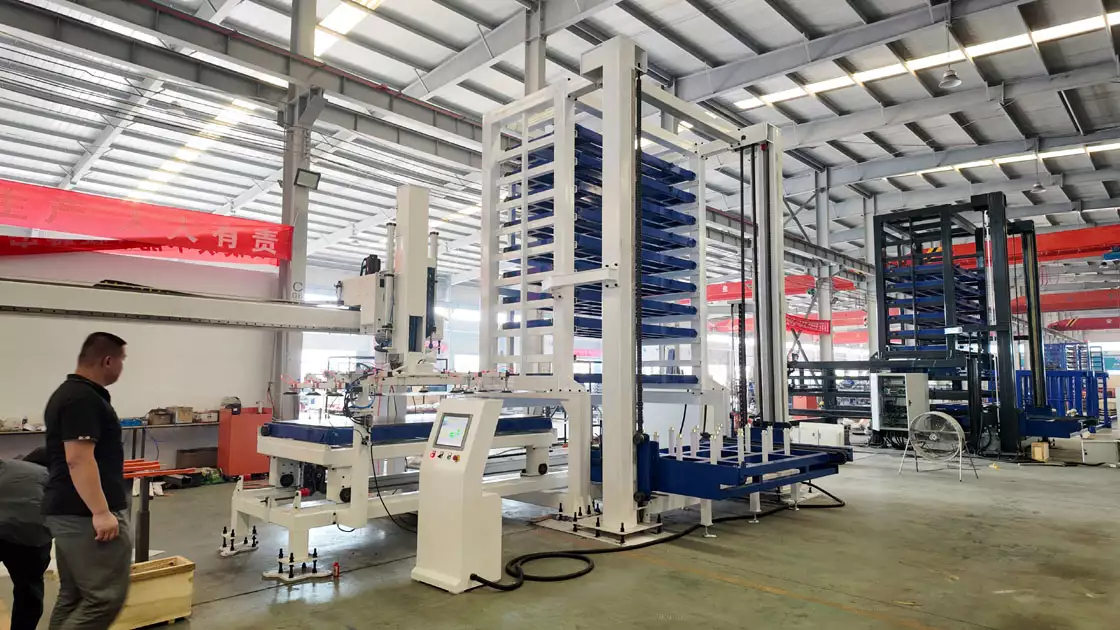
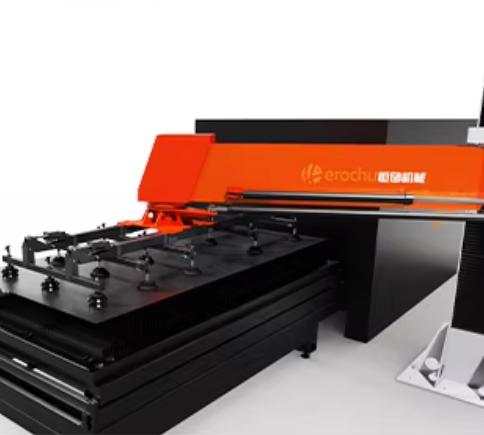
The term “servo swing” describes the core mechanical concept: a floor-mounted or structure-mounted column supports a horizontal swing arm driven by servo motors through precision gear reducers. The arm carries an end-effector — vacuum grippers, magnetic clamps, or mechanical hooks depending on the material — that engages the workpiece at the pickup point, lifts it through a vertical stroke, swings it through a horizontal arc to the destination, and releases it at the programmed coordinates.
What distinguishes servo swing equipment from simpler pneumatic balancers or articulated jib cranes is the control intelligence layer. A Siemens S7 PLC manages the coordinated motion of multiple servo axes, executing stored motion profiles that define acceleration ramps, swing speed, lift height, and placement position for each material type the shop processes.
The servo drive advantage over pneumatic actuation becomes apparent in three areas. First, motion is programmable rather than manually guided — the operator selects a program and the machine executes it consistently, cycle after cycle. Second, positioning accuracy derives from encoder feedback rather than operator eyesight, delivering repeatability within plus or minus 0.5 millimeters. Third, cycle speed is deterministic — the machine completes its motion sequence in a known time window regardless of shift hour or operator fatigue level.
Application Range: Beyond Laser Loading
While laser cutting sheet loading represents the most common deployment, Herochu servo swing material handling equipment adapts to a range of fabrication workflows.
In press brake lines, the swing arm transfers cut blanks from a staging table to the press brake bed, positioning each blank consistently for the brake operator. This removes the lifting and positioning portion of the brake operator’s work cycle, letting the operator focus on bend sequence execution and quality verification while the machine handles the material movement.
In stamping operations, servo swing units feed blanks into progressive dies or transfer dies at a controlled rate synchronized with the press stroke. The PLC communicates with the press controller through dry-contact I/O, receiving a “ready for next blank” signal and executing the loading sequence within the press cycle window.
In CNC machining, the swing arm loads raw castings or pre-machined blanks onto fixture plates and unloads finished parts, operating as an island automation cell that serves one or multiple machine tools without requiring a full gantry or robot cell installation.
Steel service centers deploy servo swing equipment to transfer incoming sheets from receiving racks to inspection stations, and from inspection to storage or direct-to-customer picking areas. The consistent handling motion reduces the edge damage and surface scratching that manual handling with chains and magnets can cause on finished or coated materials.
Customization and Integration Flexibility
Herochu servo swing material handling equipment is not a catalog product with fixed dimensions. Each installation begins with an application assessment covering the material types and dimensions processed, the physical layout of the work zone, the target cycle time, and the integration requirements with existing equipment.
Arm reach and column height are specified to match the actual distance between pickup and placement points in the customer’s facility. A unit feeding a laser cutter from a raw material rack positioned two meters away gets a different arm geometry than one transferring blanks from a conveyor to a press bed across a four-meter span.
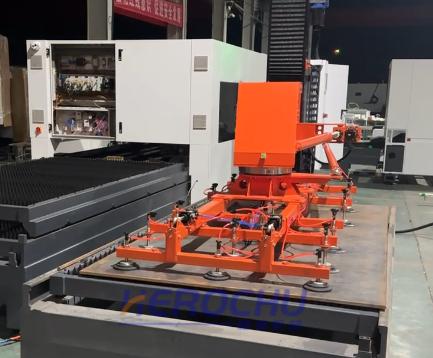
End-effector selection follows material characteristics. Multi-point vacuum suction cup arrays handle finished, coated, or pre-painted sheets without surface marking. Magnetic grippers suit raw hot-rolled plate with mill scale. Mechanical grippers with padded contact surfaces handle structural shapes and non-ferrous materials where neither vacuum nor magnetic gripping applies.
Control system integration ranges from standalone operation with its own HMI panel — the operator selects a program and presses start — to full integration with the downstream machine’s controller via fieldbus communication, enabling the loading cycle to trigger automatically when the laser cutter, press brake, or machining center signals readiness for the next workpiece.
Economic Analysis: Labor, Utilization, and Quality
The direct labor saving is the most visible benefit. A material handler whose primary function is moving sheets or blanks between stations represents a recurring annual cost. The servo swing unit eliminates this role, and one production supervisor can oversee multiple automated handling stations.
Equipment utilization improvement generates the larger financial return. Processing machines — whether fiber lasers, press brakes, or CNC mills — earn revenue only when cutting, bending, or machining. Every minute of idle time between workpieces represents lost billable capacity. Manual handling introduces variable and often extended idle intervals as the operator retrieves, positions, and verifies each workpiece. Automated servo swing handling compresses this interval to a consistent sub-ten-second window, adding productive minutes to every shift.
For a fiber laser cutting operation processing a mix of sheet thicknesses, the utilization gain is particularly significant on thin-gauge jobs where cutting time per sheet is short and the loading-to-cutting time ratio is unfavorable. Cutting a 1-millimeter sheet might take two minutes. If manual loading consumes 45 seconds between sheets, the laser is idle for over 25 percent of the job. The servo swing unit’s sub-ten-second loading cycle reduces that idle fraction to under 8 percent — netting the equivalent of an additional hour of cutting capacity per eight-hour shift on thin-gauge work.
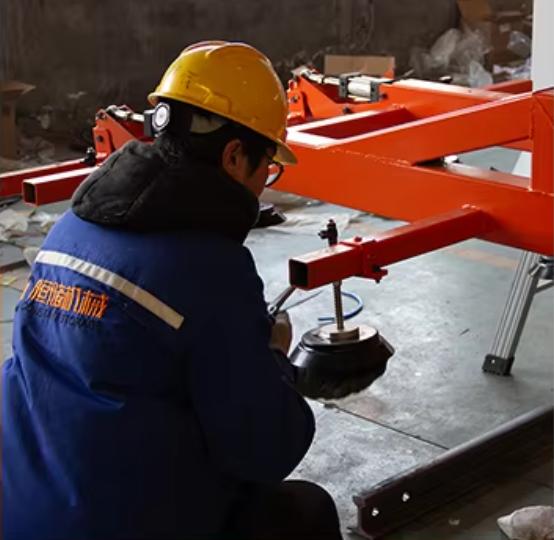
Quality improvement from consistent handling is harder to quantify but real. Manual handling introduces scratch risk every time a chain or magnet contacts a sheet surface. Vacuum-based servo swing handling eliminates metal-to-metal contact, preserving surface finish on materials destined for visible applications in architectural metalwork, appliance manufacturing, and automotive body panels.
Scrap reduction from consistent positioning feeds directly into material cost savings. When every sheet lands within half a millimeter of the programmed position, the nesting software can use tighter edge margins without risking that cut features fall off the sheet edge. Over thousands of sheets per year, the material saved from edge waste reduction alone can exceed the annual labor cost of the material handler the automation replaced.
Operational Safety and Compliance
Automated material handling removes operators from the most hazardous zone in a fabrication shop: the space between a suspended load and the machine bed. Manual loading with overhead cranes exposes the operator to crush risk if rigging fails or if the load swings unexpectedly. Pneumatic manipulators reduce but do not eliminate this risk, since the operator still guides the load by hand through the motion sequence.
Herochu servo swing material handling equipment operates within a defined safety perimeter. Light curtains or physical guarding separate the robot’s motion envelope from personnel access areas. The control system includes emergency stop circuits, automatic braking on power loss, and safe torque-off functionality on all servo drives. CE certification and ISO 9001 manufacturing quality management apply across the entire product range.