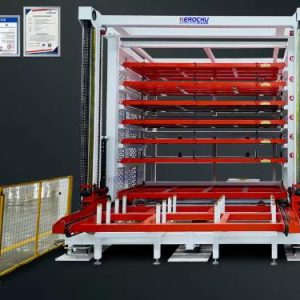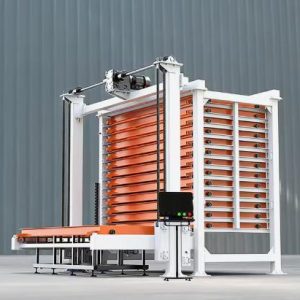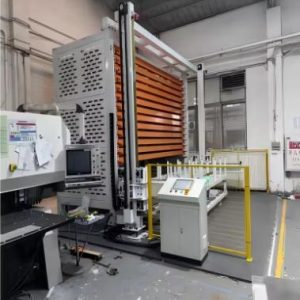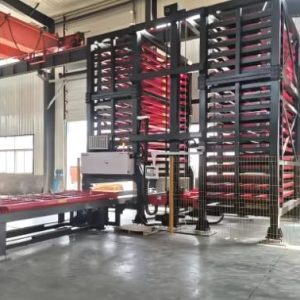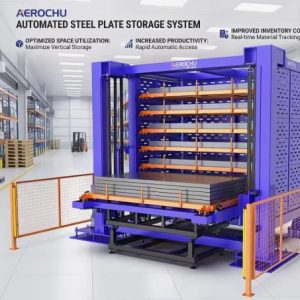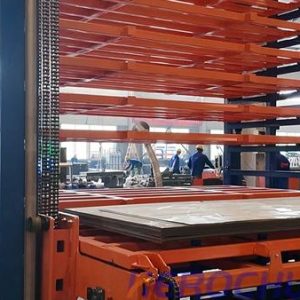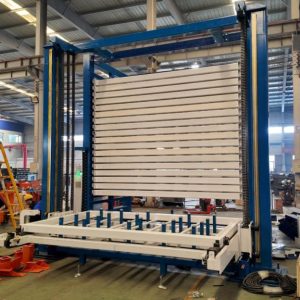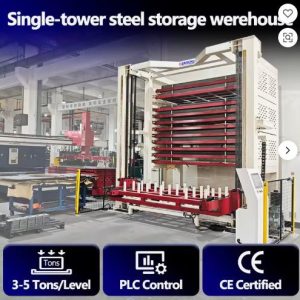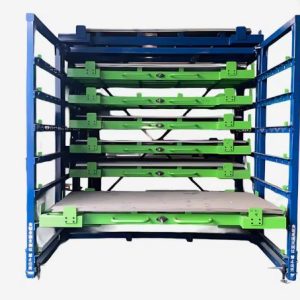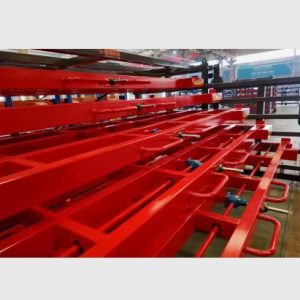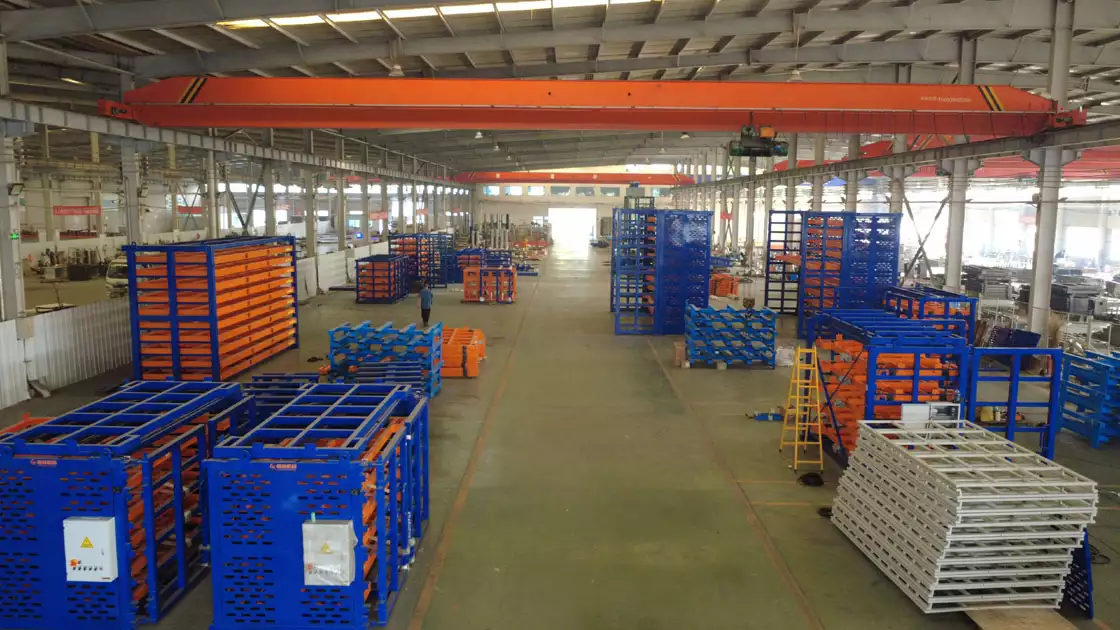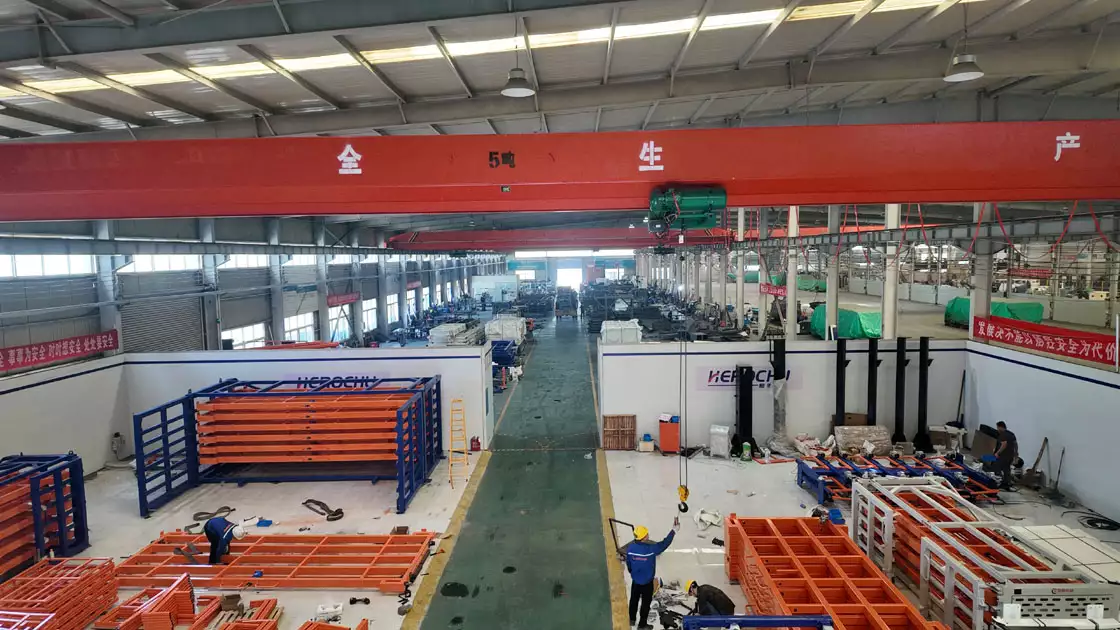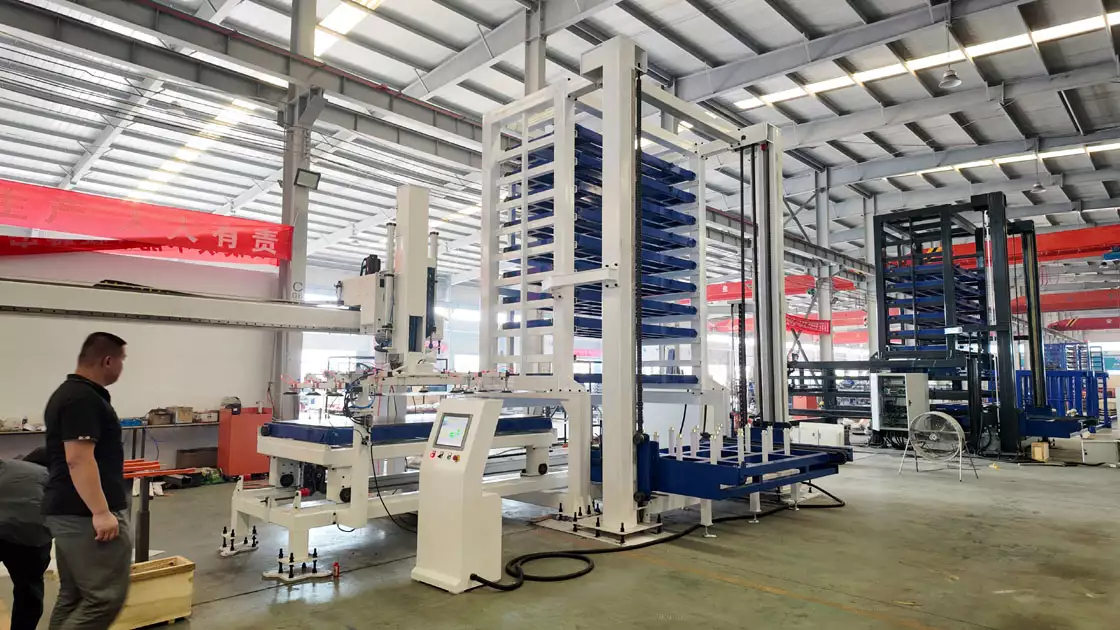
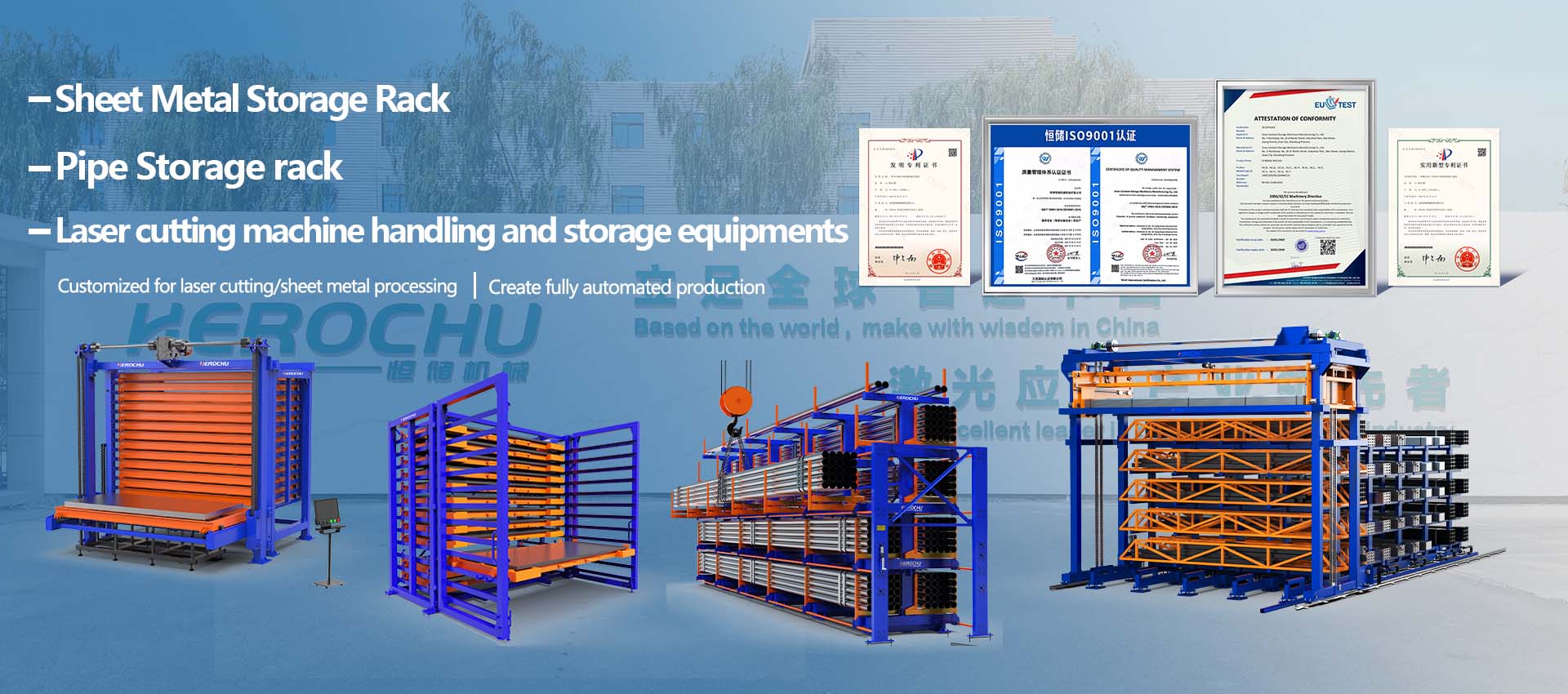
A vertical sheet storage tower operates across three spatial axes: the Z-axis governs vertical carriage positioning between drawer levels, the Y-axis controls drawer extraction and retraction, and the X-axis determines lateral placement within the access station. Coordinating motion across all three axes with millimetre precision demands a control architecture capable of closed-loop feedback, real-time position verification, and fault-tolerant sequencing.
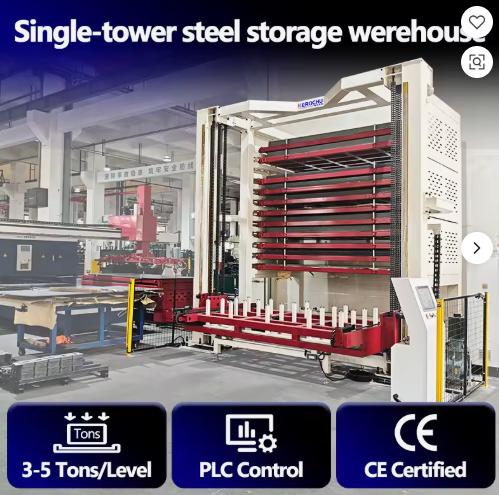
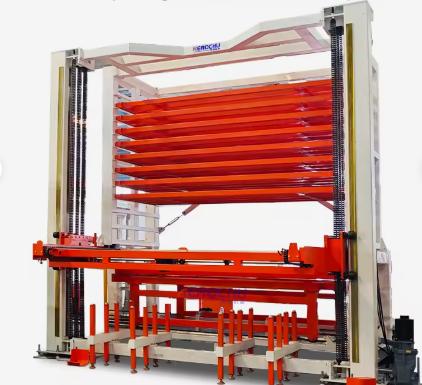
The Herochu PLC-controlled 3D vertical sheet stock tower achieves this coordination through an industrial automation platform that integrates motion control, sensor feedback, and network communication into a single deterministic control loop.
Three-Axis Motion Architecture
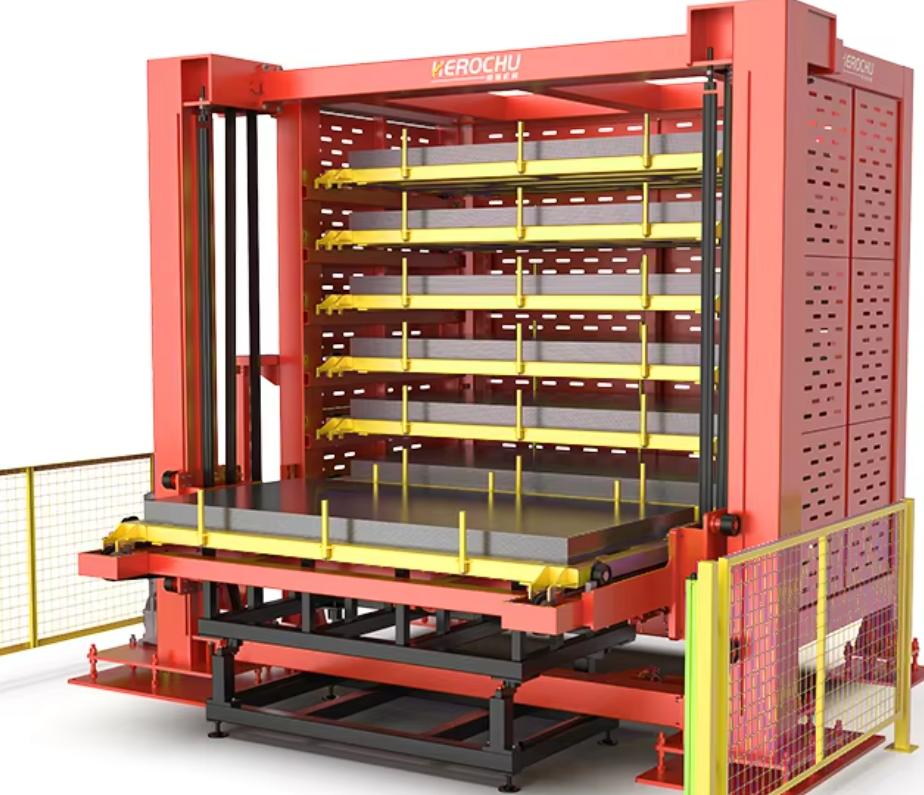
Vertical positioning — the Z-axis — is the most mechanically demanding axis. The chain-driven lifting carriage must stop at the exact height corresponding to the selected drawer level, typically across a travel range of 6 to 10 metres depending on tower height. The Herochu PLC reads position feedback from an encoder mounted on the drive motor shaft and compares the actual position against the target coordinate. If the carriage overshoots or undershoots, the controller applies a correction step before authorising the drawer extraction sequence.
The Y-axis controls drawer horizontal movement. A separate motor drives the drawer extension mechanism through a rack-and-pinion or chain-drive coupling. The PLC monitors current draw on the drive motor — an unexpected increase in current suggests a mechanical obstruction or an overloaded drawer, and the controller halts movement before damage occurs. This current-based load monitoring supplements the physical positioning safety devices and weight sensors, creating a redundant safety layer.
The X-axis applies primarily in multi-column tower configurations where a lateral shuttle moves retrieved sheets to a central pickup station. For single-column Herochu towers, the X-axis function is often handled by the external material handling equipment — the overhead crane or robot arm that collects the presented sheet.
Automatic Weight Detection and Load Tracking
Load cells integrated into each drawer’s support structure feed weight data to the PLC on a continuous polling cycle. The controller compares the measured weight of each drawer against its tare weight (the empty drawer mass recorded during commissioning) and against the last logged loaded weight. Three scenarios trigger specific controller responses:
First, if a drawer weight drops below its recorded loaded value, the controller flags the drawer as containing a remnant or partial sheet. The operator receives a prompt to confirm the remnant dimensions at the next access event, keeping inventory records aligned with physical reality.
Second, if a drawer weight exceeds its rated capacity, the controller locks out retrieval commands and alerts the operator through the touchscreen. This prevents attempts to extract an overloaded drawer, which could strain the drive mechanism or compromise the positioning safety lock.
Third, if no weight change is detected after a retrieval-and-return cycle — meaning the operator extracted a sheet and returned nothing — the controller updates the inventory database to remove that material entry. The empty drawer remains available for new stock assignment.
This continuous weight monitoring closes the most common inventory accuracy gap in sheet metal storage: the discrepancy between what the purchasing system believes is in stock and what physically occupies the tower drawers.
Pick-and-Count Tracking Logic
The Herochu PLC maintains a pick counter that tallies retrieval events by material type, operator ID, and production order number. Each retrieval increments the counter for the associated material category and decrements the drawer’s recorded sheet count. The system supports both single-sheet retrieval (one drawer access, one sheet removed) and multi-sheet batch retrieval (multiple drawer accesses in sequence for a single production order).
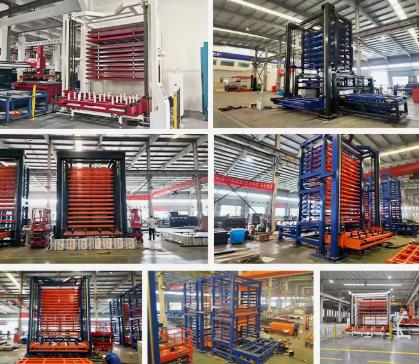
The count tracking data feeds into production performance metrics. A production manager can query the system for total sheets retrieved during a shift, breakdowns by material grade, and average retrieval cycle time. These metrics support productivity analysis and help identify bottlenecks — for instance, a consistently longer retrieval time for thick-plate drawers might indicate that the material handling equipment at the access station needs adjustment.
Fault Detection and Operator Safety
The PLC runs a continuous self-diagnostic routine that monitors motor temperatures, encoder signal integrity, communication bus status, and safety interlock positions. Any anomaly triggers a controlled stop sequence — the carriage halts at its current position, the drawer motor disengages, and a fault code appears on the touchscreen with a plain-language description and recommended corrective action.
Physical safety features operate independently of the PLC logic. Each drawer positioning lock is a mechanical device — a spring-loaded pin that engages when the drawer reaches full extension or retraction. The PLC reads the lock status through limit switches, but the locking mechanism itself does not depend on electrical power or controller logic to hold position. If the facility loses power mid-cycle, the mechanical locks hold all extended drawers in place until power is restored.
Emergency stop buttons at the operator station and at the tower base cut motor power directly through a hardwired safety relay, bypassing the PLC entirely. This relay-based safety circuit meets the requirements for Category 3 safety architecture under ISO 13849-1, providing redundancy in the emergency stop signal path.
Network Architecture and ERP Connectivity
The Herochu PLC-controlled 3D vertical sheet stock tower connects to the factory network through an Ethernet-based industrial protocol — typically Profinet, EtherNet/IP, or Modbus TCP, selected to match the customer’s existing automation infrastructure. The PLC exposes a defined set of data tags that the ERP or WMS reads and writes: inventory levels, drawer status, weight readings, fault codes, and retrieval commands.
The communication is bidirectional. The ERP can push a retrieval order directly to the tower PLC — specifying a material grade, thickness, and sheet count — and the tower executes the retrieval without operator touchscreen interaction. The PLC returns a confirmation with the actual retrieved sheet data, closing the digital loop.
For facilities with multiple automated storage towers, a central WMS server aggregates data from each tower PLC and presents a unified inventory view. The WMS load-balances retrieval commands across towers to avoid queuing delays and to keep each tower operating within its rated duty cycle.
Commissioning and System Tuning
Herochu commissioning engineers configure each tower PLC during on-site installation. Tare weights for every drawer are recorded with the drawer empty. Position coordinates for each level are taught to the controller through a manual jog-and-set procedure, where the engineer positions the carriage at each drawer level and the PLC stores the encoder count. Speed ramps for the vertical drive are tuned to balance cycle time against mechanical stress — aggressive acceleration reduces retrieval time but increases chain and guide wear, so the tuning reflects the customer’s throughput requirements and maintenance expectations.
The touchscreen interface is customised with the customer’s material nomenclature, drawer layout, and operator language preference. The configuration file is backed up to USB storage and to the customer’s network, enabling rapid restoration if a controller replacement is ever needed.
Operational Impact
A Herochu PLC-controlled 3D vertical sheet stock tower running under full automation eliminates the operator tasks of searching for material, verifying sheet identity, and manually logging inventory changes. Retrieval time for any sheet in the tower drops to a consistent 60 to 90 seconds regardless of whether the sheet sits on the top or bottom level. Material misidentification errors — an operator accidentally loading 2 mm 304 where 2.5 mm 316 was specified — are caught by the weight verification logic before the wrong sheet reaches the cutting machine.
The combination of mechanical safety interlocks, PLC-based fault monitoring, and continuous weight tracking produces a storage system that is both faster and safer than the floor-stacked inventory it replaces. For fabrication facilities moving toward Industry 4.0 connectivity targets, the tower’s network integration provides the material-level data visibility that higher-level planning and scheduling systems require to function accurately.