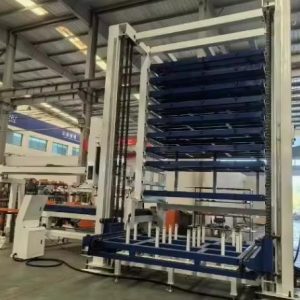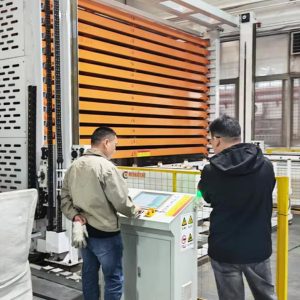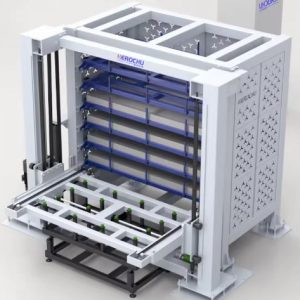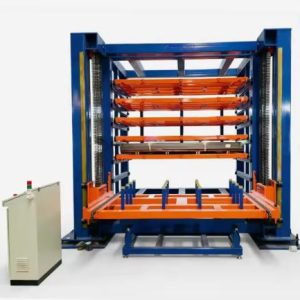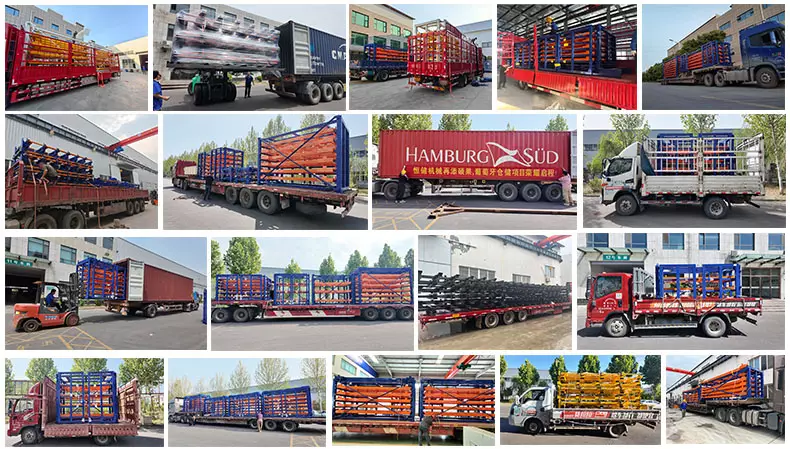
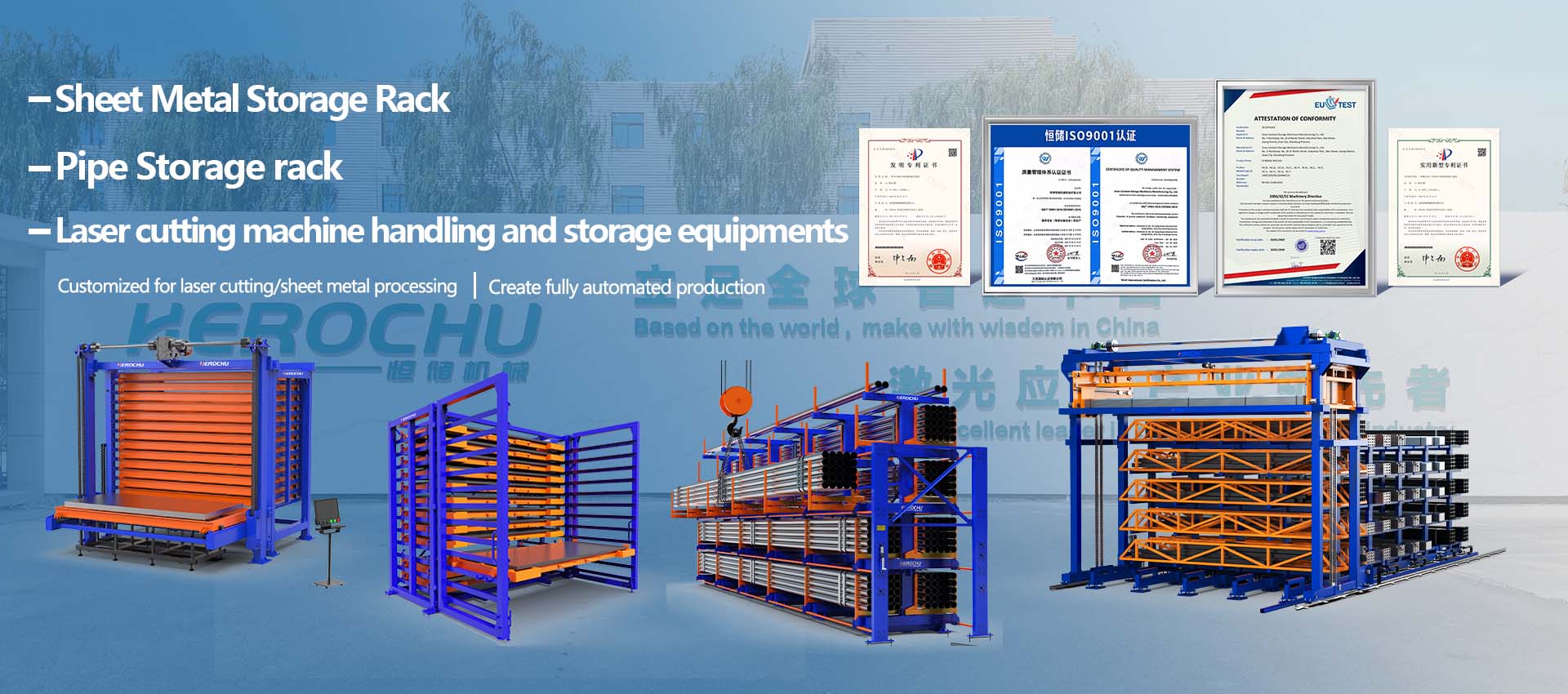
A fiber laser cutting machine runs at its rated speed only when the cutting head sees a fresh sheet the moment the previous nest completes. In practice, most shops fall short of this ideal. The operator finishes unloading cut parts, walks to the sheet rack, hooks up the crane, guides a swinging plate across the bay, aligns it on the cutting grid, and double-checks the zero-point reference. By the time the laser fires again, five to ten minutes have passed. Over a shift, those minutes add up to hours of lost cutting time. Herochu automated sheet loading systems close this gap by replacing manual lift-and-carry sequences with controlled, repeatable material transfer that keeps the laser cutting nonstop.
The Loading Bottleneck in Modern Fabrication
Laser cutting speeds have increased dramatically over the past decade. A modern 6-kilowatt fiber laser can slice through 1-millimeter stainless steel at over 40 meters per minute. At that pace, a full 3-meter by 1.5-meter sheet of nested parts may finish cutting in under three minutes. If the operator then spends five minutes swapping sheets, the machine utilization rate drops below 40 percent—an unacceptable figure for a capital asset that costs hundreds of thousands of dollars.
The bottleneck is not the laser. It is the gap between the unloading of finished parts and the placement of the next raw sheet. Manual loading also introduces variability: a plate that lands slightly off-square on the cutting grid forces the laser head to run a sheet-edge detection routine that adds more seconds to the cycle. An automated loading system from Herochu eliminates both the delay and the positioning variance, delivering each sheet to the same reference point within a repeatable tolerance.
Types of Herochu Automated Loading Systems
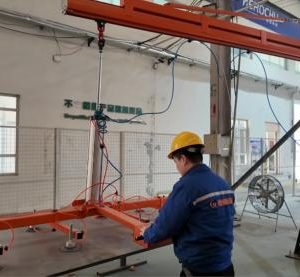
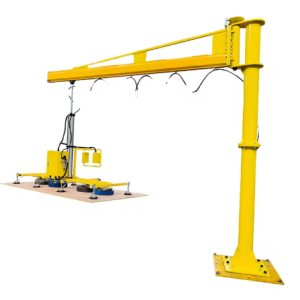
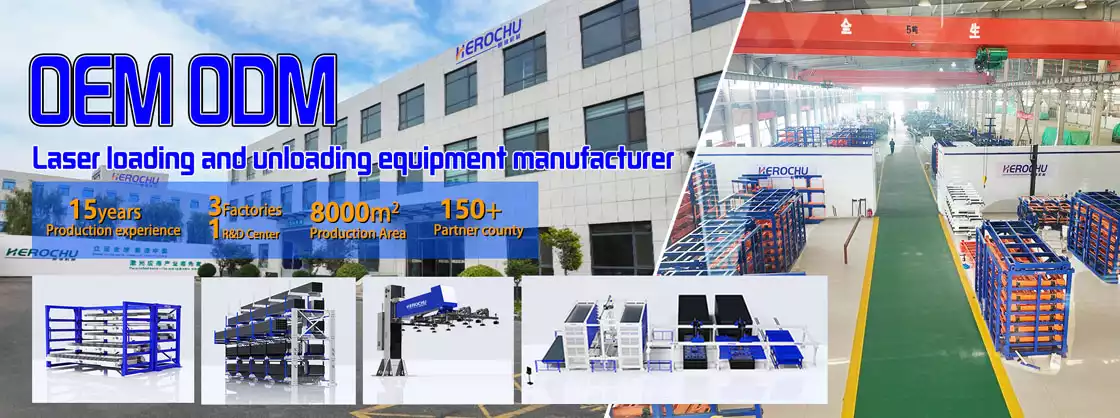
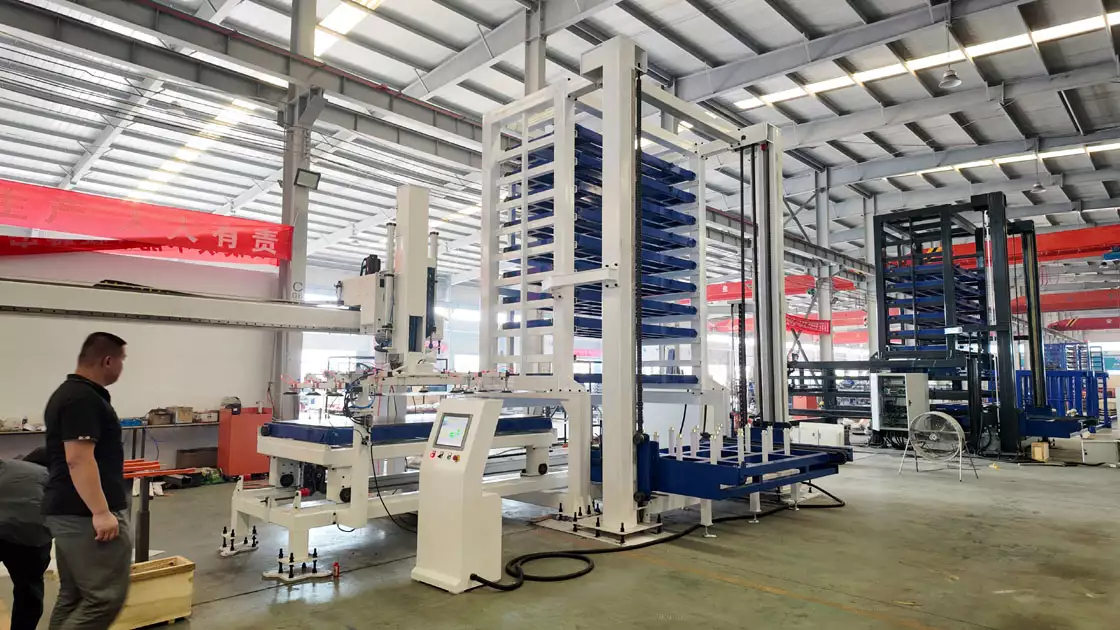
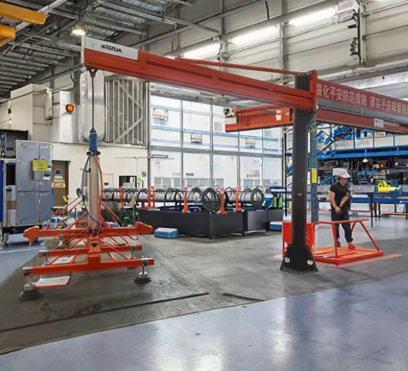
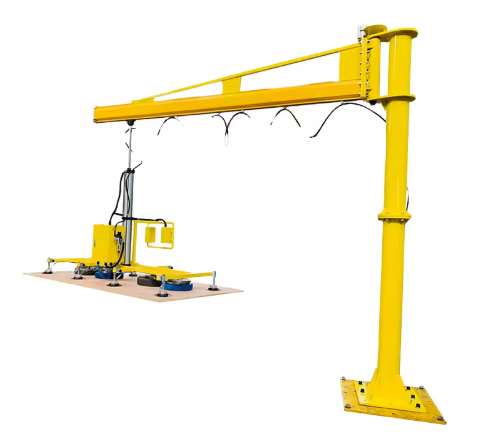
Herochu supplies automated loading equipment in several configurations, each matched to a specific production volume and sheet size range. The pneumatic cantilever manipulator, covered in detail in a companion article, handles sheets up to 500 kilograms with vacuum gripping and manual-operator guidance. For higher throughput and fully automated operation, Herochu offers servo-driven loading arms and integrated loading gantries that interface directly with the laser cutter’s CNC controller.
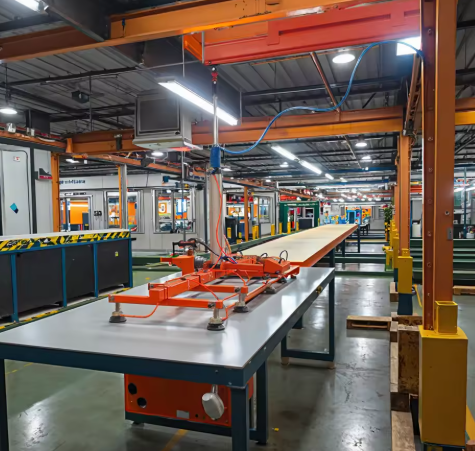
The servo-driven swing arm robot manipulator represents a step up in automation level from the pneumatic model. It uses AC servomotors on the rotation, lift, and extension axes, giving the control system precise command over acceleration, velocity, and stopping position. The operator sets the pick and place coordinates through a PLC touch screen interface, and the arm executes the motion profile automatically. A sheet separation function—using either magnetic fanning or an air-knife arrangement—prevents the common problem of two thin sheets sticking together and being loaded as a single double-thickness blank. This anti-double-feed feature is particularly valuable when running 0.8-millimeter to 2-millimeter material, where oil-film adhesion between sheets is strongest.
Vacuum Gripping: The Core of Reliable Pick-and-Place
Regardless of the motion system—pneumatic, servo, or gantry—the business end of every Herochu loading system is a vacuum gripping head. The rationale is straightforward: vacuum cups lift without marring the sheet surface, they release instantly when the vacuum is vented, and they accommodate slight variations in material flatness that would defeat a mechanical gripper.
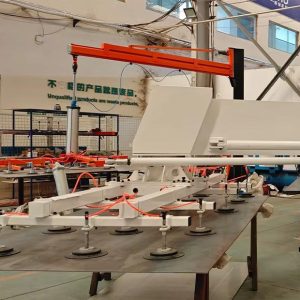
The standard Herochu vacuum head carries eight groups of suction cups, each 200 millimeters in diameter. The cups are arranged in a pattern that covers the sheet near its edges and across the center, so the plate stays flat during the lift. Individual check valves on each cup group isolate a failed cup so the remaining groups maintain grip. The vacuum is generated by a compressed-air-driven ejector pump integrated into the manipulator column, eliminating the need for a separate electric vacuum pump and its associated controls.
For shops that process a mix of materials—oily cold-rolled steel, dry brushed stainless, and aluminum with a mill finish—Herochu fits the vacuum cups in a material blend that provides consistent coefficient of friction across all three surface types. The cup lips are replaceable and can be swapped between a standard compound for general use and a high-temperature compound for sheets that come straight from a pre-heating station or that carry residual heat from a previous process step.
Positioning Accuracy and the Laser Cutting Interface
Loading a sheet onto a laser cutter table requires more than just placing it somewhere on the slats. The sheet must be positioned so that the cutting head’s coordinate system aligns with the blank edges, or the nests will cut partial parts and generate scrap. Herochu automated loading systems address this through mechanical datum stops and, on the servo-driven models, through programmed positioning coordinates stored in the PLC.
The operator or the automation program lowers the sheet onto the cutting grid, then nudges it against hardened datum pins set at the table’s reference corner. On the servo swing arm, this nudge is part of the programmed motion sequence. On the pneumatic manipulator, the operator performs it manually as part of the placement routine. Either way, the result is the same: the sheet lands in the same position every cycle, and the laser cutter’s sheet alignment routine runs faster because the initial placement is already within a few millimeters of nominal.
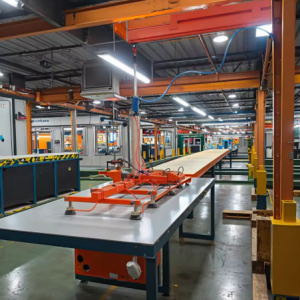
For laser cutting centers equipped with automatic shuttle tables—where one table is cutting while the other is being loaded outside the enclosure—Herochu integrates the loading system with the shuttle control. The loading arm places the sheet on the parked table, the operator or the automation system confirms placement, and the shuttle drives the loaded table into the cutting enclosure. The laser resumes cutting while the previous nest of parts is unloaded from the other table. This parallel loading and cutting arrangement pushes machine utilization above 85 percent on high-volume production lines.
Safety Systems on Herochu Loading Equipment
Automated material handling equipment operates in the same space as human workers, so safety is designed in from the start rather than added as an afterthought. All Herochu loading systems carry CE and UKCA certification and are built under the ISO 9001 quality standard. The safety architecture includes several independent layers.
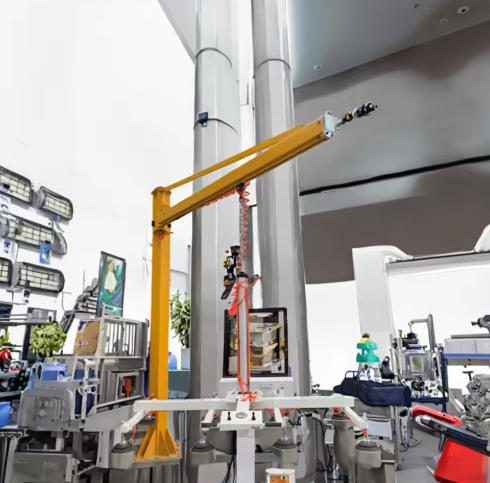
The emergency stop circuit is hardwired, not software-dependent. Pushing any E-stop button on the column, the control pendant, or the perimeter guarding immediately cuts pneumatic supply and engages the holding brakes on servo-driven axes. The pneumatic air-cut protection, described in the HC-RP series documentation, maintains vacuum and boom position during a supply pressure failure. An audible alarm and a strobe light activate whenever the loading arm is in motion, giving nearby workers a clear awareness cue even in noisy shop environments.
On the servo swing arm, the PLC monitors motor torque in real time. If the torque signature deviates from the expected profile—indicating a collision with an obstacle or a jammed mechanism—the drive cuts power within milliseconds. Light curtains or pressure-sensitive safety mats around the loading zone are available as options and are recommended for installations where pedestrian traffic passes close to the manipulator’s rotation arc.
Shop Floor Integration and Layout Planning
Installing an automated loading system requires more than bolting the column to the floor. The material flow into and out of the cutting cell must be mapped so the loading arm has continuous access to fresh sheet stock and a clear path to the laser table. Herochu application engineers typically start with a CAD layout of the existing shop floor and sketch the loading arm’s work envelope as a 220-degree sector centered on the column.
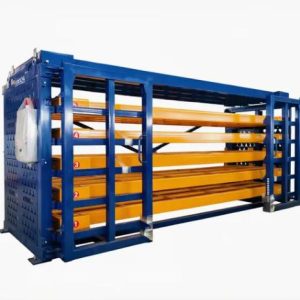
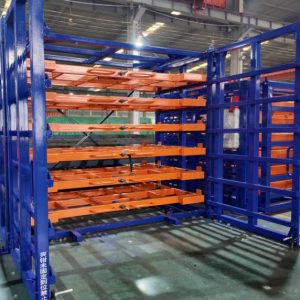
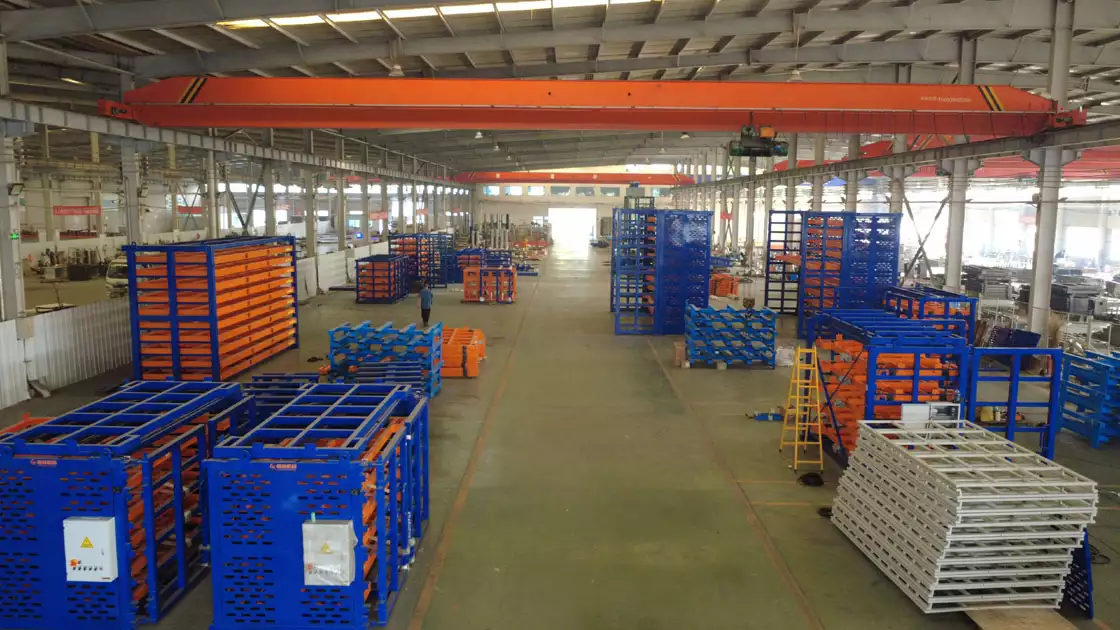
Raw material should be staged within this sector on pallets or a dedicated storage rack. The rack should present sheets at a consistent height so the operator or the automation program does not need to adjust the pick elevation for every cycle. If the shop uses a mix of sheet sizes, the rack can be organized with designated slots for each standard dimension, and the PLC program on the servo arm can store a pick coordinate for each slot.
The column base plate bolts to a reinforced concrete pad. The pad dimensions depend on the maximum load and the boom length, and Herochu provides foundation drawings as part of the installation package. Compressed air supply at 6 to 8 bar and single-phase power for the control system are the only utility connections required for the pneumatic models. The servo models add a three-phase power feed for the motor drives.
Comparing Manual Loading and Herochu Automation: The Numbers
A practical cost comparison helps frame the investment decision. Consider a shop running a single 6-kilowatt fiber laser on a two-shift schedule, processing 3-meter by 1.5-meter sheets of 3-millimeter mild steel. With manual loading using an overhead crane, the loading cycle averages 6 minutes. The cutting cycle for a fully nested sheet of this thickness runs about 8 minutes. Total cycle time: 14 minutes. Machine utilization: 57 percent. Daily output: roughly 34 sheets across two shifts.
With a Herochu pneumatic cantilever manipulator, the loading cycle drops to 1.5 to 2 minutes once the operator has a week of practice. Total cycle time: approximately 10 minutes. Machine utilization: 80 percent. Daily output: roughly 48 sheets across two shifts—a 41 percent increase. The additional 14 sheets per day represent genuine incremental revenue, and the payback period on the manipulator, at typical sheet metal job shop rates, runs well under 12 months.
Move to a Herochu servo swing arm with automated positioning and the loading cycle approaches 1 minute. Combined with a shuttle table, machine utilization reaches the 85 to 90 percent range. The economics scale further because one operator can now supervise two cutting cells instead of being tethered to a single machine.
Sheet loading is the gap between what a modern laser cutter can do and what it actually does in most shops. Herochu automated loading systems close that gap with vacuum-grip technology, programmable positioning, and safety architecture that protects both the operator and the sheet surface. For any fabricator measuring machine utilization in the 40 to 60 percent range, automating the load cycle delivers the fastest payback of any single investment on the shop floor.