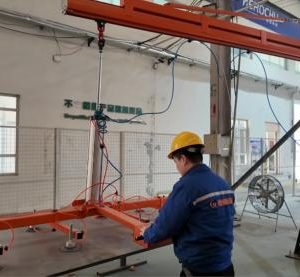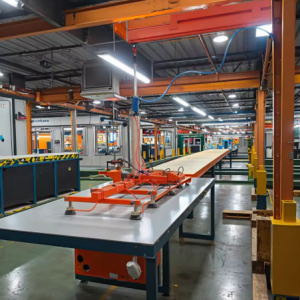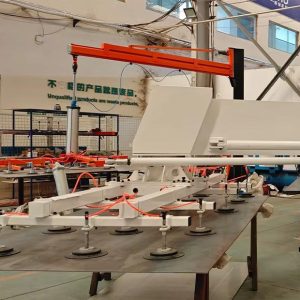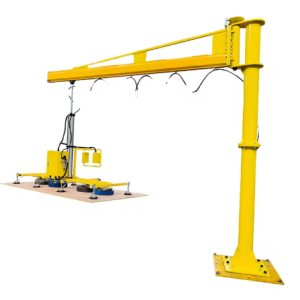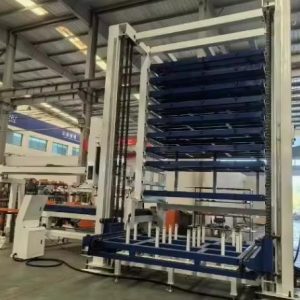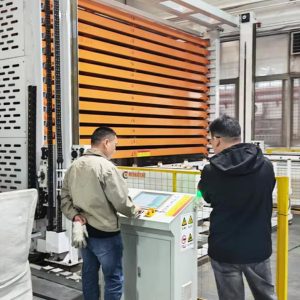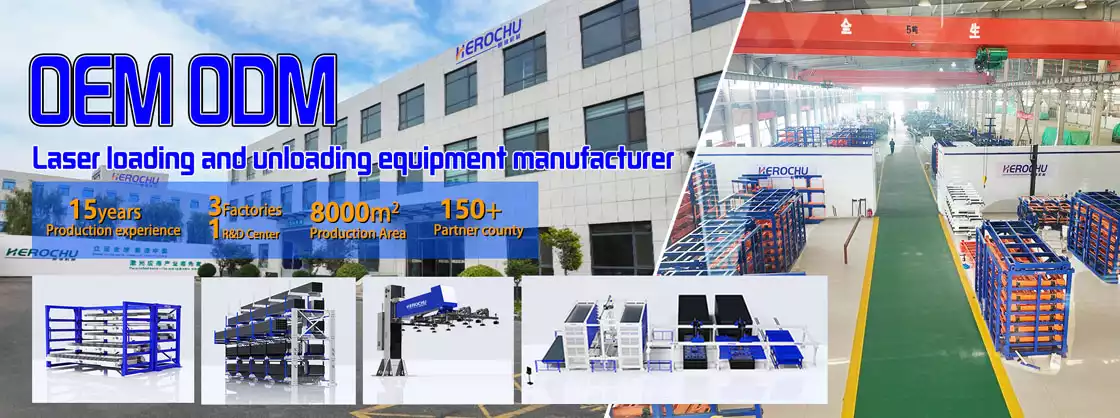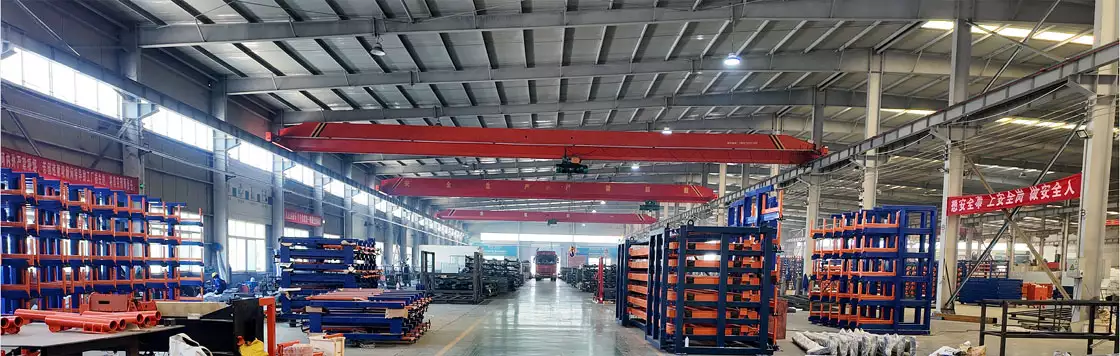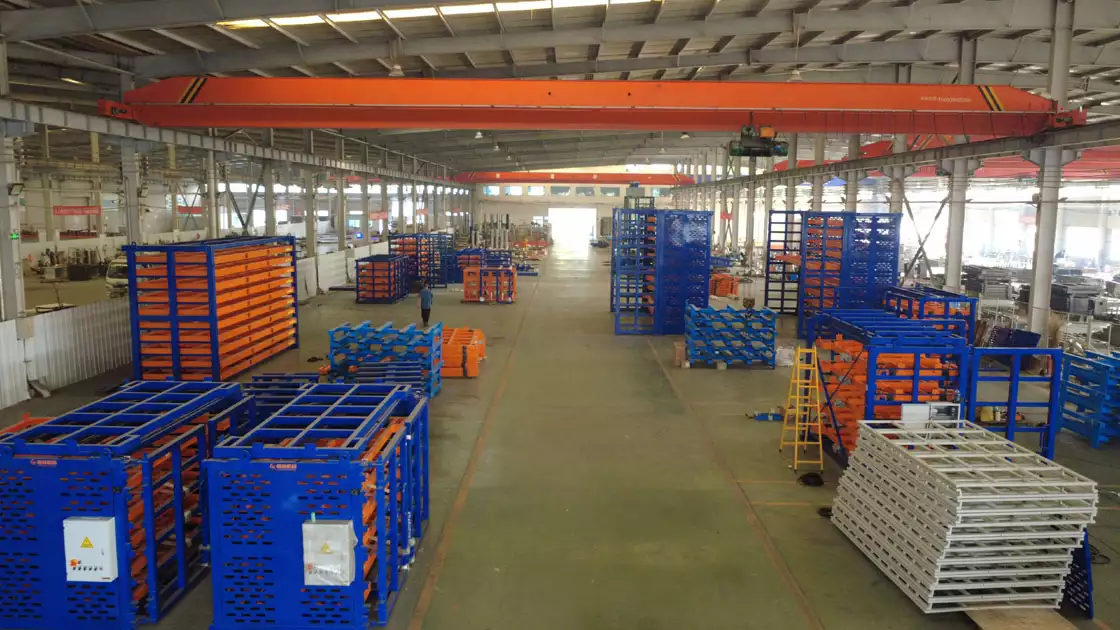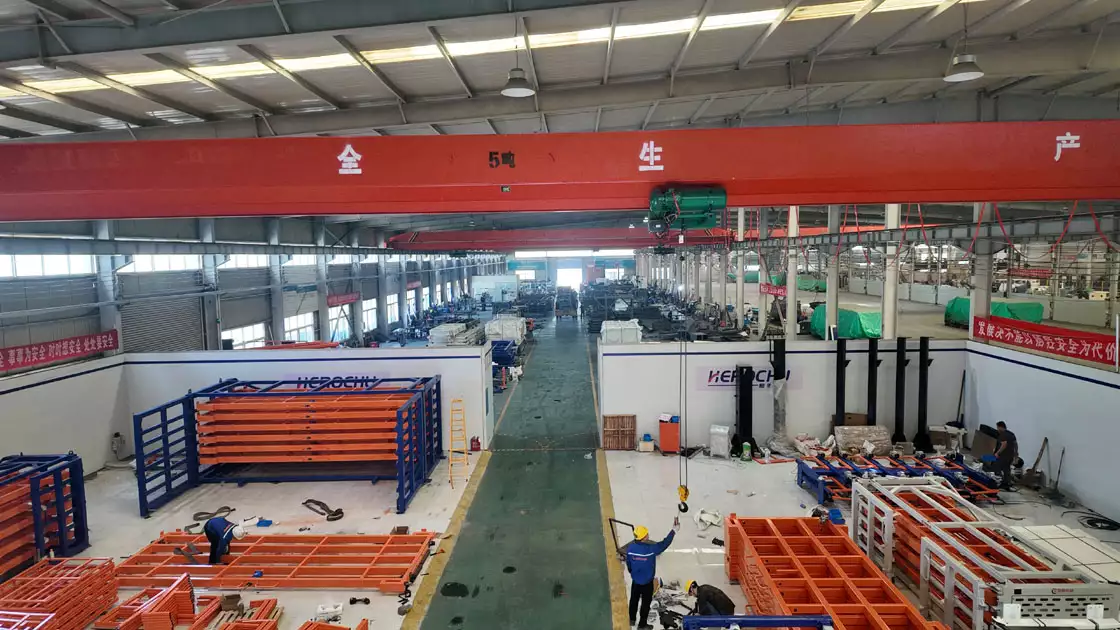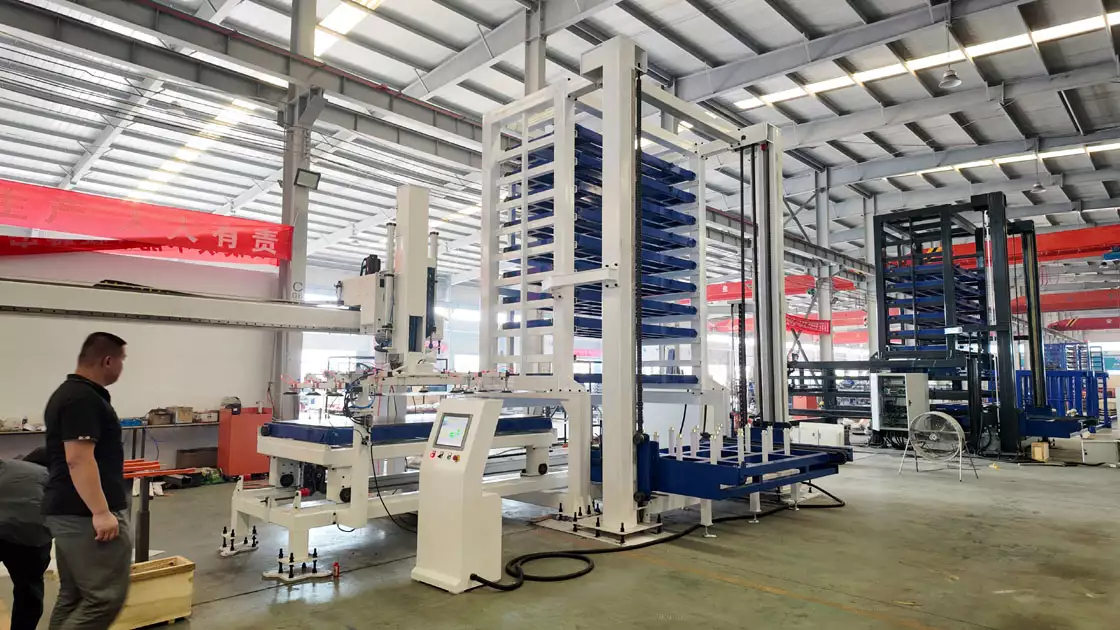
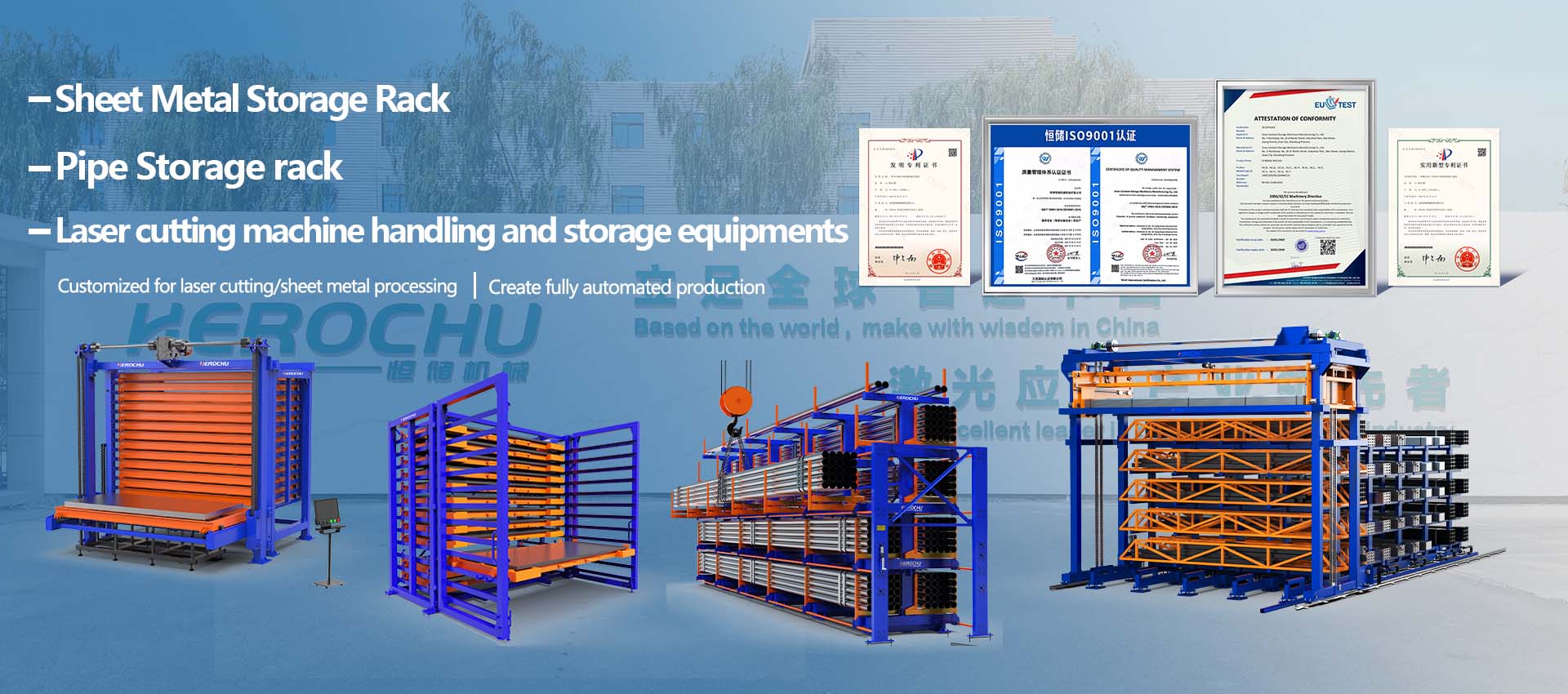
Positioning a sheet of metal on a laser cutter table to within a millimeter of the programmed datum may not sound ambitious. But that sheet can measure 4 meters across, weigh 500 kilograms, and arrive at the table swinging from the end of a 3.6-meter boom. Achieving sub-millimeter placement repeatability at that scale, cycle after cycle, requires a control architecture that blends mechanical rigidity with intelligent sensing. Herochu high-precision automated loading equipment for sheet metal feeding delivers exactly this—repeatable positioning accuracy that turns the loading cycle from a source of process variation into a fully controlled step in the fabrication workflow.
Why Positioning Precision Matters in Sheet Feeding
The laser cutting head references its coordinate system from a physical datum point on the cutting table. If the operator places a sheet 5 millimeters off that datum in X and 3 millimeters off in Y, the entire nest shifts by the same offset. Parts near the sheet edges may run past the material boundary and produce scrap. Parts in the center of the nest cut correctly but lose their positional relationship to any features that were punched or formed in a previous operation. The result is rework, material waste, and a machine that spends extra seconds running the sheet-edge detection routine to compensate for sloppy placement.
On a high-volume production line running hundreds of sheets per shift, a 2-millimeter placement error on every load translates into measurable scrap rates and measurable downtime for the edge-finding sequence. Multiply those seconds across a year, and the cost of poor positioning becomes a line item worth addressing. Herochu automated loading equipment reduces placement variance to the point where the edge-finding routine becomes a confirmation step rather than a correction step.
The Herochu Servo Swing Arm: Precision Through Controlled Motion
The Herochu servo-driven swing arm robot manipulator achieves its positioning repeatability through closed-loop control on every axis. Unlike the pneumatic cantilever manipulator, which relies on the operator’s hand to guide the boom and set the final position, the servo arm executes a programmed motion profile from pick to place. The operator defines the pick coordinate—the location of the raw sheet on the storage rack—and the place coordinate—the datum position on the laser table—through the PLC touch screen. From that point forward, the arm repeats the same trajectory with a positioning tolerance that stays within the mechanical resolution of the servo drives.
Each axis—rotation, lift, and reach—uses an AC servomotor with an integrated encoder that reports position to the PLC at the millisecond level. The PLC compares the actual position against the commanded position and adjusts motor torque in real time. This closed-loop architecture compensates for load variation, so a 500-kilogram steel plate tracks the same path as a 100-kilogram aluminum sheet. The motors are sized with enough torque headroom to accelerate the full rated load without saturation, meaning the motion profile remains consistent regardless of what is hanging from the vacuum head.
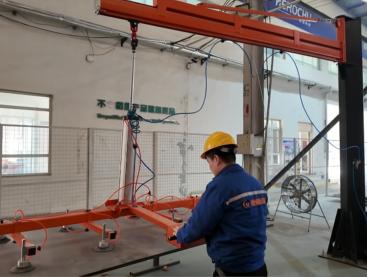
The rotation axis covers 220 degrees, the same as the pneumatic models, but the servo drive adds programmable intermediate stops. A shop that feeds two laser cutters from a single loading station can program the arm to pause at an intermediate angle for one machine or continue through the full arc to the second. Speed ramps at the start and end of each move smooth the acceleration and deceleration, reducing mechanical shock on the boom structure and preventing the sheet from swinging as a pendulum.
The PLC Interface and Program Storage
The PLC touch screen serves as the operator’s primary interface to the servo loading arm. The home screen displays system status—vacuum level, motor currents, current arm position—along with soft buttons for the most common operations: pick, place, and return to home. Behind this surface layer, the PLC stores a library of job programs, each defining a complete pick-and-place sequence for a specific sheet size and machine configuration.
Setting up a new job takes about ten minutes. The operator jogs the arm to the pick position above the sheet rack, records the coordinate, jogs to the place position above the laser table datum, records that coordinate, and saves the program under a descriptive name—”3mm CRS 3000×1500 to Laser 1,” for example. The PLC automatically calculates the lift height, the swing speed, and the descent profile based on the distance between the two coordinates and the load weight entered by the operator. The operator can adjust these parameters if needed, but the default motion profiles are conservative and safe for initial setup.
The program library eliminates the setup time between material changeovers. If the morning shift runs 3000-by-1500 carbon steel and the afternoon shift switches to 2500-by-1250 stainless, the operator selects the pre-saved program for the new material and the arm reconfigures itself accordingly. The vacuum level adjusts automatically based on the material type and sheet weight stored in the program parameters.
Automated Sheet Separation: Solving the Double-Feed Problem
Thin-gauge sheet metal, particularly in the 0.5-millimeter to 2-millimeter range, tends to stick together. The oil film applied at the mill for corrosion protection acts as an adhesive between adjacent sheets in a stack. When the vacuum cups lift the top sheet, a second sheet—or sometimes a third—comes along for the ride. Loading two sheets into a laser cutter at once produces two nests cut from the bottom sheet and a top sheet with partial through-cuts, destroying both.
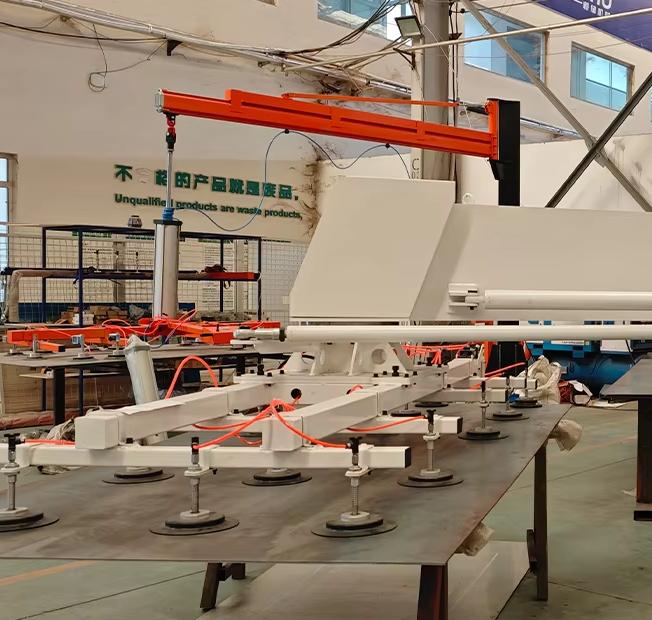
Herochu addresses double-feeding with an automated sheet separation system integrated into the servo arm’s control sequence. After the vacuum cups engage and begin lifting, the arm executes a short, rapid lateral shake—a motion profile programmed into the servo drive that applies a shear force between the top sheet and any adherent sheets below it. The shake amplitude and frequency are tuned to the material thickness and sheet size stored in the job program. If a sensor detects that a second sheet has followed the first, the arm sets the second sheet down on a reject station and repeats the pick cycle.
This anti-double-feed function operates automatically as part of every pick sequence. The operator does not need to fan the sheets apart by hand before loading, which was the traditional method and a frequent cause of hand injuries from sharp sheet edges. The separation shake adds less than two seconds to the pick cycle and has eliminated double-feeding as a cause of scrap in Herochu servo arm installations.
Integration with Laser Cutting Cell Automation
A Herochu servo loading arm rarely operates as a standalone device. In a well-designed cutting cell, the arm coordinates with a shuttle table, a part-unloading system, and the laser cutter’s own CNC controller. The PLC on the Herochu arm exchanges signals with these other systems through hardwired I/O or through a fieldbus connection such as Profinet or EtherCAT.
A typical automated sequence runs as follows. The laser cutter finishes a nest and the cutting head retracts to its home position. The CNC sends a “cycle complete” signal to the cell controller. The shuttle table drives the finished nest out of the cutting enclosure to the unloading station, while the empty table from the previous cycle shuttles into cutting position. The Herochu arm, which has already picked a fresh sheet from the rack and is waiting at an intermediate position, moves to the now-empty table and places the sheet against the datum stops. A “load complete” signal returns to the CNC, the cutting enclosure doors close, and the laser begins the next nest. The operator at the unloading station removes the finished parts while the next sheet is already cutting.
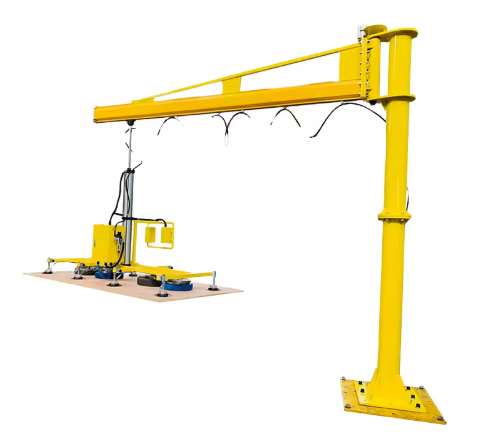
This parallel workflow—cutting on one table while loading the other—pushes machine utilization above 85 percent, compared to 50 to 60 percent with sequential manual loading. The operator’s role shifts from physical sheet handling to part sorting and quality inspection, tasks that add more value than hooking and unhooking a crane.
Safety Architecture for Automated Motion
An automated loading arm that moves under its own power requires a safety architecture that goes beyond the pneumatic system’s air-cut protection. The Herochu servo arm uses a safety-rated PLC that monitors the state of all safety devices and can bring the arm to a controlled stop within the stopping distance specified by the risk assessment.
The safety perimeter around the arm’s rotation arc is defined by light curtains or safety fencing. If a person or a forklift breaks the light curtain during arm motion, the safety PLC immediately removes power from the motor drives, and the holding brakes engage. The brakes are spring-applied and electrically released, so a power failure causes them to engage by default rather than relying on electrical actuation. The arm cannot restart until the operator physically resets the safety circuit at a reset button located outside the guarded area, confirming that the zone is clear.
Speed monitoring is another layer of the safety system. The servo drives report actual motor speed to the safety PLC on a separate channel from the motion control loop. If the actual speed exceeds the programmed safe speed limit for the current zone—for example, if the arm enters a restricted-speed zone near the operator workstation—the safety PLC triggers a stop. This zone-based speed limiting allows the arm to move at full speed in the unoccupied portion of its arc and slow to a crawl when approaching the operator area, balancing productivity with safety.
Positioning Verification and Quality Assurance
Even with servo-controlled positioning, verification that the sheet landed where it was supposed to land provides a quality assurance checkpoint. Some Herochu installations include a laser-based or camera-based position verification system that checks the sheet edge location after placement and before the laser begins cutting.
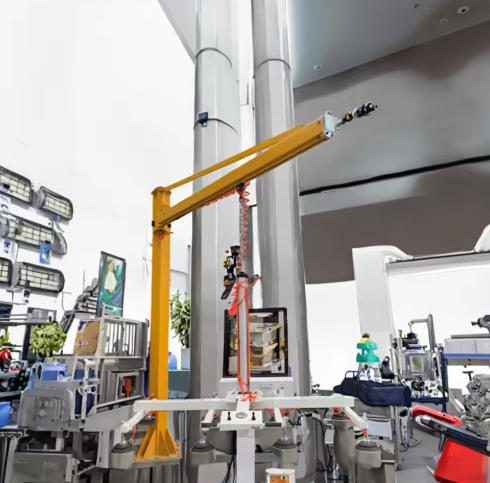
The verification sensor, mounted on the gantry above the laser table or integrated into the loading arm head, takes a quick measurement of two adjacent sheet edges. The measured coordinates are compared against the programmed datum. If the deviation exceeds a configurable threshold—typically 1 millimeter—the system triggers an alarm and prevents the laser from starting. The operator can then jog the sheet into position manually or, on more advanced installations, the arm can execute a correction cycle that nudges the sheet by the measured offset.
This closed-loop verification closes the gap between “likely in position” and “confirmed in position.” For high-value parts where a single scrap piece represents hundreds of dollars in material and machine time, the verification step pays for itself quickly.
Comparing the Servo Arm and Pneumatic Manipulator: When Each Makes Sense
The choice between a Herochu servo swing arm and a Herochu pneumatic cantilever manipulator depends on production volume, operator skill level, and the tolerance requirements of the downstream processes.
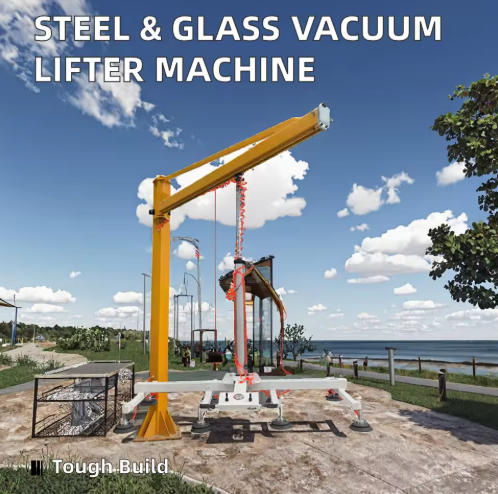
The pneumatic manipulator suits shops that run maybe 30 to 50 sheets per shift, where the operator is experienced enough to place sheets accurately by hand, and where the capital budget favors a simpler machine. It costs less to purchase, has fewer components that can fail, and requires only compressed air as a utility. The operator remains fully in control of the motion, which some shops prefer for handling non-standard or damaged sheets that might confuse an automated system.
The servo arm suits higher-volume shops running 50 to 200 sheets per shift, where consistent placement accuracy across thousands of cycles outweighs the higher initial investment. The programmability eliminates setup time between material changes, the sheet separation system prevents double-feeding, and the integration with cell automation enables the parallel loading-and-cutting workflow that drives machine utilization into the high 80s. The servo arm also collects data—cycle times, load weights, vacuum levels—that a production manager can use to track cell performance and identify bottlenecks.
Both machines share the same vacuum gripping technology, the same column-and-boom architecture, and the same commitment to CE, UKCA, and ISO 9001 compliance. The decision is not about capability but about the level of automation that matches the shop’s production reality and its plans for the next five years.
High-precision loading is not a luxury reserved for automotive Tier 1 suppliers with fully automated production lines. Herochu has packaged the core technologies—servo positioning, closed-loop control, automated sheet separation, and integrated safety—into a loading arm that a mid-size job shop can install, program, and run profitably. When every sheet lands on the same datum within a millimeter, the laser cutter runs faster, the scrap rate drops, and the operator spends the day sorting finished parts rather than wrestling heavy plates.