Floor Space Is the First Thing a Remnant Pile Eats
A sheet of 2500 x 1250 mm mild steel laid flat claims the same square meters whether it is a single piece or the bottom of a stack. That is the basic problem with horizontal remnant storage: the footprint grows with every plate, and the shop floor — the most expensive surface in the building — disappears under piles of metal.
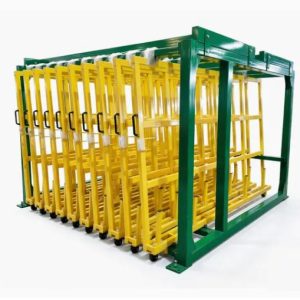
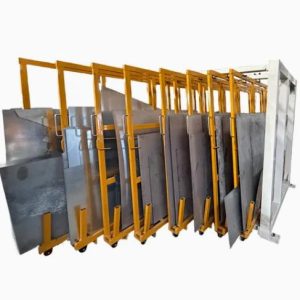
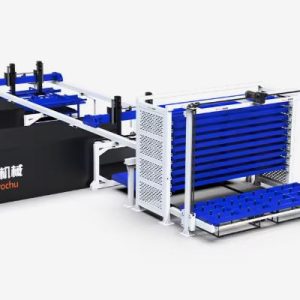
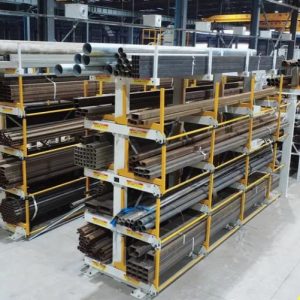
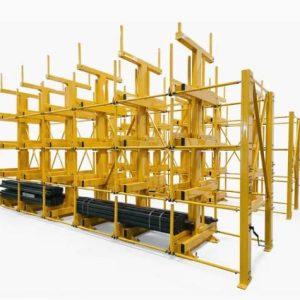
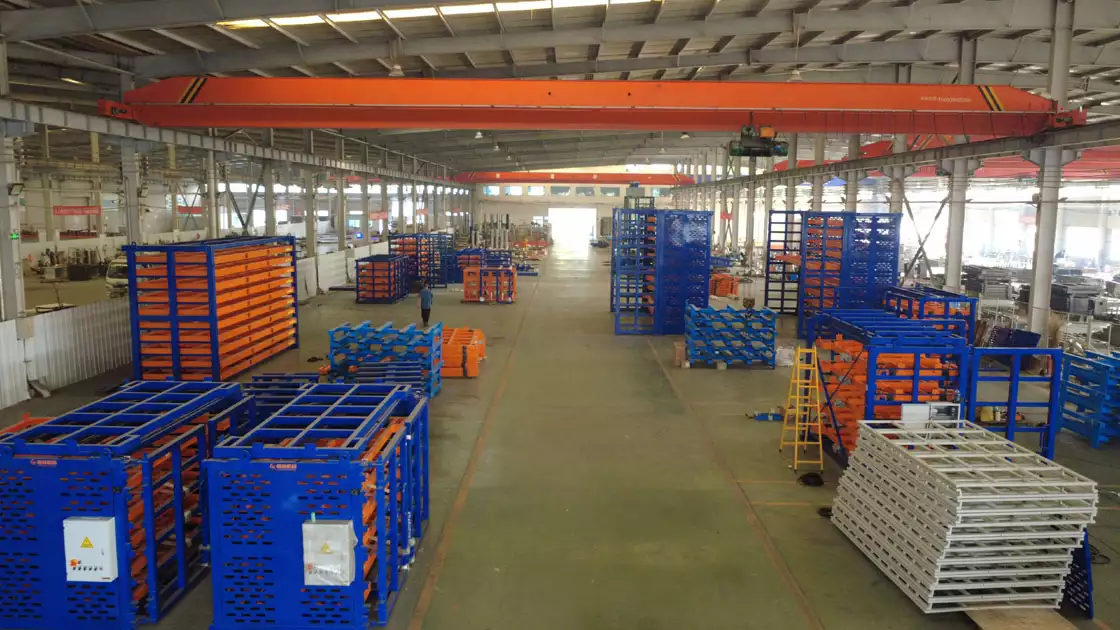
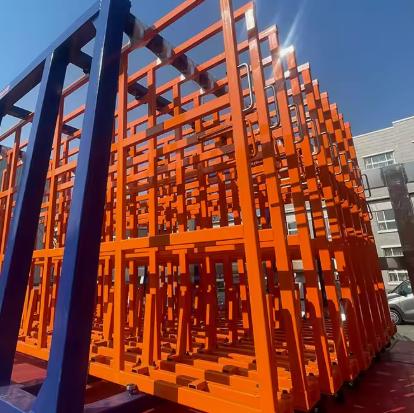
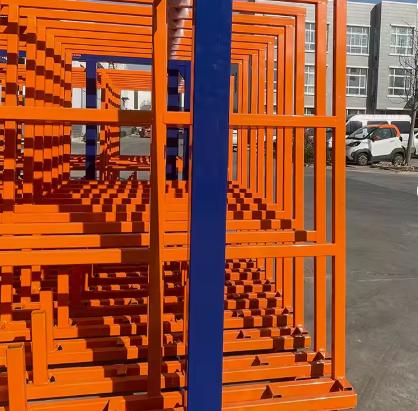
Herochu’s space-saving vertical remnant rack with pull-out shelves inverts the logic. Plates stand on edge, so the footprint stays small while the stored tonnage climbs. One unit with eight levels, each rated to 1000 kg, can hold several tonnes of offcuts in the space of a single pallet. The vertical meter of the workshop, which most layouts ignore, becomes usable storage.
Pull-Out Shelves Designed Around the Operator
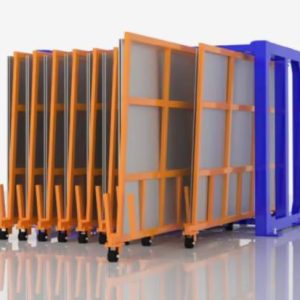
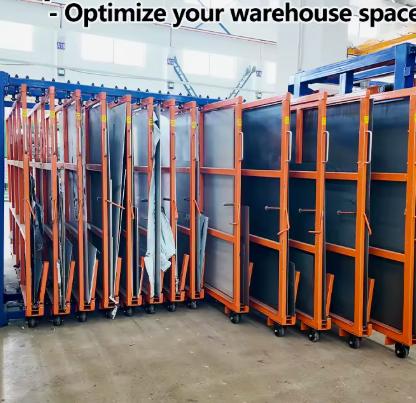
Each shelf is a drawer on heavy-duty industrial bearings that rolls out the full depth of the rack. An operator pulls the shelf, takes the sheet from above with a crane or vacuum lifter, and slides it back. One person handles plates that would normally take two, because the sheet is never buried and never has to be lifted out of a flat stack.
Drawer Direction Matches the Aisle
The system can be built with either front-back or left-right drawer motion. A shop with narrow aisles can choose the direction that suits its layout, and a rack standing against a wall can pull sideways into the open floor. This flexibility lets the rack fit existing traffic patterns instead of forcing a rearrangement of the workshop.
Edge Protection for Finished Surfaces
Remnants of stainless steel, aluminum, or titanium carry real value and real surface requirements. The rack holds sheets upright with roughly 60 mm of clear space between them, so edges do not rub against neighbors. Optional removable dividers and adjustable support arms can be reconfigured to cradle odd-shaped remnants or sensitive metals without scratching — a detail that matters when the “scrap” is a half sheet of aerospace-grade material.
Capacity That Keeps Up With Production
The two standard models cover common plate sizes:
HC-V2513-8: sheets up to 2500 x 1000 mm
HC-V3015-8: sheets up to 3000 x 1500 mm
Both are built from structural-grade steel. Eight layers come standard and the tier count is customizable, so the rack can be matched to the mix of materials a shop actually cuts. Per-level capacity is 1000 kg, and a single drawer in standard trim carries up to 700 kg (about 1,500 lb). Racks can be configured with up to 15 vertical drawers per section, and overall height, width, and depth are adjustable at the design stage.
How the Capacity Adds Up
The math is worth spelling out. Eight levels at 1000 kg each put roughly 8,000 kg of plate into a footprint measured in a few square meters. In a 15-drawer configuration, that total climbs further while the floor area stays the same. Compare that with horizontal stacking, where every added sheet expands the footprint, and the space argument settles itself: vertical storage multiplies capacity without multiplying floor use.
Where the Rack Belongs in the Workshop
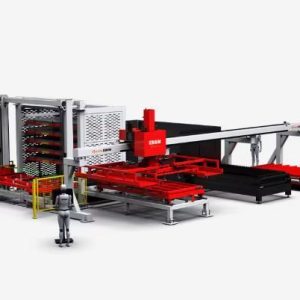
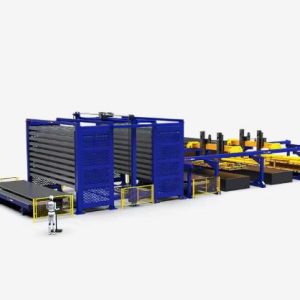
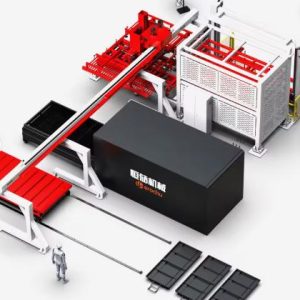
Placement determines how much of that capacity a shop actually uses. The natural position is beside the cutting machine — laser table, plasma, or punch — so the pull-out shelves sit within reach of the crane or lifter that feeds the machine. Drawers can be specified for front-back or left-right motion, which lets the unit work in narrow aisles or against a wall. Racks positioned near the goods-in bay also make sense, letting full sheets be staged vertically on arrival instead of laid out flat on the floor.
A Small Footprint That Pays Back
The economics work on three lines at once. Floor space is reclaimed, because vertical storage stacks the inventory upward instead of outward. Labor is reduced, because one operator with a crane or lifter retrieves heavy sheets safely and quickly. And material is reused, because visible remnants get consumed by later jobs instead of being reordered.
A 3-degree backward incline in each drawer uses gravity to hold plates against the backframe during extension, so the safety feature adds no handling steps. The result is a storage system that pays for itself in recovered floor area and recovered metal.
Built by a Storage Specialist
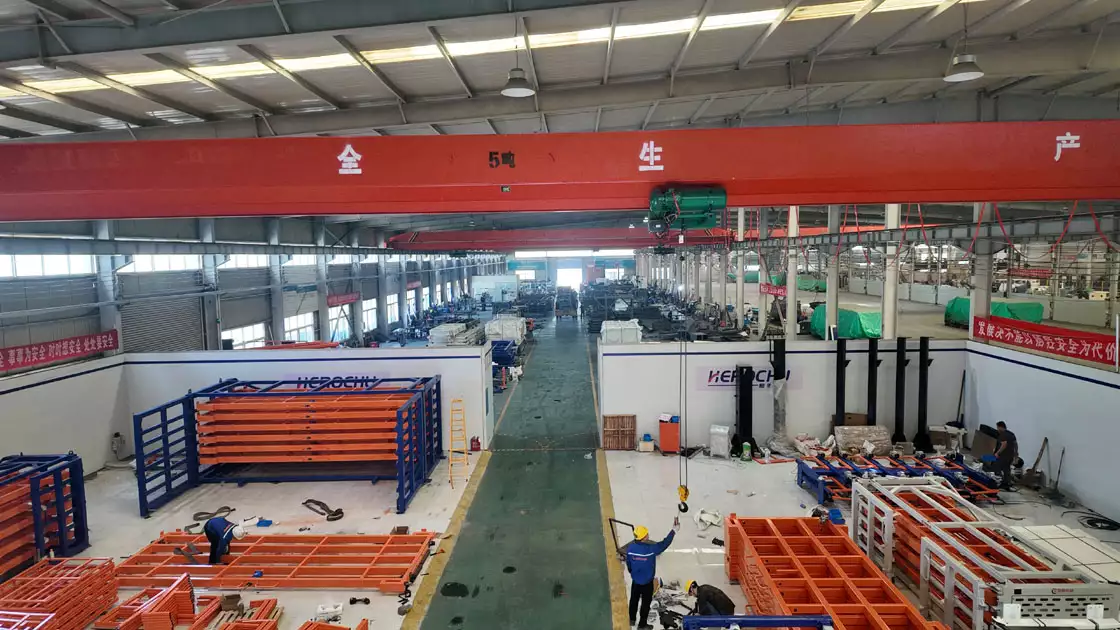
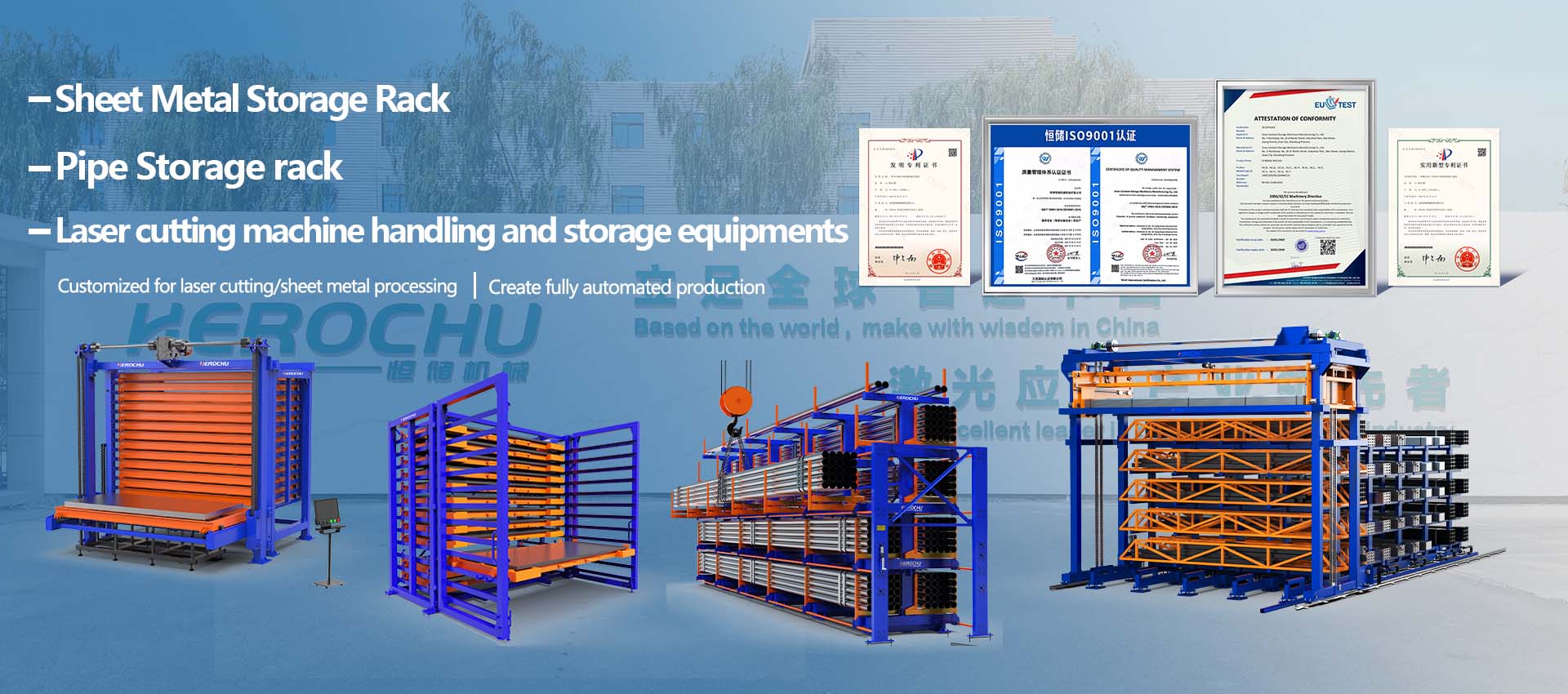
Herochu manufactures the rack in an ISO9001-compliant facility with CE certification and pre-shipment structural load testing. With over 15 years of engineering experience, custom design services, and global installation support, the company supplies this storage to aerospace, automotive, railway, and heavy machinery fabrication shops worldwide.
Common Questions
Does the rack protect coated or polished sheets?
Yes. Sheets stand with roughly 60 mm of clear space between them, so surfaces do not rub against neighboring plates. Removable dividers and adjustable support arms can be added to cradle odd shapes and sensitive metals like stainless steel or titanium.
How many layers can a rack have?
Eight layers is the standard build, and the tier count is customized to the material mix — a shop cutting several gauges may want one level per gauge. Up to 15 vertical drawers per section are possible.
Can one operator really handle these loads?
The full-extension drawers put the sheet in front of the operator at working height, where a crane or vacuum lifter takes over the weight. The physical effort is guidance, not lifting, which is why a single person can manage the cycle.
Verdict
If the remnant pile is claiming the workshop floor, the fix is not a bigger pile — it is a vertical one. The Herochu space-saving vertical remnant rack with pull-out shelves delivers 1000 kg of capacity per level in a footprint that leaves room for machines, traffic, and the next job.