What does manual drive change about how the rack works?
Herochu’s manual drive replaces a motor and a control cabinet. A gear reducer turns handle effort into chain pull, the carriage rolls along its track, and the shelf stops wherever the operator lets go. That last point matters in a fabrication shop: a crane often needs 300 mm of clearance, not a metre, and partial extension is a normal way to work.
Manual drive also removes the electrical drop, the hydraulic hoses and the motor starter from the maintenance list. Chain lubrication becomes the routine service item, and the guard has to be in place before the rack runs.
How much floor space does a double-sided layout actually save?
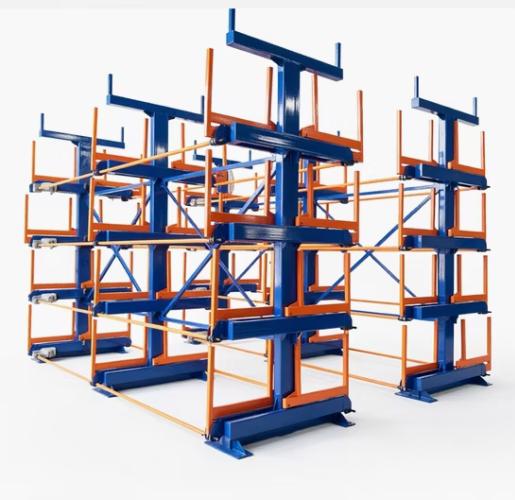
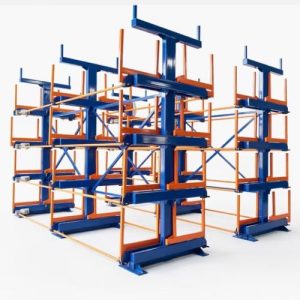
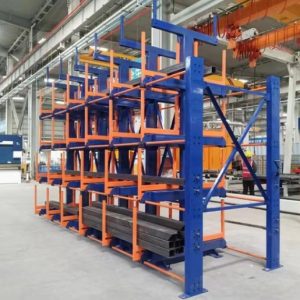
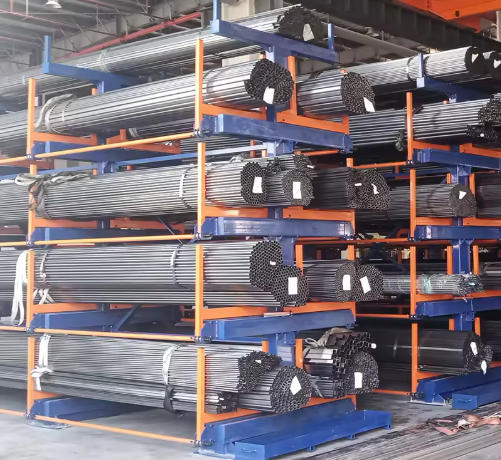
Count storage faces, not racks. A 36 ft double-sided unit with four levels gives eight storage levels on one base and one column line. Two single-sided racks with the same eight levels need two bases, two column lines and clearance between them, and each face still needs its own approach.
The saving is not only the second base. Fewer column lines mean fewer obstructions in the crane path, which shortens each lift and lets one hook position serve both faces.
Where does a hand crank beat a powered drive?
Manual wins in plants without a convenient power drop at the rack, in areas where oil leaks are unacceptable, and in shops where a level cycles a few times a shift rather than continuously. It also suits mixed stock: the operator sees the bundle, turns the handle and stops at the right point, with no controller to program.
No power feed, cable tray or isolator to install at the rack
Simple maintenance: chain lubrication, guard checks, occasional bearing grease
Precise partial extension with no programming or limit switches
The rack keeps working through a power outage
Powered drives earn their place when one level cycles dozens of times a shift. Below that rhythm, Herochu fits a crank because it is the simpler machine to keep in service.
How should one operator run it safely?
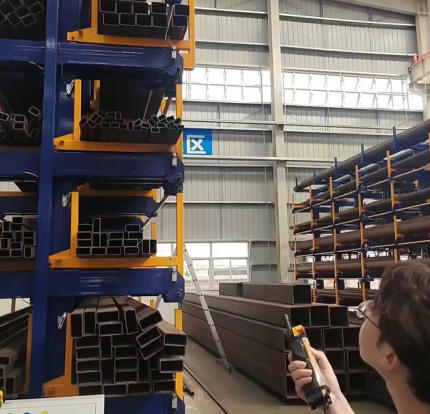
Stand square to the panel, keep the free hand off the frame, and watch the bundle rather than the arms while the shelf moves. Extend only the level being worked and retract it before the next. Never climb the rack, never ride an extended shelf, and keep everyone out of the arm travel zone during a lift.
The ergonomic gain is the reason the design exists. Instead of reaching over a fixed arm with a sling, or prying a bundle clear with a bar, the operator cranks the shelf into open air and lifts vertically. Less over-reaching, less twisting and less lifting below shoulder height mean fewer strain injuries and fewer compensation claims.
Manual or powered: a fair comparison
Manual crank-out versus powered cantilever storage
| Criterion | Manual crank-out | Powered drive |
| Drive | Hand crank, reduction gear, chain | Motor, gearbox, control panel |
| Site services | None at the rack | Power feed and isolator |
| Routine maintenance | Chain lubrication, guards, rollers | Motor, brake, controls, chain |
| Positioning | Operator controlled, partial extension | Push-button with set positions |
| Best fit | Job shops, mixed stock, medium cycles | High-cycle, single-section storage |
| Footprint | Equal for equal capacity | Equal for equal capacity |
The table leaves out price and cycle times on purpose: both depend on level count, arm depth and the crane serving the rack, so they belong in a quotation against a layout, not a rule of thumb.
What does a working day look like?
A saw operator needs three lengths of 6 m angle. He walks to the rack, cranks the second level out, hooks the bundle, lifts it clear, swings it to the saw and sets it down. The shelf goes back in with a few turns. No forklift, no aisle traffic, no second man on the far end. After lunch the same cycle repeats with a different section from the other face.
How is the rack installed and kept running?
Herochu supplies a sequenced installation sheet: uprights stand first and are cross-squared until the diagonal X dimensions match, spanner tubes drop into the U-brackets, bracing fits the D-brackets, long drive shafts connect the uprights, and the panel is squared to the first upright before the short spanners and shafts go in. The fixed top post is bolted on where specified, then the frame is levelled, anchored and checked for square.
Weekly, remove the guard, lubricate the crank-out chains and refit the guard; the rack never runs with the guard off. Grease bearings with zerk fittings and leave sealed bearings alone. If a shelf binds, stop and check squareness, chain tension and track debris rather than forcing the handle.
Can the crank move a fully loaded shelf?
Yes. The reduction gearing is sized for a loaded start, which is why the arms glide out instead of jerking. If a loaded level needs unusual force, stop and inspect the chain and track.
Does it need electricity or compressed air?
No. The drive is mechanical, so the rack works in unserviced areas of a plant and during power interruptions.
How many levels can one rack have?
Three to eight levels are practical, four being the common starting point. More levels change drive length and upright load, so the count is confirmed at the engineering stage.
Can it hold pipe as well as profiles?
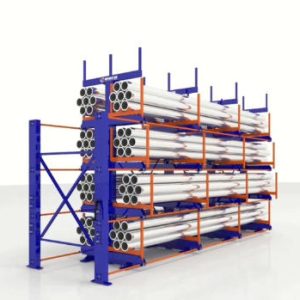
Yes, with dividers, cradles or shaped liners to stop round stock rolling. The same upright line can carry pipe on one face and profiles on the other.
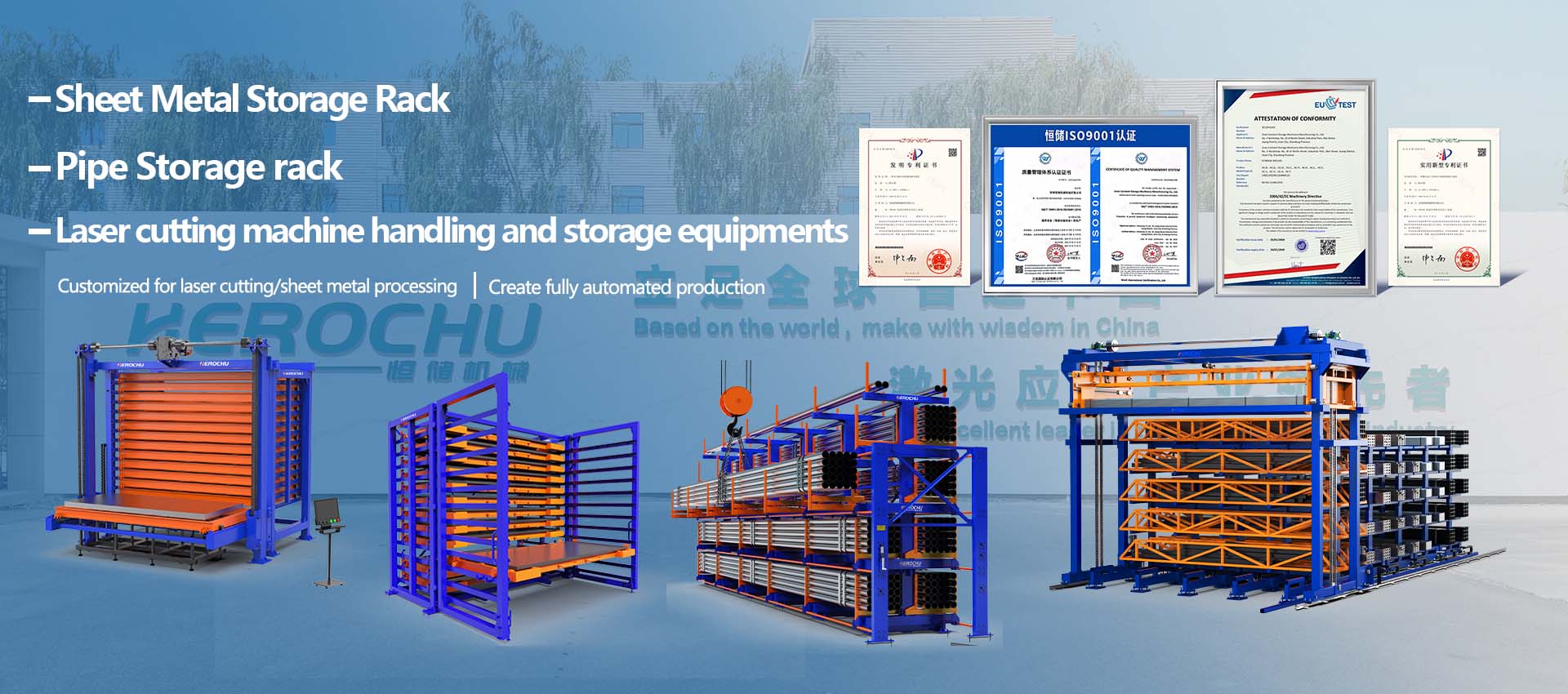
Herochu builds manual crank-out racks for shops that want overhead access without adding a power feed or a hydraulic system. Send the material list, bundle weight and hook height, and the layout follows from those numbers.