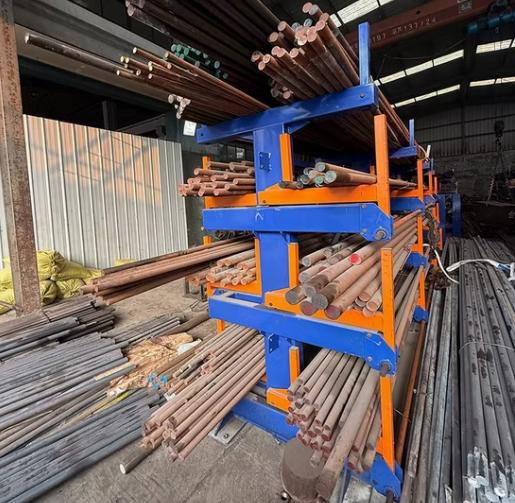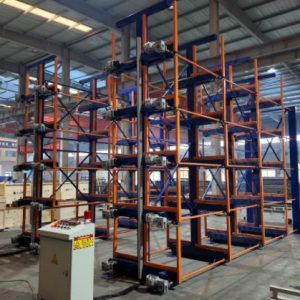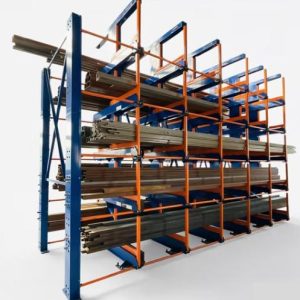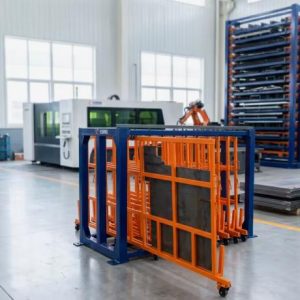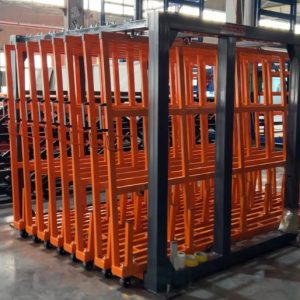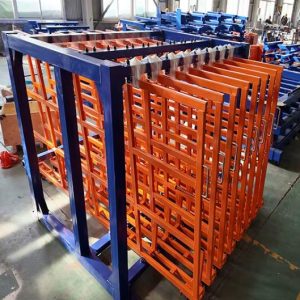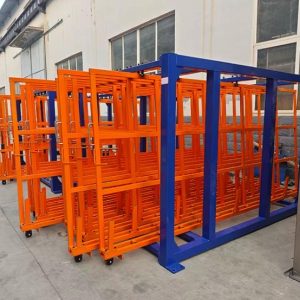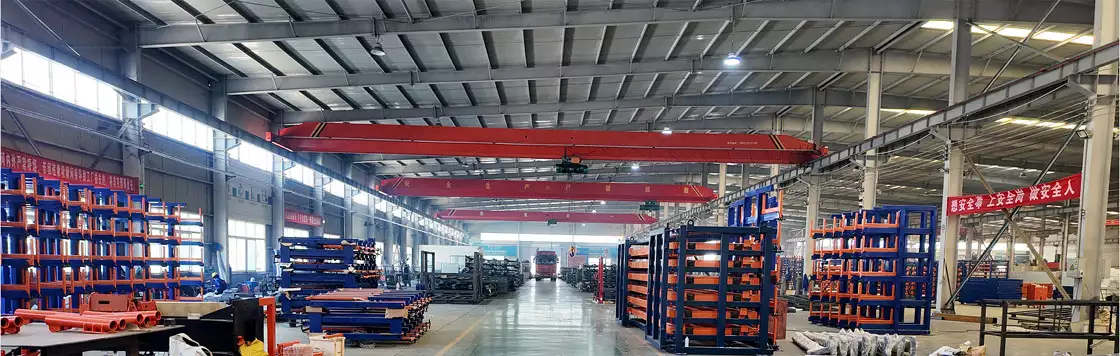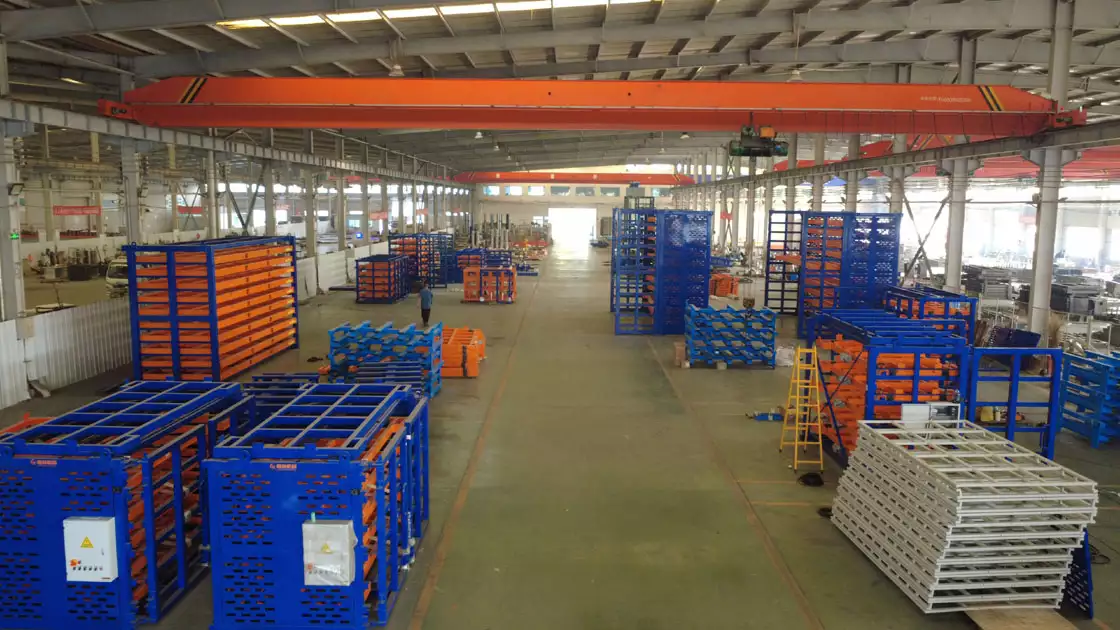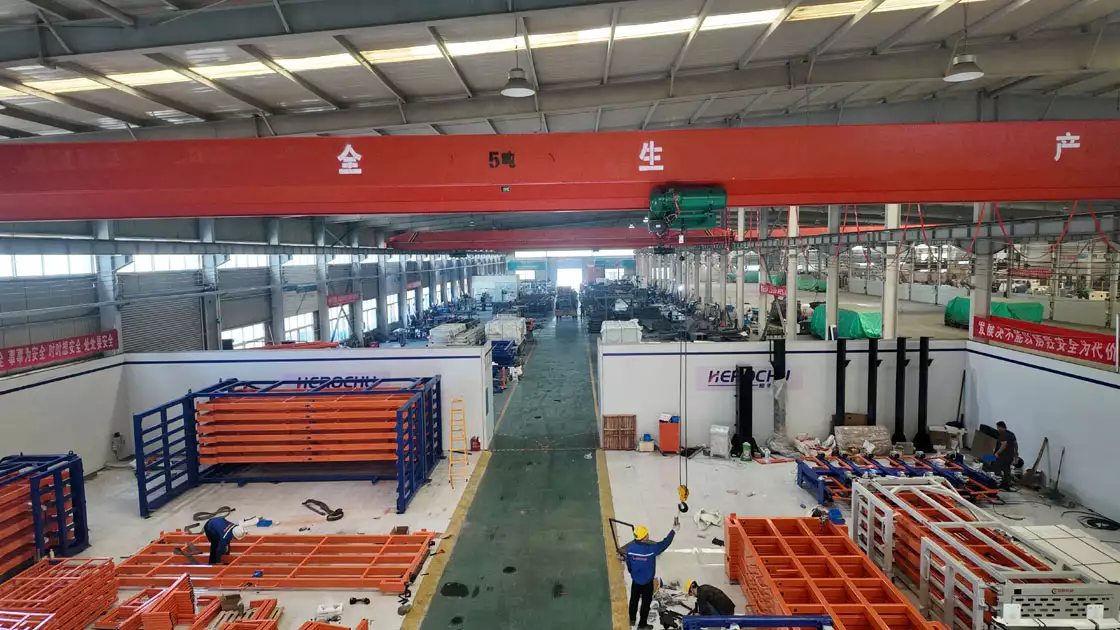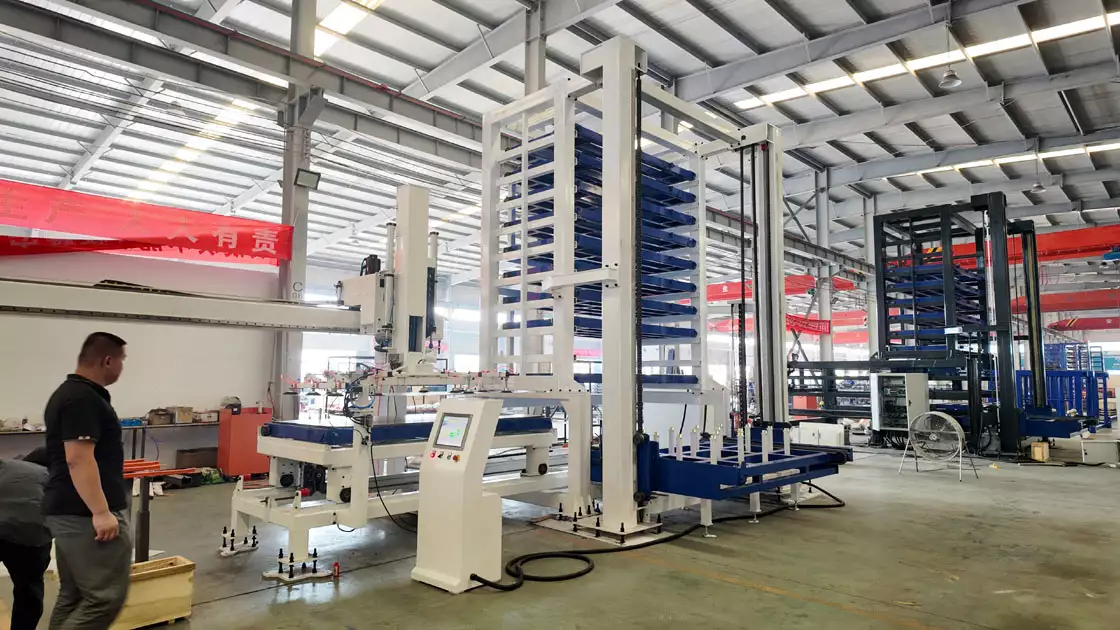
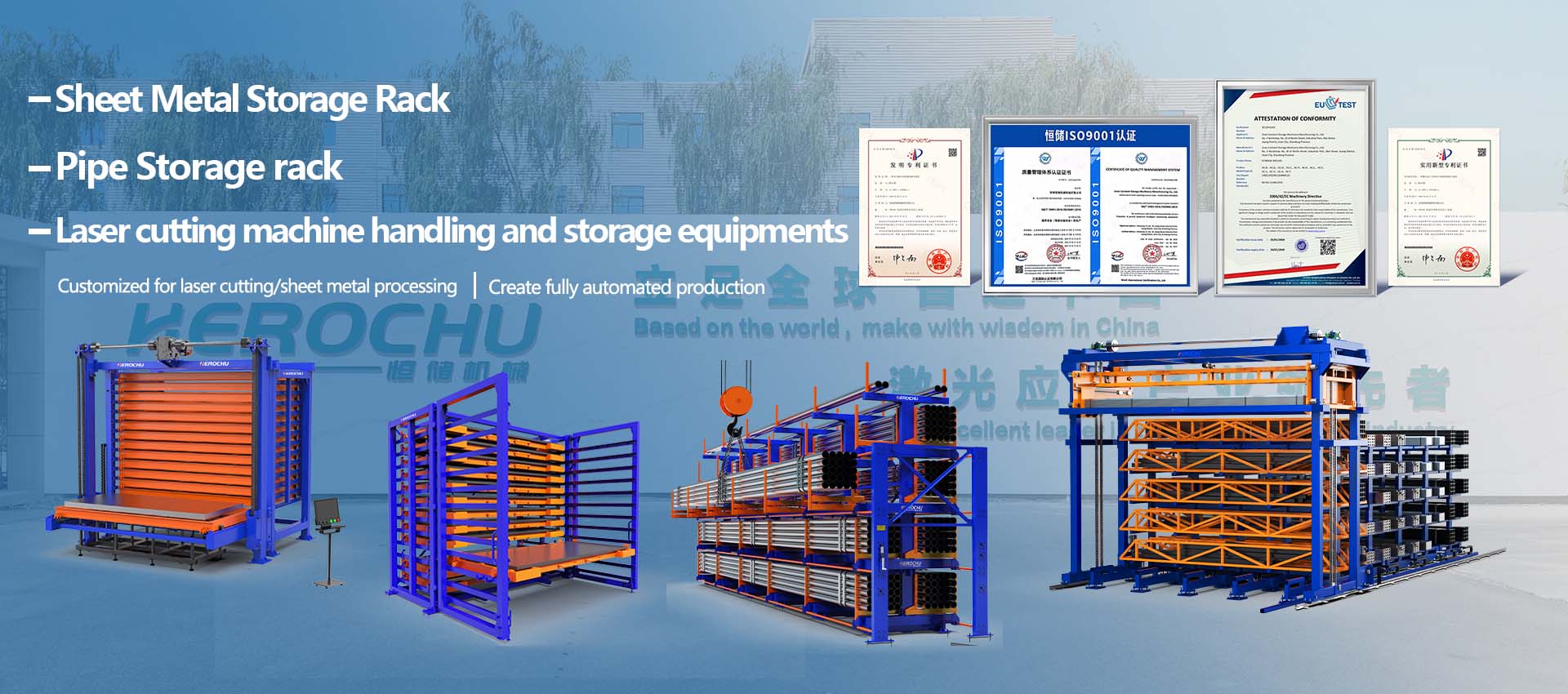
When an extrusion line outputs aluminum profiles between 5 and 8 meters in length, the downstream warehouse immediately faces a structural problem. Standard selective pallet racking was never dimensioned for slender, high-value extrusions that sag under their own weight if support points are too far apart. Forklift aisles consume floor area that could otherwise hold finished goods. Surface contact with bare steel arms leaves scratches that downstream anodizing or powder-coating lines cannot always hide. Herochu engineered its telescopic cantilever rack for aluminum profiles ranging from 5m to 8m in length to eliminate each of these failure modes at the structural level rather than through operator discipline.
Why 5-to-8-Meter Aluminum Profiles Demand a Dedicated Rack Geometry
Aluminum extrusions in the 5–8 meter range occupy a difficult middle ground. They are too long for conventional bar stock racks and not quite long enough to justify a full-length structural tower system. Their modulus of elasticity—approximately 70 GPa, roughly one-third that of carbon steel—means a 6-meter profile suspended between two widely spaced supports deflects measurably under gravity alone, long before any handling load is applied. Over weeks of storage that deflection becomes permanent set, and a profile that entered the rack straight leaves it with visible camber.
Herochu addresses this through tier geometry rather than through thicker stock. The Herochu engineering team configures each installation based on the actual extrusion profile mix the customer handles, not on a generic catalog dimension. Each tier on the HC-G6053 and HC-G6053S models carries arms spaced to provide a minimum of three contact points along a 6-meter profile, dropping mid-span deflection below measurable thresholds. The clear space between opposing columns is set at a standardized 600 mm and can be widened on custom orders to accommodate bulkier extrusion bundle cross-sections without compromising the three-point support rule.
Telescopic Kinematics and 100 Percent Arm Extension
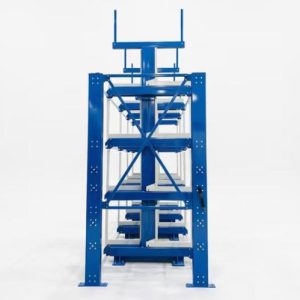
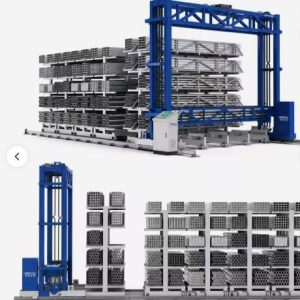
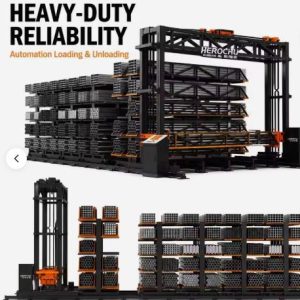
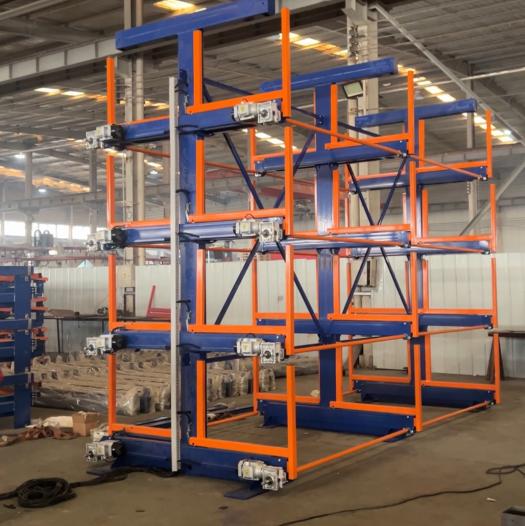
The defining feature of this system is the telescopic arm mechanism. Each arm runs on sealed linear bearings and hardened chrome shafts, extending outward up to 1,000 mm under full rated load. In the fully extended position, every tier presents 100 percent of its stored inventory to the aisle. An overhead crane or vacuum lifter can pick a specific bundle from any tier without reaching past or disturbing adjacent material.
This contrasts sharply with fixed cantilever designs, where inner tiers are shadowed by the arms above them and operators must either accept reduced selectivity or use specialized reach equipment. Herochu eliminated that compromise when designing the telescopic kinematic platform. For aluminum profiles—where each bundle may represent a different alloy temper, wall thickness, or surface finish—the ability to retrieve one bundle without moving the others translates directly into reduced handling damage and shorter order-picking cycles.
Q235B Structural Frame and Dual-Beam Crossbar Load Distribution
The load-bearing frame is manufactured from Q235B high-strength carbon steel, specified for a minimum yield strength of 235 MPa. Column bases, uprights, and arm connection points are all produced from this material, giving the rack a consistent mechanical baseline across every structural joint.
Arm connections use a dual-beam crossbar configuration. Rather than transferring the full tier load through a single bolted junction, the load path splits across two parallel structural members. This reduces bending moment concentration at the arm-to-column interface and stiffens the assembly against the lateral forces generated when a crane withdraws a bundle that has settled into its supports. The HC-G6053 carries 3,000 kg per level across five tiers; the HC-G6053S mirrors those dimensions in a single-sided configuration for placement against a wall line.
Surface Protection Engineered Into the Storage Interface
Aluminum profiles are scored, gouged, and contaminated far more often by their storage interface than by the extrusion press itself. Herochu equips each arm with optional rubber or polyethylene contact sleeves that isolate the extrusion surface from the bare steel arm. The sleeve material is selected for low durometer hardness, ensuring it conforms to the profile cross-section without inducing point loads on thin walls.
For bundles stored with interleaving separators—common practice for flat extrusions destined for architectural glazing—the tier depth accommodates separator boards without reducing the effective bundle capacity. Galvanized zinc coatings on arm surfaces provide a secondary defense against galvanic interaction between stored aluminum and the steel rack structure.
Operational Workflow and Space Recovery
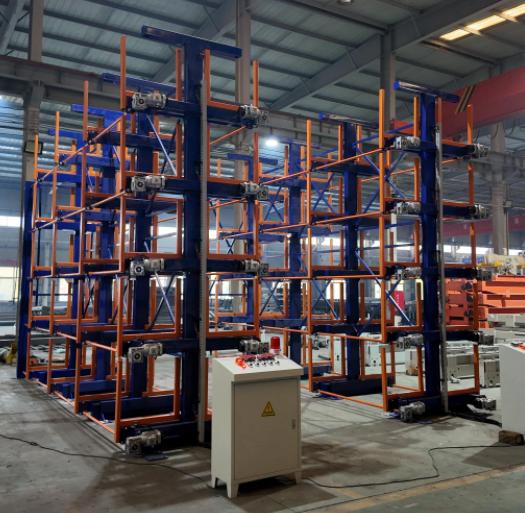
Material arrives from the extrusion line, is bundled to the required pack size, and is placed by overhead crane directly onto an extended tier. The tier retracts, the crane moves to the next assignment, and the profile sits in its dedicated compartment until the downstream cutting or anodizing line calls for it. No forklift enters the rack bay, no wide turning aisle is required, and no operator walks between stored bundles to locate a specific pack.
Vertical air up to 15 meters is utilized through tier counts that can be customized beyond the standard five-level configuration. Facilities that previously devoted an entire bay to flat-stacked aluminum on the floor routinely recover 60 to 80 percent of that footprint after installing a Herochu telescopic system along the same wall line.
Model Selection and Customization Path
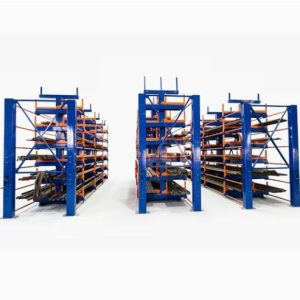
The HC-G6053S single-sided unit suits facilities where the rack backs onto a wall or machine line, offering full arm extension on one face only. The HC-G6053 double-sided unit doubles the storage face per column footprint and is the preferred layout for central warehouse aisles. Both models accept the full range of arm sleeve options, tier-count customization, and clear-space adjustment. For facilities handling profiles beyond 6 meters, the Herochu platform scales upward through the HC-G9065 (9,000 mm pipe length, 5,000 kg per level) and HC-G12065 (12,000 mm pipe length, 5,000 kg per level), preserving the same telescopic kinematics and structural section throughout the Herochu range.
Quality Verification Before Shipment
Every Herochu rack design passes through finite element stress analysis using Simsolid and Ansys before production begins. The simulation models irregular bundle loading, dynamic withdrawal forces, and maximum-weight distribution across all tiers simultaneously. Welded assemblies are verified against CE, UE, and ISO 9001 quality standards, and each batch ships with documented load-test results. The objective is straightforward: when a crane places a 3-ton bundle of architectural aluminum onto an extended arm, the arm holds, the column holds, and the profile leaves the rack in the same condition it entered.