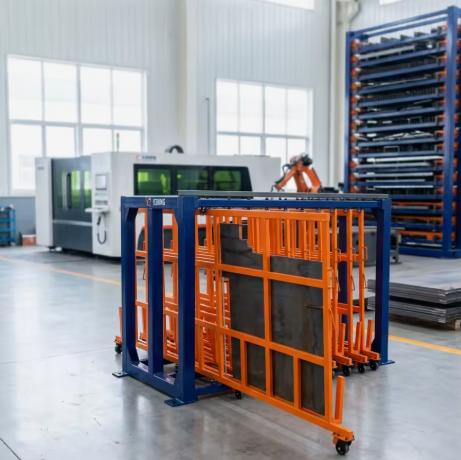
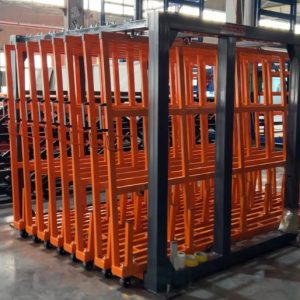
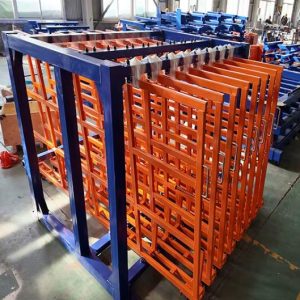
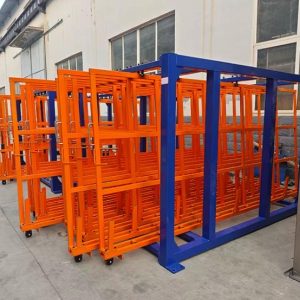
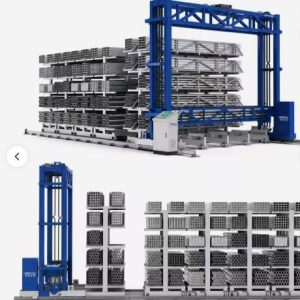
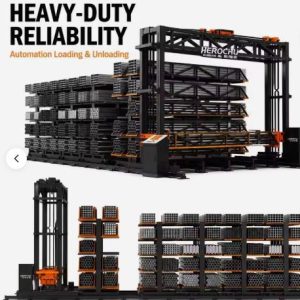
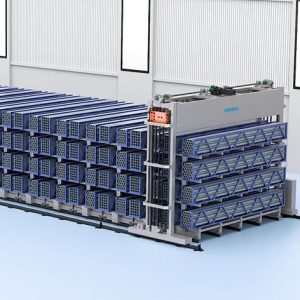
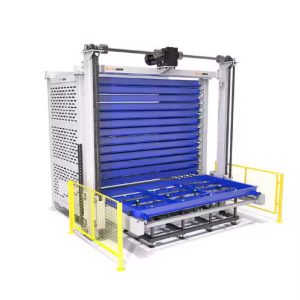
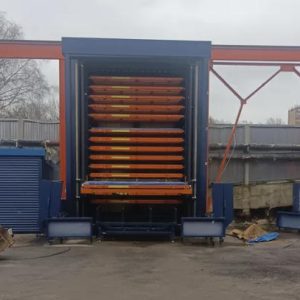
Laser cutting operations generate a continuous stream of drops, offcuts, and partial sheets that carry real material value. The problem is rarely the material itself—it is the absence of a storage system that makes those remnants findable, accessible, and reusable. Herochu’s vertical roll-out drop rack addresses this gap directly, converting what most shops treat as floor clutter into an organized, searchable remnant inventory positioned beside the cutting machine.
Why Floor-Leaning Fails Remnants
The default approach in many workshops is to lean offcuts against a wall or stack them on pallets near the laser. This method fails on three counts. First, access requires moving multiple pieces to reach the one needed, which turns a thirty-second retrieval into a fifteen-minute excavation. Second, edges and surfaces degrade through repeated handling and contact with debris. Third, the material becomes invisible inventory—planners order new sheet while usable drops sit unnoticed in a corner.
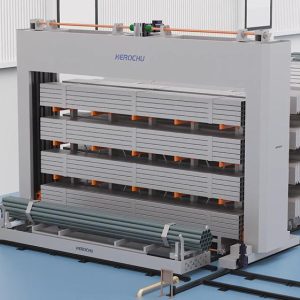
Herochu’s roll-out design eliminates each failure. Every tier operates as an independent drawer that extends fully on sealed industrial bearings. The operator pulls the drawer, sees the entire contents at once, and lifts the required piece with a vacuum lifter or overhead crane. Nothing is buried. Nothing requires rearranging.
Specifications Matched to Real Laser Work
Two standard Herochu configurations cover the sheet sizes most laser shops process. The HC-V2513-8 accommodates sheets up to 2500 × 1000 mm across eight tiers, while the HC-V3015-8 handles 3000 × 1500 mm sheets with the same eight-tier standard. Tier count is customizable by material type—a shop storing thin stainless offcuts can specify more layers than one handling thick carbon plate.
Each level carries up to 1000 kg, a capacity that reflects the density of stacked metal rather than a theoretical maximum. The clear space between tiers is adjustable around a 60 mm baseline, allowing shops to tune the rack to their actual material profile rather than accepting wasted vertical gaps.
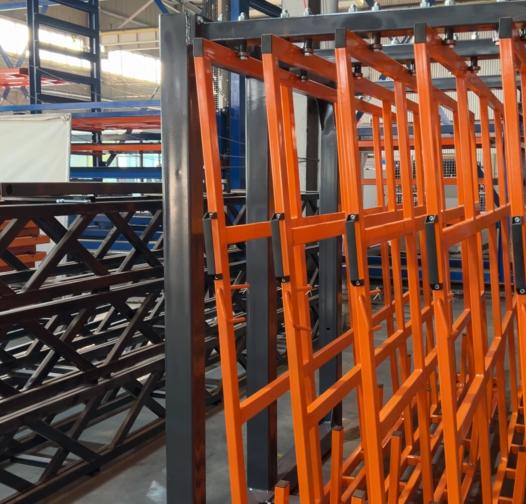
The Sealed Bearing Difference
Roll-out mechanisms live or die by their bearings. Open bearings in a laser cutting environment collect metal fines, cutting dust, and coolant residue within months, turning smooth drawers into grinding ones. Herochu specifies sealed bearings tested to 30,000 open-close cycles, a figure that translates to over a decade of functional life in typical two-shift operation. The sealed assemblies retain lubrication and exclude the contaminants that destroy unsealed alternatives.
Full Extension for Crane and Vacuum Access
Partial extension is a safety hazard when heavy plate is involved. A 1000 kg sheet cannot be manhandled from a half-open drawer—it must be lifted vertically with the lifting device centered over the load. Herochu’s full-extension geometry moves the load center outside the rack frame, giving overhead equipment unobstructed access from directly above. Non-skid rubber liners inside each drawer prevent plate movement during extension, and partition heights keep individual sheets separated and stable.
Integration With Laser Cell Workflow
The rack’s value multiplies when placed within arm’s reach of the cutting table. The workflow becomes a closed loop: pull the drawer holding the required grade and thickness, lift the sheet to the laser bed, cut the job, return the usable remainder to its assigned tier. The offcut never touches the floor. It never enters a pile. It remains a known, accessible asset from the moment it is created.
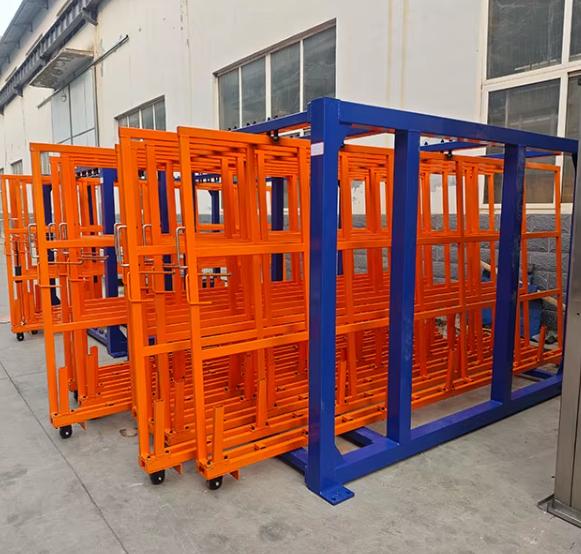
For shops running many small jobs per shift, this proximity changes changeover economics. The next job’s material is identified and staged in seconds rather than searched for across the shop floor. Herochu builds the rack to interface with vacuum lifters, gantry loaders, and automated material handling arms, so the storage system feeds the cutting line rather than interrupting it.
Customization Without Compromise
Every workshop generates remnants in its own pattern. A shop cutting long, narrow components produces drops that fit poorly in drawers sized for full sheets. Herochu customizes drawer dimensions, tier counts, and load ratings to the material profile the shop actually handles. The rack fits the remnants; the remnants are not forced to fit a standard drawer.
For laser cutting workshops evaluating storage, the calculation is straightforward. The material already exists. The question is whether it remains accessible inventory or becomes scrap. Herochu’s vertical roll-out drop rack answers that question in favor of reuse.