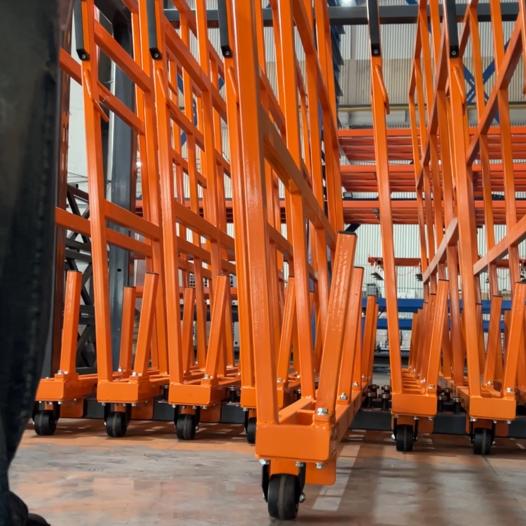
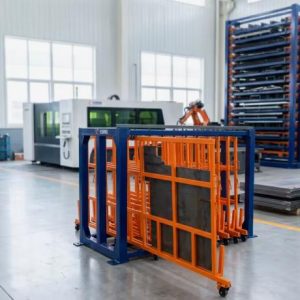
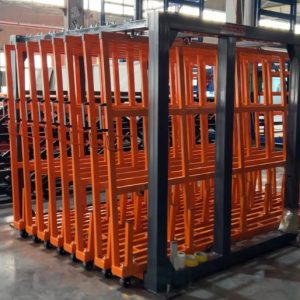
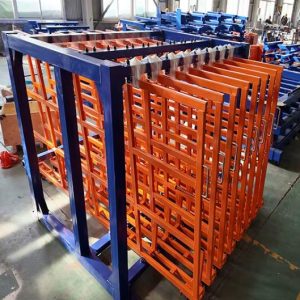
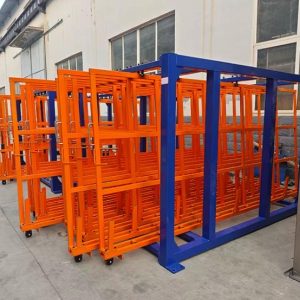
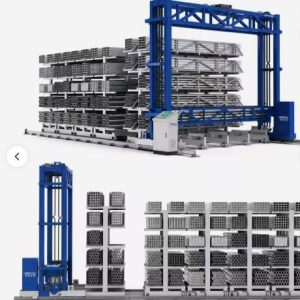
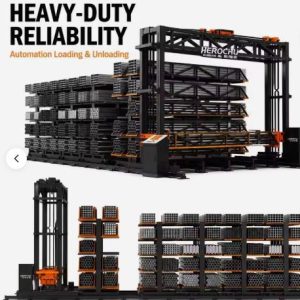
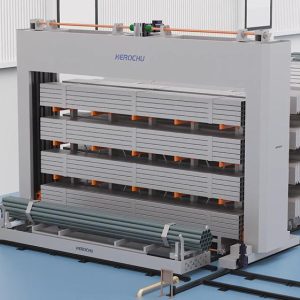
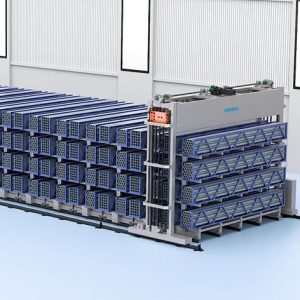
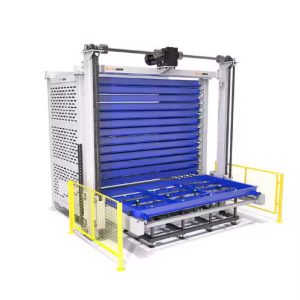
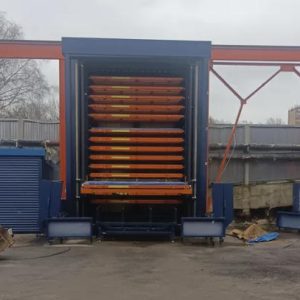
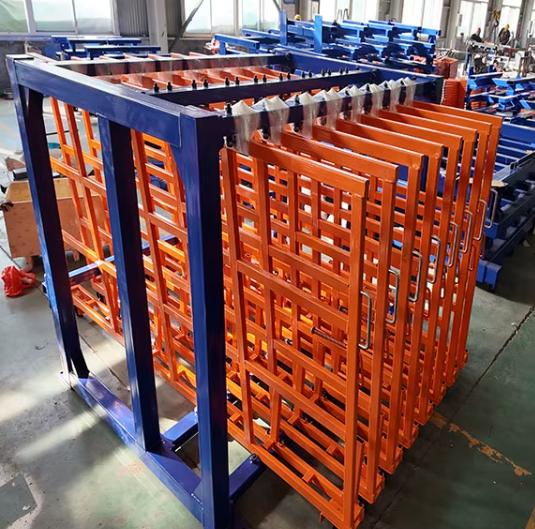
Every laser cutting job produces waste in the literal sense—skeletal webs, edge trims, and cutouts that have no further use. But mixed within that waste stream are remnants that do have value: rectangular drops, partial sheets, and semi-finished blanks that can feed smaller jobs if they can be found and retrieved. Herochu’s vertical roll-out sheet metal remnants rack is built around this distinction, separating recoverable material from true scrap and keeping it accessible.
The Waste Stream Is Not Homogeneous
A laser cutter does not produce uniform waste. The skeleton left after nesting may be scrap, but the rectangular offcut from the end of a sheet is a usable asset. The problem is that both end up on the floor together. Without a system that separates them at the point of generation, the valuable piece becomes contaminated by contact, buried under other material, or simply forgotten.
Herochu’s rack addresses this at the source. Placed beside the cutting table, it gives the operator a designated location for recoverable remnants before they hit the floor. The drawer opens, the usable piece goes in, the drawer closes. The material enters organized storage at the moment it is created, when its dimensions and grade are still known.
Drawer-Based Sorting by Material and Thickness
Laser shops processing multiple gauges and alloys need more than a single storage location. Herochu’s multi-tier design allows each level to serve a specific material category. Level one for 16-gauge mild steel offcuts. Level two for 14-gauge stainless. Level three for aluminum drops above a minimum usable size. The physical separation reduces search time and prevents the cross-contamination that occurs when different metals share a pile.
Tier count is customizable by material type, and the clear space between levels adjusts to the profile being stored. Thin remnants require minimal clearance; stacked pieces or thicker sections need greater opening height. The rack is configured to the shop’s actual waste profile, not a generic standard.
Protecting Remnant Value Through Storage
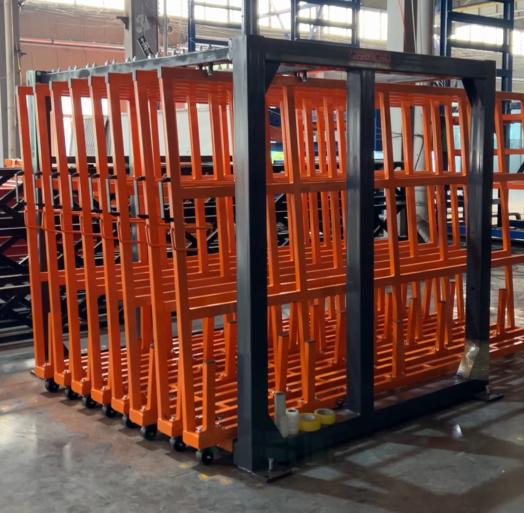
A remnant that survives cutting but arrives at storage with bent edges, scratches, and surface damage has lost much of its value. The handling between machine and storage determines whether the piece remains usable. Herochu’s roll-out drawers minimize handling damage because the remnant stays on the drawer surface. It is placed once and retrieved when needed. There is no pile-to-pile transfer, no leaning against walls, no stacking under heavier pieces.
Non-skid liners hold the material in place during drawer movement. The drawers contain the remnant within a defined space, reducing the risk of the material sliding, falling, or contacting adjacent pieces. For shops cutting coated, polished, or otherwise surface-critical materials, this protection extends the usable life of every remnant.
Safety in an Unpredictable Material Stream
Remnants are awkward. They are irregular shapes, uneven weights, and dimensions that do not match standard handling equipment. A storage system that does not account for this variability creates risk—falling pieces, unstable piles, and manual lifting that exceeds ergonomic limits.
Herochu’s rack creates a controlled environment. The drawer presents the remnant at a consistent height. The operator attaches a vacuum lifter or sling without reaching into a pile or lifting from floor level. The auto-latch holds the drawer open during retrieval, preventing the drawer from rolling closed unexpectedly. The material is contained within a steel frame rather than balanced against a wall.
Integration With Existing Waste Workflows
The rack does not replace scrap bins or recycling contracts. It sits upstream of them, capturing material that would otherwise enter the waste stream prematurely. A shop with a Herochu rack beside each cutting cell creates a distributed remnant capture system. Every operator can deposit usable offcuts without walking to a central storage area. The material is sorted by the person who knows its dimensions and grade—the machine operator who just cut the job.
For shops tracking material costs, the visibility itself has value. When remnants have designated locations, the shop can see how much reusable material is on hand. That visibility changes purchasing behavior. Planners quote jobs against known remnant stock rather than assuming every job requires a new sheet.
Built for the Laser Environment
Laser cutting bays generate heat, dust, and vibration. Herochu builds the rack with sealed bearings that exclude metal fines and cutting residue, powder-coated surfaces that resist corrosion, and structural steel that handles the load without deflection. The rack is an industrial tool, not a storage accessory—it is designed for the same environment as the machine it serves.
The calculation is simple. Every remnant that enters the rack is a piece of material the shop does not need to purchase again. Every remnant that reaches the scrap bin because it could not be found is a loss. Herochu’s vertical roll-out rack shifts the balance toward recovery.