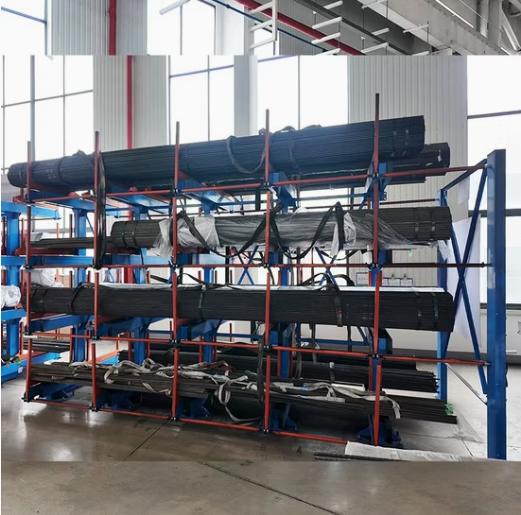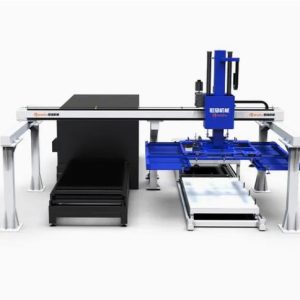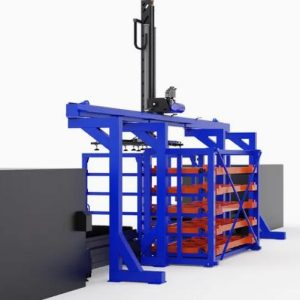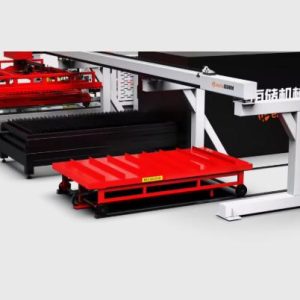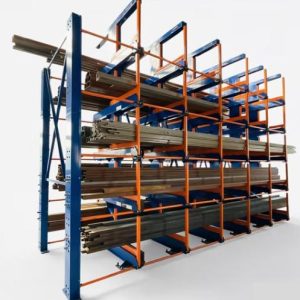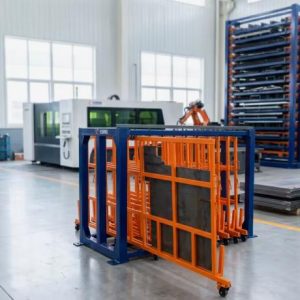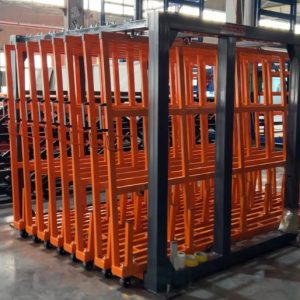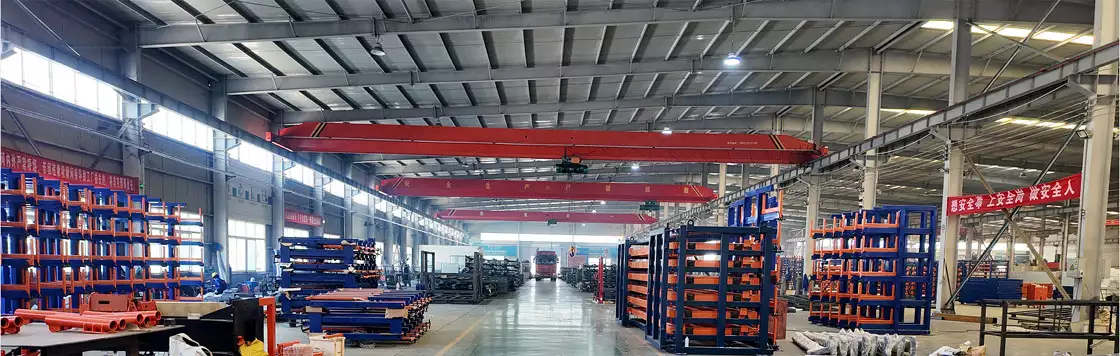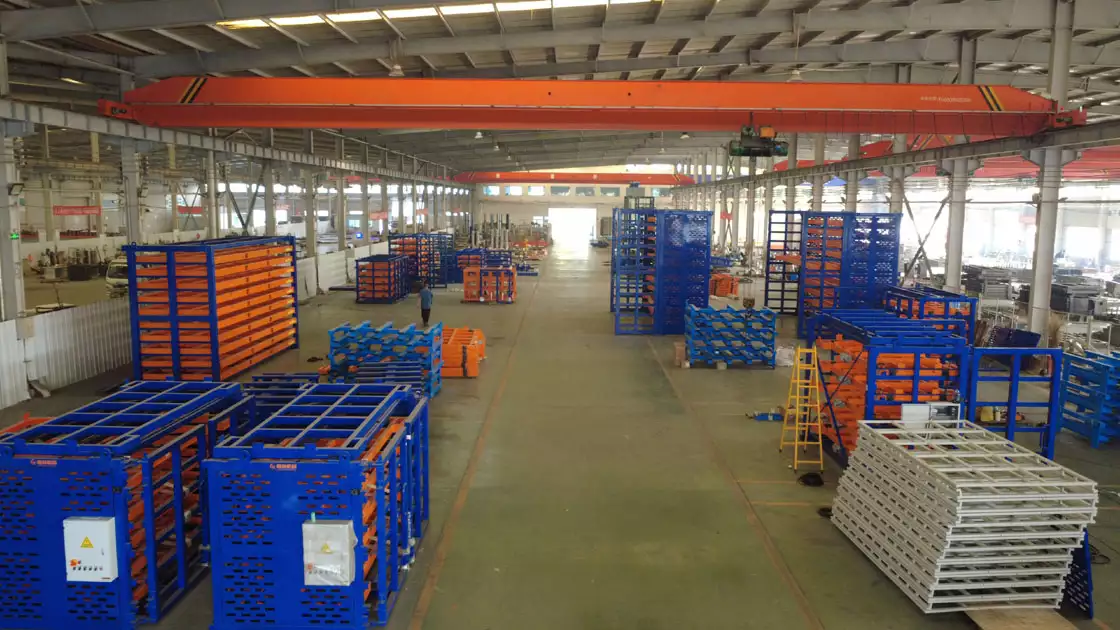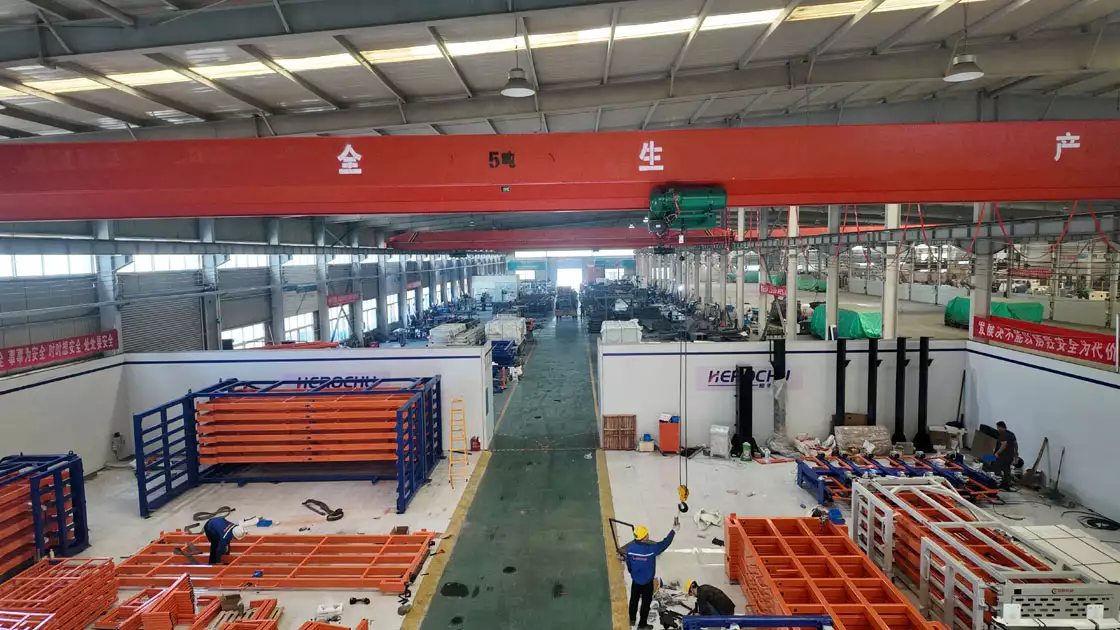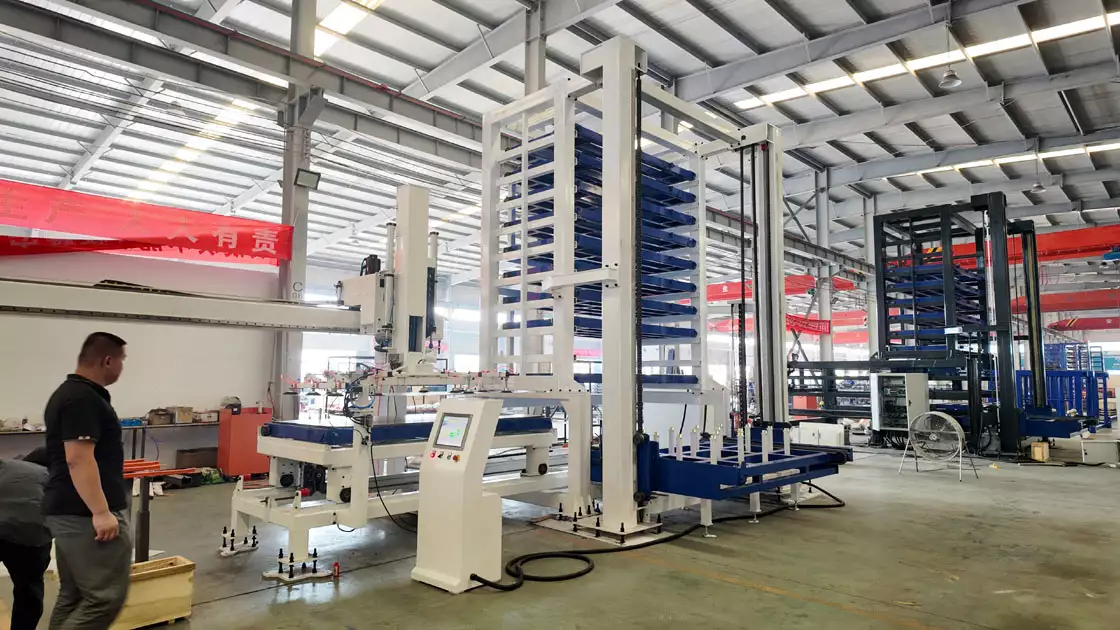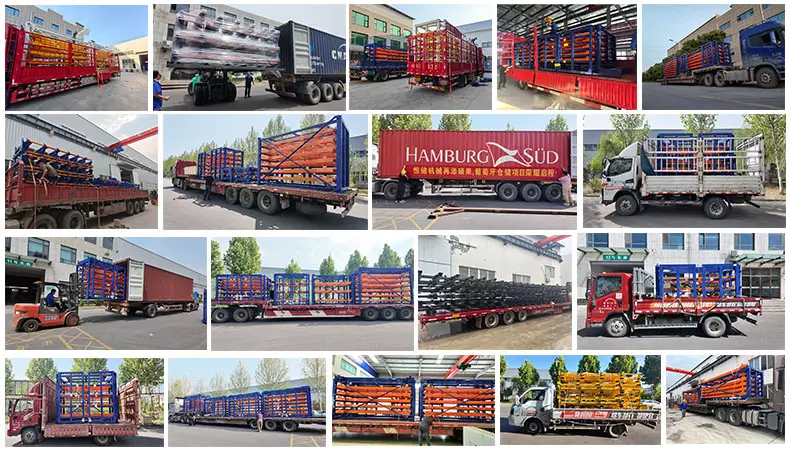
Industrial long material and bulk goods—steel pipe, structural tube, bar stock, angle iron, timber bundles, and similar inventory—share a common storage failure mode. Stacked on the floor, they consume square footage that no facility can spare, they migrate under their own weight, and they hide the specific item an operator needs behind layers of unrelated stock. Retrieving a single bundle from a floor stack can consume more time than the downstream operation that called for it. Herochu engineered its heavy duty cantilever long material and bulk goods racking system to resolve these issues at the structural level, carrying up to 5,000 kg per tier across configurations that scale from 6 to 12 meters of stored length.
The Structural Challenge of Heavy Long Material
Long material stored at industrial weights imposes demands that standard pallet racking cannot meet. A 6-meter bundle of structural steel tube can weigh 3,000 to 5,000 kg. A 12-meter bundle of pipe can exceed that. These loads are not static; they shift during crane placement, settle under gravity over days of storage, and transmit dynamic forces into the rack frame every time an adjacent tier is loaded or unloaded. The rack structure must absorb these forces without column drift, arm deflection, or base plate movement.
Herochu meets this through material selection and connection design. The foundational frame—upright columns, base plates, and arm connection assemblies—is manufactured from Q235B high-strength carbon steel, rated at 235 MPa minimum yield strength. This is not a cosmetic specification; it is the structural baseline that determines whether the rack maintains dimensional stability under years of heavy cyclic loading or whether it gradually drifts out of plumb and begins to compromise every subsequent load placement.
Dual-Beam Crossbar Configuration and Load Distribution
The arm-to-column junction is the highest-stress point in any cantilever rack. A single-bolt connection there concentrates the full tier load, the bending moment generated by arm extension, and the dynamic withdrawal force into one mechanical interface. Over time, that concentration produces bolt stretch, hole elongation, and progressive joint loosening.
Herochu eliminates this failure path with a dual-beam crossbar design. Two parallel structural members transfer load from arm to column, halving the stress concentration at the junction and stiffening the assembly against lateral forces. Under the 5,000 kg per level rating of the HC-G9065 and HC-G12065 models, this configuration maintains joint integrity through thousands of load cycles where a single-connection design would require periodic retorquing or replacement.
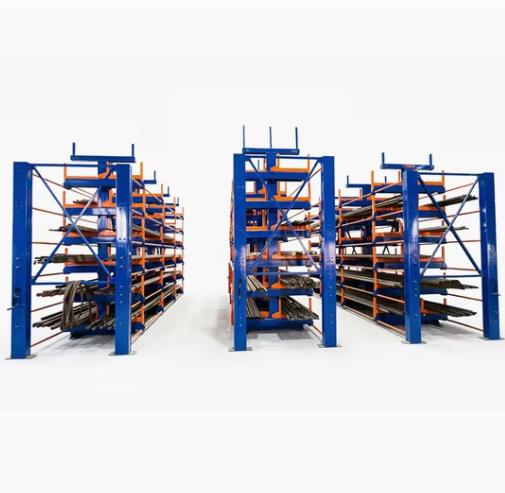
The engineering is verified before production through finite element analysis. Simsolid and Ansys simulations model the actual loading pattern: maximum weight on every tier simultaneously, dynamic crane withdrawal forces applied at full arm extension, and the irregular load distribution that occurs when operators place partial bundles or off-center loads. Designs that show stress margins below threshold are re-engineered, not shipped.
Model Range and Capacity Scaling
The platform scales across four standard models to match the material length and weight profile of the installation:
- HC-G6053S: Single-sided, 6,000 mm pipe length, 3,000 kg per level, five tiers. The wall-line configuration for facilities that need storage along a perimeter without occupying floor depth on the back side.
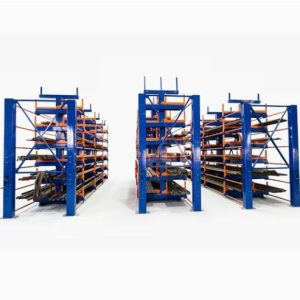
- HC-G6053: Double-sided, 6,000 mm pipe length, 3,000 kg per level, five tiers. The central-aisle configuration that doubles storage face per column footprint.
- HC-G9065: 9,000 mm pipe length, 5,000 kg per level, six tiers. For longer stock and heavier bundles common in structural steel service centers.
- HC-G12065: 12,000 mm pipe length, 5,000 kg per level, six tiers. The maximum-length configuration for mill stock and heavy structural sections.
All four Herochu models share the same structural section, kinematic mechanism, and connection design. A facility that installs HC-G6053 racks today and adds Herochu HC-G12065 capacity next year integrates the two without engineering conflict. Clear space between columns is standardized at 600 mm and customizable to accommodate bundle geometries outside the standard range.
Telescopic and Roll-Out Arm Operation
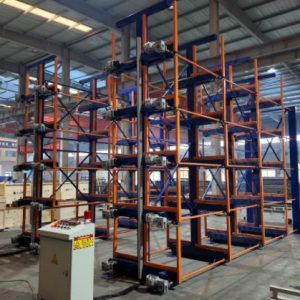
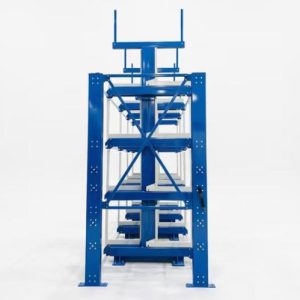
Arms extend outward on sealed linear bearings and hardened chrome shafts, reaching up to 1,000 mm of travel under full rated load. At full extension, every tier presents 100 percent of its stored inventory to the aisle. An overhead crane picks any bundle from any tier without reaching past adjacent material, without a forklift entering the rack bay, and without an operator walking between stored bundles.
The 2-degree to 4-degree upward tilt on loaded arms prevents round stock—pipe, tube, bar—from rolling off during extension. Arm-end pin retainers and base pin locks secure the arm in the extended position. Cross-braced uprights deliver a 38 percent increase in torsional stiffness over unbraced designs, holding the column steady against the lateral forces generated when a loaded bundle is withdrawn.
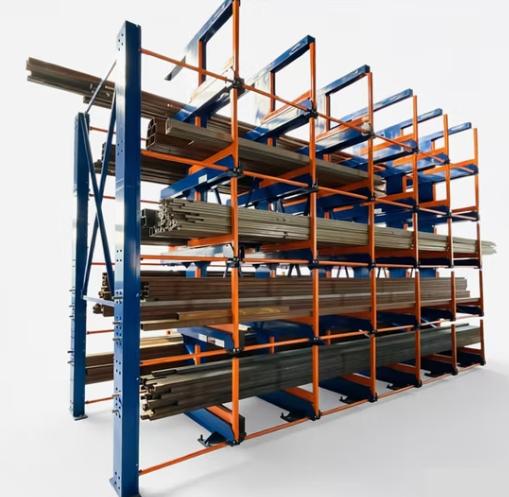
For high-throughput facilities, the platform offers electrically driven roll-out as an alternative to the manual crank. Powered operation suits environments where tiers cycle dozens of times per shift and the operator time saved by eliminating the crank motion offsets the drive mechanism investment.
Bulk Goods and Mixed Material Storage
The system stores more than long bar and tube. Angle iron, channel, flat bar, timber bundles, and other bulk goods load onto the same arms with configuration changes limited to sleeve selection and tier spacing. The compartmentalized tier design—with independent cells on each level—prevents adjacent bundles of different material types from migrating into each other during load cycling.
Remnant trays on each tier hold leftover cut lengths, keeping short pieces organized by material type and length rather than accumulating on the shop floor. A facility storing structural steel today can transition to mixed material—aluminum extrusions, copper bar, brass rod—by reconfiguring arms and sleeves, not by replacing the rack. This flexibility reflects the Herochu engineering principle that the structural frame is a permanent capital asset while the storage interface evolves with the operation.
Space Recovery and Vertical Utilization
By eliminating the wide forklift turning aisles required by static racking and utilizing vertical air up to 15 meters, facilities routinely recover 60 to 80 percent of the floor area previously dedicated to long material storage. That recovered footprint becomes productive manufacturing space—additional machine capacity, assembly area, or finished goods staging. The rack occupies a narrow column line along a wall or aisle center and stores vertically what floor storage spread horizontally.
Quality Assurance and Installation Standard
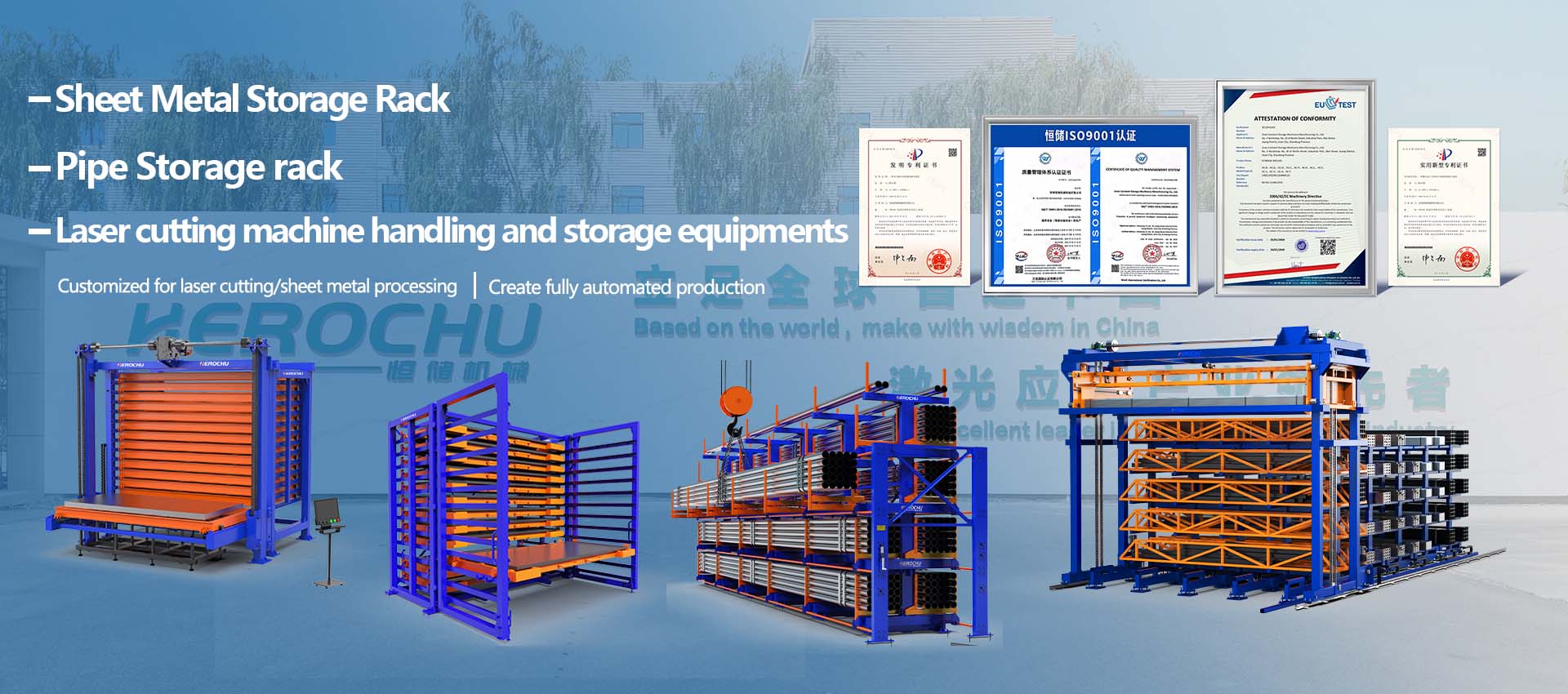
Every Herochu heavy duty cantilever rack ships with CE, UE, and ISO 9001 certification. Installation follows a documented procedure: base plates anchored to a leveled concrete slab capable of carrying the point loads at full rack capacity, columns plumbed and cross-braced to specification, arms installed at the configured tier spacing, and each tier load-tested before handoff. The structural engineering, the kinematic mechanism, and the installation standard are designed as a single integrated system—because a rack is only as reliable as the weakest of those three elements.