Metal fabrication workshops operate under a structural constraint: cutting, punching, and forming equipment requires continuous, accurate material supply, but floor space is finite. The conventional response is to stage plates near the machines and rely on operator experience to find the right material. This works at low volume. Once order intake increases, material search, handling, and waiting become the constraint rather than machine capacity.
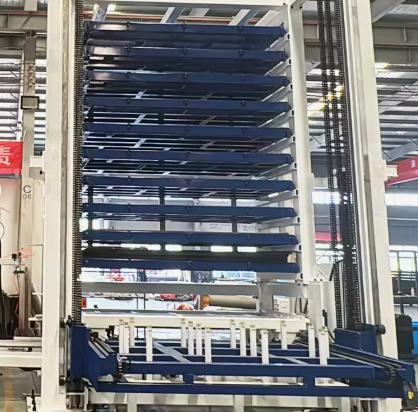
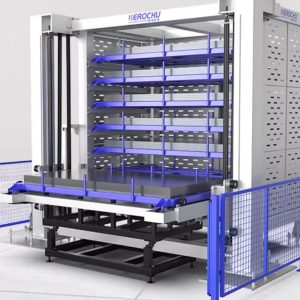
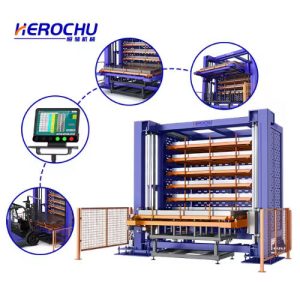
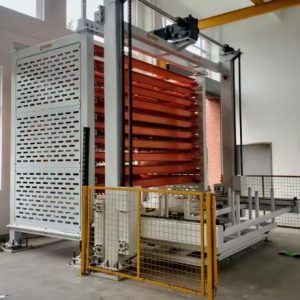
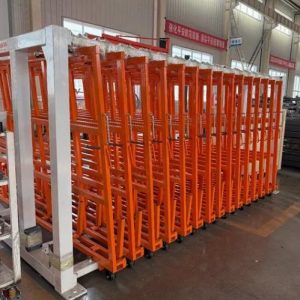
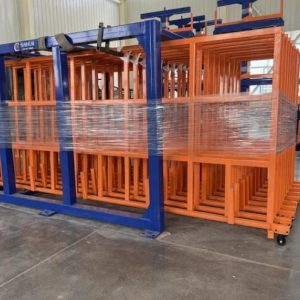
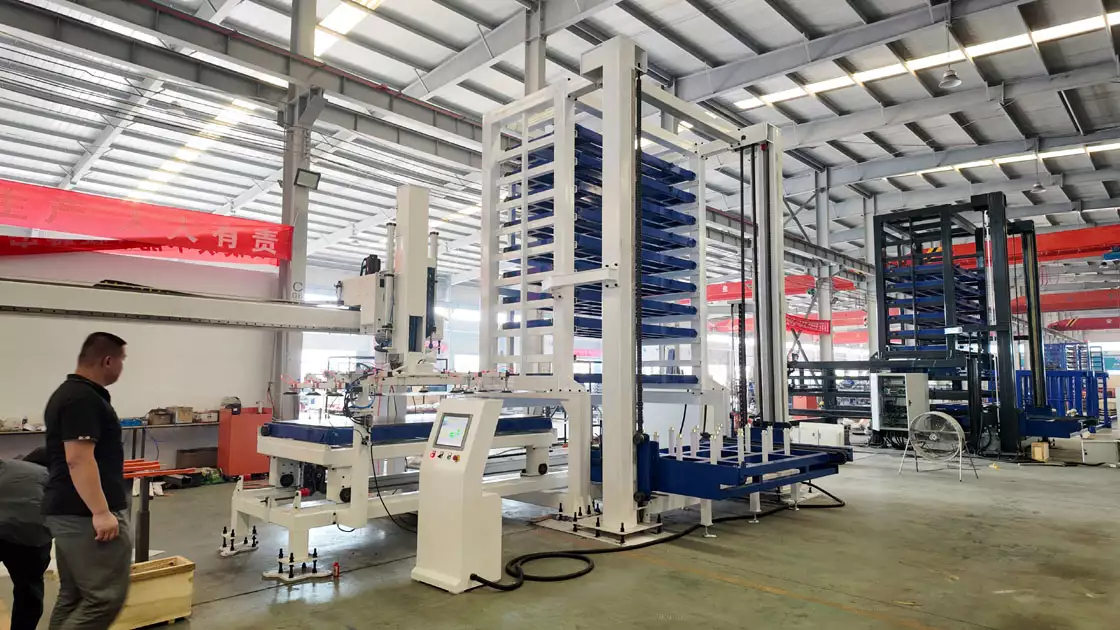
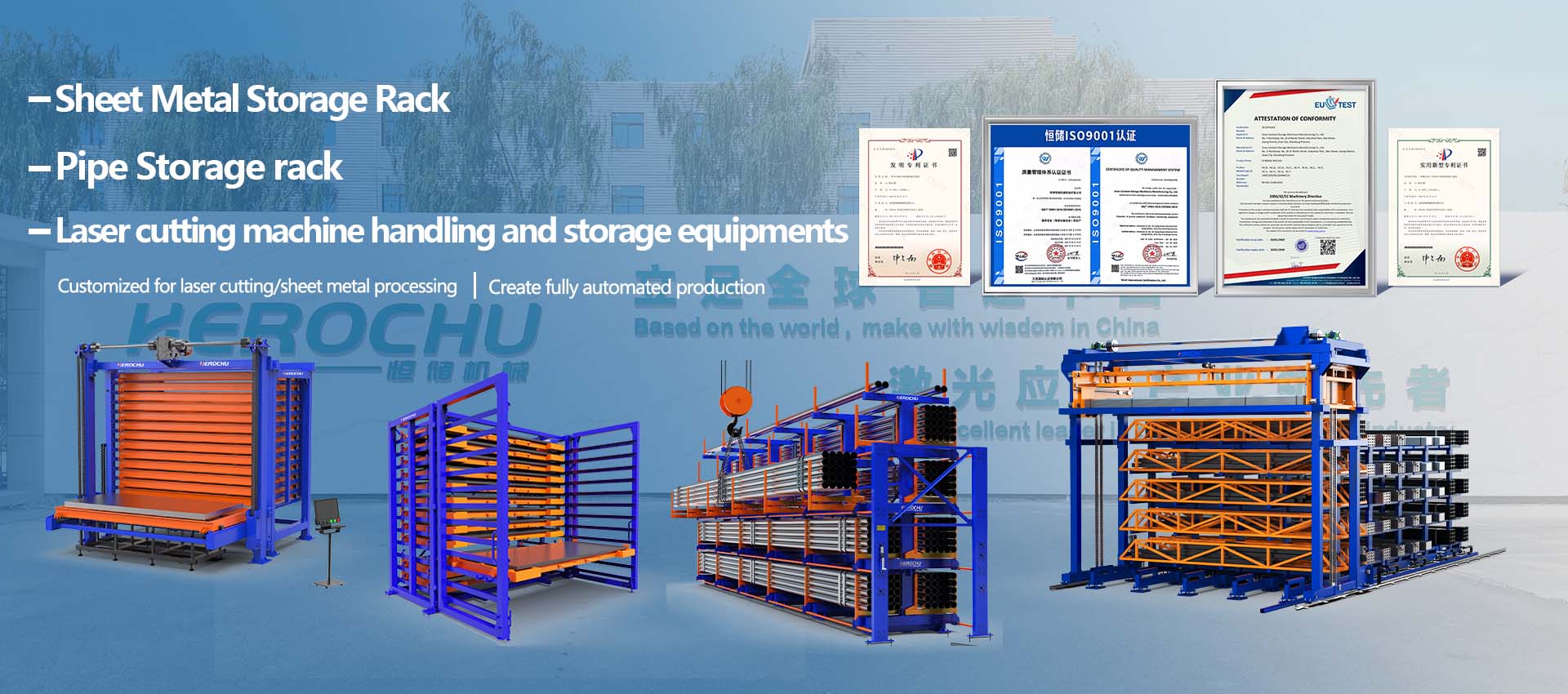
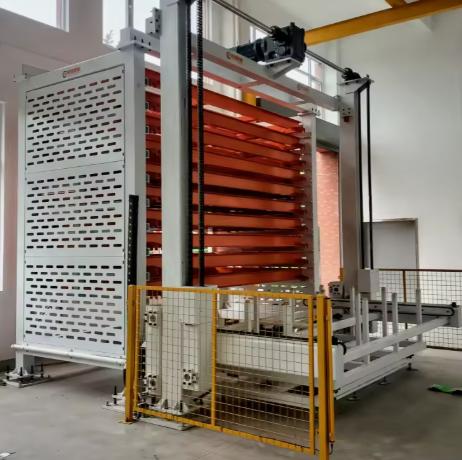
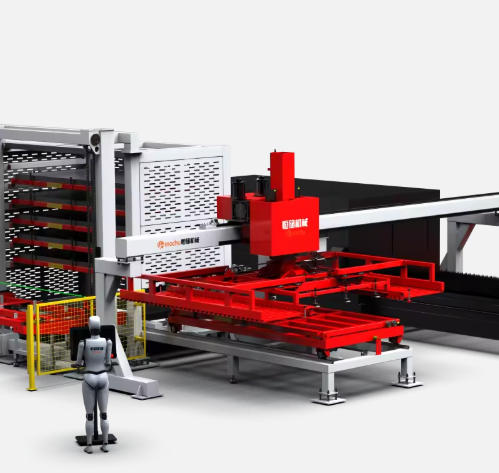
Herochu’s Sheet Metal Storage System addresses this constraint directly. It changes the material handling paradigm from “operator finds material” to “material arrives where the operator needs it.” The vertical tower consolidates scattered floor stock into a single compact footprint, and the automated retrieval delivers the required plate to the extraction point without manual search.
Integration with Processing Equipment
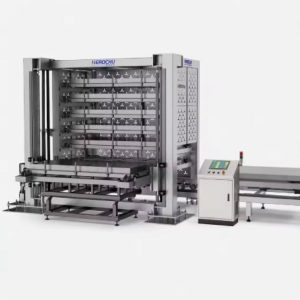
The extraction point is positioned to interface with common fabrication equipment. Laser cutting machines typically have loading tables at heights between 700mm and 900mm. Herochu’s discharge height can be matched to this range, allowing plates to move from tower to cutting table with minimal intermediate handling.
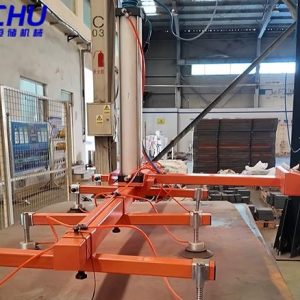
For machines equipped with automatic loading systems, Herochu offers interface options for robotic arms or gantry loaders. The system receives a production task from ERP or MES, retrieves the specified plate, and delivers it to the transfer position. The loading device completes the transfer without operator involvement. This capability extends material preparation into unattended shifts, decoupling plate availability from operator presence.
Classification and Storage Logic
Fabrication workshops typically stock plates across multiple dimensions: material type (mild steel, stainless, galvanized, aluminum), thickness, and sheet size. Herochu’s PLC program supports classification along any combination of these parameters. Operators can assign storage zones by material, layer by thickness, or define custom rules that match their specific inventory profile. Retrieval is initiated by entering the material and thickness on the touchscreen, and the system locates the correct tray automatically.
The operational value of this classification is error reduction. In floor-stacked storage, plates of similar thickness and different material are easily confused. A misidentified plate that enters a cutting program produces a batch of non-conforming parts before the error is detected. Herochu’s digital inventory control ensures that the plate delivered matches the work order specification, removing the source of this failure mode.
ERP and WMS Integration
Herochu connects to factory ERP systems through REST API or direct database interfaces. When a plate enters storage, the system writes dimensions, material grade, thickness, weight, and timestamp to the inventory database. Material requirements planning modules in ERP can query this data directly to assess availability and trigger replenishment.
When a work order is released, ERP can push the required plate specification to Herochu, which reserves the material and queues it for retrieval. Consumption data returns to ERP in real time. Material planners no longer need to conduct periodic physical counts or confirm stock status by phone. The information lag between physical inventory and system records—a persistent source of planning error in fabrication shops—is eliminated.
Floor Space Recovery
The ideal fabrication workflow places processing equipment in a compact cluster with minimal material travel distance. Conventional plate storage consumes large areas of floor space that could otherwise serve production. Herochu’s vertical tower moves inventory off the floor and into vertical space. A single tower occupies a footprint equivalent to a few pallet positions but holds several times the material that could be stored in the same floor area using conventional methods. The released space can accommodate additional machines, staging buffers, or workflow corridors that reduce non-value-added travel.
Operator Interface
The touchscreen interface is designed around how shop floor personnel actually work. The display shows current inventory across all storage levels, including specifications, quantities, and weights. Retrieval requires selecting the target plate and confirming. The system handles the rest. No programming knowledge is required, and training time is measured in minutes rather than days. For operations running multiple shifts, this simplicity ensures consistent usage across the entire production team.