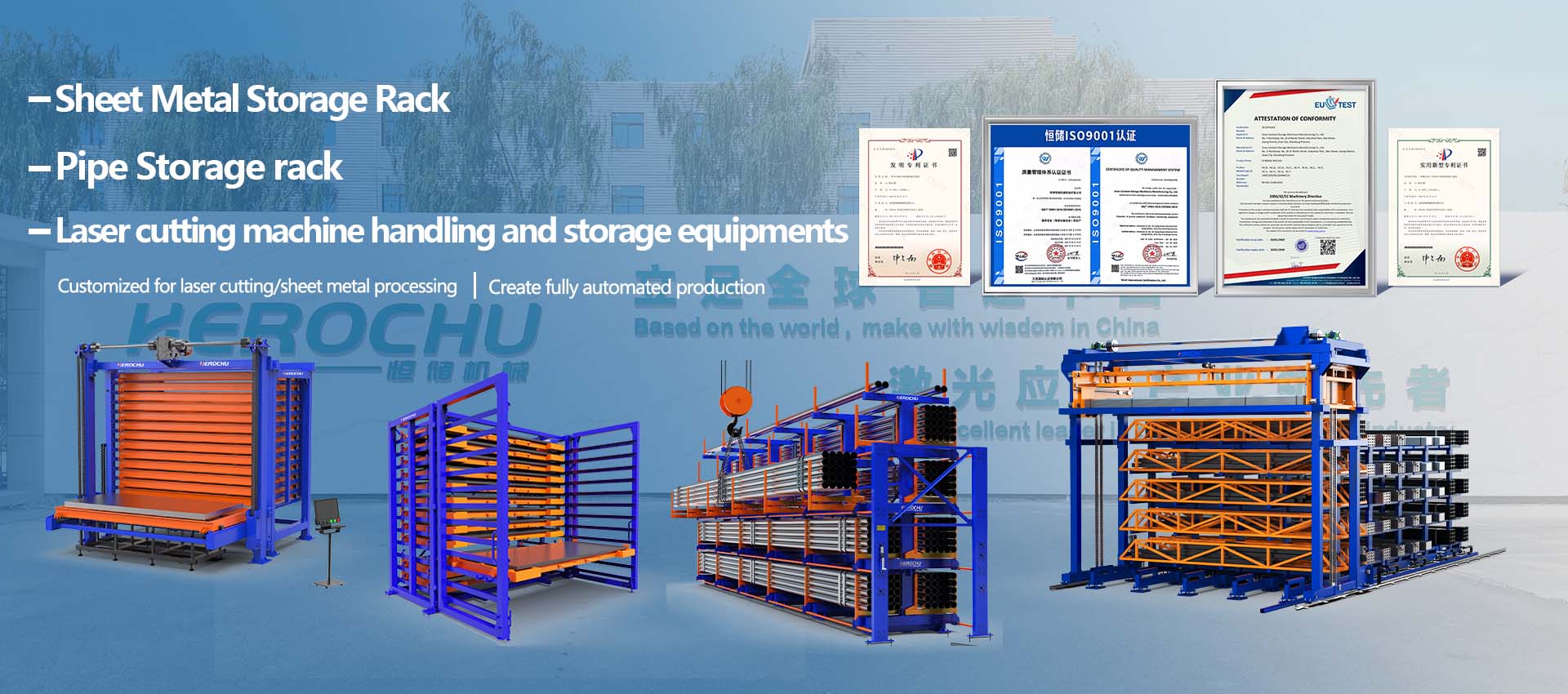
Fiber laser cutting machines have transformed sheet metal fabrication with higher cutting speeds, lower operating costs, and greater reliability than CO2 predecessors. Yet the material handling side of the equation has not kept pace automatically. A sheet metal loader for fiber laser machine operations must match the cutting technology’s capabilities with equally efficient loading—otherwise the laser sits idle while operators struggle with manual handling.
Herochu’s vacuum lifting and pneumatic manipulator systems are designed for integration with fiber laser cutting workflows. This article examines the specific requirements of fiber laser loading and how Herochu addresses them.
The Speed Mismatch Problem
A modern fiber laser cutting machine can process thin sheet at speeds exceeding 100 meters per minute. For a 3000 mm × 1500 mm sheet with a typical nest pattern, the cutting cycle for 2 mm stainless steel might be 60–90 seconds. Manual loading of that same sheet—removing the previous part and skeleton, then positioning the new sheet—takes 2–4 minutes with a two-person team.
The arithmetic is unforgiving. If cutting takes 90 seconds and loading takes 180 seconds, the laser is idle 67% of the time. Even accounting for the fact that loading occurs while cutting is finishing on the previous sheet, the material handling system is the limiting factor in overall throughput.
A sheet metal loader for fiber laser machine applications must reduce loading time to a fraction of the cutting cycle. Single-operator vacuum lifting achieves this by eliminating the coordination overhead of two-person manual handling and by providing controlled, repeatable sheet placement.
Vacuum Lifting for Fiber Laser Loading
The fiber laser environment imposes specific constraints on material handling equipment:
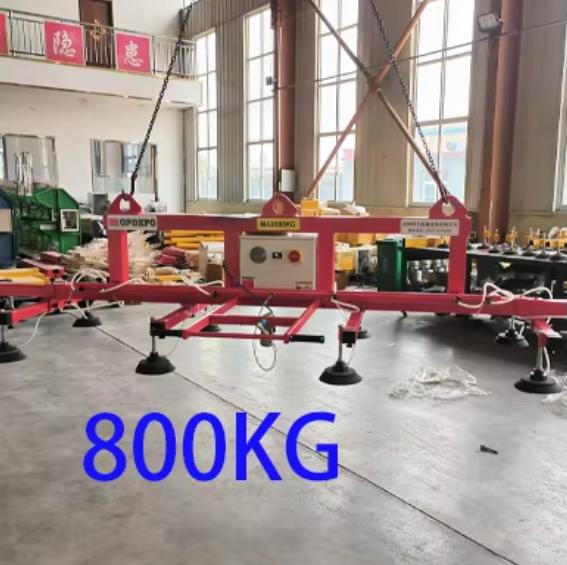
Cleanliness requirements. Fiber laser cutting generates fine particulate and fumes. The vacuum system’s components—cups, hoses, filters—must tolerate this environment without degradation. Herochu uses cup materials and hose compounds selected for resistance to the oils and particulates common in laser cutting shops.
Precision placement. Fiber laser cutting achieves kerf widths measured in fractions of a millimeter. The sheet must be positioned accurately relative to the cutting program’s origin. A vacuum lifter with rotation and lateral adjustment capability allows the operator to align the sheet to the cutting bed’s reference stops without manual nudging.
Avoiding slat disturbance. As discussed in the context of general laser loading, the cutting bed’s support slats are easily disturbed by dragging or sliding a sheet. Vacuum lifting allows vertical placement—the sheet is lowered directly onto the slats without lateral contact.
Skeleton and part removal. After cutting, the operator must remove the finished parts and the remaining skeleton. A sheet metal loader for fiber laser machine can also serve this function, using the same vacuum beam to lift the skeleton for disposal and to handle larger cut parts that require relocation.
Pneumatic Manipulator Technology
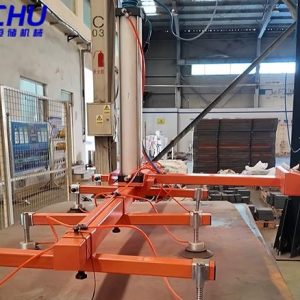
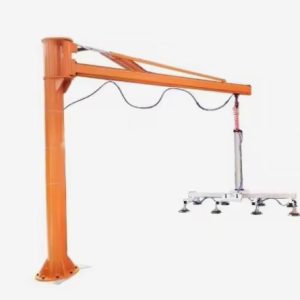
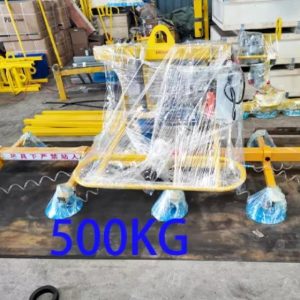
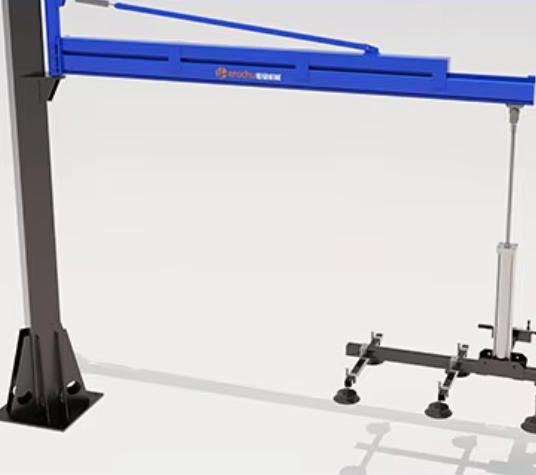
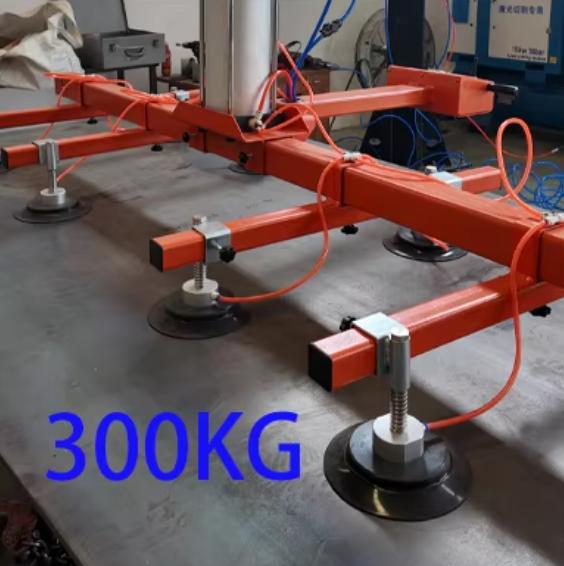
Herochu’s pneumatic sheet plate lifter incorporates a pneumatic manipulator mechanism that provides responsive, low-effort control of the lifting beam’s position. The manipulator uses an air cylinder or pneumatic balancing system to create a nearly weightless feel at the handle, allowing the operator to move even a 500 kg load with minimal physical force.
This responsiveness is particularly valuable in fiber laser loading, where the operator must make precise adjustments to sheet position. A manually counterbalanced or mechanically balanced lifter tends to have higher friction and less sensitivity than a pneumatic manipulator. The result is faster, more accurate placement.
The pneumatic manipulator also contributes to safety. Because the load is effectively “floating,” the operator can stop movement at any point without the load drifting or dropping. This stop-any-position capability is a hallmark of Herochu’s design and a significant advantage over gravity-balanced lifting systems.
Compatibility with Automated Loading Systems
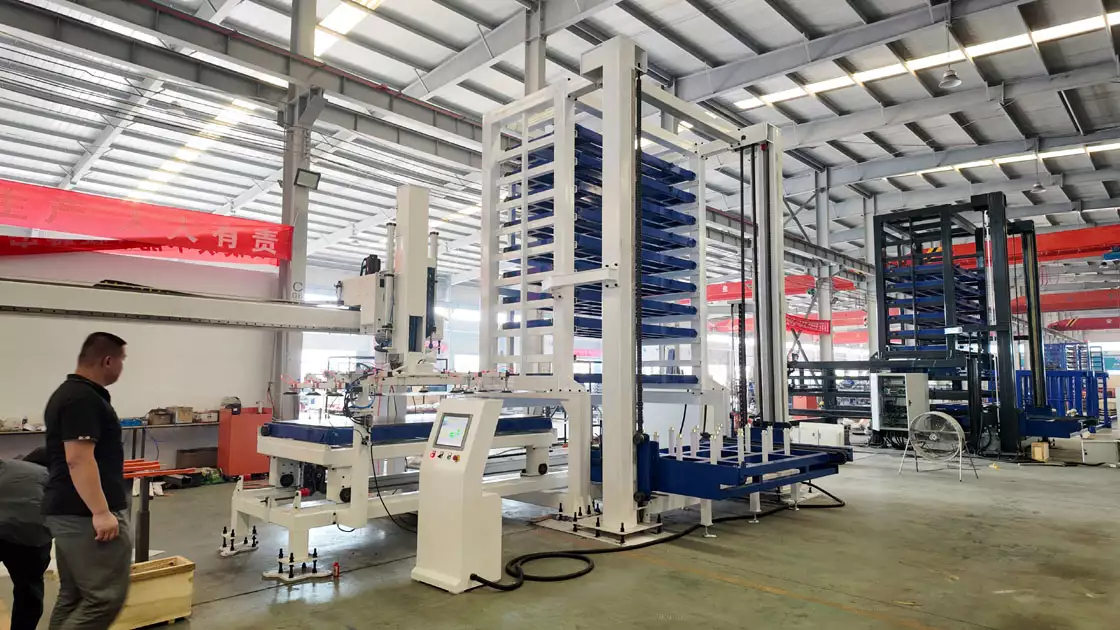
While Herochu’s focus is on semi-automatic lifting with direct operator control, the company’s vacuum lifting components are also compatible with automated loading systems. The vacuum beam and suction cup assemblies can be integrated with gantry or robot-based automation where the production volume justifies full automation.
For shops considering a phased approach to automation, starting with a manual vacuum lifter and upgrading to automated control later preserves the initial investment in vacuum technology while adding motion automation as needs evolve.
The Single-Person Sheet Metal Loading Lifter Advantage
The single person sheet metal loading lifter represents a fundamental shift in how fabrication shops organize their labor. Rather than dedicating two or three workers to material handling, a single operator with a vacuum lifter can manage the loading process for one or more laser cutting machines.
This labor reallocation has cascading benefits. The workers freed from manual loading can be redeployed to higher-value tasks: quality inspection, part sorting, secondary operations, or programming. The shop’s overall productivity increases without additional headcount.
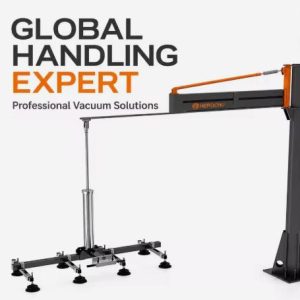
Herochu’s single person sheet metal loading lifter configurations include the floor-mounted HC-RP series and overhead hoisting variants. Both approaches provide the same fundamental capability: controlled vacuum lifting of sheet material by one operator, with safety systems appropriate to the application.
Conclusion
The sheet metal loader for fiber laser machine is not merely an accessory to the cutting equipment—it is a determinant of the cutting operation’s overall efficiency. By eliminating the manual handling bottleneck, a well-designed vacuum lifting system allows the fiber laser to operate at its designed capacity. Herochu’s pneumatic manipulator technology provides the responsiveness, safety, and single-operator efficiency that modern laser cutting operations require.