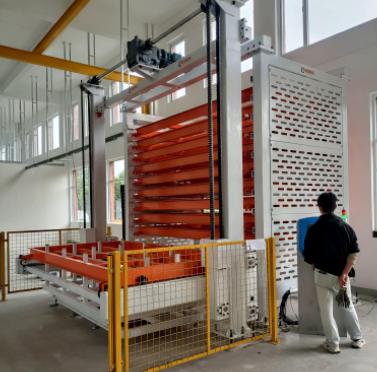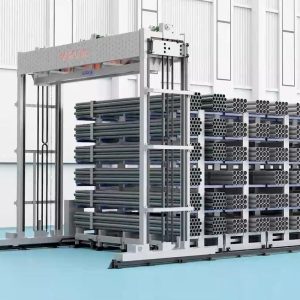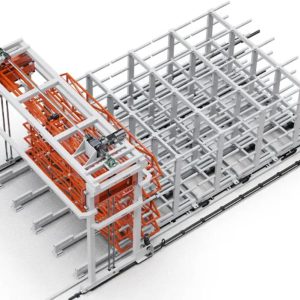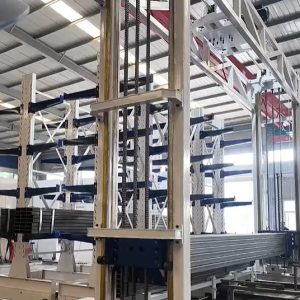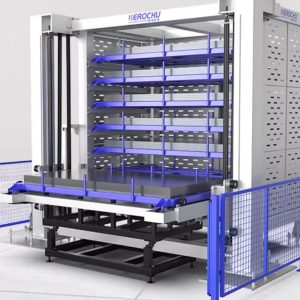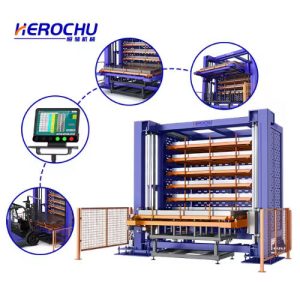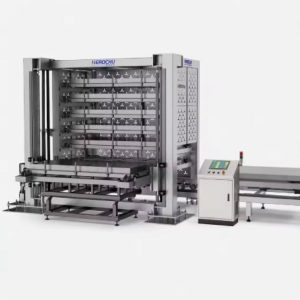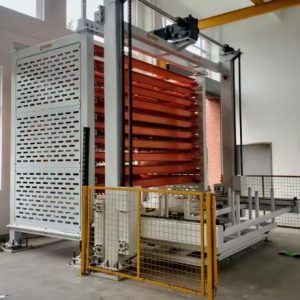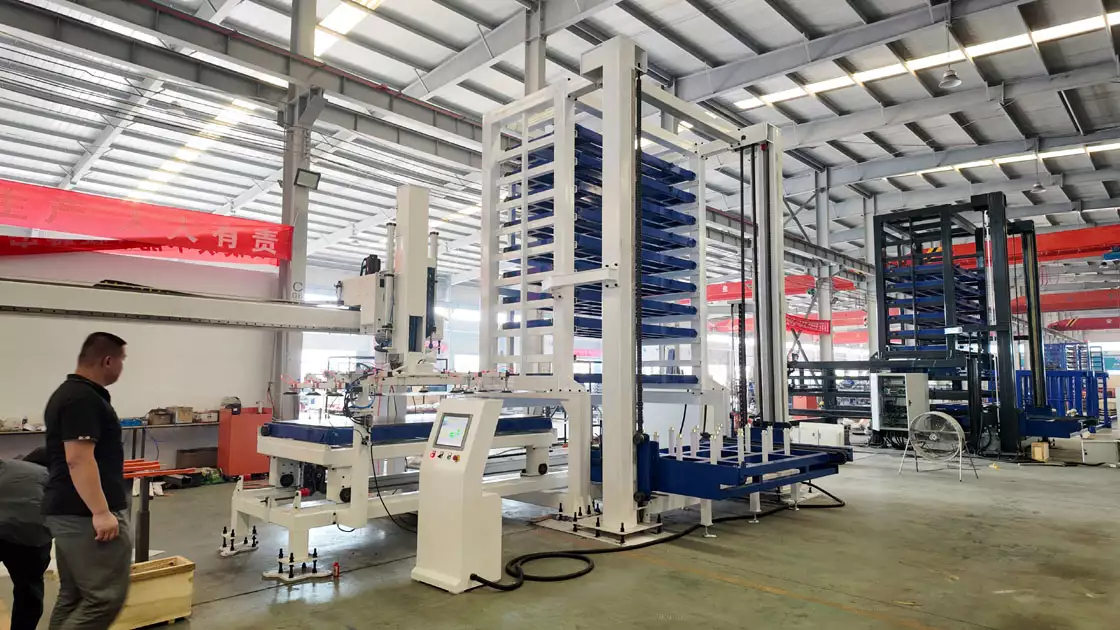
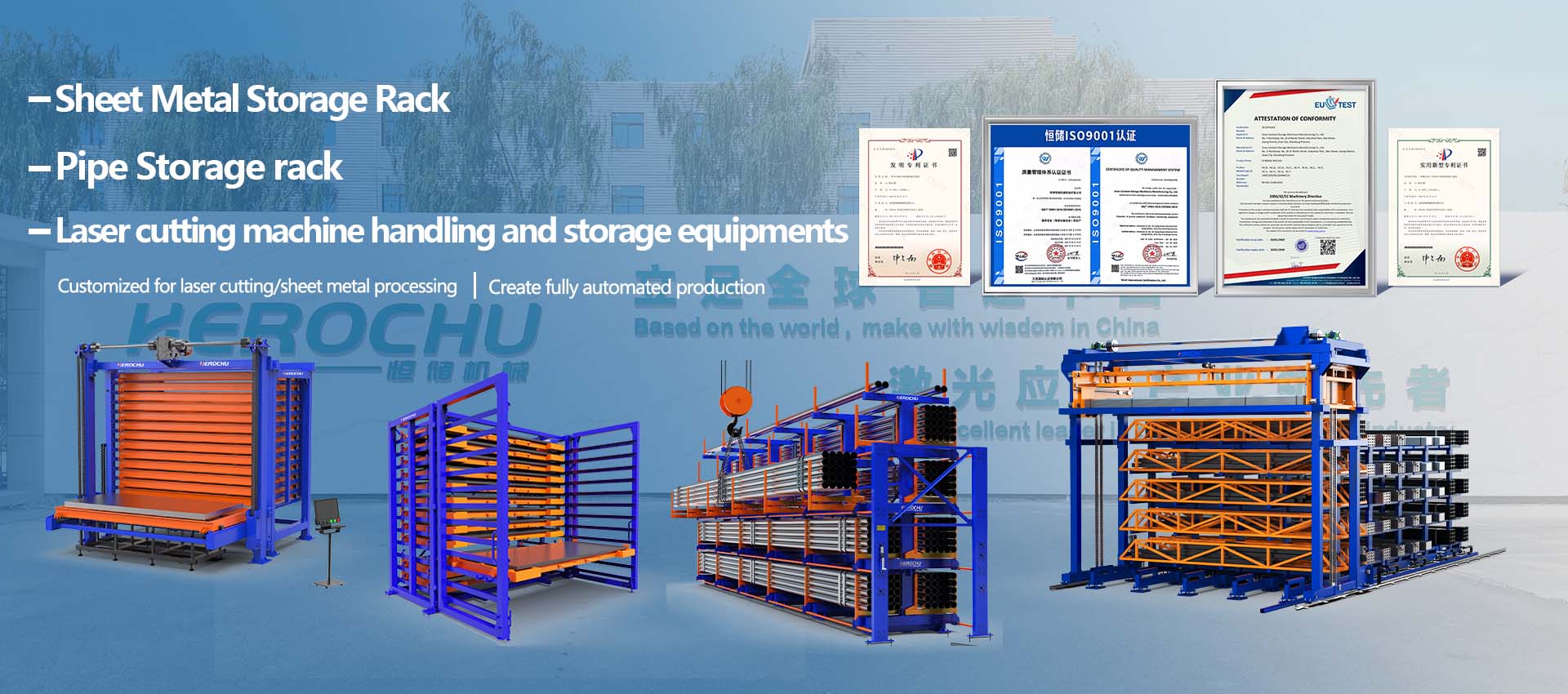
The value of an automated storage system depends on how well it connects to the information systems that drive production. A tower that stores plates efficiently but cannot tell the ERP system what is inside is only a partial solution. Herochu’s Vertical Steel Plate Rack is engineered around the assumption that storage, inventory management, and production planning operate as one system. The tower is the physical layer; ERP and WMS integration is the information layer that makes the physical storage visible to planning, procurement, and production control.
How the Integration Works
Herochu systems connect to ERP and WMS platforms through standard interfaces. The integration operates in three directions. Inbound data flows from the storage system to ERP: every plate entry and exit updates the inventory database with dimensions, material grade, thickness, weight, and timestamp. Outbound data flows from ERP to the storage system: when a work order is released, the required plate specification is transmitted to the tower, which reserves the material and initiates retrieval. Status data flows continuously in both directions: the system reports current inventory levels, reserved material, and material in transit to the extraction point.
The practical effect is that the ERP system’s view of plate inventory matches physical reality without manual intervention. Material planners query available stock and receive accurate numbers. Production schedulers release work orders knowing that the required material is present and accessible. Procurement triggers replenishment based on consumption data that reflects actual usage rather than estimated depletion.
Real-Time Inventory Accuracy
Herochu’s inventory management capability extends beyond simple quantity tracking. The system records the physical characteristics of each plate on entry, including dimensions and weight measured by integrated weighing. This data is available through the WMS interface for downstream functions: nesting software can retrieve exact sheet dimensions for optimal layout; costing systems can calculate material consumption by weight rather than by piece count; quality systems can trace material back to receiving records if a defect is discovered.
The built-in weighing function also serves a control purpose. Overloading a storage level can compromise structural integrity and positioning accuracy. Herochu detects weight exceedance during entry and alerts the operator before the tray enters the storage zone. This prevents the cumulative structural stress that occurs when overload conditions go undetected.
Compatibility with Factory Lifting Equipment
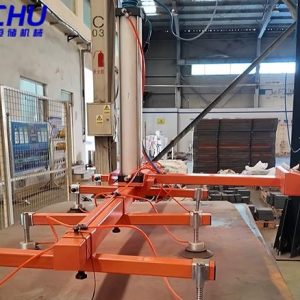
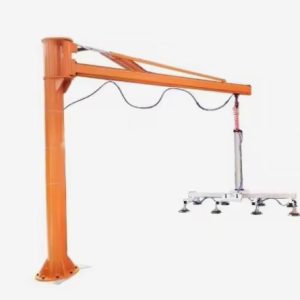
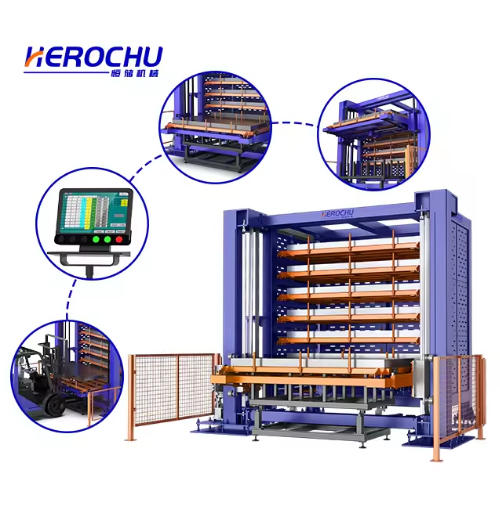
Integration is not limited to software. Herochu systems are designed to work with the lifting equipment already present in the factory. Forklifts load and unload material at the transfer station without modification. Overhead cranes can access the extraction point directly. The conveyor interface includes adjustable legs and leveling feet to align with existing material flow lines. No dedicated handling equipment is required, which reduces the capital cost of adoption and simplifies the integration into existing shop layouts.
Customization for Workflow Fit
Every fabrication operation has a different material profile and production rhythm. Herochu supports customization across the parameters that matter: layer count and tower configuration, tray dimensions, load capacity per layer, and clear height between levels. A shop processing standard 3,000×1,500mm plates at moderate volume may require a different configuration than a heavy equipment manufacturer handling 6,000mm plates at maximum load. Herochu builds to the application rather than forcing the application to fit a standard model.
The Operational Payoff
The combination of physical automation and digital integration produces measurable improvements in fabrication operations. Material search time drops to near zero because the system knows where every plate is stored. Inventory accuracy improves because data is captured at the point of material movement rather than through periodic manual counts. Material damage decreases because each plate is stored on an independent tray and handled by the tower mechanism rather than by repeated forklift or crane contact. Floor space is recovered because storage moves vertical. For operations evaluating automation investment, Herochu’s ERP and WMS integration capability is what transforms a storage tower from a piece of equipment into a component of the production system.